

What Is Iron-Air Battery? A Complete Guide to Multi-Day Energy Storage
Introduction: Why Iron-Air Batteries Are Gaining Attention
Iron-Air Battery: Renewable energy is growing fast. Solar and wind now supply a large share of electricity in many regions. However, both sources depend on weather conditions.
As a result, grids need energy storage systems that can deliver power even when the sun is not shining and the wind is not blowing.
Lithium-ion batteries help solve short-term gaps. Typically, they provide two to four hours of storage. Yet this is not enough during multi-day weather events.
Therefore, long-duration energy storage has become a major focus. Among the emerging technologies, the iron-air battery stands out.
Summary
What is an iron-air battery?
An iron-air battery is a long-duration energy storage system that produces electricity through a reversible reaction between iron and oxygen.
How does it work?
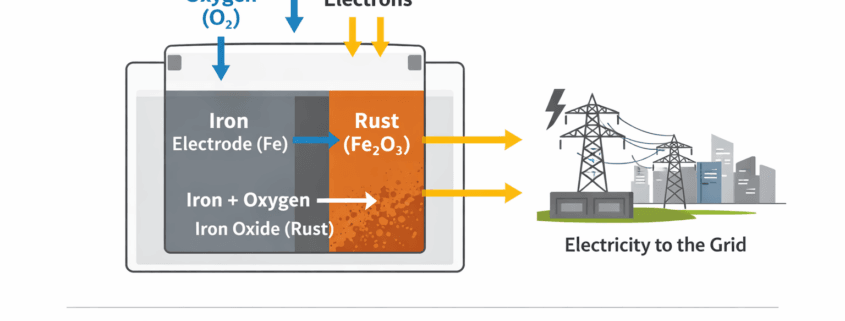
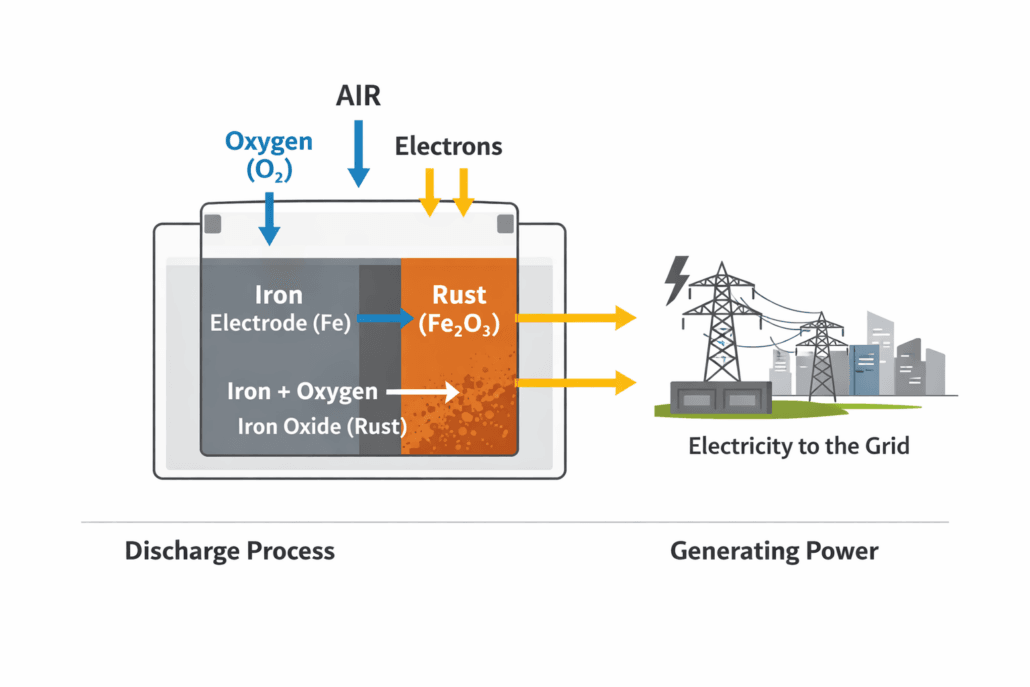
During discharge, iron reacts with oxygen and forms rust. During charging, electricity converts the rust back into iron.
How long does it last?
Commercial systems are designed to deliver 50 to 100+ hours of power.
Where is it used?
Iron-air batteries are used in utility-scale grid storage and renewable integration projects.
How is it different from lithium-ion?
Iron-air provides much longer duration at lower material cost, but it requires more space and has lower energy density.
What Is an Iron-Air Battery?
An iron-air battery is a type of metal-air battery. It uses iron as one electrode and oxygen from the surrounding air as the other reactant.
Unlike lithium-ion cells, iron-air systems are not sealed in the same way. Instead, they pull oxygen directly from the atmosphere. This approach reduces material costs and simplifies chemistry.
The technology has gained attention through companies such as Form Energy, which is developing commercial 100-hour battery systems for grid use.
Because iron is cheap and widely available, this chemistry offers strong cost potential for long-duration storage.
How Does an Iron-Air Battery Work?
Iron-air batteries rely on a reversible rusting process. Although the concept sounds simple, the engineering behind it is sophisticated.
Discharge Phase: Producing Electricity
During discharge:
- Iron reacts with oxygen
- Iron oxide (rust) forms
- Electrons move through an external circuit
- Electricity flows to the grid
In simple terms, the battery “rusts” to generate power.
Charge Phase: Storing Energy
When the battery charges:
- External electricity is applied
- Iron oxide converts back into iron
- Oxygen is released
Consequently, the system resets and becomes ready for the next cycle.
Even though the reaction is straightforward, system control requires airflow management, moisture balance, and electrolyte stability. Therefore, large-scale engineering plays a critical role in performance.
Why Iron-Air Batteries Are Important for the Grid
As renewable penetration rises above 50%, short-duration storage alone cannot stabilize the grid. Multi-day weather patterns can reduce both solar and wind output.
For example, extended cloudy and low-wind periods create serious reliability challenges. Under these conditions, four-hour batteries are insufficient.
Iron-air systems address this gap.
Multi-Day Energy Storage
Most iron-air designs target 50 to 100 hours of discharge. This duration supports:
- Renewable smoothing
- Coal plant retirement
- Reduced gas peaker dependence
- Grid resilience during extreme weather
Because of this capability, utilities are actively evaluating long-duration solutions.
Lower Material Cost
Iron is one of the most abundant elements on Earth. In contrast, lithium and nickel markets can experience volatility.
As a result, iron-air batteries reduce exposure to critical mineral supply risks. Over time, this could lower the levelized cost of storage for long-duration projects.
Utility Adoption
Utilities such as Xcel Energy are working with Form Energy to deploy iron-air systems in regions like Minnesota.
These projects aim to replace retiring coal plants while maintaining grid reliability.
Iron-Air Battery vs Lithium-Ion: Key Differences
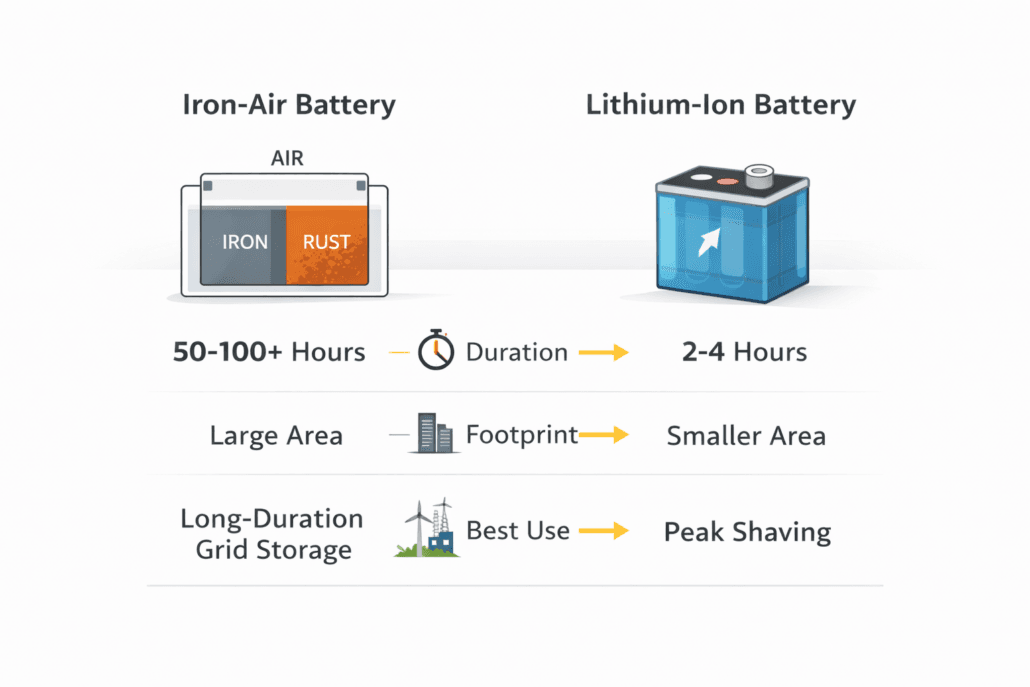
Although both technologies store electricity, their applications differ significantly.
| Feature | Iron-Air Battery | Lithium-Ion Battery |
|---|---|---|
| Duration | 50–100+ hours | 2–4 hours |
| Energy Density | Low | High |
| Footprint | Large | Compact |
| Response Speed | Moderate | Fast |
| Best Use | Multi-day grid storage | C&I & peak shaving |
Lithium-ion remains ideal for:
- Commercial and industrial (C&I) projects
- Frequency regulation
- Fast-response services
Iron-air, on the other hand, targets bulk energy shifting over extended periods.
Where Are Iron-Air Batteries Installed?
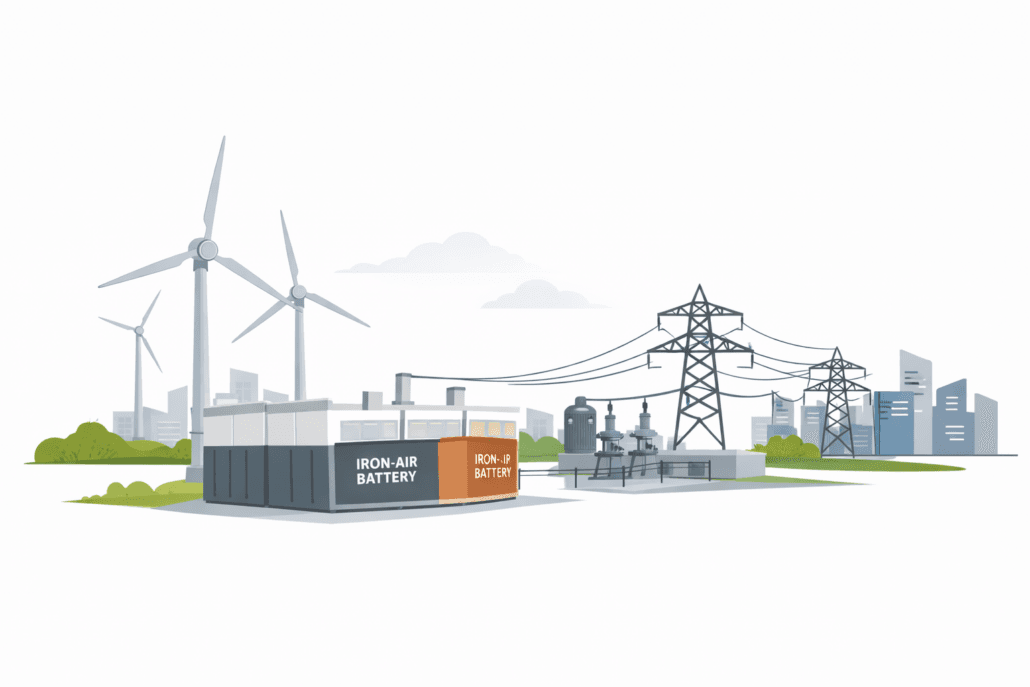
Iron-air systems are designed for utility-scale deployment. Therefore, they are typically installed near:
- Substations
- Renewable generation sites
- Coal plant retirement locations
- Dedicated storage facilities
Because energy density is lower, these systems require more land. However, utilities often have sufficient space for such installations.
Residential or electric vehicle applications are not suitable for this chemistry.
Advantages of Iron-Air Batteries
Iron-air technology offers several benefits.
First, raw material cost is low. Iron is cheap and widely available.
Second, discharge duration is significantly longer than lithium-ion systems.
Third, the chemistry does not rely on highly flammable materials. As a result, fire risk at the cell level may be lower.
Finally, supply chain dependence on critical minerals decreases.
Taken together, these advantages position iron-air as a strong candidate for long-duration grid storage.
Limitations and Engineering Challenges
Despite its promise, iron-air technology also has constraints.
Energy density is lower than lithium-ion. Therefore, installations require more space.
Round-trip efficiency may also be lower. Consequently, system design must optimize operational cycles.
In addition, large-scale commercialization is still in early phases. Manufacturing expansion and cost validation remain ongoing.
Because of these factors, iron-air does not replace lithium-ion. Instead, it complements it.
The Future of Long-Duration Energy Storage
Energy storage markets are evolving rapidly. As renewable penetration increases, grid planners must diversify storage solutions.
Short-duration lithium-ion systems remain critical for fast response and peak shaving. Meanwhile, long-duration technologies provide backup during multi-day events.
Iron-air batteries may become part of layered storage strategies:
- Lithium-ion for 0–4 hours
- Iron-air for 24–100 hours
- Hydrogen or other seasonal storage for longer periods
Such integration improves grid reliability while accelerating decarbonization.
Companies like Sunlith Energy focus on scalable lithium-based BESS architectures designed for commercial and utility performance. As long-duration technologies mature, hybrid solutions may become standard industry practice.
Iron-Air Battery FAQ
What makes an iron-air battery different?
Iron-air batteries use iron and oxygen instead of lithium-based compounds. They are designed for much longer discharge durations.
How long can an iron-air battery run?
Most commercial designs target 50 to 100 hours of continuous discharge.
Are iron-air batteries safe?
The chemistry does not rely on flammable lithium electrolytes. However, full system safety depends on engineering and installation design.
Will iron-air replace lithium-ion?
No. Iron-air complements lithium-ion by serving long-duration grid storage, while lithium-ion remains optimal for short-duration applications.
Conclusion
Iron-air batteries represent an important step in long-duration energy storage.
By using a reversible rusting process, they enable multi-day power delivery at potentially lower material cost.
Although they require more space and have lower energy density, their long discharge capability supports renewable-heavy grids.
As energy systems transition toward deep decarbonization, iron-air batteries may become a key pillar in multi-layer storage strategies.