
Energy Storage Losses: Where Energy Gets Lost in BESS Systems
What are energy storage losses in BESS systems?
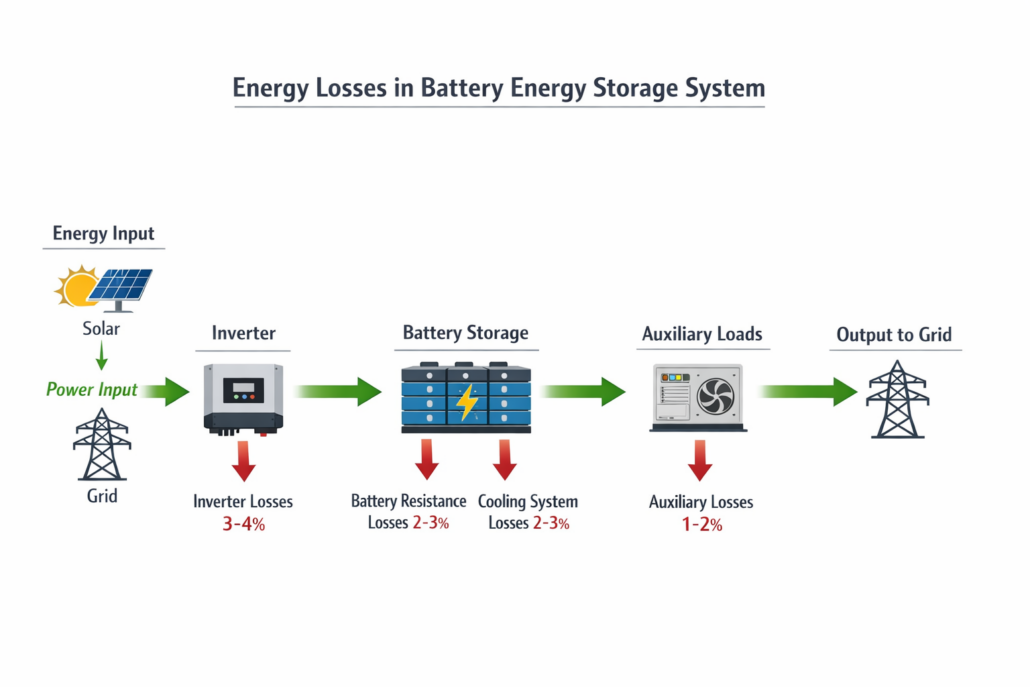
Energy storage losses in BESS systems occur when a portion of electrical energy is lost during charging, storage, and discharge due to battery resistance, inverter conversion, cooling systems, and auxiliary equipment.
Introduction
Energy Storage Losses: Battery Energy Storage Systems (BESS) are designed to store electricity and release it when needed, improving grid reliability and supporting renewable energy integration. However, no energy storage system operates with perfect efficiency.
During charging, storage, and discharge, a portion of energy is lost due to electrical, thermal, and operational processes. These energy storage losses directly affect the round trip efficiency of battery systems.
Understanding where these losses occur is essential for optimizing system performance and improving the economics of energy storage projects.
For a broader overview of system design and components, see Sunlith Energy’s Battery Energy Storage System complete guide.
What Are Energy Storage Losses?
Energy storage losses refer to the difference between the amount of energy used to charge a battery and the amount of energy that can be recovered when the battery discharges.
These losses are commonly measured using round trip efficiency (RTE).
Example:
Energy input: 100 MWh
Energy output: 90 MWh
Round trip efficiency = 90%
The remaining 10% represents energy lost within the system.
A detailed explanation of how efficiency is calculated can be found in Sunlith’s article on BESS round trip efficiency.
Major Sources of Energy Loss in Battery Storage Systems
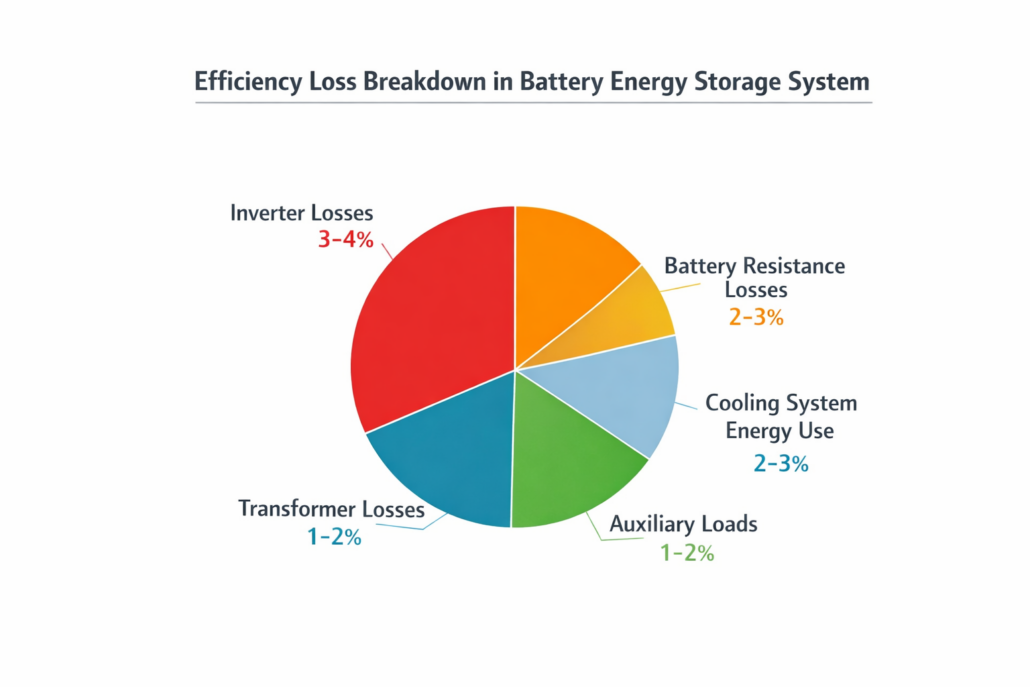
Energy losses in battery storage systems typically occur in several key areas.
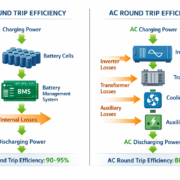
Battery Internal Resistance Losses
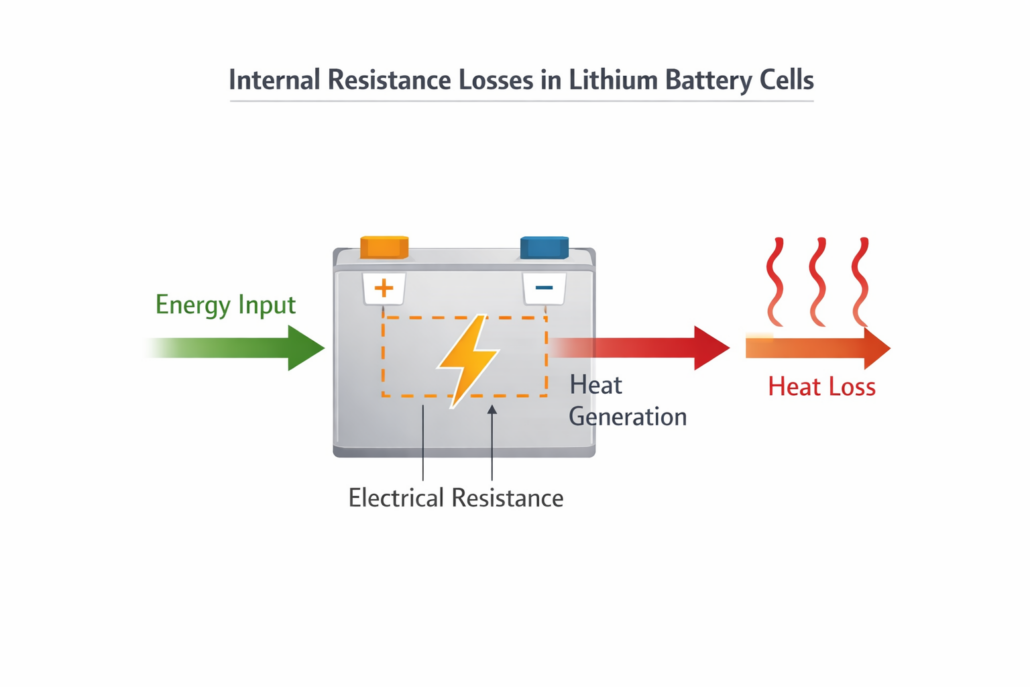
Every battery cell has internal electrical resistance.
When electricity flows through the battery during charging and discharging, some of the energy is converted into heat.
This phenomenon is known as resistive loss.
Factors that influence this loss include:
- battery chemistry
- temperature
- current flow
- battery age
Modern lithium-ion batteries minimize internal resistance, but these losses cannot be completely eliminated.
Power Conversion Losses
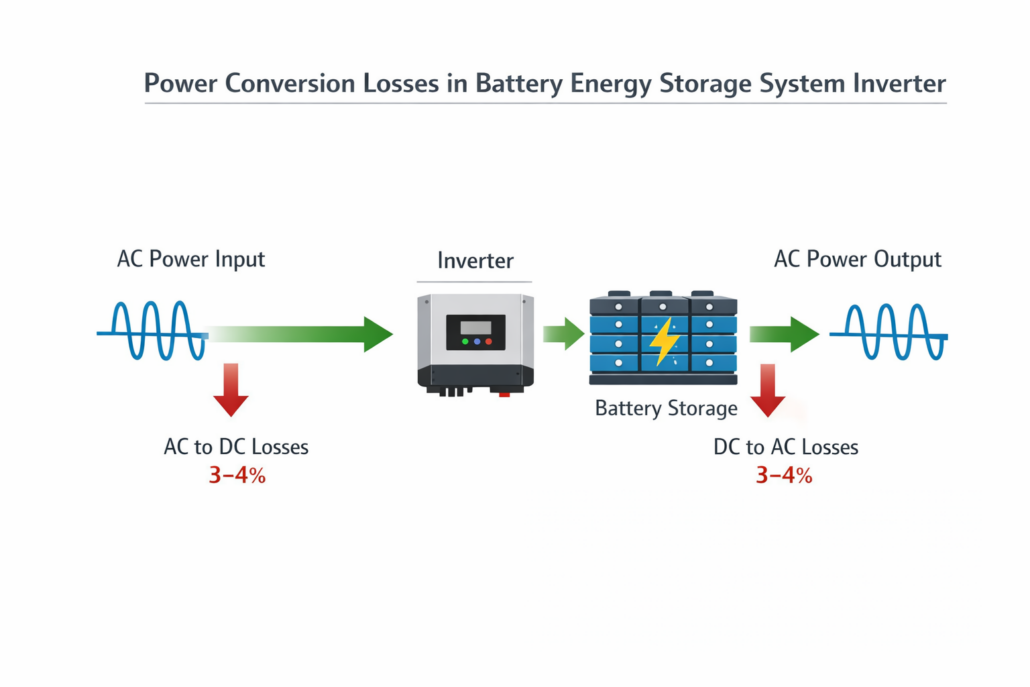
One of the largest sources of energy loss occurs during the conversion between AC and DC electricity.
Battery systems rely on power conversion systems (PCS) that include bi-directional inverters.
These inverters convert:
- AC electricity from the grid into DC electricity for charging
- DC electricity from batteries back into AC power for the grid
Typical inverter efficiency is between 96% and 98%, meaning some energy is lost during each conversion cycle.
Because electricity passes through the inverter multiple times, these losses accumulate.
Thermal Management Losses
Battery systems generate heat during operation. If not properly controlled, excessive heat can reduce battery performance and shorten system lifespan.
To maintain optimal operating conditions, BESS installations use thermal management systems such as:
- HVAC cooling systems
- liquid cooling systems
- air cooling systems
These systems consume energy continuously, contributing to overall efficiency losses.
Efficient thermal design is critical for minimizing these losses in large-scale battery installations.
Auxiliary System Consumption
Battery energy storage systems contain several supporting components that operate continuously.
These auxiliary systems include:
- battery management systems (BMS)
- monitoring equipment
- fire detection and suppression systems
- communication hardware
- safety controls
Although each component uses a small amount of energy, together they contribute to system losses over time.
Idle and Standby Losses
Energy storage systems do not always operate continuously. During idle periods, some components still consume power.
These standby losses may occur when:
- the system is waiting for dispatch signals
- monitoring systems remain active
- cooling systems operate intermittently
Reducing standby power consumption can significantly improve overall system efficiency.
Transmission and Distribution Losses
In grid-scale installations, electricity may travel through transformers and power distribution equipment before reaching the grid.
Each additional electrical component introduces small energy losses.
Although these losses are typically minor, they become significant in very large utility-scale installations.
Typical Efficiency of Modern BESS Systems
Modern lithium-ion battery storage systems have improved significantly over the past decade.
Typical round trip efficiency ranges include:
| Battery Technology | Round Trip Efficiency |
|---|---|
| Lithium-ion | 90–95% |
| Lithium Iron Phosphate | 90–94% |
| Lead-acid | 70–85% |
| Flow batteries | 65–80% |
These values reflect the combined impact of all energy losses within the system.
How to Reduce Energy Storage Losses
Energy storage developers use several strategies to improve efficiency.
High-Efficiency Power Conversion Systems
Advanced inverter technologies reduce power conversion losses by using improved semiconductor switching devices.
New technologies such as silicon carbide power electronics offer higher efficiency and lower heat generation.
Advanced Thermal Management
Optimizing cooling systems helps reduce energy consumption while maintaining battery performance.
Liquid cooling systems can often achieve better efficiency than traditional air cooling solutions.
Intelligent Energy Management Systems
Energy management software optimizes battery charging and discharging schedules.
By operating batteries within optimal conditions, these systems minimize energy losses and extend battery life.
Optimized System Architecture
Choosing the correct system architecture, such as AC-coupled or DC-coupled configurations, can also influence efficiency.
Reducing unnecessary energy conversions can significantly improve overall system performance.
Why Minimizing Energy Loss Matters
Reducing energy losses improves the overall economics of energy storage projects.
Higher efficiency leads to:
- more usable stored energy
- lower operational costs
- higher project profitability
- improved renewable energy utilization
Even small improvements in efficiency can produce large financial benefits for large-scale energy storage installations.
The Future of High-Efficiency Energy Storage
Battery technology continues to evolve rapidly. Emerging innovations are expected to further reduce energy losses in storage systems.
These innovations include:
- next-generation battery chemistries
- solid-state batteries
- advanced power electronics
- AI-driven energy management systems
As these technologies mature, battery storage systems will become even more efficient and reliable.
Conclusion
Energy storage losses are an unavoidable part of battery energy storage systems. However, understanding where these losses occur allows engineers and developers to optimize system design and improve overall efficiency.
By minimizing losses from batteries, power electronics, thermal management, and auxiliary systems, modern BESS installations can achieve high levels of performance and reliability.
As energy storage becomes increasingly important for renewable power systems, improving efficiency will remain a key focus for the industry.




Trackbacks & Pingbacks
[…] Energy Storage Losses in BESS Systems […]
[…] Energy losses occur at several stages within a battery energy storage system. […]
Leave a Reply
Want to join the discussion?Feel free to contribute!