
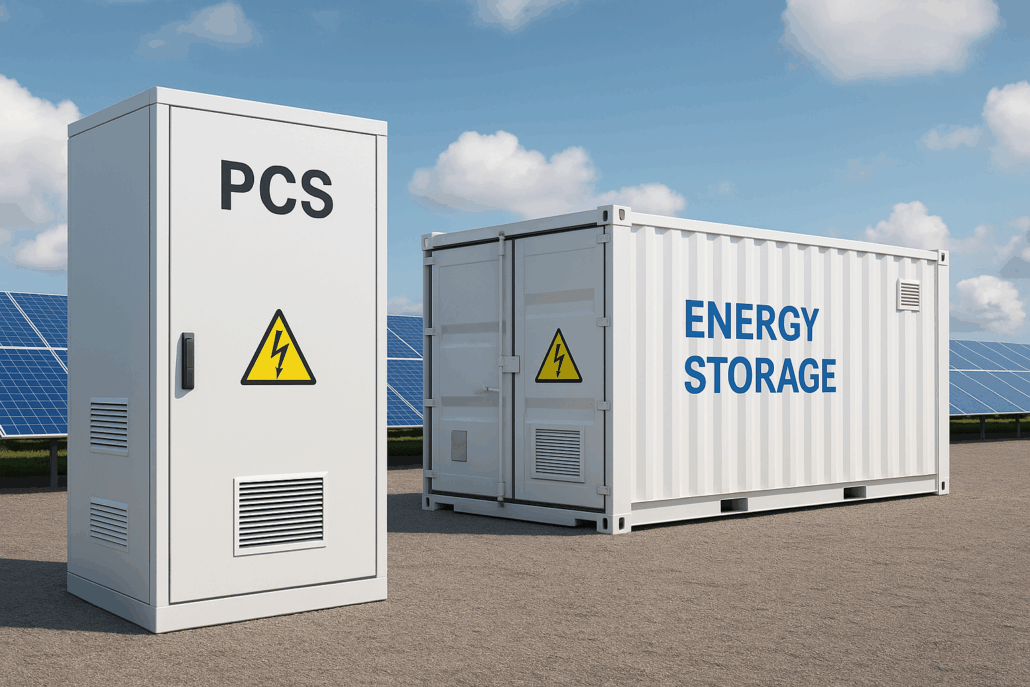
Unlocking the Power of Energy Storage PCS: The Brain Behind Battery Energy Storage Systems
Ever wondered what Energy Storage PCS actually does? In this post, we’ll break down how it works and where it’s used in real-world energy storage systems.
What is PCS in Energy Storage?
PCS stands for Power Conversion System. It is an essential device in energy storage systems that converts electricity between alternating current (AC) and direct current (DC). It allows batteries to store energy from the grid or renewable sources and then release it back as usable AC power when needed.
In short, PCS is the bridge between your batteries and the electrical grid—managing energy flow, ensuring safety, and improving overall efficiency.
What is Energy Storage PCS and Why It Matters?
Energy storage PCS (Power Conversion System) is the heart of any Battery Energy Storage System (BESS). It is responsible for managing the conversion between AC and DC power, enabling batteries to store energy and deliver it back to the grid when needed. Without a PCS, your energy storage solution is like a car without an engine.
The PCS helps to regulate the flow of electricity, balance energy loads, and ensure maximum efficiency and safety of your battery system. Whether for solar, wind, or hybrid power systems, energy storage PCS plays a vital role in stabilizing renewable energy.
How Energy Storage PCS Works
The PCS acts as a two-way converter. When the energy is generated by solar panels or wind turbines (AC power), the PCS converts it into DC to charge the batteries. When the energy is needed (like during peak hours), it converts the stored DC power back into AC to feed into the grid or power your home or facility.
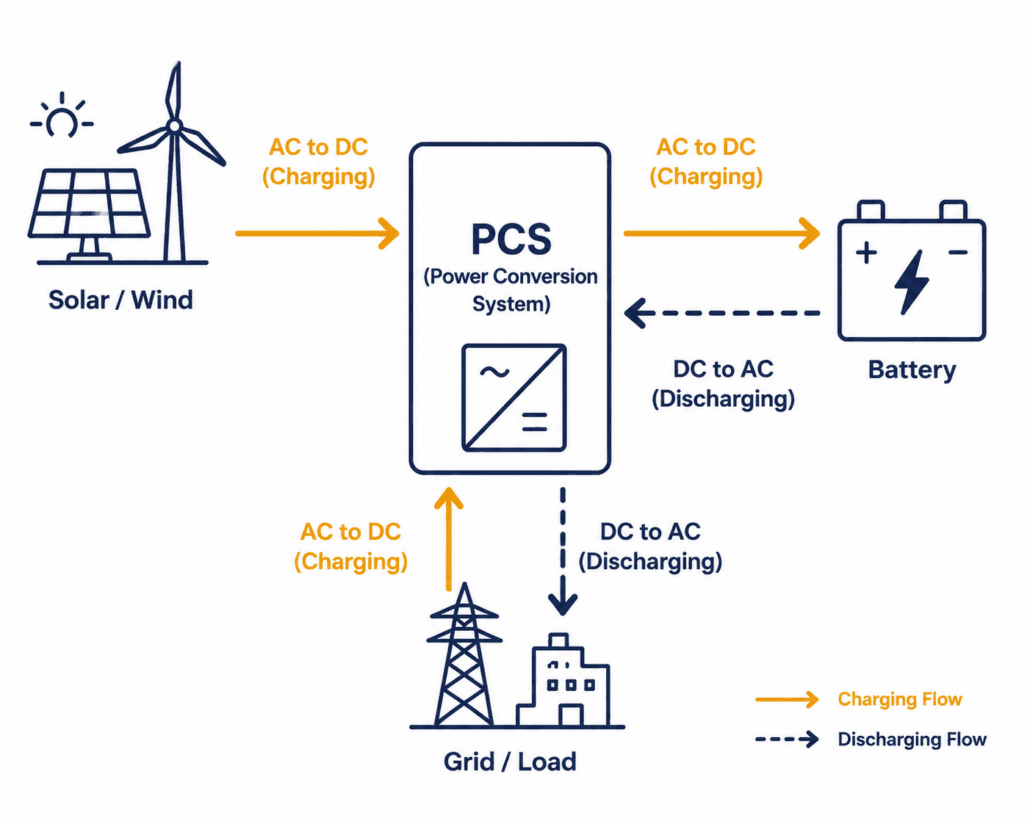
In simpler terms:
- AC to DC conversion for charging the battery.
- DC to AC conversion for discharging to the grid or loads.
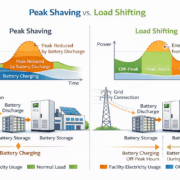
It also works with smart controllers and EMS (Energy Management Systems) to provide grid-support functions, frequency regulation, peak shaving, and energy arbitrage.
Types of Energy Storage PCS
There are several types of PCS based on the application and voltage level:
1. Low-Voltage PCS (LV PCS)
Used in small-scale or residential BESS. Operates below 1,000V.
2. Medium-Voltage PCS (MV PCS)
Used in commercial and industrial systems. Operates between 1,000V to 35kV.
3. High-Voltage PCS (HV PCS)
Used in utility-scale and grid-level projects. Supports large containers and centralized ESS plants.
4. Bi-directional PCS
This is the most advanced type. It can both charge and discharge efficiently, supporting dynamic grid functions.
Each type serves a unique purpose, and selecting the right PCS depends on your project size, energy goals, and budget.
PCS vs. Inverter: Are They the Same Thing?
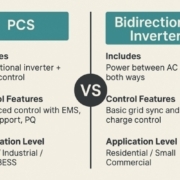
People often use “PCS” and “inverter” interchangeably, but a PCS is the broader system. Every PCS contains an inverter, but a PCS also handles charge/discharge control, grid synchronization, protection functions, and often bidirectional power flow — jobs a standalone inverter doesn’t do on its own.
For the full breakdown of where the terms overlap and where they diverge, see PCS vs. Inverter: What’s the Difference in an ESS?.
Bidirectional Inverters and the PCS
Most modern PCS units are built around a bidirectional inverter core — one that converts power in both directions, DC to AC during discharge and AC to DC during charging, rather than needing separate hardware for each direction.
For how bidirectional inverters compare structurally to a full PCS, see Bidirectional Inverter vs. PCS, and for where this hardware gets used across different project types, see Bi-Directional Inverters: PCS Applications.
PCS Architecture: AC-Coupled vs. DC-Coupled Systems
How many PCS units a project needs, and how they’re configured, depends heavily on whether the system is AC-coupled or DC-coupled. AC-coupled systems use a separate battery inverter alongside the solar inverter; DC-coupled systems share one PCS across both PV and battery on the same DC bus.
For the full comparison, see AC-Coupled vs. DC-Coupled BESS: Which Architecture Is Right for Your Project?, or go deeper on either architecture individually: What is DC-Coupled BESS? and What is AC-Coupled BESS?.
Grid-Forming vs. Grid-Following PCS Operation
A PCS can operate in one of two modes. Grid-following units synchronize to an existing grid signal and can’t operate without one. Grid-forming units establish their own voltage and frequency reference, which is what makes off-grid and islanded operation possible.
These reactive power control, voltage ride-through, and frequency response functions are documented in NREL’s research on advanced inverter functions, funded by the U.S. Department of Energy, which explains how grid-support-capable inverters and PCS units help maintain grid stability as more distributed solar and storage comes online.
For the full technical comparison, see Grid-Forming vs. Grid-Following BESS, and for more on grid-following behavior specifically, see BESS Grid-Following (GFL).
PCS in Microgrid and Island-Grid Applications
Grid-forming PCS capability becomes essential once a project needs to operate independently of the utility grid, whether that’s a resilience-focused microgrid or a fully islanded system. Sizing and configuring the PCS correctly for these applications looks different from a standard grid-tied project.
For the full technical guide, see Microgrid BESS: The Complete Technical Guide, and for fully islanded systems specifically, see Island Grid BESS.
Why PCS is Crucial in Battery Energy Storage Systems
Still wondering why energy storage PCS is important?
Here are a few key reasons:
- Grid Integration: It connects your battery storage to the utility grid seamlessly.
- Voltage & Frequency Control: Ensures clean, stable, and reliable electricity output.
- Safety & Protection: Prevents overcurrent, overvoltage, and system failures.
- Efficiency Optimization: Boosts round-trip efficiency and reduces energy losses.
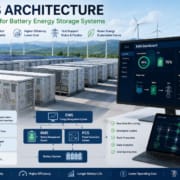
- Smart Control: Works with EMS and BMS to manage operations in real time.
Without a reliable PCS, your BESS will struggle to perform efficiently or safely.
Common Applications of Energy Storage PCS
PCS isn’t just for big power plants. You can find them in:
- Home and C&I energy storage systems
- Solar plus storage solutions
- Microgrids and off-grid systems
- EV charging stations
- Grid stabilization and frequency regulation projects
- Peak shaving and demand charge reduction
Whether you’re a homeowner trying to store solar energy or a utility trying to manage grid fluctuations, energy storage PCS is the backbone of your system.
Choosing the Right PCS for Your BESS
Here are a few questions to ask before choosing a PCS:
Q: What voltage and power level does my application need?
A: Match the PCS to your battery bank’s voltage and your energy load.
Q: Is it compatible with my battery chemistry (LFP, NMC, etc.)?
A: Yes. Always confirm with your supplier or integrator.
Q: Does it offer bidirectional operation?
A: For advanced systems, bidirectional PCS is a must.
Q: What kind of grid functions does it support?
A: Look for reactive power control, frequency response, black start, and islanding support.
Q: How efficient is the PCS?
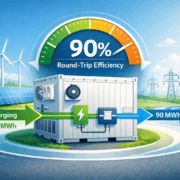
A: A good PCS will offer 96%–98% round-trip efficiency.
Q: What is a PCS in a BESS?
A: A PCS, or Power Conversion System, is the equipment that converts DC power from the battery to AC power for the grid or loads, and back again during charging. It’s the central control point that manages how energy moves into and out of a battery energy storage system.
Q: Is a PCS the same as an inverter?
A: A PCS includes an inverter but does more than one. Inverters convert DC to AC; a PCS also manages charge/discharge control, grid synchronization, and protection functions, often across bidirectional power flow. See our full breakdown in PCS vs. Inverter: What’s the Difference in an ESS?.
Q: What’s the difference between PCS in AC-coupled and DC-coupled BESS?
A: In AC-coupled systems, the PCS is a standalone battery inverter working independently of the solar inverter. In DC-coupled systems, the PCS is a shared hybrid inverter that manages power from both PV and battery through a single conversion point. See our full comparison in AC-Coupled vs. DC-Coupled BESS: Which Architecture Is Right for Your Project?.
Q: What certifications does a PCS need?
A: Requirements vary by region and grid operator, typically including UL 1741 and IEEE 1547 in the U.S., IEC 62109 and VDE-AR-N standards in the EU, and additional grid codes depending on the interconnection point. See our full breakdown in Worldwide PCS Certification Guide.
Q: Can a PCS operate in grid-forming mode?
A: Yes, depending on its design. Grid-forming PCS units can establish voltage and frequency independently, which is essential for microgrid and island-mode operation. Grid-following units instead synchronize to an existing grid signal. See our full comparison in Grid-Forming vs. Grid-Following BESS.
Top Features to Look for in Energy Storage PCS
If you’re sourcing or integrating a PCS, here are some must-have features:
- Modular design for easy expansion
- IP54 or higher protection level for outdoor installations
- Liquid or forced air cooling for heat management
- LCD/Touchscreen display for monitoring
- Remote control and IoT connectivity
- CE, UL 1741, IEC 62109, and IEEE 1547 grid code certifications
Certification requirements vary significantly by region and grid operator. See our worldwide guide to PCS certification standards for a full breakdown of what’s required in your market.
Want to see how these features actually play out across different project types? Our full guide breaks down PCS functions and features for residential, C&I, and utility-scale BESS applications in detail.
Future Trends in Energy Storage PCS
The role of energy storage PCS is evolving with technology. Some exciting trends include:
- AI-powered PCS: Real-time learning and optimization
- Hybrid PCS: Can integrate solar inverter and battery PCS in one
- Higher voltage PCS (1500V+): For larger grid-scale projects
- PCS + EMS integration: Full-stack energy management solutions
These innovations make energy storage more accessible, efficient, and intelligent.
Conclusion: Energy Storage PCS Is the Unsung Hero of Clean Energy
In today’s energy transition journey, energy storage PCS is more important than ever. It acts as a bridge between renewable power and the grid, ensuring smooth, efficient, and safe operations. Whether you are building a small home system or a 100MW utility project, choosing the right PCS will make or break your success.
So, next time you think about a battery storage system, remember—your energy is only as smart as your PCS.




Trackbacks & Pingbacks
[…] The choice between grid-following and grid-forming PCS specifications has become one of the most consequential decisions in modern BESS procurement. This is especially true for projects with high renewable penetration or islanded operation. For a full comparison, see Grid Forming vs Grid Following BESS: What Is the Difference?, and our complete reference on Power Conversion System (PCS) for BESS. […]
[…] What is Energy Storage PCS? Complete Guide for BESS Applications […]
[…] For a full breakdown of how the PCS works and what it does in a BESS, see our guide: Power Conversion System (PCS): The Brain Behind Battery Energy Storage Systems. […]
[…] For a full breakdown of how the PCS works and what it does in a BESS, see our guide: Power Conversion System (PCS): The Brain Behind Battery Energy Storage Systems. […]
[…] To learn more about how inverter technology manages these loads, read about the role of the power conversion system (PCS). […]
[…] more background, see our guides on the Battery Management System (BMS), the Power Conversion System (PCS), and the Energy Management System […]
[…] See: Power Conversion System (PCS): The Heart of a BESS […]
[…] Power conversion systems convert electricity between AC and DC. […]
[…] 👉 If you’re exploring how PCS technology integrates into storage systems, check our detailed guide on Energy Storage PCS. […]
[…] For more details on BESS safety, see our guide on energy storage PCS. […]
[…] Learn more about Energy Storage PCS and how cooling supports PCS […]
[…] Power Conversion System (PCS) […]
[…] Power Conversion System (PCS): Converts DC (battery) to AC (grid) and vice versa. […]
[…] Inverter vs PCS: In the evolving world of energy systems, both Bidirectional Inverters and Power Conversion Systems (PCS) play a critical role—especially in energy storage systems (ESS), microgrids, and renewable […]
[…] Function: Converts DC power from the batteries to AC power for use, and vice versa when charging. […]
[…] Power Conversion System (PCS): Converts DC from batteries to AC for the grid and vice versa. […]
[…] can feed power back into the grid or absorb it as required, enabling voltage/frequency stabilization, which is critical in renewable energy-heavy […]
[…] Grid stabilization […]
[…] Power Conversion System (PCS)/Inverter […]
[…] PCS, inverters, and grid settings are synchronized […]
[…] The PCS converts energy between AC and DC and balances power input and output. It’s the “translator” between your power sources and your appliances. […]
Leave a Reply
Want to join the discussion?Feel free to contribute!