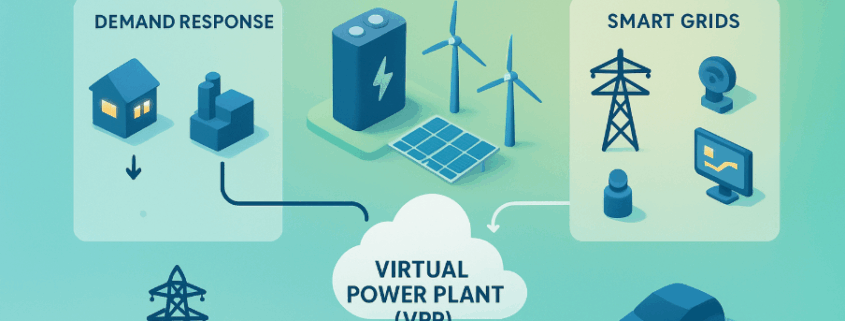
In today’s energy landscape, flexibility is just as important as generation. As renewable energy adoption grows, balancing supply and demand has become a major challenge. Demand Response (DR), when integrated into Virtual Power Plants (VPPs), offers a powerful solution to achieve this balance. By intelligently shifting or reducing electricity usage during peak hours, demand response ensures a more resilient, affordable, and sustainable energy system.
What Is Demand Response?
Demand Response is an energy management strategy where consumers adjust their electricity usage in response to grid conditions, price signals, or incentives. Instead of relying solely on power plants to ramp up supply, DR helps reduce stress on the grid by adjusting demand.
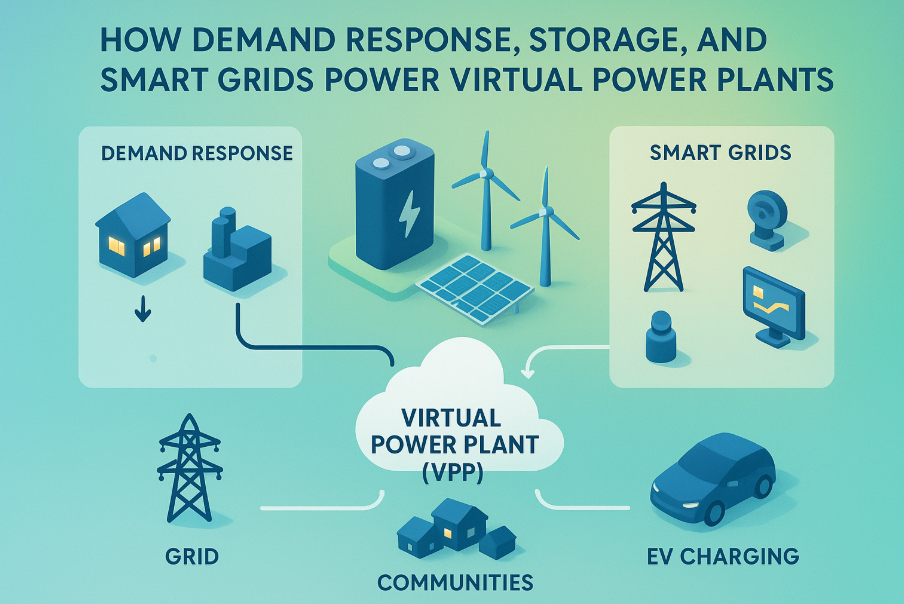
When this capability is connected to a Virtual Power Plant, thousands of distributed assets — from smart appliances to EV chargers — can collectively act as a flexible energy resource.
How Demand Response Works in Virtual Power Plants
Real-Time Monitoring: Smart meters and IoT devices track consumption patterns.
Automated Control: Appliances, batteries, and HVAC systems adjust based on grid signals.
Aggregated Flexibility: Small changes across households and businesses add up to major load reductions.
Bidirectional Benefits: Consumers earn incentives, while grid operators reduce stress on infrastructure.
Decarbonization – Maximizes the integration of renewable energy by reducing reliance on fossil-fuel backup plants.
Resilience – Communities gain more reliable access to electricity during extreme demand peaks.
Real-World Applications
United States: California’s Flex Alert program rewards consumers for reducing usage during peak times, and when tied into VPPs, it supports grid resilience during heatwaves.
Europe: Germany and the UK are experimenting with large-scale DR programs integrated into VPP platforms to balance wind and solar fluctuations.
Asia: Japan’s utilities use DR to manage peak demand from air conditioning loads in summer while leveraging VPP networks.
Demand Response + Smart Grids + Storage
Demand Response becomes even more effective when combined with:
Demand Response is the hidden power of Virtual Power Plants. By engaging consumers and leveraging automation, it transforms passive energy users into active participants in grid management. The result is a system that is smarter, cleaner, and more resilient for everyone.
Peak Shaving vs Load Shifting: Electricity demand is becoming increasingly dynamic as renewable energy adoption grows and electricity consumption patterns change.
Businesses and utilities must manage demand efficiently to avoid high electricity costs and maintain grid stability.
Two important strategies used in energy management are peak shaving and load shifting.
Understanding the difference between peak shaving vs load shifting helps organizations optimize energy use, reduce electricity costs, and maximize the value of battery energy storage systems.
Peak Shaving vs Load Shifting (Quick Comparison)
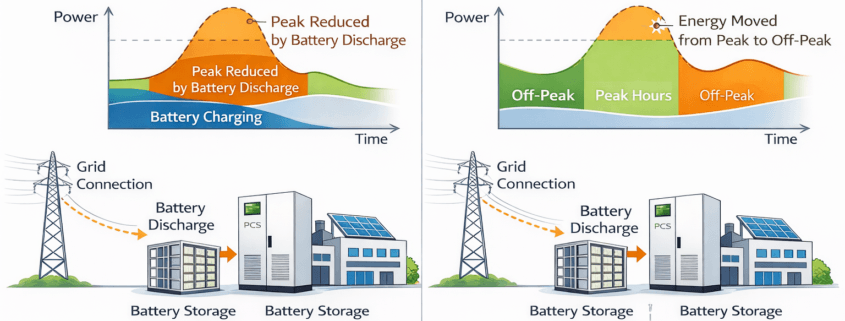
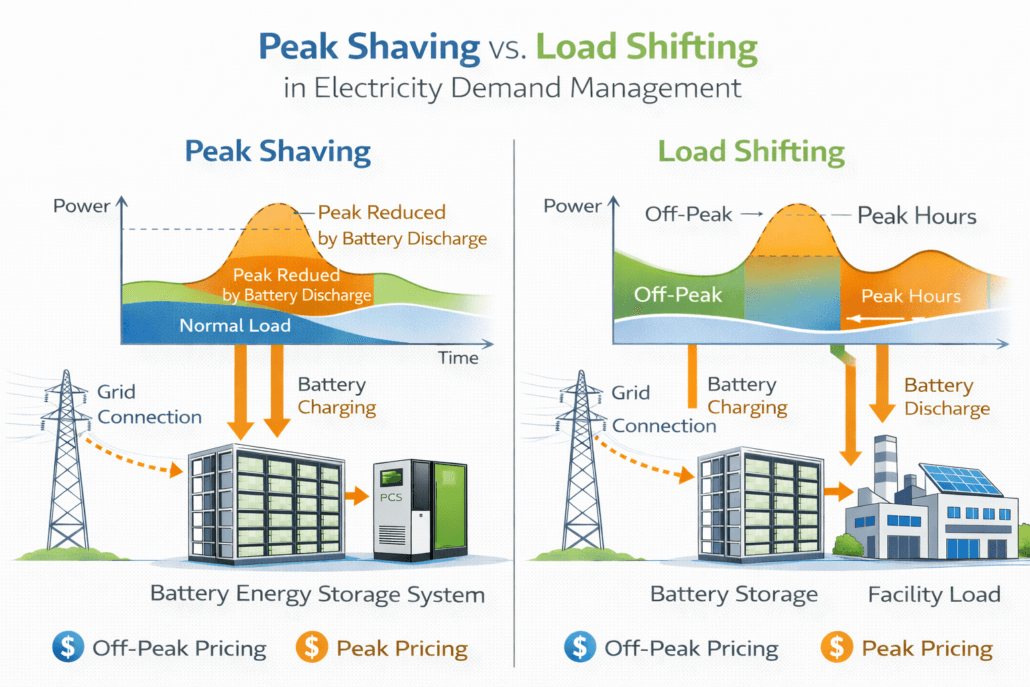
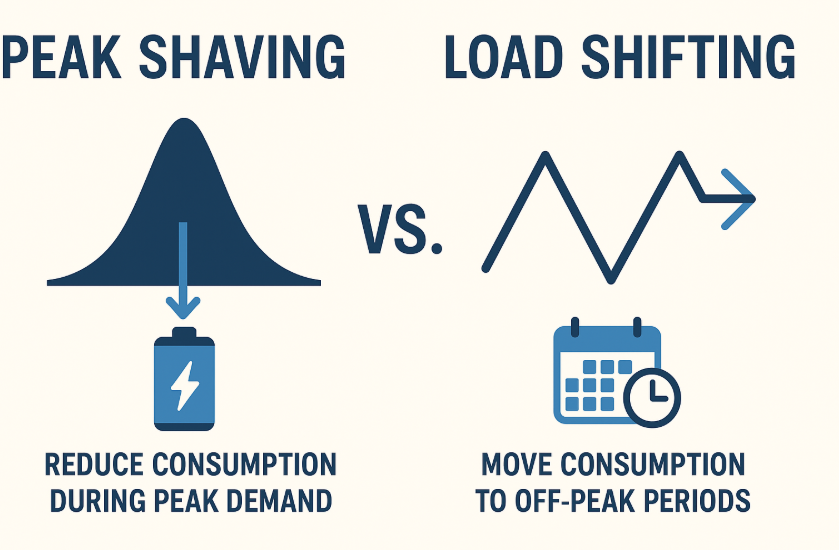
Peak shaving and load shifting are energy management strategies used to reduce electricity costs. Peak shaving lowers electricity demand during peak hours by using stored energy or reducing loads. Load shifting moves energy consumption to off-peak periods when electricity prices are lower. Many businesses combine both strategies using battery energy storage systems.
Strategy
Main Goal
Peak Shaving
Reduce demand spikes
Load Shifting
Move demand to cheaper hours
What Is Peak Shaving?
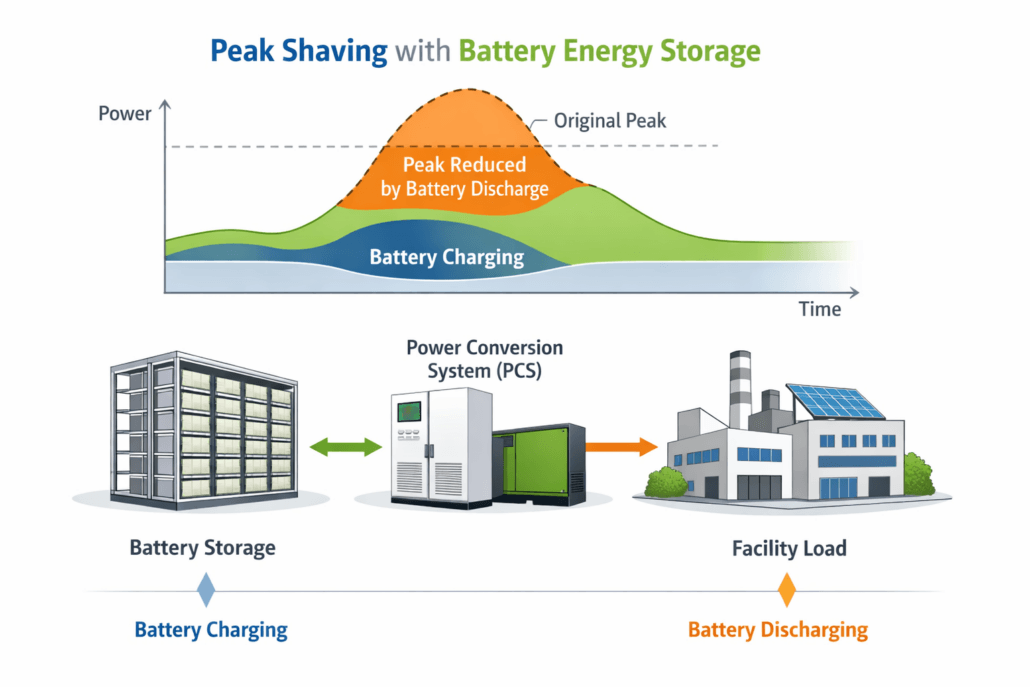
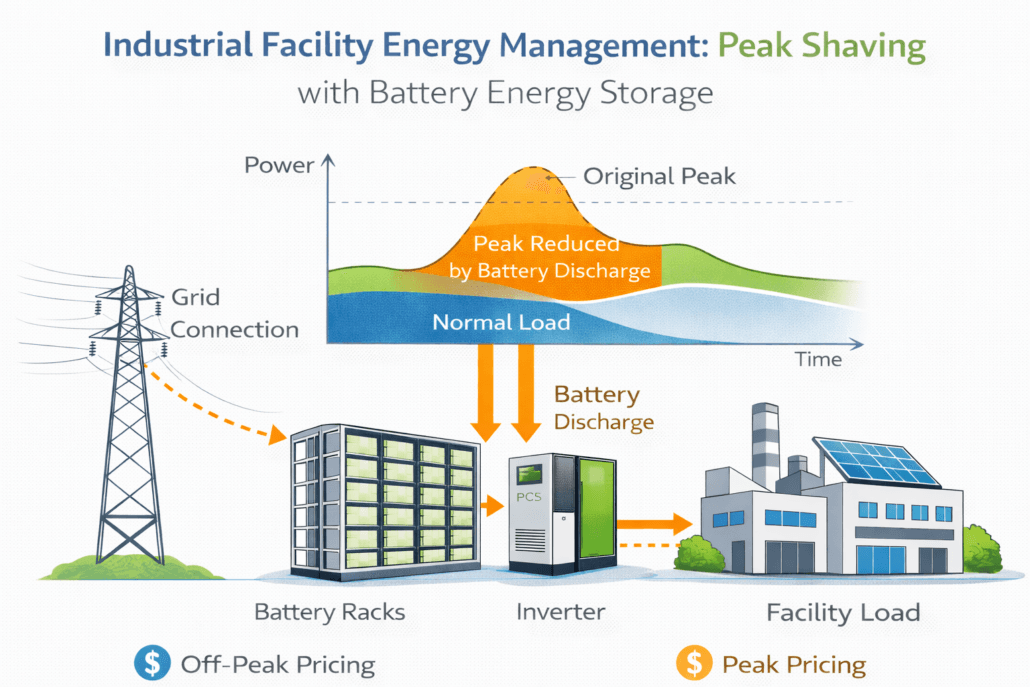
Peak shaving using battery energy storage to reduce electricity demand spikes.
Utilities often charge commercial customers based on their maximum demand (kW) during a billing cycle. These are known as demand charges.
According to the U.S. Department of Energy, demand charges can represent a significant portion of industrial electricity bills.
Peak shaving reduces this maximum demand by supplying energy from alternative sources.
Common Peak Shaving Methods
Organizations use several technologies to perform peak shaving:
Battery Energy Storage Systems
On-site backup generators
Smart energy management systems
Temporary load reduction strategies
For example, a manufacturing facility may use stored battery energy between 4 PM and 8 PM, when electricity demand is highest.
Instead of drawing power from the grid, the battery supplies electricity to the facility.
This reduces peak demand and lowers electricity costs.
What Is Load Shifting?
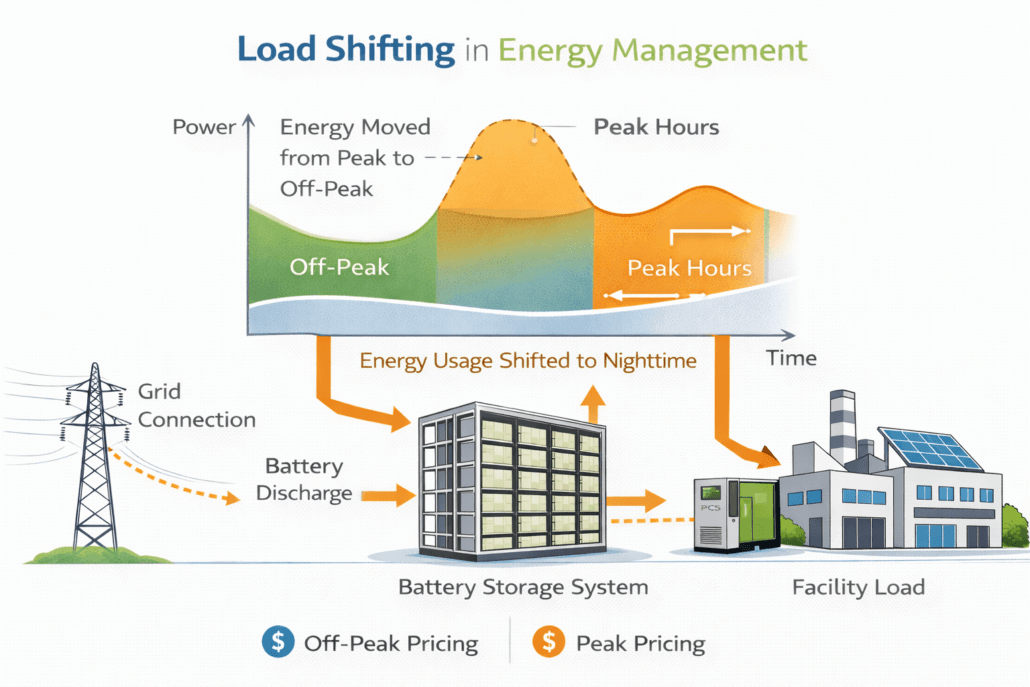
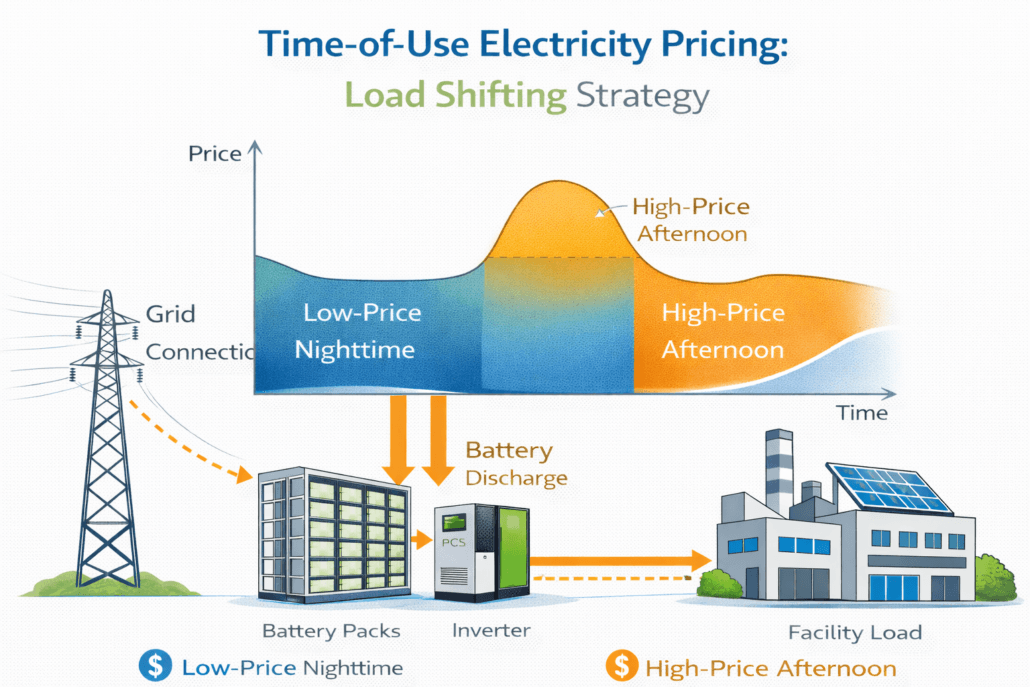
Load shifting moves electricity consumption to lower-cost off-peak periods.
Load shifting is an energy management strategy that moves electricity consumption from high-price periods to lower-price periods.
Unlike peak shaving, load shifting does not necessarily reduce total energy consumption. Instead, it changes when electricity is used.
Time-of-use electricity pricing encourages this behavior by charging different rates depending on the time of day.
Energy market analysis from the International Energy Agency shows that flexible demand strategies like load shifting play an important role in modern electricity systems.
Examples of Load Shifting
Common load shifting strategies include:
Charging electric vehicles overnight
Running industrial processes during off-peak hours
Pre-cooling commercial buildings early in the day
Scheduling data processing tasks overnight
By shifting energy usage to cheaper periods, businesses can significantly reduce electricity costs.
Peak Shaving vs Load Shifting: Key Differences
Peak shaving reduces demand spikes while load shifting moves energy consumption to off-peak periods.
Although both strategies improve energy efficiency, they address different energy management objectives.
Peak Shaving vs Load Shifting Comparison
Feature
Peak Shaving
Load Shifting
Primary goal
Reduce maximum demand
Move consumption timing
Electricity usage
Reduced during peak
Similar total usage
Cost savings
Lower demand charges
Lower energy charges
Technologies
BESS, generators
Automation, scheduling
Typical duration
Short peak events
Several hours
Peak shaving focuses on reducing demand spikes, while load shifting focuses on changing consumption patterns.
How Battery Energy Storage Enables Both Strategies
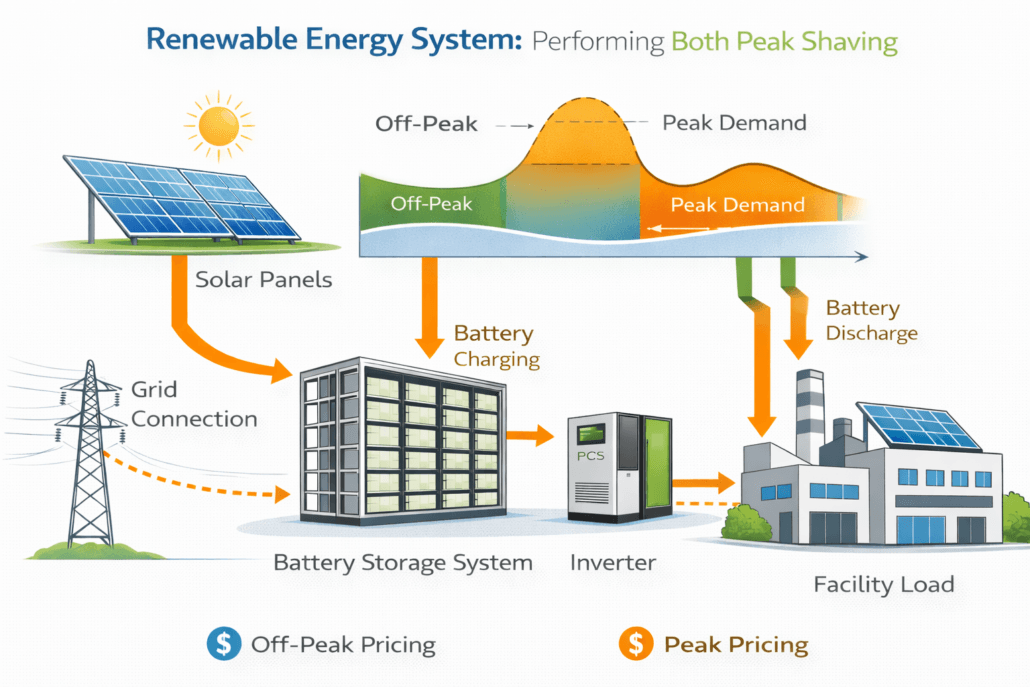
Battery storage enables both peak shaving and load shifting by storing energy during low-demand periods and discharging during peak demand.
Battery energy storage systems are one of the most effective tools for modern energy management.
Batteries can perform both peak shaving and load shifting simultaneously.
Peak Shaving with Batteries
During periods of high demand, stored electricity is discharged to supply facility loads.
This reduces the amount of power drawn from the grid.
Load Shifting with Batteries
During low-price periods, batteries charge using grid electricity or renewable energy.
The stored energy is then used later when prices increase.
Advanced energy management platforms automatically control charging and discharging schedules.
Peak shaving and load shifting are essential tools for modern energy management.
Peak shaving reduces electricity demand during high-load periods to avoid costly demand charges.
Load shifting moves electricity consumption to lower-cost periods.
Together, these strategies help businesses:
Reduce electricity costs
Improve grid stability
Optimize renewable energy usage
Increase energy efficiency
With the growing adoption of battery energy storage systems, organizations can implement both strategies effectively and create more resilient energy systems.
Peak Shaving vs Load Shifting FAQ
What is peak shaving in energy management?
Peak shaving is the process of reducing electricity demand during the highest consumption periods. Businesses typically use battery energy storage systems or on-site generation to supply electricity during peak hours and avoid demand charges.
What is load shifting in electricity systems?
Load shifting is an energy management strategy that moves electricity consumption from high-cost peak periods to lower-cost off-peak hours.
What is the difference between peak shaving and load shifting?
Peak shaving reduces electricity demand during peak hours, while load shifting changes when electricity is consumed to take advantage of lower electricity prices.
Can battery energy storage systems perform both peak shaving and load shifting?
Yes. Battery energy storage systems can charge during off-peak periods and discharge during peak demand, enabling both strategies.
Why do utilities charge demand charges?
Utilities charge demand charges to encourage customers to reduce peak electricity demand and maintain grid stability.