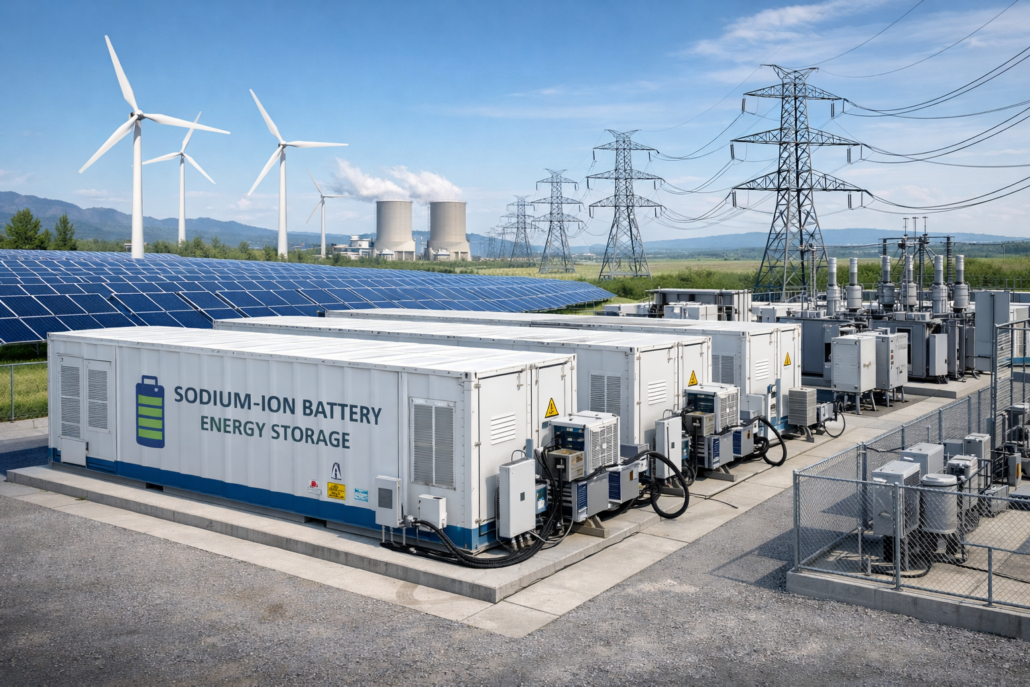
The sodium ion battery is becoming a key solution in energy storage. Today, industries need safer and cheaper systems. Because of this, many experts are exploring new battery technologies.
Unlike lithium systems, sodium-based batteries use common materials. As a result, costs are lower. In addition, supply risks are reduced. Therefore, this technology is gaining global attention.
At the same time, energy demand is rising. So, better storage solutions are required. Because of these factors, sodium batteries are now seen as a strong alternative.
What Is a Sodium Ion Battery?
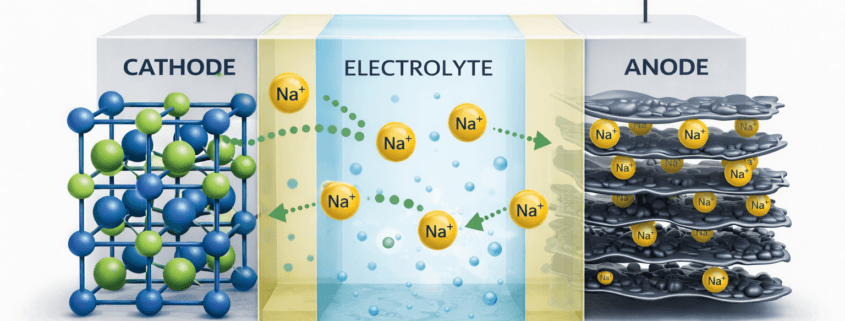
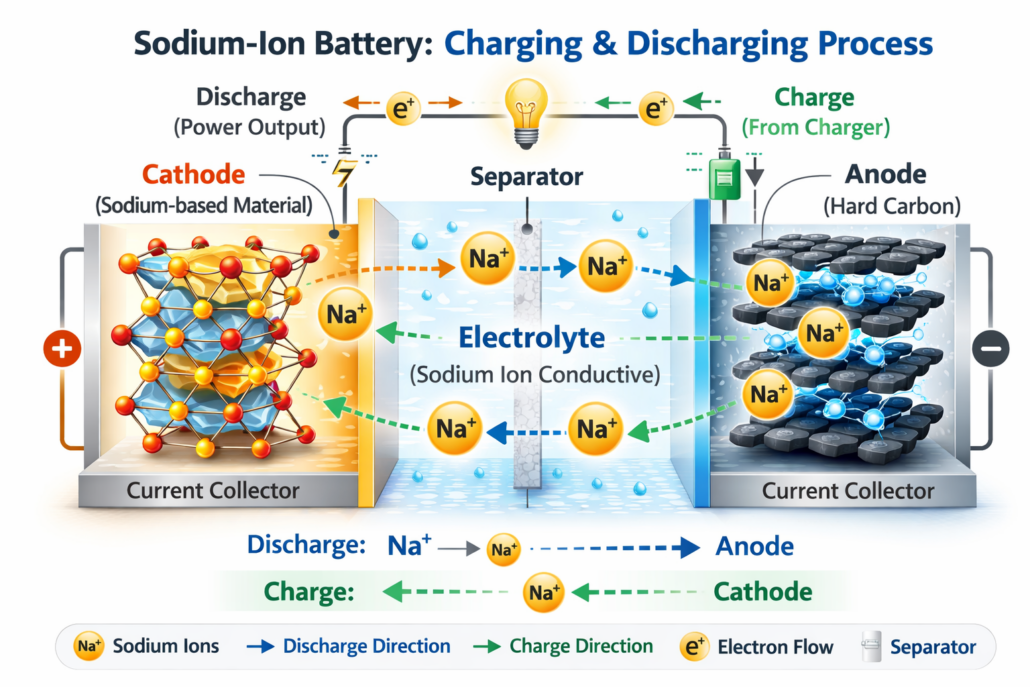
A sodium ion battery is a rechargeable system. It stores and releases energy using sodium ions.
It works in a similar way to lithium batteries. However, it replaces lithium with sodium. Because sodium is abundant, production becomes easier.
In simple terms, the battery moves ions between two electrodes. During this process, energy is stored and released. Therefore, it can power devices and systems efficiently.
Are sodium batteries better than lithium batteries?
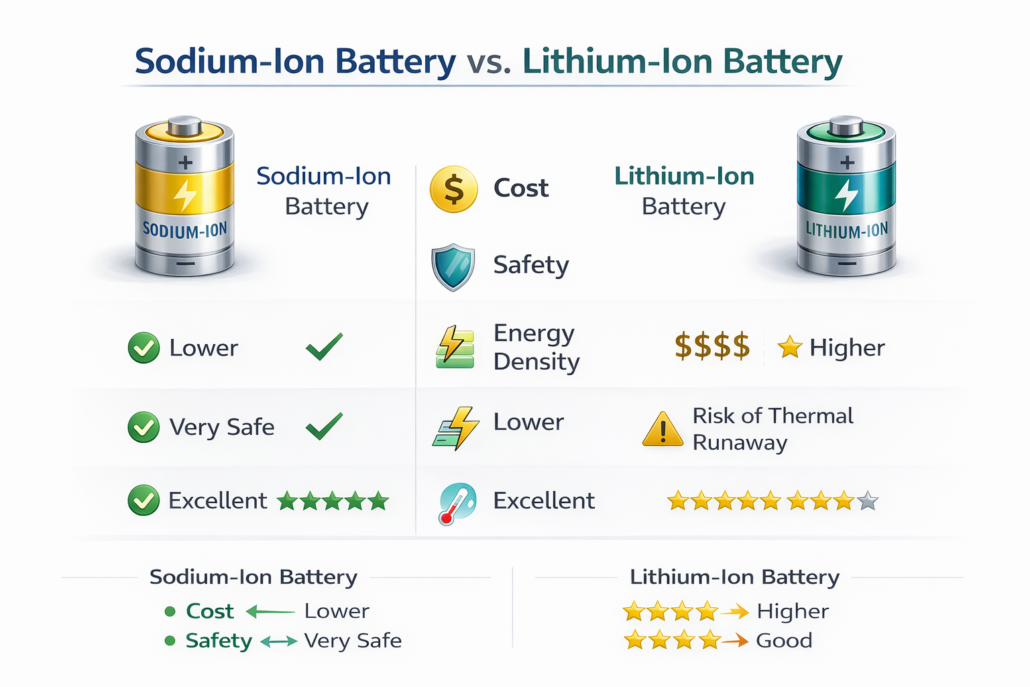
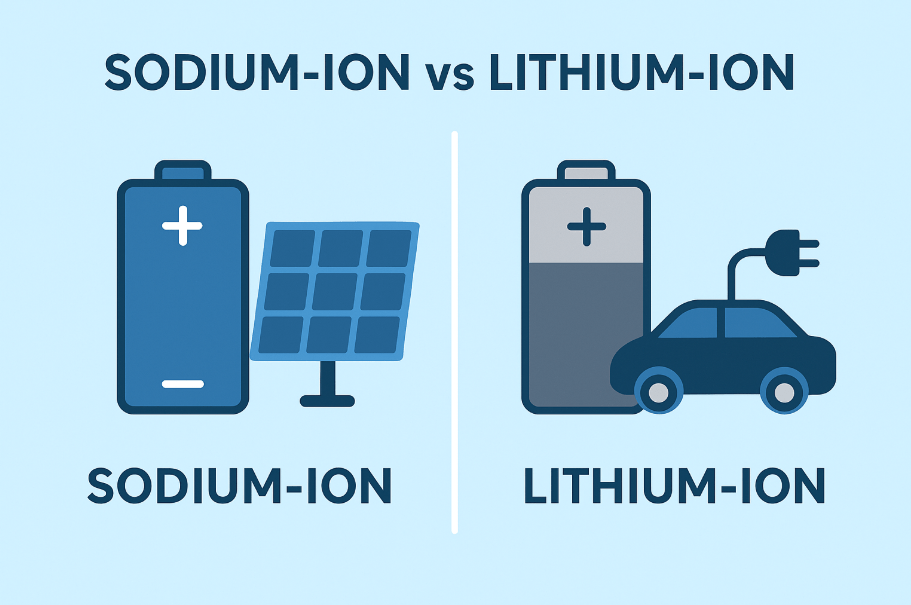
Sodium batteries are better in some areas. For example, they are cheaper and safer. However, lithium batteries store more energy. Therefore, each technology serves a different purpose.
Why are sodium-based batteries cheaper?
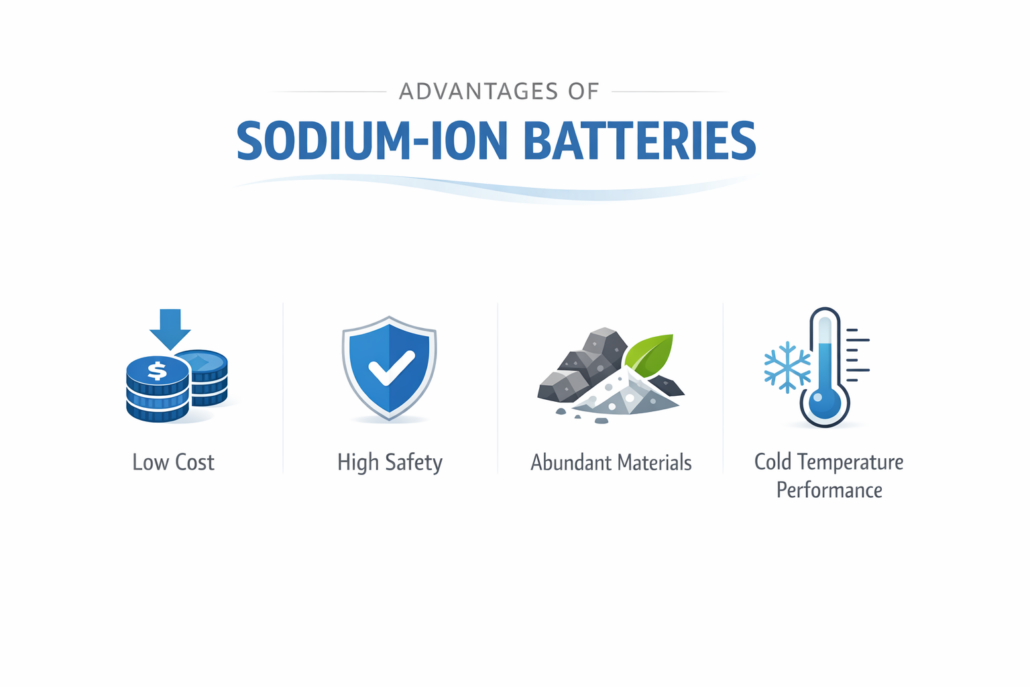
They are cheaper because sodium is widely available. In addition, it does not require rare metals. As a result, material costs are lower.
Can sodium batteries be used for solar storage?
Yes, they are suitable for solar storage. They provide stable performance. In addition, they are safe for long-term use. Therefore, they are ideal for renewable energy systems.
Do sodium batteries last long?
Yes, they offer good cycle life. However, performance depends on design and usage. In general, they are reliable for stationary storage.
Are sodium batteries safe?
Yes, they are considered very safe. They are less prone to overheating. As a result, fire risk is lower compared to many other battery types.
What is the biggest disadvantage of sodium batteries?
The main limitation is lower energy density. Therefore, they store less energy per weight. However, this is less important for grid storage.
Who is developing sodium battery technology?
Many companies are working on it, including CATL and BYD. As a result, development is moving quickly.
Can sodium batteries replace lithium batteries?
They will not fully replace lithium batteries. However, they will complement them. For example, they are ideal for large storage systems.
Are sodium batteries good for electric vehicles?
They are suitable for small vehicles. However, lithium batteries are still better for long-range EVs. Therefore, usage depends on application.
What is the future of sodium battery technology?
The future is promising. Production is increasing. As a result, costs will decrease. In addition, performance will improve over time.
Conclusion
The sodium ion battery is becoming a strong option for energy storage. It offers safety, low cost, and reliable performance.
Although it has some limitations, improvements are happening fast. Therefore, Sodium Ion Battery will play an important role in future energy systems.
Introduction: Why Iron-Air Batteries Are Gaining Attention
Iron-Air Battery: Renewable energy is growing fast. Solar and wind now supply a large share of electricity in many regions. However, both sources depend on weather conditions.
As a result, grids need energy storage systems that can deliver power even when the sun is not shining and the wind is not blowing.
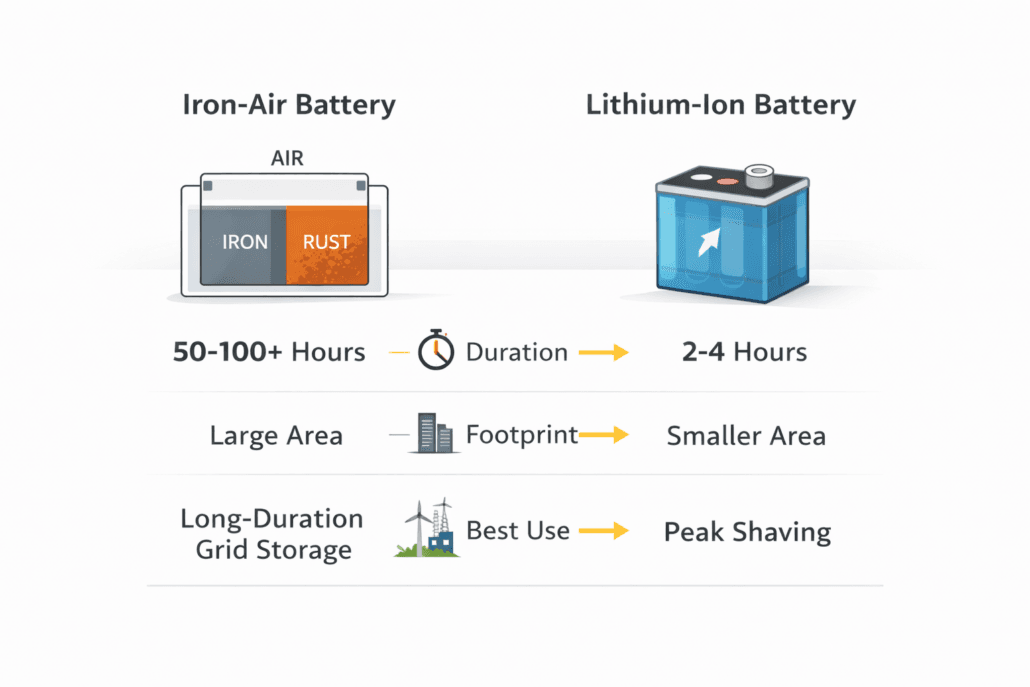
Lithium-ion batteries help solve short-term gaps. Typically, they provide two to four hours of storage. Yet this is not enough during multi-day weather events.
This makes long-duration energy storage a major focus for grid operators, with iron-air technology standing out as a frontrunner.
Summary
What is an iron-air battery? An iron-air battery is a long-duration energy storage system that produces electricity through a reversible reaction between iron and oxygen.
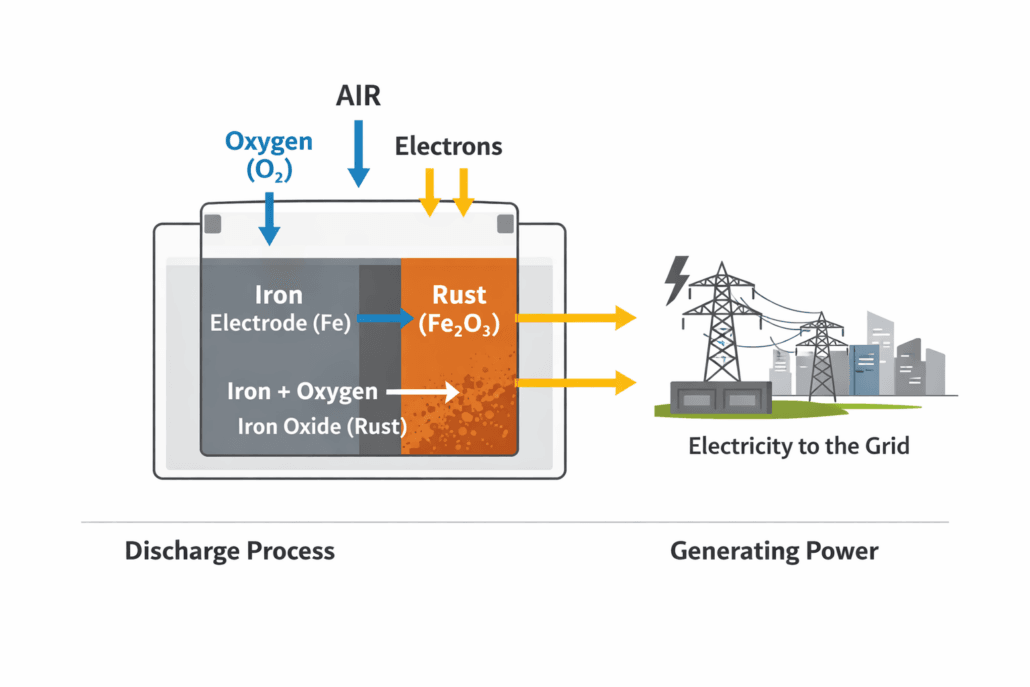
How does it work? During discharge, iron reacts with oxygen and forms rust. During charging, electricity converts the rust back into iron.
How long does it last? Commercial systems are designed to deliver 50 to 100+ hours of power.
Where is it used? Iron-air batteries are used in utility-scale grid storage and renewable integration projects.
How is it different from lithium-ion? Iron-air provides much longer duration at lower material cost, but it requires more space and has lower energy density.
What Is an Iron-Air Battery?
An iron-air battery is a type of metal-air battery. It uses iron as one electrode and oxygen from the surrounding air as the other reactant.
Unlike lithium-ion cells, iron-air systems feature an open design to draw oxygen directly from the atmosphere. Instead, they pull oxygen directly from the atmosphere. This approach reduces material costs and simplifies chemistry.
The technology has gained attention through companies such as Form Energy, which is developing commercial 100-hour battery systems for grid use.
Because iron is cheap and widely available, this chemistry offers strong cost potential for long-duration storage.
How Does an Iron-Air Battery Work?
Iron-air batteries rely on a reversible rusting process. Although the concept sounds simple, the engineering behind it is sophisticated.
Discharge Phase: Producing Electricity
During discharge:
Iron reacts with oxygen
Iron oxide (rust) forms
Electrons move through an external circuit
Electricity flows to the grid
In simple terms, the battery “rusts” to generate power.
Charge Phase: Storing Energy
When the battery charges:
External electricity is applied
Iron oxide converts back into iron
Oxygen is released
Consequently, the system resets and becomes ready for the next cycle.
Even though the reaction is straightforward, system control requires airflow management, moisture balance, and electrolyte stability. Therefore, large-scale engineering plays a critical role in performance.
Why Iron-Air Batteries Are Important for the Grid
As renewable penetration rises above 50%, short-duration storage alone cannot stabilize the grid. Multi-day weather patterns can reduce both solar and wind output.
For example, extended cloudy and low-wind periods create serious reliability challenges. Under these conditions, four-hour batteries are insufficient.
Iron-air systems address this gap.
Multi-Day Energy Storage
Most iron-air designs target 50 to 100 hours of discharge. This duration supports:
Renewable smoothing
Coal plant retirement
Reduced gas peaker dependence
Grid resilience during extreme weather
Because of this capability, utilities are actively evaluating long-duration solutions.
Lower Material Cost
Iron is one of the most abundant elements on Earth. In contrast, lithium and nickel markets can experience volatility.
As a result, iron-air batteries reduce exposure to critical mineral supply risks. Over time, this could lower the levelized cost of storage for long-duration projects.
Iron-air, on the other hand, targets bulk energy shifting over extended periods.
Where Are Iron-Air Batteries Installed?
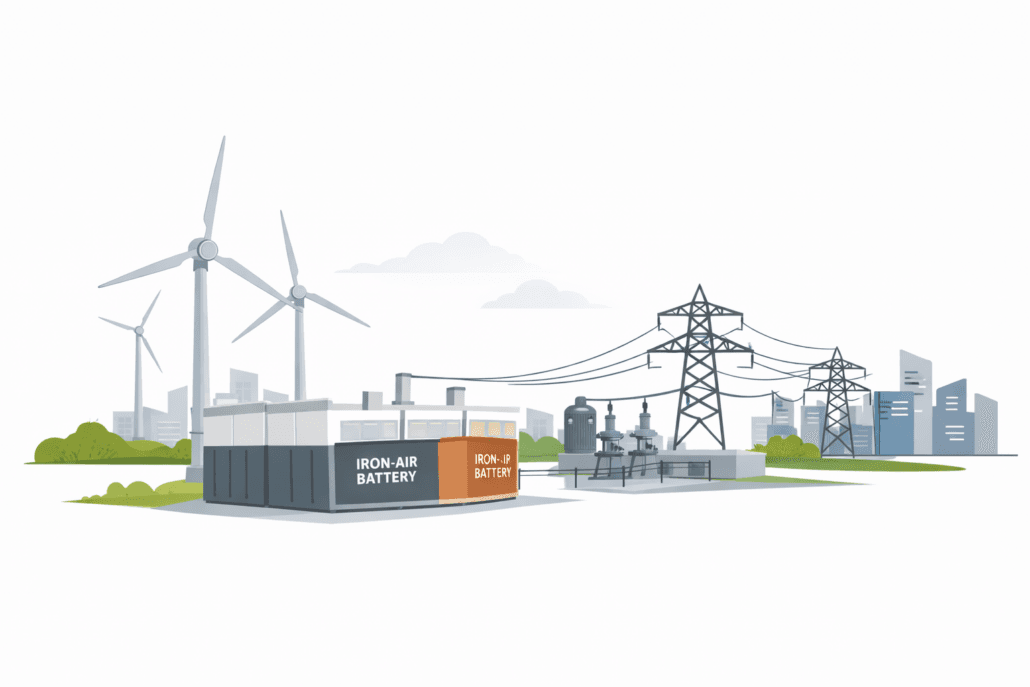
Manufacturers design iron-air systems specifically for utility-scale deployment, typically installing them near:
Substations
Renewable generation sites
Coal plant retirement locations
Dedicated storage facilities
Because energy density is lower, these systems require more land. However, utilities often have sufficient space for such installations.
Residential or electric vehicle applications are not suitable for this chemistry.
Advantages of Iron-Air Batteries
Iron-air technology offers a distinctive set of advantages that make it compelling specifically for utility-scale, long-duration grid storage. These benefits are not incremental improvements over existing storage — they represent a fundamentally different cost and duration profile that no other commercially available battery chemistry currently matches.
1. Ultra-Low Raw Material Cost
Iron is one of the most abundant elements on Earth, making up approximately 5% of the planet’s crust. Unlike lithium, cobalt, or nickel — whose prices can spike due to geopolitical concentration — iron is produced in over 50 countries with stable, diversified supply chains. According to the IEA battery storage report, reducing critical mineral dependency is one of the most important steps toward a resilient, low-cost grid storage industry. Iron-air batteries achieve this by design.
2. 100-Hour Discharge Duration
Most iron-air systems, including the commercial Form Energy iron-air battery system, are designed for up to 100 continuous hours of discharge. This makes them uniquely suited to multi-day renewable energy gaps — extended periods of low solar irradiance and low wind — that short-duration lithium-ion batteries cannot economically address. As renewable penetration crosses 50–70% in major grids, multi-day storage transitions from a niche capability to a grid reliability requirement.
3. No Critical Mineral Supply Chain Risk
Iron-air batteries contain no lithium, cobalt, nickel, or manganese. This eliminates exposure to the supply concentration risks that affect lithium-ion: approximately 60% of cobalt production comes from the Democratic Republic of Congo, and over 70% of lithium refining occurs in China. Iron-air batteries are therefore better positioned for long-duration energy storage (LDES) deployment in markets prioritizing domestic energy security.
4. Non-Flammable Cell Chemistry
The electrochemical reactions in iron-air batteries use iron metal, oxygen from air, and an aqueous potassium hydroxide (KOH) electrolyte. None of these components is inherently flammable. This contrasts with lithium-ion cells, which use organic electrolytes that can enter thermal runaway under fault conditions. As grid storage projects scale to GWh capacities, cell-level fire risk becomes a critical design factor — and iron-air’s chemistry offers a meaningful advantage. For relevant BESS certifications and safety standards applicable to large-scale installations, NFPA 855 and IEC 62933 still apply to the system level regardless of chemistry.
5. Highly Scalable Capacity
Iron-air systems use modular cell stacks. Adding capacity means adding modules — there is no fundamental chemistry barrier to scaling from MWh to GWh. This modularity aligns well with phased utility procurement strategies, where developers may initially deploy 100 MWh and expand incrementally as demand grows.
6. Compelling Levelized Cost of Storage (LCOS)
At a projected system cost of approximately $20/kWh — compared with $250–400/kWh for lithium-ion grid storage systems — iron-air batteries target a levelised cost of storage (LCOS) of $20–40/MWh for 100-hour discharge applications, according to NREL grid storage cost benchmarks. This figure makes iron-air competitive with new-build gas peaker plants even before accounting for carbon pricing or clean energy incentive structures.
✔ Advantages
✘ Limitations
✔ Low raw material cost — iron is one of Earth’s most abundant and inexpensive metals
✘ Lower energy density than lithium-ion — requires significantly more land per MWh
✔ 100-hour discharge capability fills multi-day renewable energy gaps that lithium-ion cannot address
✘ Round-trip efficiency of 50–60% is lower than lithium-ion (85–95%), increasing energy input cost per cycle
✔ No lithium, cobalt, or nickel — eliminates critical mineral supply chain risk and price volatility
✘ Commercial scale is still early-stage — limited bankability track record for project finance
✔ Aqueous KOH electrolyte is non-flammable and low-toxicity — reducing cell-level fire risk
✘ Slow charge and discharge response makes it unsuitable for frequency regulation or fast-response grid services
✔ Highly scalable — system capacity can reach GWh range using modular iron-air cell stacks
✘ Air electrode durability and iron anode corrosion management are active engineering challenges
✔ Projected system cost of ~$20/kWh unlocks an LCOS of $20–40/MWh for long-duration grid storage
✘ Interconnection queue delays in US ISOs can add 3–5 years to project timelines
💡 Key insight: The advantages of iron-air batteries are most powerful when evaluated against the correct baseline: not short-duration lithium-ion, but the cost of multi-day grid firming using gas peakers or pumped hydro. Against those benchmarks, iron-air’s cost and duration profile is highly competitive.
Limitations and Engineering Challenges
Iron-air batteries carry real constraints that developers, utilities, and investors must understand clearly. However, understanding these limitations in full context — including why they exist and how they compare with alternative technologies — is essential for accurate project evaluation.
1. Lower Energy Density Requires More Land
Iron-air batteries have significantly lower volumetric energy density than lithium-ion. A utility-scale iron-air system may require 5–10× more land per MWh than an equivalent LFP lithium-ion installation. For projects near urban centers or in land-constrained regions, this is a genuine site selection constraint. However, utility-scale projects targeting multi-day storage are typically sited on large parcels near substations or generation assets, where land availability is less limiting. For compact commercial and industrial projects, battery energy storage systems (BESS) using LFP or NMC chemistries remain the correct choice.
2. Round-Trip Efficiency: The 50–60% Trade-Off
Round-trip efficiency (RTE) measures energy recovered per unit of energy stored. Iron-air systems currently achieve 50–60% RTE, compared with 85–95% for lithium-ion. This means that for every 100 kWh charged, only 50–60 kWh is recovered on discharge. The following comparison shows why this trade-off is accepted for long-duration applications:
Metric
Iron-Air
LFP Lithium-Ion
Vanadium Flow
Round-Trip Efficiency
50–60%
85–95%
65–75%
Max Discharge Duration
100+ hours
4–8 hours
8–12 hours
System Cost ($/kWh)
~$20
$250–400
$300–500
LCOS ($/MWh, long-duration)
$20–40
Not viable >8 hr
$80–120
Best Application
Multi-day grid firming
Peak shaving / C&I
Daily cycling / medium duration
As the table shows, iron-air’s lower RTE is offset by its dramatically lower cost per kWh and its ability to discharge for 100+ hours — a duration at which lithium-ion is not economically viable regardless of efficiency. For more on how these specifications are evaluated in project procurement, see BESS specifications.
3. Early Commercialization Stage
As of 2026, iron-air battery technology is at the early commercial stage. Form Energy’s Weirton, West Virginia facility is the first high-volume manufacturing site globally. While over 75 GWh of iron-air capacity is under commercial agreement, actual installed operating experience remains limited compared with lithium-ion’s decade-plus of utility-scale deployments. This limits bankability — project finance lenders and insurance underwriters require operating data that is still accumulating. Consequently, early iron-air projects may carry higher financing costs than equivalent lithium-ion installations.
4. Slow Response Speed
Iron-air batteries are designed for bulk energy shifting over long periods, not rapid power delivery. Their response time — the speed at which they can ramp from standby to full output — is slower than lithium-ion. This makes them unsuitable for frequency regulation, spinning reserve, or other ancillary grid services that require sub-second response. A grid-scale BESS combining lithium-ion for fast response with iron-air for long-duration firming represents the emerging standard for high-renewable-penetration grids.
5. Air Electrode and Corrosion Engineering
The bifunctional air electrode — which must perform both the Oxygen Reduction Reaction (ORR) during discharge and the Oxygen Evolution Reaction (OER) during charging — is the most technically demanding component of an iron-air system. Designing an electrode that can sustain both reactions across thousands of cycles without degradation requires advanced catalyst and materials engineering. In parallel, iron anode corrosion management — specifically preventing parasitic side reactions such as hydrogen evolution — is an active area of development that directly impacts system cycle life.
6. Interconnection and Permitting Timelines
In the United States, the interconnection queue managed by ISOs such as CAISO, MISO, PJM, and ERCOT currently imposes multi-year delays on large storage projects. According to the DOE long-duration storage program, queue reform is an active policy priority — but as of 2026, developers should budget 3–5 years from interconnection application to energization for large-scale projects. This timeline constraint applies to all grid storage technologies, not just iron-air, but it is particularly relevant for a technology still accumulating its first commercial operating record.
⚖️ Context: None of the limitations above are disqualifying for iron-air’s target application: multi-day, utility-scale grid firming. They are trade-offs that make iron-air unsuitable for short-duration, fast-response, or space-constrained applications — precisely the segments where lithium-ion excels. The two technologies are complementary, not competitive.
The Future of Long-Duration Energy Storage
Energy storage markets are evolving rapidly. As renewable penetration increases, grid planners must diversify storage solutions.
Top advantages of sodium-ion batteries: The demand for energy storage systems (ESS) is growing rapidly as businesses, homeowners, and utilities shift toward renewable energy. For years, lithium-ion batteries have dominated the industry. But as challenges like raw material costs, safety risks, and supply chain constraints emerge, a new player—sodium-ion batteries—is stepping into the spotlight.
Sodium-ion technology isn’t here to replace lithium-ion entirely. Instead, it offers unique advantages that make it especially promising for stationary storage applications such as residential ESS, commercial & industrial (C&I) systems, and grid-scale storage.
In this article, we’ll explore the top five advantages of sodium-ion batteries, and why they could be a game-changer for the future of energy storage.
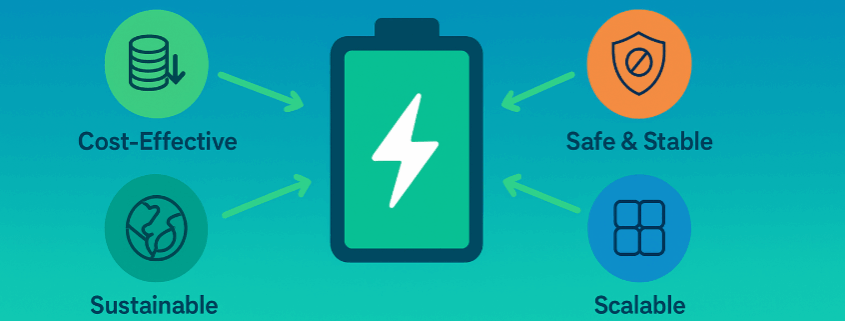
1. Top advantages of sodium-ion batteries: Cost-Effective and Abundant Raw Materials
One of the biggest advantages of sodium-ion batteries is their reliance on sodium, a material that is far more abundant than lithium.
Sodium sources: Widely available in seawater and common minerals.
Cost factor: Sodium is cheaper to extract and process, reducing the overall cost of batteries.
Supply chain benefit: Unlike lithium, which is concentrated in a few regions, sodium resources are globally distributed, lowering geopolitical risks.
👉 For businesses investing in large-scale BESS, sodium-ion batteries can help reduce long-term costs while ensuring a more stable supply chain.
2. Top advantages of sodium-ion batteries: Enhanced Safety and Thermal Stability
Safety is one of the top concerns in energy storage—especially after widely publicized incidents involving lithium-ion battery fires.
Lithium-ion risks: Thermal runaway and fire hazards under extreme heat or damage.
Sodium-ion advantage: Better thermal stability, meaning they are less likely to overheat or catch fire.
This makes sodium-ion batteries a strong candidate for:
Residential storage systems, where safety is a priority for homeowners.
Indoor commercial applications, where fire risk regulations are stricter.
Key takeaway: Sodium-ion batteries reduce safety risks, lowering compliance burdens and offering peace of mind to users.
3. Sustainability and Environmental Benefits
Sodium-ion batteries align well with global sustainability goals.
Eco-friendly mining: Sodium extraction is less environmentally damaging compared to lithium mining, which consumes vast amounts of water.
At SunLith Energy, we believe sodium-ion batteries will accelerate the transition to cleaner, more sustainable energy systems. By staying ahead of this innovation, businesses can future-proof their energy strategies and remain competitive in the evolving market.