C&I BESS case studies provide powerful proof of how energy storage systems deliver measurable benefits in commercial and industrial settings. By examining successful deployments, businesses can see real-world evidence of cost savings, resilience improvements, and renewable energy integration. This article showcases real-life examples across industries, linking back to applications of BESS and the economic benefits of deployment.
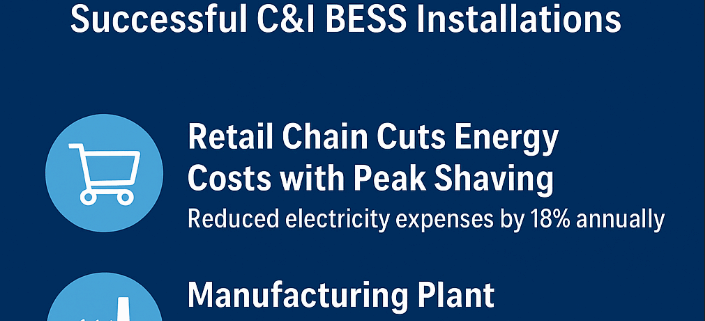
Case Study 1: Retail Chain Cuts Energy Costs with Peak Shaving
A large retail chain in the U.S. adopted a C&I BESS to manage demand charges. By reducing peak load, the business cut electricity expenses by 18% annually. The system also provided backup power during outages, improving reliability.
Key Outcome: Cost savings + resilience.
Case Study 2: Manufacturing Plant Improves Power Quality
An industrial manufacturer in Germany faced frequent voltage fluctuations, disrupting operations. A 5 MWh BESS was deployed to stabilize the grid connection and smooth load profiles. The plant saw reduced downtime and higher operational efficiency.
Key Outcome: Enhanced power quality + productivity.
Case Study 3: Data Center Achieves 24/7 Uptime
Data centers require uninterrupted power. A Singapore-based data center installed a C&I BESS as part of its microgrid. The system ensured seamless switchover during grid disturbances, protecting sensitive equipment and avoiding costly downtime.
Key Outcome: Reliability + continuous operations.
Case Study 4: Winery Integrates Solar with Storage
Case Study 5: Hospital Increases Energy Resilience
Hospitals must prioritize uninterrupted energy supply. A hospital in Australia deployed BESS alongside diesel generators. The hybrid system provided critical backup, reduced fuel costs, and aligned with green initiatives.
Key Outcome: Energy security + reduced emissions.
Lessons Learned from C&I BESS Case Studies
Across these case studies, common success factors emerge:
Peak shaving and demand charge reduction directly improve the bottom line.
Improved resilience and power quality safeguard operations.
Integration with renewables aligns with sustainability and ESG goals.
Scalability and flexibility make BESS suitable across diverse industries.
Conclusion
Real-world C&I BESS case studies demonstrate the versatility and value of energy storage. From retail and manufacturing to data centers and healthcare, businesses are achieving cost savings, operational resilience, and sustainable energy strategies. Companies evaluating storage can learn from these successes and explore how C&I BESS can strengthen their operations.
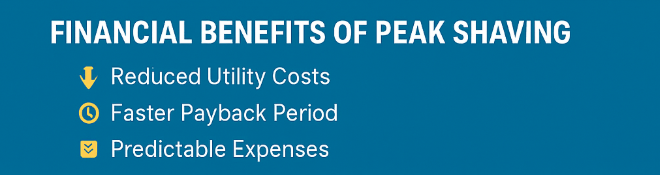
C&I BESS peak shaving is rapidly becoming one of the most effective strategies for commercial and industrial (C&I) facilities to lower electricity costs. By leveraging battery energy storage systems (BESS), businesses can reduce demand charges, optimize energy usage, and unlock significant long-term savings.
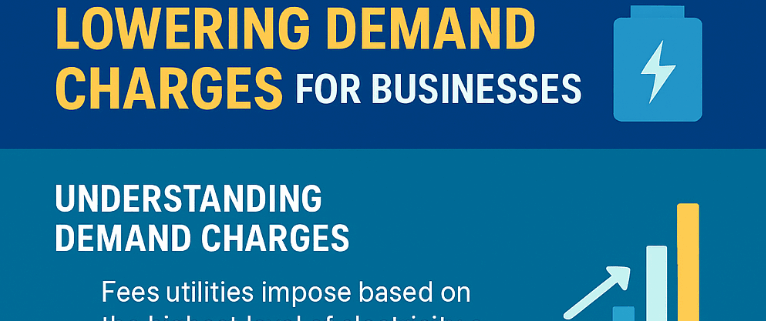
Understanding Demand Charges
Demand charges are fees utilities impose based on the highest level of electricity a facility consumes during a billing cycle. For businesses with large equipment or fluctuating energy needs, these charges often make up 30–70% of total electricity bills.
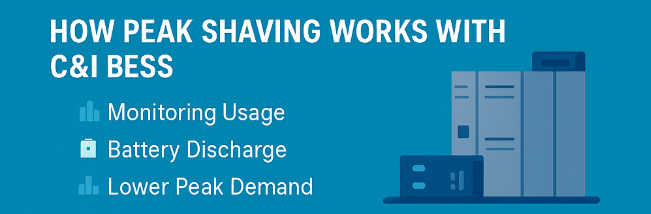
How Peak Shaving Works with C&I BESS
Monitoring Usage: Smart systems track real-time energy demand.
Battery Discharge: During peak load times, stored energy is released to reduce grid reliance.
Lower Peak Demand: Utilities see a reduced maximum load, leading to lower demand charges.
This process allows companies to maintain operations while avoiding costly spikes in utility bills.
Improved Energy Reliability during high-demand periods.
Optimized Equipment Usage by reducing grid strain.
Increased Flexibility for energy-intensive operations.
👉 Learn more about the broader Benefits of C&I BESS, including resilience and sustainability.
Case Example: Peak Shaving in Manufacturing
A large manufacturing facility with heavy machinery faced monthly demand charges of over $50,000. By installing a 5 MW / 10 MWh C&I BESS, the facility:
Cut demand charges by 35%.
Saved over $500,000 annually.
Recovered the investment within 4 years.
Future Outlook: Peak Shaving as a Business Imperative
As electricity rates rise and utilities implement more time-based pricing, C&I BESS peak shaving will shift from an optional strategy to a business necessity. Companies adopting this approach early will gain a competitive advantage in cost control and sustainability goals.
Conclusion
C&I BESS peak shaving is a proven solution to reduce demand charges, optimize energy use, and drive long-term savings. For businesses in manufacturing, retail, healthcare, or data centers, investing in battery storage is not just about energy—it’s about financial resilience and operational efficiency.
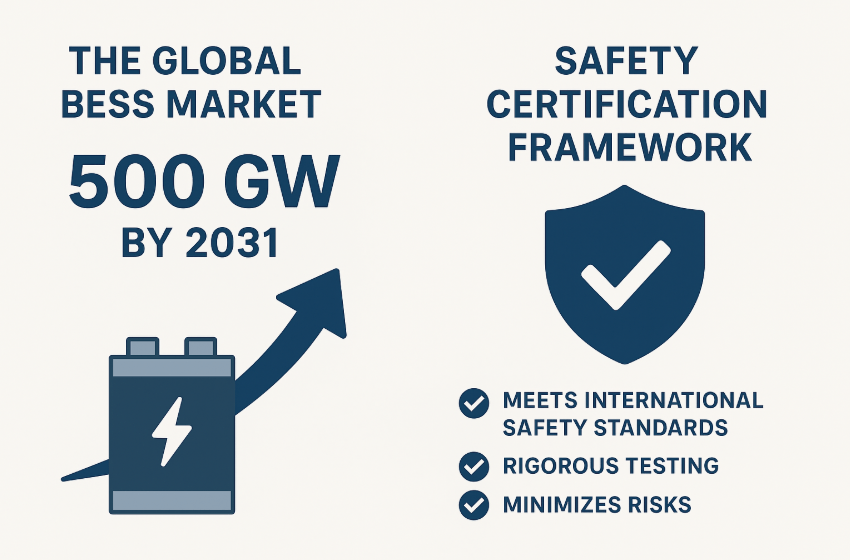
The global BESS market is projected to grow exponentially, reaching 500 GW by 2031. This forecast is a reflection of the world’s transition toward clean energy, electrification, and grid modernization. Battery Energy Storage Systems (BESS) are no longer niche technologies—they are becoming central to the stability and flexibility of modern energy networks.
But with such rapid deployment, BESS safety certification has emerged as a critical factor. Without strong certification standards, the risks of fire, explosion, or system failure increase. These risks not only threaten energy reliability but also create challenges for regulators, insurers, and investors.
In this article, we explore the drivers of global BESS market growth, the importance of safety certification, and the frameworks shaping the future of energy storage systems.
Why the Global BESS Market Is Growing So Fast
The energy storage systems projected 500 GW growth is being driven by a combination of technical, economic, and policy-related factors.
1. Renewable Energy Integration
Wind and solar are now the cheapest forms of new power generation worldwide. However, their variability creates challenges for grid operators. Battery energy storage systems solve this problem by storing excess energy and releasing it when demand rises.
2. Grid Modernization and Stability
Utilities are increasingly deploying BESS for peak shaving and load shifting, frequency regulation, and emergency backup. These applications make the grid more stable and resilient.
3. Commercial and Industrial Adoption
The C&I sector is also embracing storage. Businesses use BESS to cut peak demand charges, integrate renewable energy, and secure backup power through certified BESS installations.
4. Policy Support and Incentives
Governments are backing storage projects through subsidies, tax credits, and regulatory frameworks. For example, the U.S. Inflation Reduction Act provides tax benefits for energy storage projects, while the EU Green Deal is pushing for accelerated deployment.
The Risks of Rapid Expansion Without Certification
The market opportunity in certified BESS installations is immense. Yet, expansion without robust certification frameworks introduces serious risks.
Thermal Runaway – Poorly tested systems can overheat and cause chain-reaction fires.
Fire Hazards – Uncertified systems lack the proven ability to prevent or contain fires.
Grid Instability – Unsafe or poorly integrated BESS may destabilize the grid.
Investor Concerns – How certification improves investor confidence in BESS is by ensuring long-term reliability. Without it, projects face financing barriers.
These risks highlight why safety risks of battery energy storage without certification cannot be ignored.
Why Safety Certification Matters for BESS
As the global BESS market forecast to 2031 shows explosive growth, safety must be at the forefront. Certification ensures that BESS systems:
Meet UL 9540 certification for large-scale BESS to prove safe system integration.
Beyond safety, certification also drives global BESS market growth by creating trust.
How Certification Improves Investor Confidence in BESS
Reduces liability risks by ensuring compliance.
Streamlines project permitting and regulatory approval.
Enhances access to financing, as banks prefer certified projects.
Demonstrates compliance with regulatory requirements for battery energy storage systems 2031.
Without certification, large-scale projects could face costly delays, stricter insurance requirements, or outright rejection.
Global Trends in Energy Storage Certification and Testing
The global trends in energy storage certification and testing point toward stricter, more harmonized standards. Several developments are shaping the industry:
Harmonization of IEC and UL standards to reduce duplication.
Performance-based testing to reflect real-world conditions.
AI and digital twins for predictive safety assessments.
Third-party testing labs expanding capacity to handle growing demand.
As the market scales toward 500 GW energy storage forecast, these certification trends will define how quickly projects come online.
Looking Ahead: Balancing Growth With Safety
The global BESS market forecast to 2031 highlights a future of rapid scaling, but it comes with responsibility. The industry must prioritize best practices for BESS fire and explosion prevention to protect communities and maintain market trust.
Future growth will depend on:
Stronger collaboration between regulators and manufacturers.
By aligning market expansion with robust safety certification, the BESS industry can deliver safe, reliable, and sustainable storage solutions that support the global clean energy transition.
Battery Energy Storage Systems (BESS) are critical to the clean energy transition, but ensuring their safety and compliance requires more than just good engineering. Certifications like CE for BESS is one of the most recognized marks in Europe, confirming that a product meets essential health, safety, and environmental standards. However, while CE is necessary for entering the EU market, it does not always guarantee complete system-level safety. To build global trust, manufacturers often combine CE with other certifications such as UL and IEC, ensuring stronger compliance, reliability, and market acceptance.
What Does CE Certification Mean for BESS?
The CE mark (Conformité Européenne) is a mandatory certification for products entering the European Economic Area (EEA). For BESS, CE shows compliance with EU directives and harmonized standards.
When a BESS carries the CE mark, it declares conformity with the following directives:
Low Voltage Directive (LVD) – Protects against electrical hazards.
Restriction of Hazardous Substances (RoHS) – Limits toxic chemicals in batteries and components.
General Safety Directives – Cover risks related to machinery and consumer use.
In essence, CE for BESS confirms that the system has met basic EU safety and environmental requirements, allowing it to be legally marketed and installed in Europe.
What Does CE for BESS Cover?
CE certification for BESS evaluates multiple aspects of product safety. These include:
Electrical Safety – Preventing risks of electric shock, short circuits, and overheating.
Thermal Safety – Assessing insulation, cooling design, and fire prevention.
Electromagnetic Compatibility (EMC) – Ensuring the BESS does not emit disruptive signals.
Environmental Safety – Controlling hazardous substances and ensuring recyclability.
However, CE certification for BESS is primarily based on a self-declaration of conformity. Manufacturers test the product internally or through a notified body, then issue a Declaration of Conformity (DoC).
This process makes CE less complex compared to third-party certifications like UL or IEC, which require independent validation and rigorous lab testing.
Why Do Most Companies Choose Only CE Certification for BESS?
Many BESS companies stop at CE certification instead of pursuing more demanding approvals. The main reasons include:
Lower Costs: CE testing is more affordable than UL or full IEC certification, which involve expensive third-party audits.
Faster Market Entry: CE certification is quicker, often taking weeks instead of months.
Simpler Process: CE allows self-declaration, reducing reliance on external labs.
Minimum Requirement: Since CE is mandatory in the EU, many companies view it as the lowest barrier to entry.
In other words, CE is often seen as the easiest, fastest, and cheapest way to access the European market. But relying on CE alone raises important safety concerns.
Is CE Alone Enough for BESS Safety?
The answer is no. While CE for BESS ensures legal entry into the EU market, it does not fully address the complex safety risks of modern energy storage systems.
BESS involves large-scale lithium-ion batteries, which can pose hazards like:
Thermal Runaway – Fire and explosion risk if cells fail.
High Voltage Risk – Danger of electric shock during installation or maintenance.
System-Level Failure – Risks from inverters, converters, or control systems.
To mitigate these risks, global safety standards go far beyond CE. Manufacturers often need UL, IEC, or national certifications depending on their target markets.
Key International Standards Beyond CE for BESS
Here are the most important certifications that complement CE for BESS:
This table shows why CE is the easiest to achieve but IEC and UL carry higher safety credibility.
Why BESS Needs Multiple Certifications
Unlike small electronics, BESS operates at industrial-scale energy levels, which makes multi-layer certification essential.
CE ensures compliance in Europe, but it does not evaluate system-level fire safety.
UL validates complete system safety and is trusted in North America.
IEC sets a global benchmark, especially for grid integration.
National standards guarantee local approval, allowing sales in markets like India, Japan, or Korea.
Therefore, CE should be seen as the foundation, while UL, IEC, and national approvals are the reinforcements. Together, they create a safe and credible BESS product.
Why Companies Should Go Beyond CE for BESS
Although CE is attractive for cost and speed, relying on it alone can lead to challenges:
Limited Market Reach: CE only works in Europe, not globally.
Lower Buyer Confidence: Utilities and large clients often demand UL or IEC reports.
Safety Risks: CE’s self-declaration model may overlook thermal runaway or fire propagation risks.
Regulatory Pressure: More countries are adopting stricter BESS safety laws.
Companies that invest in full certification portfolios gain stronger market access, brand reputation, and customer trust.
Conclusion: CE is Essential but Not the Final Step
CE for BESS is a mandatory starting point for European market access. It ensures compliance with basic safety, EMC, and environmental standards. However, CE is not enough to prove the full safety of complex battery energy storage systems.
Most companies choose CE because it is fast, affordable, and easy, but long-term success requires additional certifications like UL 9540, IEC 62619, and BIS. These provide independent validation, global acceptance, and higher safety assurance.
In the evolving energy landscape, BESS manufacturers and project developers must go beyond CE certification to build trust, reliability, and international growth opportunities.
❓ Frequently Asked Questions About CE for BESS
1. What is CE certification for BESS?
CE certification for Battery Energy Storage Systems (BESS) is a European conformity mark that shows the product meets essential EU safety, health, and environmental requirements. It’s a legal requirement for selling BESS in the European Economic Area (EEA).
2. Does CE certification cover fire safety in BESS?
No. CE certification ensures compliance with core directives but does not specifically address thermal runaway or fire safety risks. For complete system safety, manufacturers often pursue additional certifications like UL 9540A (fire safety) or IEC 62619 (battery cell safety).
3. How is CE different from UL or IEC certification?
CE Certification: Mandatory for the EU market, focuses on regulatory compliance.
UL Certification: Recognized mainly in North America, emphasizes product safety and fire prevention.
IEC Standards: Internationally accepted, providing detailed technical guidelines for testing and performance.
Using CE alone may open EU markets, but UL and IEC certifications build global trust and credibility.
4. Can I sell CE-certified BESS outside Europe?
Not necessarily. While CE certification allows access to EU markets, other regions like the US, Middle East, and Asia-Pacific often require local standards such as UL, BIS, or GB/T. Companies targeting global markets usually combine CE with additional certifications.
5. How long does CE for BESS take?
The timeline depends on the complexity of the BESS and the scope of testing. In general:
Large, complex systems: 3–6 months Working with an accredited testing lab or certification body can speed up the process.
Simple systems: 4–8 weeks
6. Why is CE certification alone not enough for BESS safety?
Because BESS safety risks go beyond basic compliance. Issues like thermal runaway, grid stability, and fire containment need deeper testing. That’s why CE is often just the starting point, with UL, IEC, and country-specific certifications adding the necessary system-level validation.
C&I BESS economics is becoming a critical consideration for businesses investing in energy storage solutions. By evaluating costs, return on investment (ROI), and key applications such as peak shaving, energy shifting, and renewable integration, companies can strategically plan how battery energy storage systems (BESS) deliver long-term financial and operational benefits.
For decision-makers, the economics provide the blueprint for determining whether a system is financially viable. Unlike traditional infrastructure, BESS generates multiple revenue streams—making it a compelling long-term investment.
Cost Components of C&I BESS
When evaluating C&I BESS economics, businesses need to consider all the cost components involved in deployment:
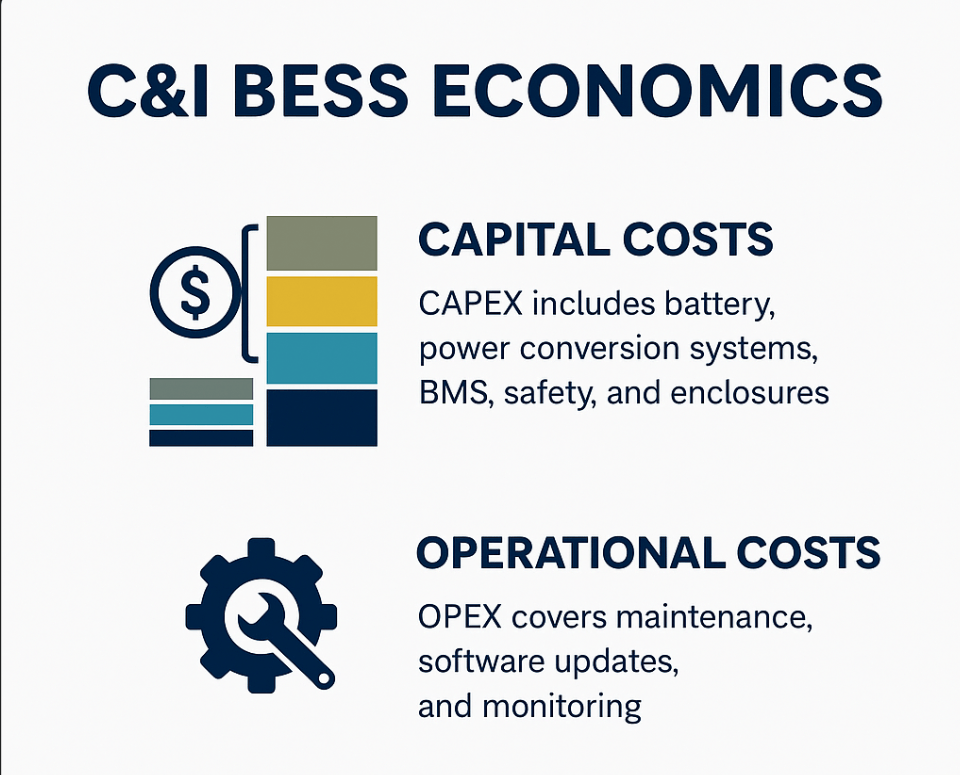
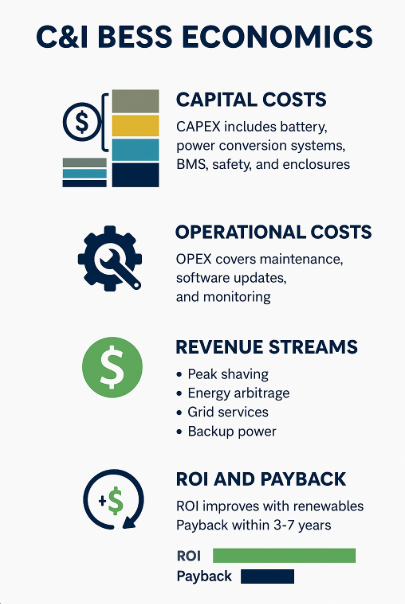
Capital Expenditure (CAPEX): Includes the cost of battery modules, power conversion systems (PCS), enclosures, and installation.
Integration Costs: Grid interconnection, compliance with utility standards, and renewable energy integration.
Safety & Compliance Costs: Fire safety systems, IP-rated enclosures, and certifications to meet international standards.
Understanding these costs ensures businesses can budget accurately and anticipate ROI timelines.
Return on Investment (ROI) for C&I BESS
ROI is one of the most attractive elements of C&I BESS economics. While upfront costs may seem high, the savings and revenue opportunities deliver significant returns. Key ROI drivers include:
Energy Bill Savings: Demand charge reduction and peak shaving lower operational expenses.
Grid Services Revenue: Businesses can participate in frequency regulation and demand response programs.
Enhanced Renewable Utilization: Solar and wind power can be stored and used later, reducing reliance on expensive grid power.
Backup Power Value: Avoiding downtime and protecting operations ensures business continuity.
Typically, ROI periods range from 3–7 years, depending on system size, energy pricing, and incentive availability.
Peak Shaving: A Core Economic Benefit
One of the strongest links in C&I BESS economics is peak shaving. Utilities often charge businesses based on their highest 15-minute demand interval each month. By deploying stored energy during peak demand, companies reduce these costly charges significantly.
By understanding these economics, businesses can make informed decisions, optimize their energy strategies, and strengthen both resilience and profitability in a rapidly evolving energy landscape.
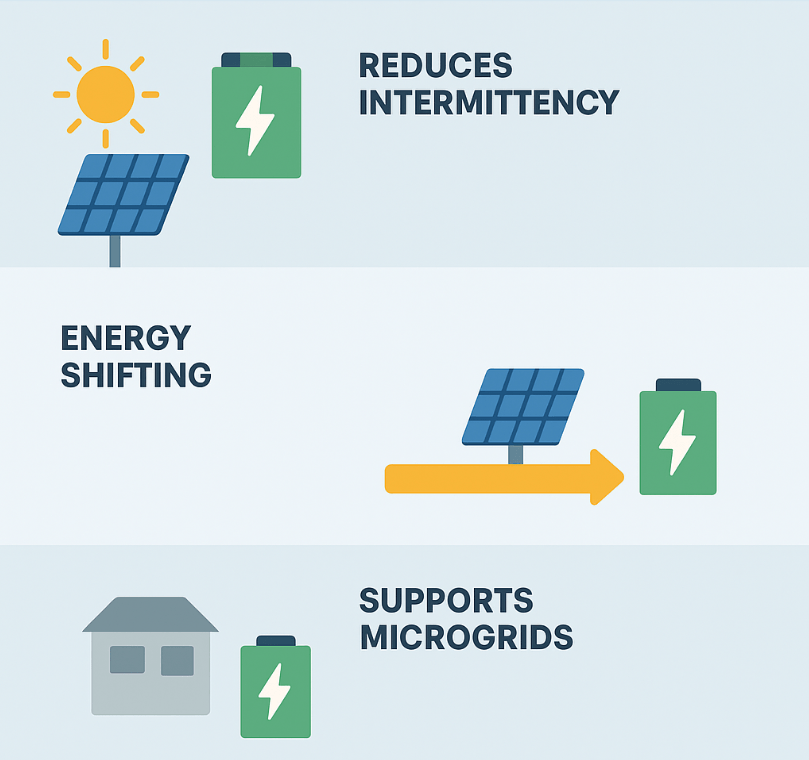
Solar and wind energy are inherently variable. Cloud cover can reduce solar production within minutes, while wind speed changes affect turbine output. Without a buffer, these fluctuations can lead to instability, grid imbalances, or even curtailment of renewable energy. For businesses that rely on consistent power for manufacturing, data centers, or logistics, unpredictability becomes a costly problem.
C&I BESS with renewable energy addresses this issue by storing excess electricity when generation is high and releasing it when demand spikes or output drops. This ensures steady energy delivery, even when renewable sources fluctuate.
Capture solar energy during peak sunlight hours and use it in the evening when demand and grid prices are higher.
Store wind power generated overnight and release it during working hours.
Reduce dependency on expensive peak-hour electricity.
By shifting energy use, C&I BESS with renewable energy ensures companies optimize both their operational costs and sustainability performance.
Supporting Microgrids for Energy Independence
Another growing trend is the deployment of microgrids, where localized power networks combine renewable generation, storage, and sometimes backup generators.
C&I BESS enhances microgrids by:
Providing islanded operation during grid outages, keeping facilities powered.
Enabling seamless integration of solar panels, wind turbines, and other distributed resources.
Balancing local supply and demand in real time.
For businesses operating in remote areas or regions with unstable grids, C&I BESS with renewable energy makes energy independence achievable.
Reduce reliance on fossil-fuel-based backup systems.
Meet Environmental, Social, and Governance (ESG) reporting requirements.
In this way, C&I BESS with renewable energy contributes not only to cost savings but also to long-term brand reputation and compliance with global sustainability frameworks.
Conclusion
The integration of C&I BESS with renewable energy is revolutionizing how businesses harness solar and wind power. By reducing intermittency, enabling energy shifting, supporting microgrids, and providing grid services, BESS empowers companies to take full advantage of renewable investments. For forward-looking enterprises, storage is no longer optional—it is essential to building a reliable, resilient, and sustainable energy future.
As renewable energy adoption grows, energy storage systems (ESS) have become critical for balancing supply and demand, improving reliability, and supporting grid resilience. To ensure safety, performance, and interoperability, the International Electrotechnical Commission (IEC) developed the IEC 62933 series, a set of globally recognized standards.
These standards guide manufacturers, developers, and policymakers in designing and deploying safe, efficient, and sustainable storage solutions.
Focuses on environmental assessment of energy storage technologies.
Considers carbon footprint, material use, and recycling practices.
Encourages sustainable deployment of large-scale ESS.
7. IEC 62933-4-4 – End-of-Life Management
Provides guidelines for decommissioning, recycling, and disposal of EES.
Promotes circular economy practices in the storage industry.
Reduces environmental risks associated with battery waste.
8. IEC 62933-5-1 – General Safety Considerations
Covers general safety requirements for stationary energy storage.
Includes electrical, chemical, mechanical, and fire safety aspects.
Ensures system safety across all technologies (batteries, flywheels, etc.).
9. IEC 62933-5-2 – Safety for Large-Scale EES
Focuses specifically on large battery energy storage systems (BESS).
Addresses thermal runaway prevention, emergency response, and system protection.
Critical for utility-scale storage projects.
10. IEC 62933-5-3 – Grid Integration Safety
Examines safety aspects during grid connection and operation.
Ensures ESS does not destabilize or endanger grid infrastructure.
Supports secure deployment in smart grids and microgrids.
Importance of IEC 62933 for the Industry
The IEC 62933 series provides:
Global Standardization – unifies practices worldwide.
Risk Reduction – prevents failures in high-risk ESS installations.
Sustainability – ensures safe end-of-life handling.
Investor Confidence – promotes compliance and long-term reliability.
Innovation Support – enables safe integration of emerging technologies like solid-state and hybrid storage.
Conclusion
The IEC62933 standard family is the backbone of global energy storage deployment. From general guidelines (IEC62933-1) to detailed safety (IEC62933-5-2) and environmental sustainability (IEC62933-4-4), it ensures storage systems are safe, efficient, and future-ready.
Adopting these standards is essential for manufacturers, developers, and regulators who aim to accelerate the clean energy transition while ensuring safety and reliability.
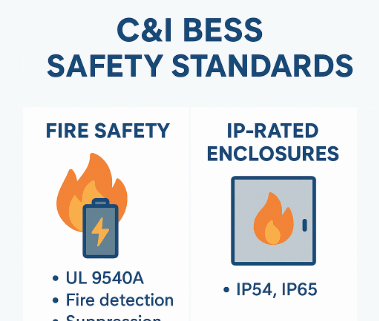
C&I BESS Safety Standards: Commercial and Industrial Battery Energy Storage Systems (C&I BESS) are becoming indispensable for businesses looking to reduce costs, enhance resilience, and integrate renewable energy. Yet, the growth of these systems comes with a critical requirement: safety.
Without robust safety measures, risks such as fire incidents, electrical faults, or environmental hazards could undermine the very benefits C&I BESS offers. This is where C&I BESS Safety Standards come into play. They provide the guidelines and certifications that ensure every component — from battery modules to enclosures — operates safely and reliably under demanding conditions.
In this post, we’ll explore the key safety standards for C&I BESS, including fire safety protocols, IP-rated enclosures, testing procedures, and compliance frameworks.
UL 1973: Governs battery systems for stationary and motive applications, ensuring safe design and performance.
IEC 62619: International standard for rechargeable lithium batteries used in industrial applications.
Thermal Runaway Protection: Advanced designs integrate shutdown separators, flame-retardant electrolytes, and pressure relief valves to minimize risks.
By meeting these battery safety standards, C&I BESS providers can prevent catastrophic failures and improve system reliability.
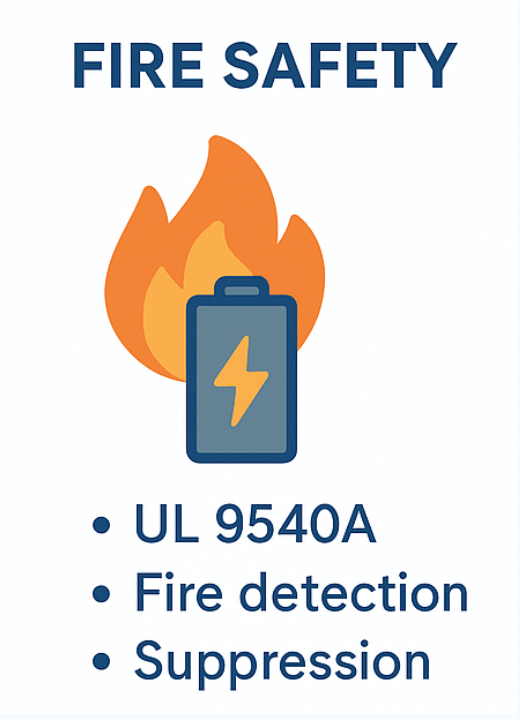
2. Fire Safety Measures: Preventing and Containing Hazards
One of the most discussed topics in C&I BESS Safety Standards is fire protection. Given the energy density of modern batteries, the risk of overheating or thermal runaway is real — and prevention is critical.
Fire Safety Practices in C&I BESS:
UL 9540A Test: Evaluates fire propagation risk in battery systems.
Automatic Fire Suppression: Systems often use clean agent gases (like Novec 1230) or water mist technologies.
Fire Detection Sensors: Smoke and gas detectors installed inside enclosures ensure early warning.
Emergency Venting: Proper ventilation prevents gas buildup during overheating events.
With these safeguards, facilities can minimize the risk of fire spreading and protect both infrastructure and personnel.
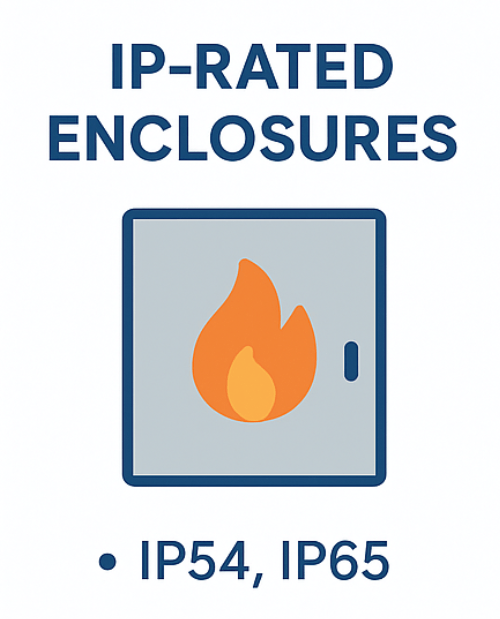
3. IP-Rated Enclosures: Shielding Against Environment
Environmental protection is another core aspect of C&I BESS Safety Standards. Since many C&I systems are installed outdoors, they must withstand dust, water, and harsh weather.
Common IP Ratings for C&I BESS:
IP54: Protects against limited dust ingress and water spray.
IP65: Dust-tight and protected against water jets.
A properly rated enclosure ensures batteries and electronics remain safe from external hazards, extending system life and reducing failure risks.
4. Electrical Protection and Circuit Breakers
Electrical faults are another potential hazard in BESS installations. To meet C&I BESS Safety Standards, robust electrical protections must be integrated.
Key Components:
Circuit Breakers and Fuses: Prevent damage from overcurrent and short circuits.
Surge Protection Devices (SPD): Safeguard equipment from voltage spikes caused by lightning or grid disturbances.
Grounding and Isolation: Ensure personnel safety and fault clearance.
These protections create multiple layers of safety, ensuring both the equipment and people remain secure.
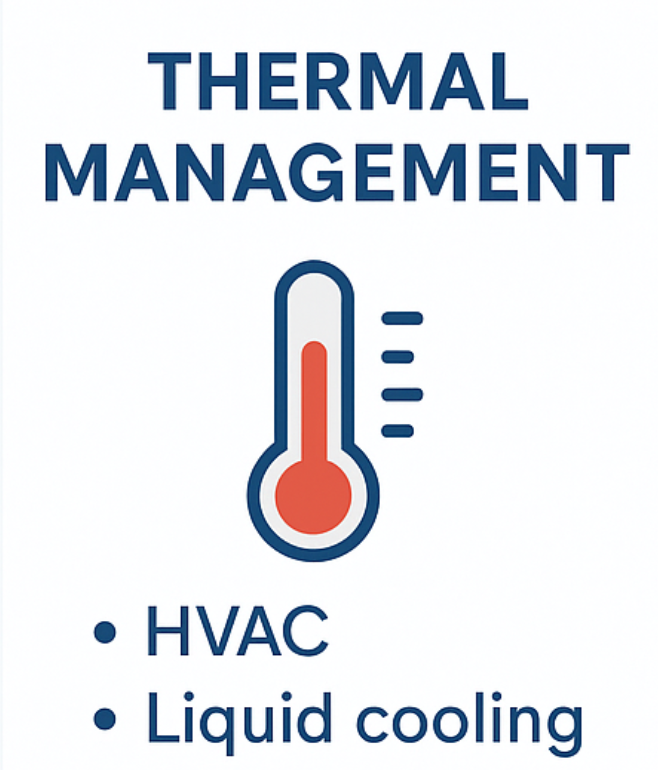
5. Thermal Management Systems
Maintaining the right temperature is essential for battery safety. Overheating accelerates degradation and raises fire risks, while extreme cold reduces performance.
Thermal Management Standards:
HVAC Integration: Ensures optimal airflow and cooling.
Liquid Cooling Systems: Offer higher efficiency for large-scale C&I BESS.
Temperature Monitoring: Real-time sensors alert operators to abnormal heat levels.
Complying with these thermal management protocols ensures safe operation across varying climates and load profiles.
6. Monitoring, EMS, and Communication
The Energy Management System (EMS) plays a crucial role in meeting C&I BESS Safety Standards. Beyond optimizing performance, it ensures early detection of anomalies.
Safety Functions of EMS:
State-of-Charge Management: Prevents overcharging and deep discharging.
Remote Monitoring: Enables 24/7 visibility of system health.
AI-based Fault Detection: Modern EMS platforms use predictive analytics to anticipate failures.
When integrated with communication protocols, EMS ensures smooth interaction with the grid while maintaining safety compliance.
7. Compliance and Certifications
To build trust and ensure safe operation, C&I BESS solutions must comply with international and regional certifications.
Key Certifications:
UL 9540: Overall safety standard for energy storage systems.
IEC 62933: Safety and performance requirements for grid-connected storage.
NFPA 855: Fire protection standards specific to stationary energy storage installations.
Compliance with these certifications not only ensures safety but also makes projects easier to finance, insure, and operate.
Conclusion: Building Trust with Safety First
The success of energy storage in the C&I sector depends not only on performance but also on trust and safety. By adhering to strict C&I BESS Safety Standards — covering batteries, fire safety, IP-rated enclosures, electrical protections, thermal management, and compliance — businesses can deploy storage systems that are both reliable and secure.
As demand for clean energy grows, these standards will remain the backbone of safe innovation, ensuring that C&I BESS continues to empower industries without compromising protection.
C&I BESS Benefits: The adoption of Commercial & Industrial Battery Energy Storage Systems (C&I BESS) is accelerating as businesses seek smarter energy solutions. While the technology itself is impressive, the real value lies in the benefits it brings to organizations.
From lowering energy bills to improving power resilience and supporting sustainability goals, a C&I BESS is more than just a storage system—it’s a business enabler. Let’s explore the key benefits that make C&I BESS essential for modern enterprises.
With a C&I BESS, businesses gain confidence in maintaining smooth operations even when the grid is unstable.
3. C&I BESS Benefits: Sustainability and Carbon Reduction
C&I BESS is a key driver of sustainability. By storing energy from renewable sources like solar or wind, businesses reduce reliance on fossil fuels and cut carbon emissions.
This not only improves environmental impact but also strengthens corporate ESG (Environmental, Social, and Governance) performance, which is increasingly important to investors and customers.
4. Revenue Opportunities
Beyond savings, a C&I BESS can generate new revenue streams. Through demand response programs, businesses can supply energy back to the grid during peak times and earn incentives from utilities.
This transforms the C&I BESS into an active energy asset that contributes to financial growth.
This benefit makes C&I BESS especially valuable for fleet operators, transport companies, and commercial charging hubs.
7. Enhanced Grid Participation
C&I BESS benefits extend beyond the facility itself. By supporting grid stability functions such as frequency regulation and voltage control, businesses contribute to a stronger, more reliable energy network.
This not only benefits utilities but also enhances the reputation of the business as a proactive energy leader.
Conclusion
The benefits of a C&I BESS go far beyond storage. From cost savings and resilience to sustainability, scalability, and new revenue opportunities, these systems offer long-term value to businesses across industries.
As energy demands grow and sustainability targets tighten, investing in a C&I BESS is not just a strategic decision—it’s a competitive advantage.
👉 Curious about real-world uses? Explore the Top Applications of C&I BESS to see how businesses are already leveraging these benefits.
This translates to major cost savings, especially for manufacturing plants, data centers, and large commercial facilities with fluctuating power needs.
A C&I BESS enables smarter energy usage, ensuring businesses maximize cost efficiency while maintaining reliable operations.
3. Renewable Energy Integration – Unlocking Sustainability
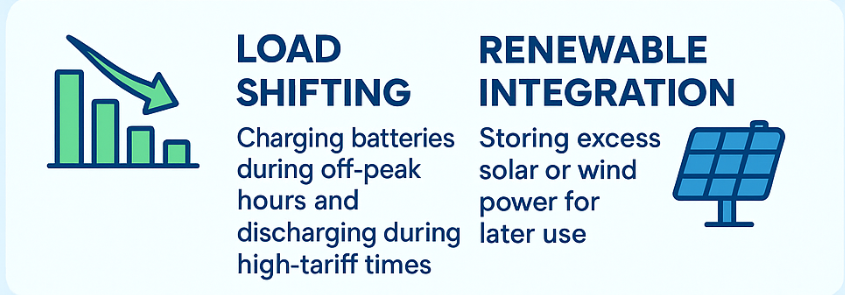
C&I BESS plays a crucial role in making renewable energy sources like solar and wind more reliable. Since renewables are intermittent, storage ensures that excess generation can be stored and used later.
This makes it easier for businesses to rely on clean energy, reduce dependence on the grid, and achieve sustainability targets.
4. Backup Power & Resilience – Business Continuity
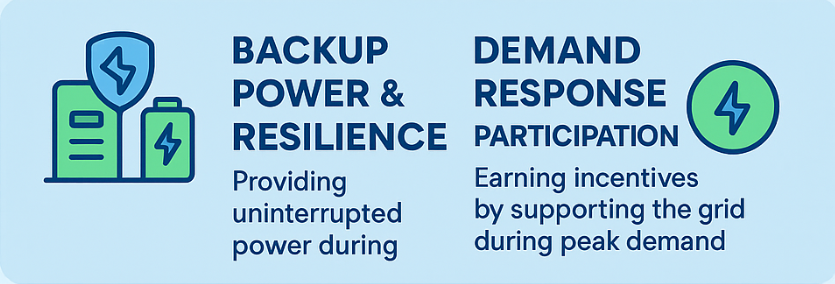
Power outages can disrupt operations, damage equipment, and cause financial losses. A C&I BESS provides backup power, ensuring continuity during grid failures.
Unlike traditional diesel generators, BESS offers silent, clean, and instant backup, making it a better long-term solution for critical facilities such as hospitals, factories, and logistics hubs.
5. Demand Response Participation – New Revenue Streams
With demand response programs, businesses can use a C&I BESS to support the grid during peak times. By discharging energy when the grid is strained, companies not only contribute to stability but also earn incentives from utilities.
This turns a C&I BESS into a revenue-generating asset, not just a cost-saving one.
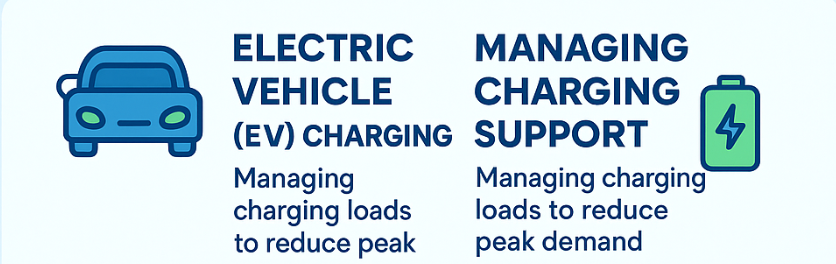
6. Electric Vehicle (EV) Charging Support – Fast & Efficient
As EV adoption grows, many businesses are installing charging infrastructure. However, fast charging requires significant power, which can strain the grid.
7. Microgrid & Grid Support – Local Energy Independence
In regions where the grid is unstable, a C&I BESS enables microgrids — self-sufficient energy systems that can operate independently.
By integrating renewables, storage, and local generation, businesses gain energy independence while also supporting grid functions like voltage regulation and frequency balancing.
Conclusion
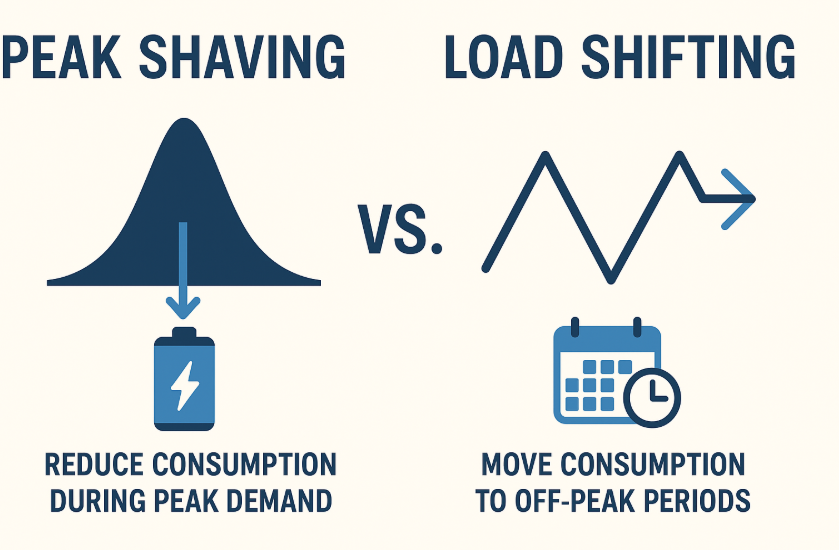
The applications of C&I BESS extend far beyond energy storage. From peak shaving and load shifting to renewable integration, backup power, EV charging support, and microgrid participation, these systems deliver unmatched flexibility and value.
For businesses seeking to cut costs, increase reliability, and move toward sustainability, a C&I BESS is no longer optional — it’s essential.
👉 Want to understand how these applications connect to the system itself? Read our detailed guide on the Key Components of a C&I BESS.