
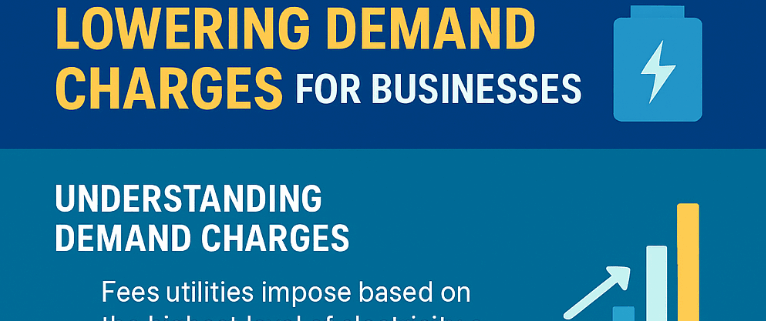

How C&I BESS Peak Shaving Lowers Demand Charges for Businesses
C&I BESS peak shaving is rapidly becoming one of the most effective strategies for commercial and industrial (C&I) facilities to lower electricity costs. By leveraging battery energy storage systems (BESS), businesses can reduce demand charges, optimize energy usage, and unlock significant long-term savings.
Understanding Demand Charges
Demand charges are fees utilities impose based on the highest level of electricity a facility consumes during a billing cycle. For businesses with large equipment or fluctuating energy needs, these charges often make up 30–70% of total electricity bills.
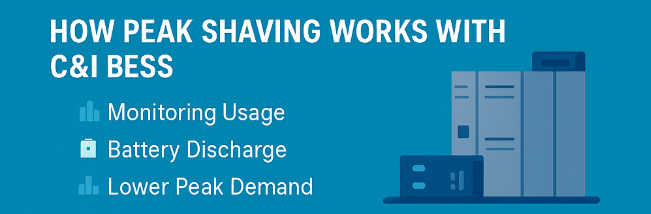
How Peak Shaving Works with C&I BESS
- Monitoring Usage: Smart systems track real-time energy demand.
- Battery Discharge: During peak load times, stored energy is released to reduce grid reliance.
- Lower Peak Demand: Utilities see a reduced maximum load, leading to lower demand charges.
This process allows companies to maintain operations while avoiding costly spikes in utility bills.
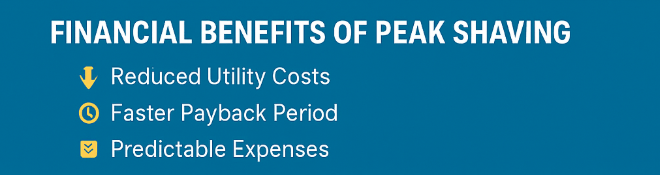
Financial Benefits of Peak Shaving
Implementing C&I BESS peak shaving delivers measurable financial benefits:
- Reduced Utility Costs: Lower peak demand translates to smaller monthly bills.
- Faster Payback Period: Cost savings accelerate ROI for BESS investments.
- Predictable Expenses: Businesses can forecast energy costs with greater accuracy.
👉 See our post on C&I BESS Economics to explore ROI in more detail.
Operational Benefits Beyond Cost Savings
While financial returns are the most visible, peak shaving also provides operational advantages:
- Improved Energy Reliability during high-demand periods.
- Optimized Equipment Usage by reducing grid strain.
- Increased Flexibility for energy-intensive operations.
👉 Learn more about the broader Benefits of C&I BESS, including resilience and sustainability.
Case Example: Peak Shaving in Manufacturing
A large manufacturing facility with heavy machinery faced monthly demand charges of over $50,000. By installing a 5 MW / 10 MWh C&I BESS, the facility:
- Cut demand charges by 35%.
- Saved over $500,000 annually.
- Recovered the investment within 4 years.
Future Outlook: Peak Shaving as a Business Imperative
As electricity rates rise and utilities implement more time-based pricing, C&I BESS peak shaving will shift from an optional strategy to a business necessity. Companies adopting this approach early will gain a competitive advantage in cost control and sustainability goals.
Conclusion
C&I BESS peak shaving is a proven solution to reduce demand charges, optimize energy use, and drive long-term savings. For businesses in manufacturing, retail, healthcare, or data centers, investing in battery storage is not just about energy—it’s about financial resilience and operational efficiency.
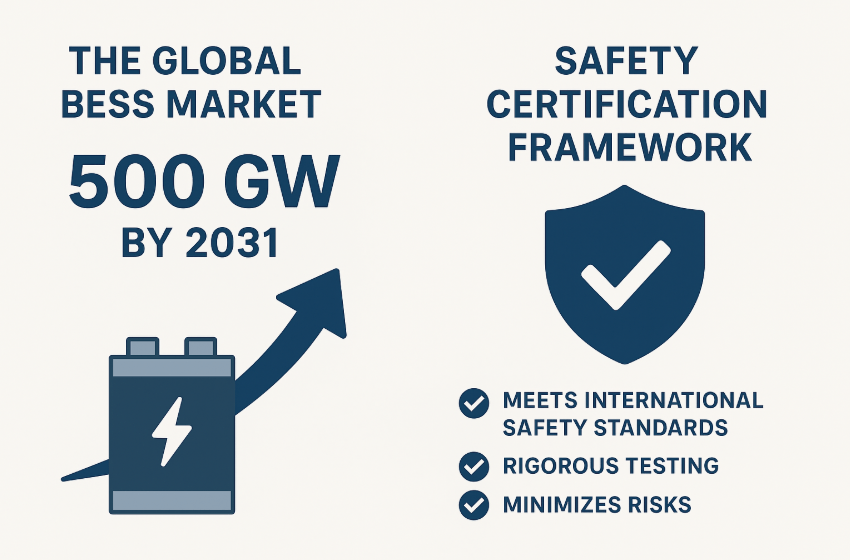
The Global BESS Market: Projected Growth to 500 GW by 2031 and the Rising Importance of Safety Certification
Global BESS Market Forecast to 2031
The global BESS market is projected to grow exponentially, reaching 500 GW by 2031. This forecast is a reflection of the world’s transition toward clean energy, electrification, and grid modernization. Battery Energy Storage Systems (BESS) are no longer niche technologies—they are becoming central to the stability and flexibility of modern energy networks.
But with such rapid deployment, BESS safety certification has emerged as a critical factor. Without strong certification standards, the risks of fire, explosion, or system failure increase. These risks not only threaten energy reliability but also create challenges for regulators, insurers, and investors.
In this article, we explore the drivers of global BESS market growth, the importance of safety certification, and the frameworks shaping the future of energy storage systems.
Why the Global BESS Market Is Growing So Fast
The energy storage systems projected 500 GW growth is being driven by a combination of technical, economic, and policy-related factors.
1. Renewable Energy Integration
Wind and solar are now the cheapest forms of new power generation worldwide. However, their variability creates challenges for grid operators. Battery energy storage systems solve this problem by storing excess energy and releasing it when demand rises.
2. Grid Modernization and Stability
Utilities are increasingly deploying BESS for peak shaving and load shifting, frequency regulation, and emergency backup. These applications make the grid more stable and resilient.
3. Commercial and Industrial Adoption
The C&I sector is also embracing storage. Businesses use BESS to cut peak demand charges, integrate renewable energy, and secure backup power through certified BESS installations.
4. Policy Support and Incentives
Governments are backing storage projects through subsidies, tax credits, and regulatory frameworks. For example, the U.S. Inflation Reduction Act provides tax benefits for energy storage projects, while the EU Green Deal is pushing for accelerated deployment.
The Risks of Rapid Expansion Without Certification
The market opportunity in certified BESS installations is immense. Yet, expansion without robust certification frameworks introduces serious risks.
- Thermal Runaway – Poorly tested systems can overheat and cause chain-reaction fires.
- Fire Hazards – Uncertified systems lack the proven ability to prevent or contain fires.
- Grid Instability – Unsafe or poorly integrated BESS may destabilize the grid.
- Investor Concerns – How certification improves investor confidence in BESS is by ensuring long-term reliability. Without it, projects face financing barriers.
These risks highlight why safety risks of battery energy storage without certification cannot be ignored.
Why Safety Certification Matters for BESS
As the global BESS market forecast to 2031 shows explosive growth, safety must be at the forefront. Certification ensures that BESS systems:
- Meet UL 9540 certification for large-scale BESS to prove safe system integration.
- Comply with the IEC 62933 global standard for grid storage safety, ensuring global interoperability.
- Fulfill CE marking requirements for battery energy storage systems in the EU.
- Follow NFPA 855 fire codes for safe installation and maintenance.
This framework builds the foundation for commercial and industrial BESS safety compliance worldwide.
Key Certifications That Define Global BESS Safety
Different certifications cover different layers of BESS safety. Together, they form a BESS safety certification framework for renewable integration.
UL Standards: The U.S. Benchmark
- UL 1973 – Battery safety for stationary, EV, and mobile applications.
- UL 9540 – System-level certification for safe operation.
- UL 9540A – Fire testing method to assess thermal runaway risks.
IEC 62933: The Global Standard
The IEC 62933 global standard for grid storage safety sets the technical foundation for performance, installation, and system integration.
CE Marking in Europe
The CE marking requirements for battery energy storage systems ensure safety, environmental compliance, and market readiness within the EU.
NFPA 855: Installation Safety
Certification Builds Market Confidence
Beyond safety, certification also drives global BESS market growth by creating trust.
How Certification Improves Investor Confidence in BESS
- Reduces liability risks by ensuring compliance.
- Streamlines project permitting and regulatory approval.
- Enhances access to financing, as banks prefer certified projects.
- Demonstrates compliance with regulatory requirements for battery energy storage systems 2031.
Without certification, large-scale projects could face costly delays, stricter insurance requirements, or outright rejection.
Global Trends in Energy Storage Certification and Testing
The global trends in energy storage certification and testing point toward stricter, more harmonized standards. Several developments are shaping the industry:
- Harmonization of IEC and UL standards to reduce duplication.
- Performance-based testing to reflect real-world conditions.
- AI and digital twins for predictive safety assessments.
- Third-party testing labs expanding capacity to handle growing demand.
As the market scales toward 500 GW energy storage forecast, these certification trends will define how quickly projects come online.
Looking Ahead: Balancing Growth With Safety
The global BESS market forecast to 2031 highlights a future of rapid scaling, but it comes with responsibility. The industry must prioritize best practices for BESS fire and explosion prevention to protect communities and maintain market trust.
Future growth will depend on:
- Stronger collaboration between regulators and manufacturers.
- Adoption of international standards like IEC 62933 across all regions.
- Increased emphasis on C&I BESS safety compliance.
- Continuous innovation in safety technologies.
By aligning market expansion with robust safety certification, the BESS industry can deliver safe, reliable, and sustainable storage solutions that support the global clean energy transition.

CE for BESS: Complete Guide to Battery Energy Storage Certification
Battery Energy Storage Systems (BESS) are critical to the clean energy transition, but ensuring their safety and compliance requires more than just good engineering. Certifications like CE for BESS is one of the most recognized marks in Europe, confirming that a product meets essential health, safety, and environmental standards. However, while CE is necessary for entering the EU market, it does not always guarantee complete system-level safety. To build global trust, manufacturers often combine CE with other certifications such as UL and IEC, ensuring stronger compliance, reliability, and market acceptance.
What Does CE Certification Mean for BESS?
The CE mark (Conformité Européenne) is a mandatory certification for products entering the European Economic Area (EEA). For BESS, CE shows compliance with EU directives and harmonized standards.
When a BESS carries the CE mark, it declares conformity with the following directives:
- Low Voltage Directive (LVD) – Protects against electrical hazards.
- Electromagnetic Compatibility (EMC) Directive – Prevents electrical interference.
- Restriction of Hazardous Substances (RoHS) – Limits toxic chemicals in batteries and components.
- General Safety Directives – Cover risks related to machinery and consumer use.
In essence, CE for BESS confirms that the system has met basic EU safety and environmental requirements, allowing it to be legally marketed and installed in Europe.
What Does CE for BESS Cover?
CE certification for BESS evaluates multiple aspects of product safety. These include:
- Electrical Safety – Preventing risks of electric shock, short circuits, and overheating.
- Thermal Safety – Assessing insulation, cooling design, and fire prevention.
- Electromagnetic Compatibility (EMC) – Ensuring the BESS does not emit disruptive signals.
- Environmental Safety – Controlling hazardous substances and ensuring recyclability.
However, CE certification for BESS is primarily based on a self-declaration of conformity. Manufacturers test the product internally or through a notified body, then issue a Declaration of Conformity (DoC).
This process makes CE less complex compared to third-party certifications like UL or IEC, which require independent validation and rigorous lab testing.
Why Do Most Companies Choose Only CE Certification for BESS?
Many BESS companies stop at CE certification instead of pursuing more demanding approvals. The main reasons include:
- Lower Costs: CE testing is more affordable than UL or full IEC certification, which involve expensive third-party audits.
- Faster Market Entry: CE certification is quicker, often taking weeks instead of months.
- Simpler Process: CE allows self-declaration, reducing reliance on external labs.
- Minimum Requirement: Since CE is mandatory in the EU, many companies view it as the lowest barrier to entry.
In other words, CE is often seen as the easiest, fastest, and cheapest way to access the European market. But relying on CE alone raises important safety concerns.
Is CE Alone Enough for BESS Safety?
The answer is no. While CE for BESS ensures legal entry into the EU market, it does not fully address the complex safety risks of modern energy storage systems.
BESS involves large-scale lithium-ion batteries, which can pose hazards like:
- Thermal Runaway – Fire and explosion risk if cells fail.
- High Voltage Risk – Danger of electric shock during installation or maintenance.
- System-Level Failure – Risks from inverters, converters, or control systems.
To mitigate these risks, global safety standards go far beyond CE. Manufacturers often need UL, IEC, or national certifications depending on their target markets.
Key International Standards Beyond CE for BESS
Here are the most important certifications that complement CE for BESS:
1. IEC Standards (International)
- IEC 62619: Safety requirements for lithium-ion batteries used in stationary storage.
- IEC 62933 series: Covers energy storage integration into power grids.
- IEC 62109: Focuses on safety of power converters.
2. UL Standards (North America)
- UL 9540: Safety requirements for complete BESS systems.
- UL 1973: Safety of battery modules for stationary applications.
- UL 9540A: Test method for thermal runaway fire propagation.
3. National Certifications
- BIS (India): Mandatory for lithium-ion cells and BESS units.
- TISI (Thailand): Battery certification for safety and performance.
- KC (Korea): Compliance for batteries and power systems.
- PSE (Japan): Electrical safety approval.
Together, these standards ensure that a BESS is safe, grid-compatible, and globally marketable.
CE vs UL vs IEC: Key Differences
| Certification | Region | Scope | Testing Requirement | Market Perception |
|---|---|---|---|---|
| CE | Europe | Basic health, safety, EMC | Self-declaration or notified body | Entry-level compliance |
| UL 9540 | USA/Canada | Full system safety | Third-party lab required | High credibility |
| IEC 62619 / 62933 | Global | Battery + system safety | Third-party testing | Widely respected |
| BIS / KC / PSE | National | Country-specific safety laws | Mandatory local tests | Legal requirement |
This table shows why CE is the easiest to achieve but IEC and UL carry higher safety credibility.
Why BESS Needs Multiple Certifications
Unlike small electronics, BESS operates at industrial-scale energy levels, which makes multi-layer certification essential.
- CE ensures compliance in Europe, but it does not evaluate system-level fire safety.
- UL validates complete system safety and is trusted in North America.
- IEC sets a global benchmark, especially for grid integration.
- National standards guarantee local approval, allowing sales in markets like India, Japan, or Korea.
Therefore, CE should be seen as the foundation, while UL, IEC, and national approvals are the reinforcements. Together, they create a safe and credible BESS product.
Why Companies Should Go Beyond CE for BESS
Although CE is attractive for cost and speed, relying on it alone can lead to challenges:
- Limited Market Reach: CE only works in Europe, not globally.
- Lower Buyer Confidence: Utilities and large clients often demand UL or IEC reports.
- Safety Risks: CE’s self-declaration model may overlook thermal runaway or fire propagation risks.
- Regulatory Pressure: More countries are adopting stricter BESS safety laws.
Companies that invest in full certification portfolios gain stronger market access, brand reputation, and customer trust.
Conclusion: CE is Essential but Not the Final Step
CE for BESS is a mandatory starting point for European market access. It ensures compliance with basic safety, EMC, and environmental standards. However, CE is not enough to prove the full safety of complex battery energy storage systems.
Most companies choose CE because it is fast, affordable, and easy, but long-term success requires additional certifications like UL 9540, IEC 62619, and BIS. These provide independent validation, global acceptance, and higher safety assurance.
In the evolving energy landscape, BESS manufacturers and project developers must go beyond CE certification to build trust, reliability, and international growth opportunities.
❓ Frequently Asked Questions About CE for BESS
1. What is CE certification for BESS?
CE certification for Battery Energy Storage Systems (BESS) is a European conformity mark that shows the product meets essential EU safety, health, and environmental requirements. It’s a legal requirement for selling BESS in the European Economic Area (EEA).
2. Does CE certification cover fire safety in BESS?
No. CE certification ensures compliance with core directives but does not specifically address thermal runaway or fire safety risks. For complete system safety, manufacturers often pursue additional certifications like UL 9540A (fire safety) or IEC 62619 (battery cell safety).
3. How is CE different from UL or IEC certification?
CE Certification: Mandatory for the EU market, focuses on regulatory compliance.
UL Certification: Recognized mainly in North America, emphasizes product safety and fire prevention.
IEC Standards: Internationally accepted, providing detailed technical guidelines for testing and performance.
Using CE alone may open EU markets, but UL and IEC certifications build global trust and credibility.
4. Can I sell CE-certified BESS outside Europe?
Not necessarily. While CE certification allows access to EU markets, other regions like the US, Middle East, and Asia-Pacific often require local standards such as UL, BIS, or GB/T. Companies targeting global markets usually combine CE with additional certifications.
5. How long does CE for BESS take?
The timeline depends on the complexity of the BESS and the scope of testing. In general:
Large, complex systems: 3–6 months
Working with an accredited testing lab or certification body can speed up the process.
Simple systems: 4–8 weeks
6. Why is CE certification alone not enough for BESS safety?
Because BESS safety risks go beyond basic compliance. Issues like thermal runaway, grid stability, and fire containment need deeper testing. That’s why CE is often just the starting point, with UL, IEC, and country-specific certifications adding the necessary system-level validation.
Understanding the Economics of C&I BESS Deployment
C&I BESS economics is becoming a critical consideration for businesses investing in energy storage solutions. By evaluating costs, return on investment (ROI), and key applications such as peak shaving, energy shifting, and renewable integration, companies can strategically plan how battery energy storage systems (BESS) deliver long-term financial and operational benefits.
Why C&I BESS Economics Matters
The adoption of commercial and industrial battery energy storage systems is no longer just about sustainability. It’s about cost competitiveness, business continuity, and energy independence. C&I BESS helps organizations reduce energy expenses, optimize renewable energy use, and avoid downtime caused by grid instability.
For decision-makers, the economics provide the blueprint for determining whether a system is financially viable. Unlike traditional infrastructure, BESS generates multiple revenue streams—making it a compelling long-term investment.
Cost Components of C&I BESS
When evaluating C&I BESS economics, businesses need to consider all the cost components involved in deployment:
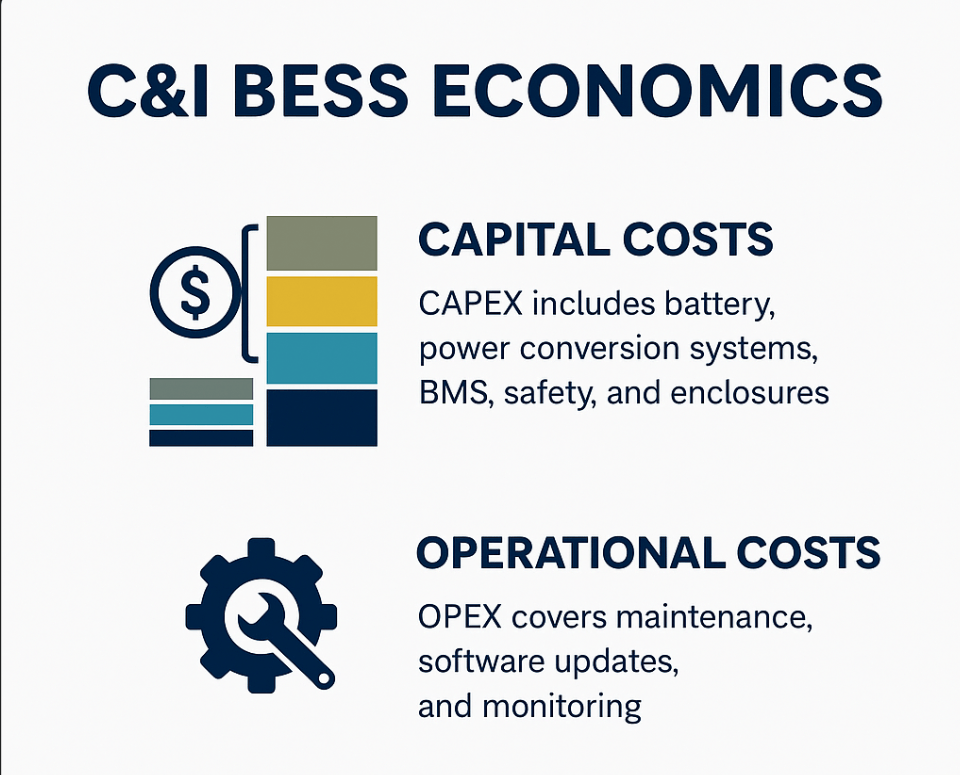
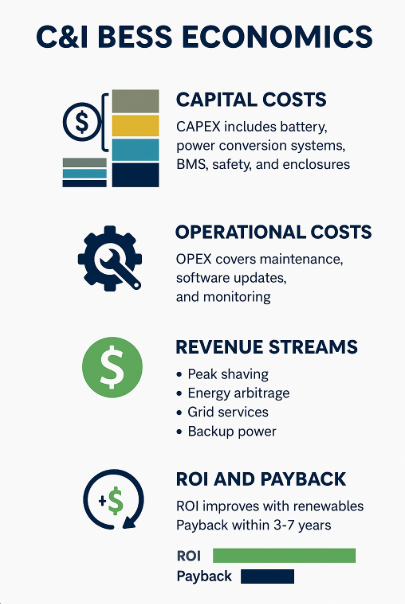
- Capital Expenditure (CAPEX): Includes the cost of battery modules, power conversion systems (PCS), enclosures, and installation.
- Operational Expenditure (OPEX): Covers routine maintenance, software updates, and monitoring systems.
- Integration Costs: Grid interconnection, compliance with utility standards, and renewable energy integration.
- Safety & Compliance Costs: Fire safety systems, IP-rated enclosures, and certifications to meet international standards.
Understanding these costs ensures businesses can budget accurately and anticipate ROI timelines.
Return on Investment (ROI) for C&I BESS
ROI is one of the most attractive elements of C&I BESS economics. While upfront costs may seem high, the savings and revenue opportunities deliver significant returns. Key ROI drivers include:
- Energy Bill Savings: Demand charge reduction and peak shaving lower operational expenses.
- Grid Services Revenue: Businesses can participate in frequency regulation and demand response programs.
- Enhanced Renewable Utilization: Solar and wind power can be stored and used later, reducing reliance on expensive grid power.
- Backup Power Value: Avoiding downtime and protecting operations ensures business continuity.
Typically, ROI periods range from 3–7 years, depending on system size, energy pricing, and incentive availability.
Peak Shaving: A Core Economic Benefit
One of the strongest links in C&I BESS economics is peak shaving. Utilities often charge businesses based on their highest 15-minute demand interval each month. By deploying stored energy during peak demand, companies reduce these costly charges significantly.
👉 Read more about C&I BESS applications for peak shaving here.
Applications Driving C&I BESS Economics
Beyond peak shaving, several applications contribute to positive BESS economics:
- Energy Shifting: Storing cheap off-peak power for use during high-tariff hours.
- Microgrid Support: Ensuring resilience and independence from grid instability.
- EV Charging Integration: Supporting electric vehicle fleet charging without overwhelming the grid.
- Renewable Energy Optimization: Aligning variable renewable supply with steady industrial demand.
👉 Explore the full range of C&I BESS applications here.
Incentives and Policy Support
C&I BESS economics improve dramatically when businesses leverage incentives and policy support. Many governments and utilities offer:
- Tax Credits & Subsidies for renewable-linked storage projects.
- Utility Rebates for demand reduction.
- Green Financing Options that lower CAPEX burden.
These programs shorten the payback period and strengthen the investment case.
Barriers to Strong Economics
Despite the benefits, certain challenges affect C&I BESS economics:
- High Upfront CAPEX compared to traditional energy solutions.
- Uncertain Energy Tariffs that impact ROI predictability.
- Complex Regulatory Approvals for grid-connected projects.
- Technology Risks tied to battery degradation over time.
However, with falling battery costs and stronger policy frameworks, these barriers are steadily declining.
The Long-Term Value of C&I BESS
The true value of C&I BESS economics goes beyond immediate savings. Businesses gain:
- Energy Cost Stability: Protection against volatile energy prices.
- Sustainability Branding: Meeting ESG and decarbonization goals.
- Future-Readiness: Supporting electrification and digital operations.
In a competitive global market, companies that adopt BESS early gain a strong operational and reputational edge.
Conclusion
C&I BESS economics proves that energy storage is not just a cost—it’s a strategic investment. From peak shaving to renewable integration, the financial and operational benefits outweigh the challenges. With the right planning, incentives, and applications, commercial and industrial energy storage transforms from an expense into a long-term value generator.
By understanding these economics, businesses can make informed decisions, optimize their energy strategies, and strengthen both resilience and profitability in a rapidly evolving energy landscape.
How C&I BESS Enhances Solar and Wind Power Integration
As renewable energy adoption accelerates, businesses are investing in solar and wind power to reduce costs, cut emissions, and achieve sustainability goals. However, the challenge of intermittency—the variability of renewable energy output—remains a barrier to full reliability. This is where C&I BESS with renewable energy plays a transformative role. By providing storage, flexibility, and stability, Battery Energy Storage Systems (BESS) enable companies to maximize the value of their renewable assets.
The Intermittency Challenge in Renewable Energy
Solar and wind energy are inherently variable. Cloud cover can reduce solar production within minutes, while wind speed changes affect turbine output. Without a buffer, these fluctuations can lead to instability, grid imbalances, or even curtailment of renewable energy. For businesses that rely on consistent power for manufacturing, data centers, or logistics, unpredictability becomes a costly problem.
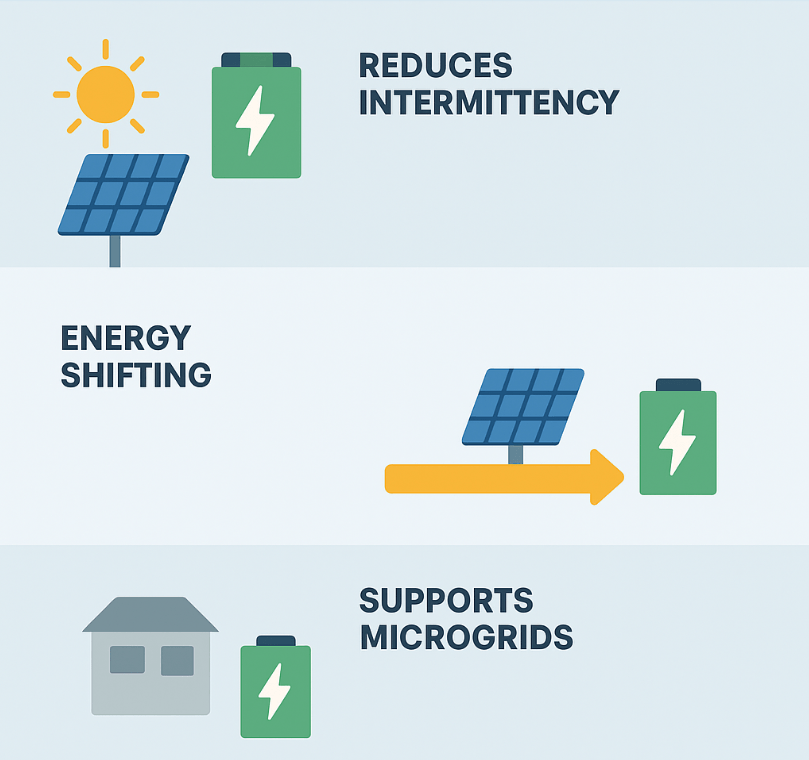
C&I BESS with renewable energy addresses this issue by storing excess electricity when generation is high and releasing it when demand spikes or output drops. This ensures steady energy delivery, even when renewable sources fluctuate.
Energy Shifting: Maximizing Renewable Value
One of the greatest advantages of BESS is energy shifting. With storage in place, businesses can:
- Capture solar energy during peak sunlight hours and use it in the evening when demand and grid prices are higher.
- Store wind power generated overnight and release it during working hours.
- Reduce dependency on expensive peak-hour electricity.
By shifting energy use, C&I BESS with renewable energy ensures companies optimize both their operational costs and sustainability performance.
Supporting Microgrids for Energy Independence
Another growing trend is the deployment of microgrids, where localized power networks combine renewable generation, storage, and sometimes backup generators.
C&I BESS enhances microgrids by:
- Providing islanded operation during grid outages, keeping facilities powered.
- Enabling seamless integration of solar panels, wind turbines, and other distributed resources.
- Balancing local supply and demand in real time.
For businesses operating in remote areas or regions with unstable grids, C&I BESS with renewable energy makes energy independence achievable.
Grid Services and Demand Response
Beyond internal use, BESS enables companies to participate in grid programs. By integrating renewable assets with storage, businesses can:
- Offer demand response, reducing load during peak events.
- Provide frequency regulation by discharging or absorbing energy instantly.
- Contribute to grid stability while generating new revenue streams.
This dual role—supporting both business operations and the wider grid—demonstrates the strategic advantage of pairing C&I BESS with renewable energy.
Real-World Applications
Several industries are already leveraging this synergy:
- Manufacturing plants integrate solar with BESS to avoid downtime and reduce peak energy costs.
- Cold storage facilities use wind plus storage to stabilize refrigeration loads.
- Campuses and hospitals adopt renewable-powered microgrids with BESS to ensure uninterrupted operations during outages.
These examples highlight how C&I BESS with renewable energy is not just a trend—it’s becoming a business necessity.
Sustainability and Corporate Goals
Today, corporations are under increasing pressure to achieve net-zero emissions. By combining renewable generation with energy storage, businesses can:
- Maximize renewable utilization rates.
- Reduce reliance on fossil-fuel-based backup systems.
- Meet Environmental, Social, and Governance (ESG) reporting requirements.
In this way, C&I BESS with renewable energy contributes not only to cost savings but also to long-term brand reputation and compliance with global sustainability frameworks.
Conclusion
The integration of C&I BESS with renewable energy is revolutionizing how businesses harness solar and wind power. By reducing intermittency, enabling energy shifting, supporting microgrids, and providing grid services, BESS empowers companies to take full advantage of renewable investments. For forward-looking enterprises, storage is no longer optional—it is essential to building a reliable, resilient, and sustainable energy future.

IEC 62933: Global Standard for Grid Energy Storage Systems
As renewable energy adoption grows, energy storage systems (ESS) have become critical for balancing supply and demand, improving reliability, and supporting grid resilience. To ensure safety, performance, and interoperability, the International Electrotechnical Commission (IEC) developed the IEC 62933 series, a set of globally recognized standards.
These standards guide manufacturers, developers, and policymakers in designing and deploying safe, efficient, and sustainable storage solutions.
What is IEC 62933?
The IEC 62933 series establishes a framework for electrical energy storage (EES) systems, including grid-scale and commercial applications. It covers general requirements, safety, performance, environmental considerations, and grid integration.
Rather than being a single document, IEC62933 is a family of interlinked standards, each addressing a specific aspect of EES.
Breakdown of Key IEC 62933 Standards

Here’s a detailed overview of the most important parts:
1. IEC 62933-1 – General Requirements
- Defines basic concepts, classifications, and terminology for EES.
- Provides common ground for stakeholders (manufacturers, regulators, utilities).
- Establishes a systematic approach to planning, designing, and evaluating ESS.
2. IEC 62933-2-1 – Performance Testing for EES Systems
- Sets methods to evaluate performance of storage systems.
- Covers energy efficiency, response time, storage capacity, and life cycle.
- Ensures consistent benchmarks for comparing technologies.
3. IEC TS 62933-2-2 – Functional Safety Assessment
- A Technical Specification (TS) focusing on safety from a system function perspective.
- Addresses potential hazards (thermal runaway, electrical failures).
- Provides methods for risk identification and mitigation.
4. IEC TS 62933-2-3 – Reliability of Energy Storage Systems
- Defines testing and assessment methods for reliability.
- Covers failure rates, durability, and long-term system resilience.
- Helps ensure stable operation in grid-critical applications.
5. IEC TR 62933-2-201 – Guidance on Safety Cases
- A Technical Report (TR) providing practical guidance for ESS safety cases.
- Supports developers and operators in building safety documentation.
- Bridges the gap between technical standards and real-world applications.
6. IEC 62933-4-2 – Environmental Impact of EES Systems
- Focuses on environmental assessment of energy storage technologies.
- Considers carbon footprint, material use, and recycling practices.
- Encourages sustainable deployment of large-scale ESS.
7. IEC 62933-4-4 – End-of-Life Management
- Provides guidelines for decommissioning, recycling, and disposal of EES.
- Promotes circular economy practices in the storage industry.
- Reduces environmental risks associated with battery waste.
8. IEC 62933-5-1 – General Safety Considerations
- Covers general safety requirements for stationary energy storage.
- Includes electrical, chemical, mechanical, and fire safety aspects.
- Ensures system safety across all technologies (batteries, flywheels, etc.).
9. IEC 62933-5-2 – Safety for Large-Scale EES
- Focuses specifically on large battery energy storage systems (BESS).
- Addresses thermal runaway prevention, emergency response, and system protection.
- Critical for utility-scale storage projects.
10. IEC 62933-5-3 – Grid Integration Safety
- Examines safety aspects during grid connection and operation.
- Ensures ESS does not destabilize or endanger grid infrastructure.
- Supports secure deployment in smart grids and microgrids.
Importance of IEC 62933 for the Industry
The IEC 62933 series provides:
- Global Standardization – unifies practices worldwide.
- Risk Reduction – prevents failures in high-risk ESS installations.
- Sustainability – ensures safe end-of-life handling.
- Investor Confidence – promotes compliance and long-term reliability.
- Innovation Support – enables safe integration of emerging technologies like solid-state and hybrid storage.
Conclusion
The IEC62933 standard family is the backbone of global energy storage deployment. From general guidelines (IEC62933-1) to detailed safety (IEC62933-5-2) and environmental sustainability (IEC62933-4-4), it ensures storage systems are safe, efficient, and future-ready.
Adopting these standards is essential for manufacturers, developers, and regulators who aim to accelerate the clean energy transition while ensuring safety and reliability.