

Peak Sun Hours by Location: Data, Seasonal Impact & Solar System Design Guide
☀️ What Are Peak Sun Hours by Location?
Peak sun hours show how much usable sunlight a location gets in one day.
In simple terms, they convert changing sunlight into full-power hours.
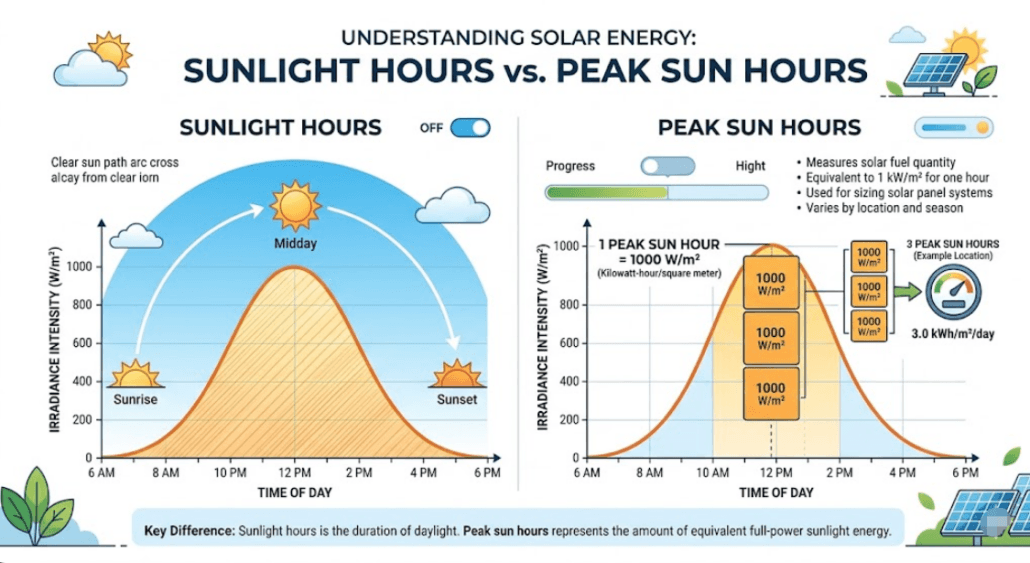
Therefore, this value helps you estimate solar energy output. For example, a region may receive sunlight all day, but only a part of that counts as full energy. To capture every bit of this potential, pairing local irradiance data with the correct solar panel tilt angle by location is critical.
As a result, most locations get about 3 to 6 effective hours.
📊 Why Peak Sun Hours by Location Matter
Peak sun hours directly affect solar system design. However, many systems still use average values.
Because of this, systems often underperform. Therefore, using location-based values is critical.
In addition, accurate data helps you:
- Size solar panels correctly and determine the optimal solar panel tilt angle by location
- Improve battery charging
- Increase efficiency
- Avoid energy shortages
As a result, your system performs better throughout the year.
🌍 Peak Sun Hours by Location in the US
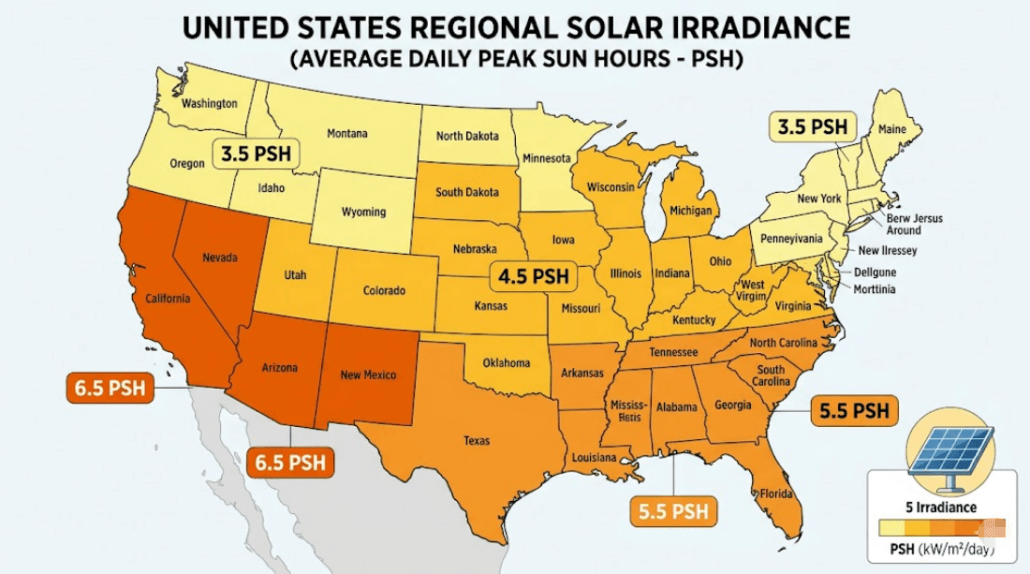
Peak sun hours vary across the United States. Therefore, each region needs a different design approach.
| State | Average Peak Sun Hours (hrs/day) |
|---|---|
| California | 5.0 – 6.0 |
| Texas | 4.5 – 5.5 |
| Arizona | 6.0 – 7.0 |
| Florida | 4.0 – 5.0 |
| New York | 3.0 – 4.0 |
| Washington | 2.5 – 3.5 |
🔍 Search All 50 US States
| State | Average Peak Sun Hours (hrs/day) |
|---|---|
| Alabama | 3.5 – 4.5 |
| Alaska | 2.0 – 3.0 |
| Arizona | 6.0 – 7.0 ✨ |
| Arkansas | 4.0 – 4.5 |
| California | 5.0 – 6.0 ✨ |
| Colorado | 4.5 – 5.5 |
| Connecticut | 3.0 – 4.0 |
| Delaware | 3.5 – 4.0 |
| Florida | 4.0 – 5.0 ✨ |
| Georgia | 4.0 – 4.5 |
| Hawaii | 5.5 – 6.0 |
| Idaho | 3.5 – 4.5 |
| Illinois | 3.5 – 4.2 |
| Indiana | 3.5 – 4.0 |
| Iowa | 4.0 – 4.5 |
| Kansas | 4.5 – 5.0 |
| Kentucky | 3.5 – 4.0 |
| Louisiana | 4.0 – 4.5 |
| Maine | 3.0 – 4.0 |
| Maryland | 3.5 – 4.0 |
| Massachusetts | 3.0 – 4.0 |
| Michigan | 3.0 – 4.0 |
| Minnesota | 3.5 – 4.0 |
| Mississippi | 4.0 – 4.5 |
| Missouri | 4.0 – 4.5 |
| Montana | 3.5 – 4.5 |
| Nebraska | 4.5 – 5.0 |
| Nevada | 5.0 – 6.0 |
| New Hampshire | 3.0 – 4.0 |
| New Jersey | 3.5 – 4.0 |
| New Mexico | 5.5 – 6.5 |
| New York | 3.0 – 4.0 |
| North Carolina | 4.0 – 4.5 |
| North Dakota | 3.5 – 4.0 |
| Ohio | 3.0 – 4.0 |
| Oklahoma | 4.5 – 5.5 |
| Oregon | 3.0 – 4.0 |
| Pennsylvania | 3.0 – 4.0 |
| Rhode Island | 3.0 – 4.0 |
| South Carolina | 4.0 – 4.5 |
| South Dakota | 4.0 – 4.5 |
| Tennessee | 3.5 – 4.5 |
| Texas | 4.5 – 5.5 ✨ |
| Utah | 5.0 – 5.5 |
| Vermont | 3.0 – 4.0 |
| Virginia | 3.5 – 4.5 |
| Washington | 2.5 – 3.5 |
| West Virginia | 3.0 – 4.0 |
| Wisconsin | 3.5 – 4.0 |
| Wyoming | 4.5 – 5.0 |
For example, Arizona gets more sunlight than New York.
Therefore, systems in New York must be larger.
👉 Solar system performance data is based on research from the National Renewable Energy Laboratory (NREL)
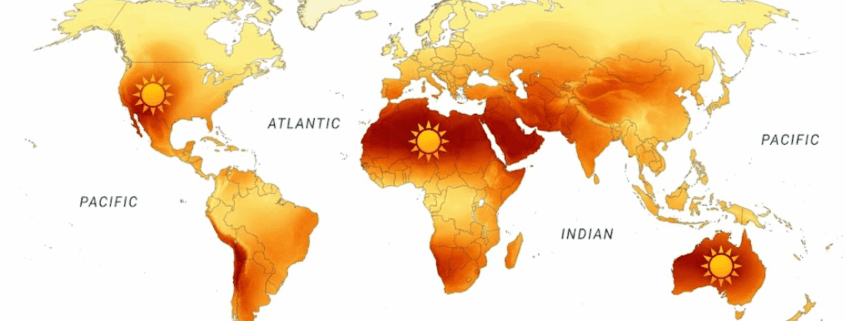
🌏 Peak Sun Hours by Location Globally
Solar exposure also changes worldwide. In addition, climate plays a major role.
| Region | Sunlight (hrs/day) |
|---|---|
| North India | 4 – 5 |
| South India | 5 – 6 |
| Middle East | 6 – 7 |
| Europe | 2.5 – 4 |
| Australia | 5 – 6 |
🌏 Search Global Peak Sun Hours
| Location / Region | Average Peak Sun Hours (hrs/day) |
|---|---|
| Rajasthan | 5.5 – 6.5 ✨ |
| Gujarat | 5.2 – 6.0 ✨ |
| Madhya Pradesh | 5.0 – 5.8 |
| Maharashtra | 4.5 – 5.5 |
| Andhra Pradesh & Telangana | 4.8 – 5.5 |
| Karnataka | 4.5 – 5.3 |
| Tamil Nadu | 4.5 – 5.2 |
| Uttar Pradesh | 4.0 – 5.0 |
As a result, systems must always match local conditions.
👉 You can also explore global solar irradiance data from the Global Solar Atlas
🌦️ Seasonal Peak Sun Hours by Location
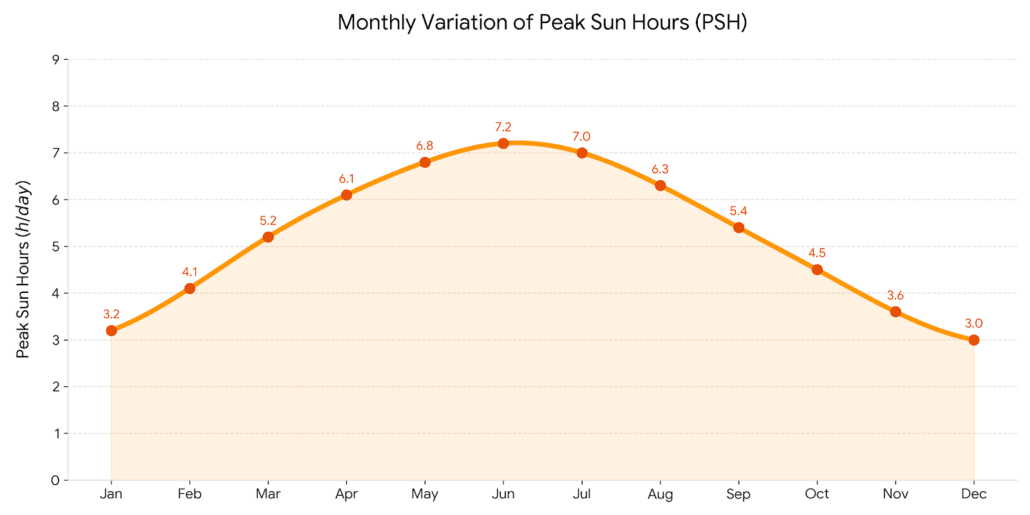
Peak sun hours change during the year. Therefore, seasonal variation is important.
Example:
- Summer → higher output
- Winter → lower output
For instance, New York drops from 5 to about 3 hours.
Similarly, California drops from 6.5 to about 4 hours.
As a result, solar production falls in winter.
⚠️ Why Seasonal Design Is Important
If systems use yearly averages, they may fail in winter. Therefore, engineers plan for the worst case.
In other words, they use the lowest sunlight value of the year.
Because of this, systems stay reliable.
🧠 Peak Sun Hours Design Rule
Always size systems using the lowest sunlight period.
Therefore, even during cloudy or winter days, the system will still work.
As a result, energy supply stays stable.
⚡ Solar Sizing Using Peak Sun Hours
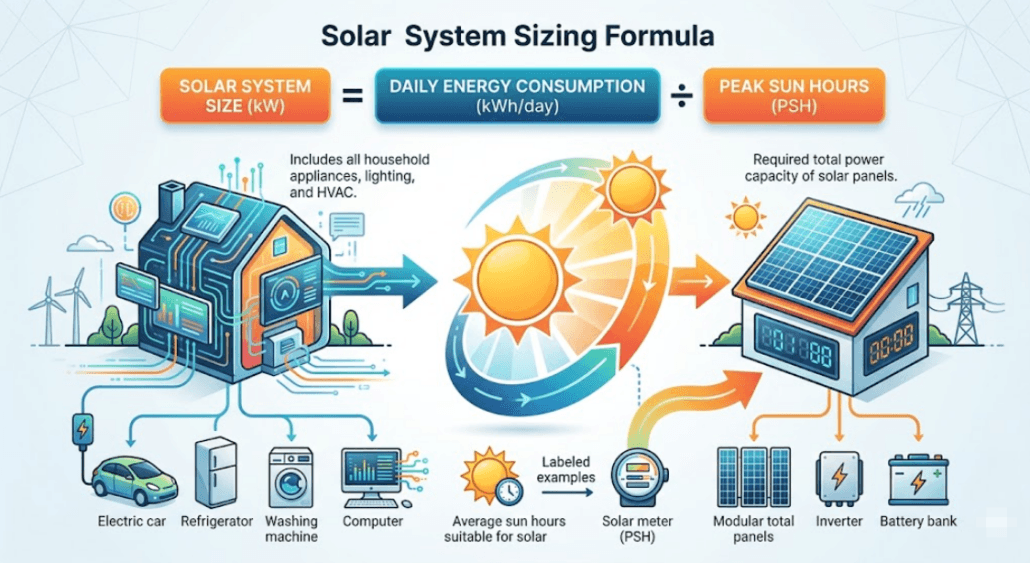
Solar system size depends on energy use and sunlight. Therefore, both must be calculated.
Formula:
Solar Size (kW) = Daily Load ÷ Sunlight Hours
(Note: When sizing a system, it is crucial to understand how your raw panel capacity translates into actual daily and annual energy generation. Read our comprehensive kWp vs kWh Solar Guide to see exactly how these metrics work together).
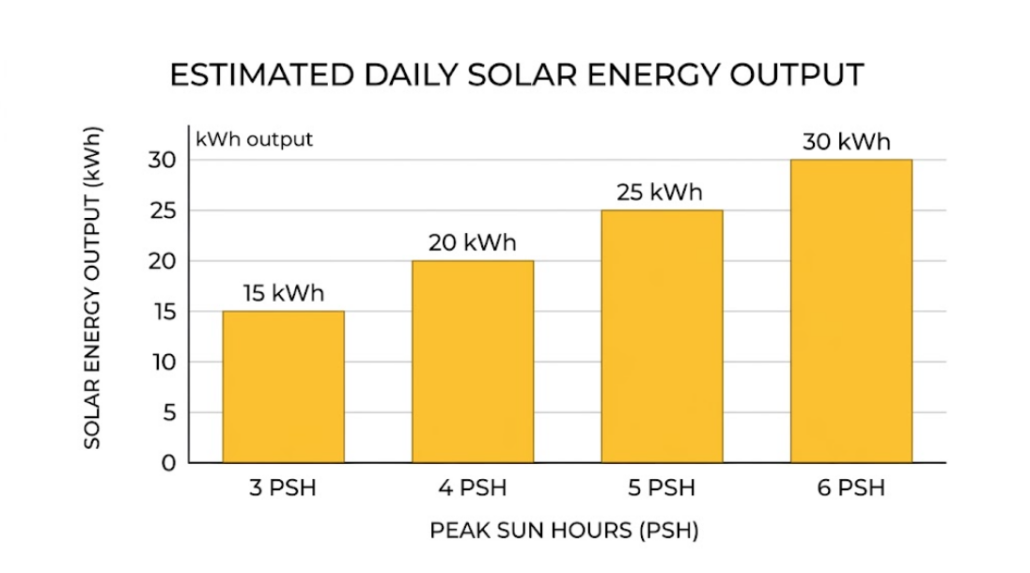
Example:
- Load = 10 kWh
- Sunlight = 3 hours
System size = 3.3 kW
However, this is not the final value.
⚡ Test Your Own System Sizing
Input your energy requirements below to calculate your system capacity instantly.
Base Estimated Size: 3.33 kW
Recommended Size (with 20% loss margin): 4.00 kW
🔄 Adjust for System Losses
Solar systems lose energy. Therefore, you must add a safety margin.
Losses come from:
- Inverters
- Wiring
- Heat
For example, real systems lose about 10–20%.
.
👉 Learn how inefficiencies impact performance in our guide on energy storage losses in BESS systems.
Adjusted Example:
3.3 × 1.20 = 4 kW
As a result, the system performs correctly.
🔋 Impact on Battery Charging
Sunlight affects battery charging speed. Therefore, lower sunlight reduces charging.
As a result:
- Charging becomes slower
- Backup time reduces
- Efficiency drops
👉 For complete system sizing, read our energy storage calculation guide.
🏢 Real System Example
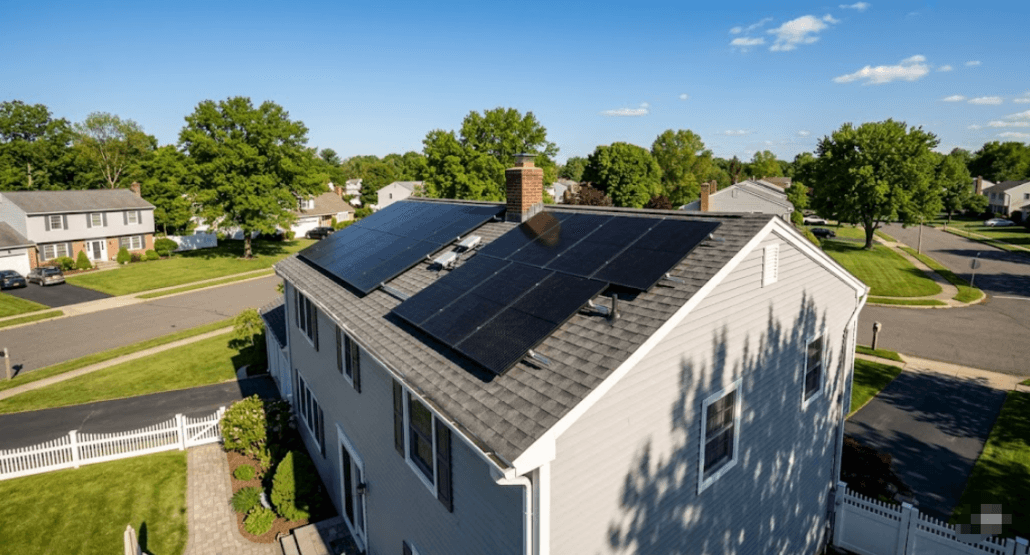
Scenario:
- Load = 100 kWh/day
- Sunlight = 4.5 hours
Calculation:
100 ÷ 4.5 = 22.2 kW
After adding losses:
→ 26–28 kW system
Therefore, correct values improve reliability.
🔥 Oversizing Based on Peak Sun Hours
Systems are often oversized. This helps handle low sunlight days.
Typical Increase:
- Residential: 20–30%
- Commercial: 25–40%
Because of this, systems perform better in winter.
🌡️ Factors Affecting Peak Sun Hours by Location
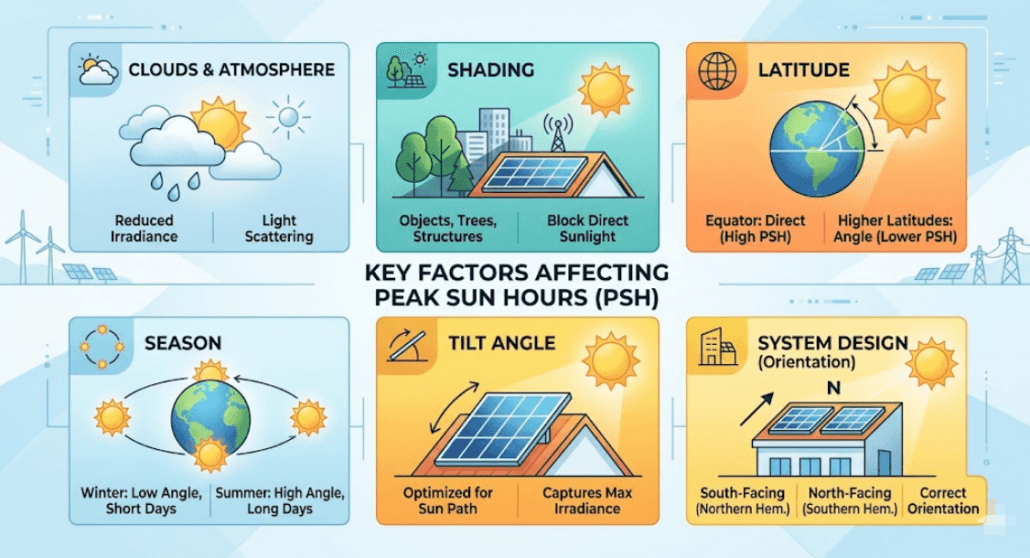
Peak sun hours depend on several factors. Therefore, you must consider:
- Location
- Weather
- Season
- Panel angle
- Temperature
In addition, pollution and shading can reduce output.
⚠️ Common Mistakes
Many systems fail due to simple errors.
Avoid these:
- Using average values
- Ignoring seasonal changes
- Designing only for summer
- Skipping loss calculations
- Confusing peak system capacity with actual energy generation (Make sure you can easily distinguish between them by checking out our guide on kWp vs kWh in Solar Energy)
As a result, your system will perform more reliably.
📊 Quick Reference Table
| Condition | Action |
|---|---|
| High sunlight | Smaller system |
| Low sunlight | Larger system |
| Winter design | Use minimum value |
| Critical systems | Add margin |
❓ FAQ
What are peak sun hours?
They measure usable sunlight for solar power generation.
How many hours do most locations get?
Most regions get 3 to 6 hours daily.
Why do values change?
They change due to location, weather, and season.
Should I use average values?
No. Instead, use minimum values for better reliability.
🧾 Conclusion
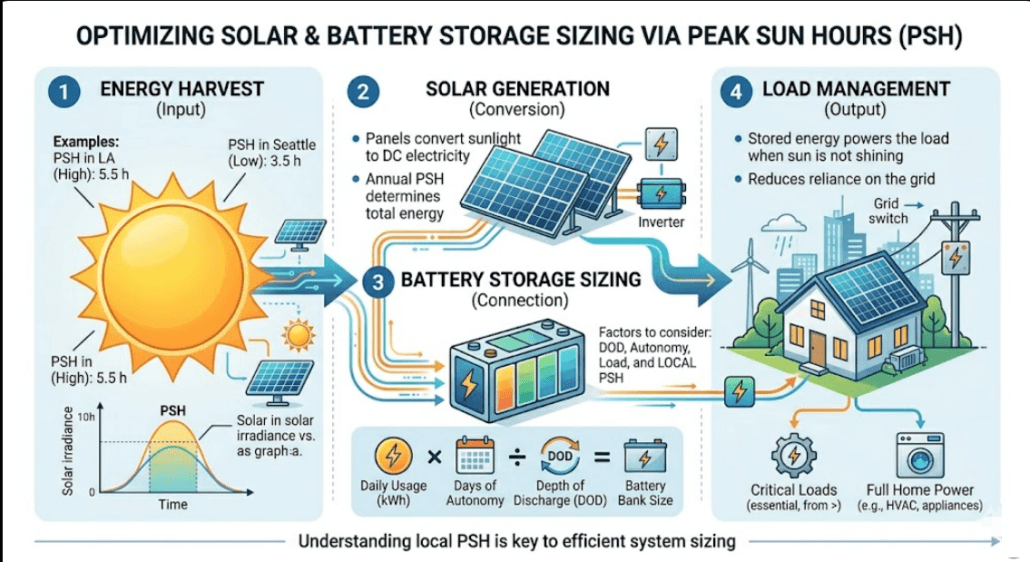
Peak sun hours vary by location and season. Therefore, accurate data is essential.
By using correct values, you can:
- Improve system design
- Increase reliability
- Optimize solar output
- Ensure proper battery charging
As a result, your solar system will work efficiently all year.