
Is Sodium-Ion Safer? The Ultimate 2026 Guide to Battery Safety
Sodium-ion battery safety explains how safely these batteries operate, store energy, and move through supply chains. Today, safety is a top concern in energy storage.
However, lithium-ion batteries still face fire risks. Thermal runaway remains a major issue. Because of this, safer alternatives are gaining attention. One strong option is sodium-ion technology.
Why Sodium-Ion Battery Safety Outperforms Lithium-Ion?
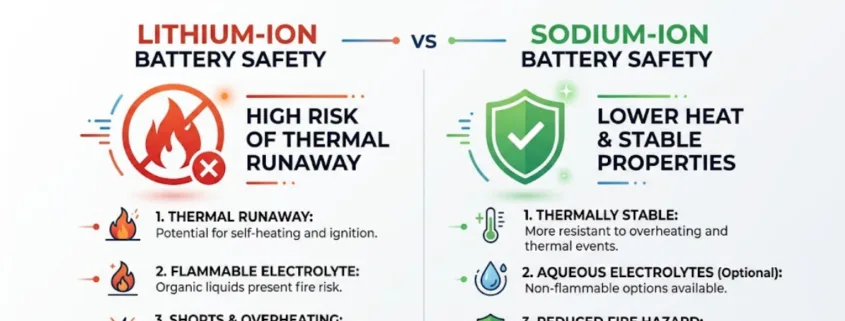
Sodium-ion batteries are safer because their chemistry is more stable. Unlike lithium, sodium does not react violently when exposed to stress. This significantly lowers the risk of a sudden fire or explosion.
Stable Electrolytes: The liquid inside a sodium battery is less likely to catch fire than the electrolytes used in lithium-ion systems.
Less Heat: Sodium-ion cells generate very little internal heat. This prevents the “domino effect” of overheating known as thermal runaway.
No Dendrites: Lithium batteries can grow tiny, sharp structures called “dendrites” that cause short circuits. Sodium chemistry naturally prevents these growths.
👉 Read more Sodium chemistry naturally prevents these growths. For a full look at how this technology works, check out our complete sodium-ion battery guide.
Sodium-Ion Battery Safety vs Lithium-Ion
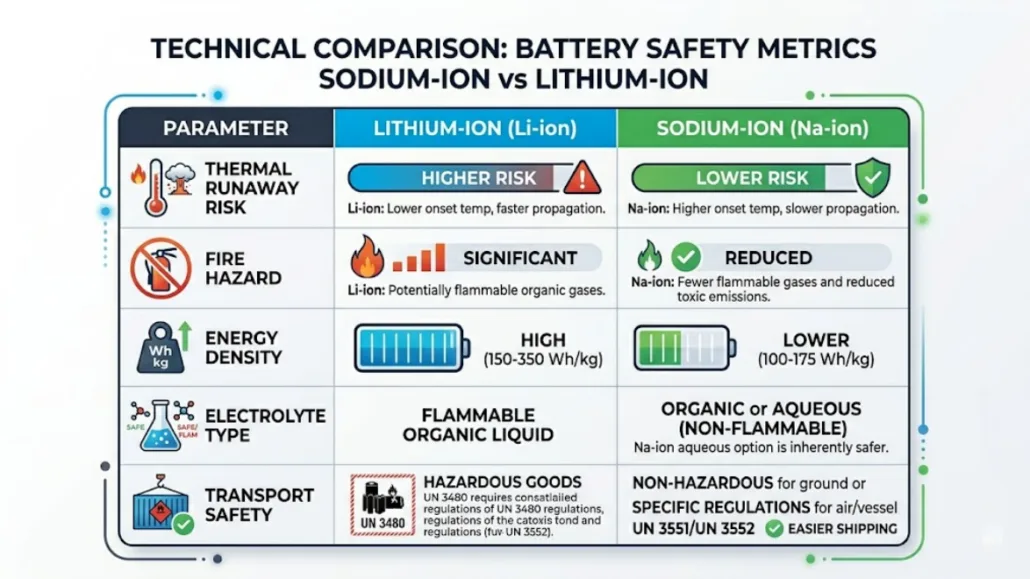
A comparison helps clarify the difference.
| Safety Factor | Sodium-Ion | Lithium-Ion |
|---|---|---|
| Thermal Runaway | Very low | Medium to high |
| Fire Risk | Low | High |
| Temperature Range | Wide | Limited |
| Electrolyte | More stable | Flammable |
| Transport State | 0V safe | Partial charge required |
In contrast, lithium-ion batteries need more protection systems. Therefore, sodium-ion battery safety is often preferred in large installations.
👉 For a deeper technical breakdown, read our sodium-ion vs lithium-ion battery guide:
What Causes Battery Fires in Lithium-Ion Systems?
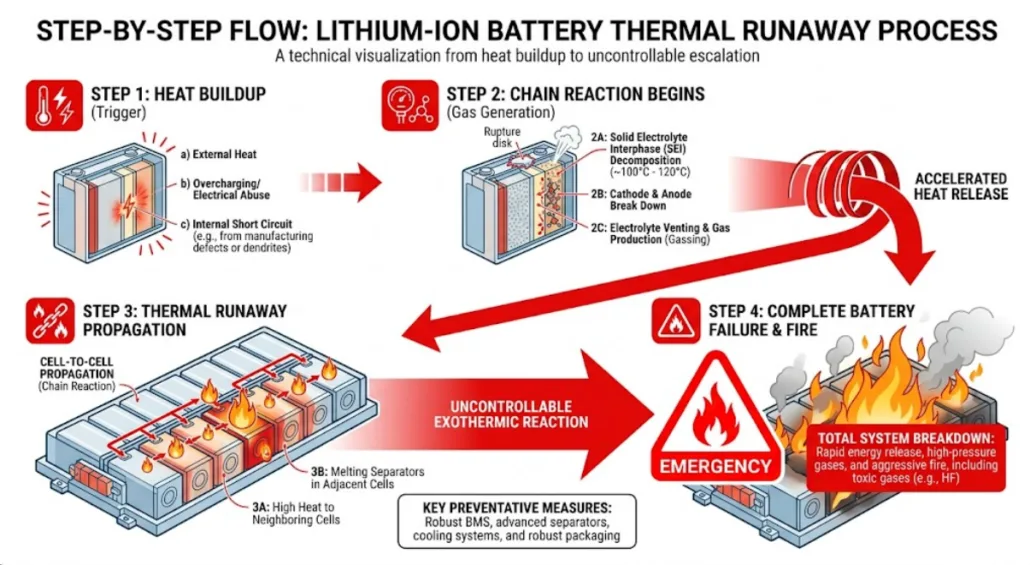
Several factors increase fire risk in lithium-ion batteries.
First, thermal runaway can occur when heat builds up quickly. Once triggered, the reaction spreads fast.
In addition, flammable electrolytes make the situation worse. These liquids can ignite under stress.
Another issue is dendrite growth. Over time, sharp lithium structures may form. These can pierce internal layers and cause short circuits.
Mechanical damage also increases risk. For example, punctures or overcharging can trigger failure.
Because of these factors, lithium-ion systems require strict safety controls.
Why Sodium-Ion Batteries Are Safer
Sodium-ion battery safety improves due to stable chemistry and lower reactivity.
Unlike lithium, sodium does not react as aggressively. This reduces the chance of sudden failure.
Heat generation is also lower. As a result, overheating becomes less likely.
Dendrite formation is minimal. Therefore, internal short circuits are rare.
Moreover, the electrolyte system is more stable. This further reduces fire risk.
The Zero-Volt Advantage: Why Sodium-Ion Battery Safety is Better for Shipping
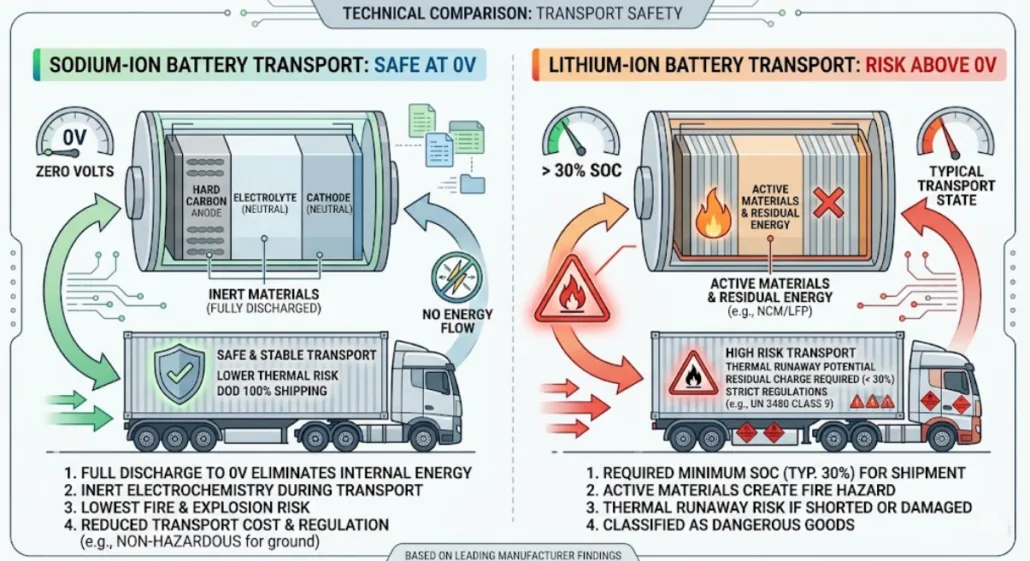
One unique advantage is zero-voltage capability.
Sodium-ion batteries can be fully discharged before transport. This removes stored energy from the system.
Because of this, shipping risk drops significantly. Lithium-ion batteries, on the other hand, must remain partially charged.
Storage performance also improves. Long-term storage at zero charge does not damage sodium-ion cells.
As a result, logistics become safer and easier to manage.
Sodium-Ion Battery Chemistry and Safety
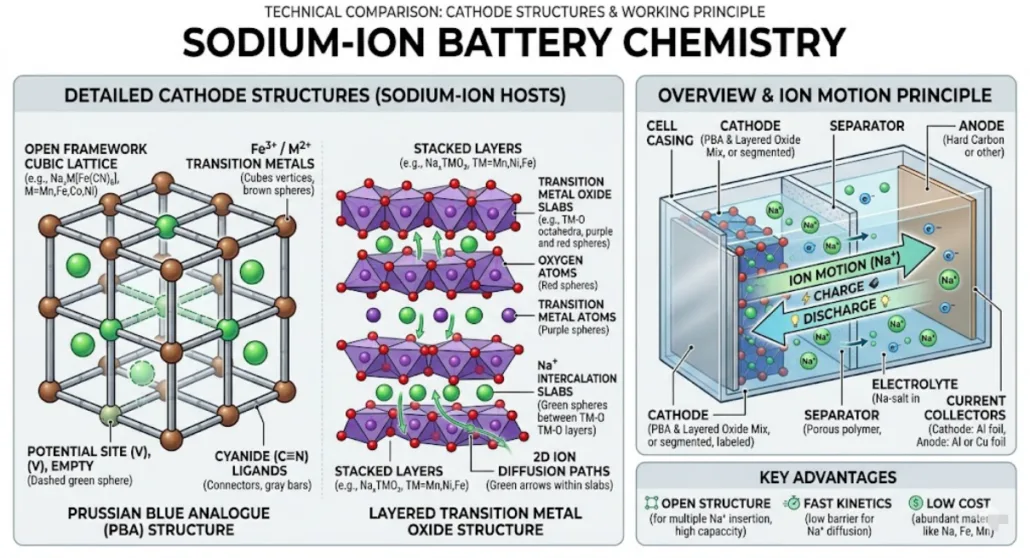
Battery chemistry plays a key role in safety performance.
Prussian blue materials provide a stable structure. They help reduce heat generation.
Layered oxides also support stability. These materials maintain performance without increasing risk.
Together, these chemistries strengthen sodium-ion battery safety. You can learn more about these specific materials in our sodium-ion battery guide.
High-Temperature Performance and Thermal Stability
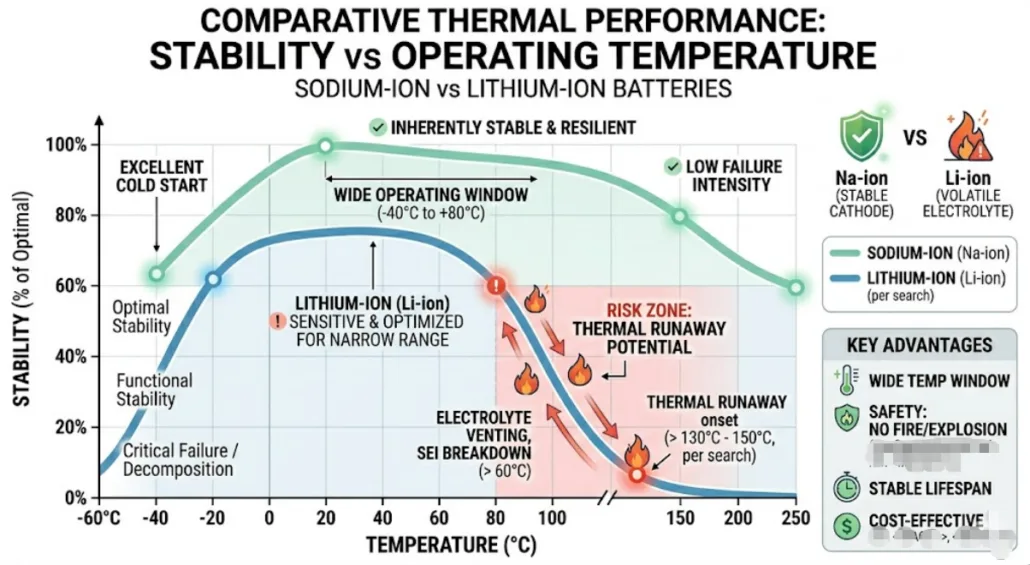
Temperature resistance is another major advantage.
Lithium-ion batteries often struggle in hot environments. Performance drops as temperature rises.
Sodium-ion batteries behave differently. They remain stable across a wider range.
Less internal heat is generated during operation. This reduces cooling requirements.
Because of this, sodium-ion systems work well in demanding climates.
Maximizing BESS Reliability with Sodium-Ion Battery Safety Standards
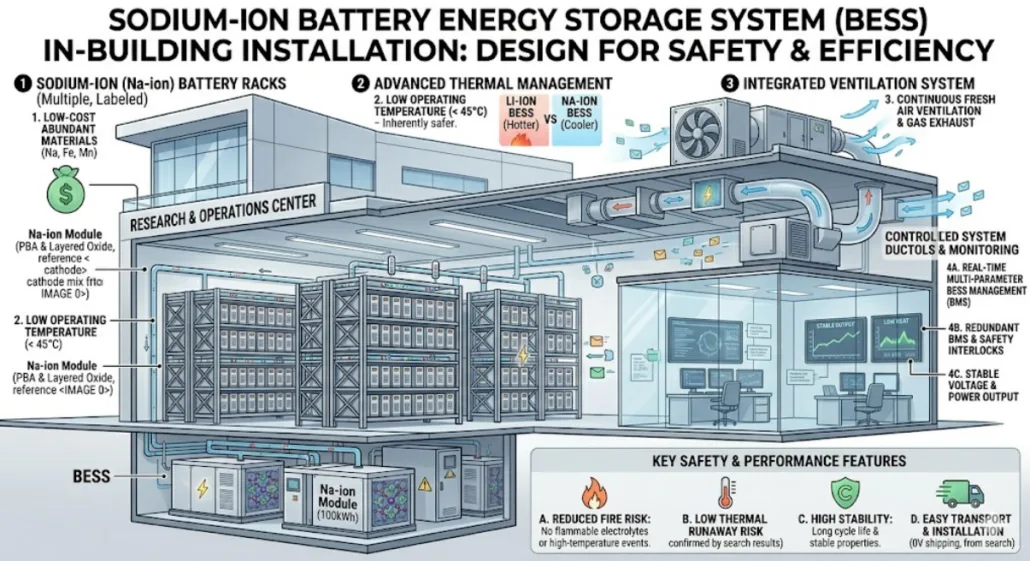
Sodium-ion batteries are well suited for energy storage systems.
👉 For a system overview, check Ultimate Guide to Battery Energy Storage Systems (BESS)
Lower fire risk makes them suitable for indoor installations. Cooling systems can also be simpler.
In addition, system failure risk is reduced. Stable chemistry improves reliability.
👉 For check our Energy Storage Calculation: Complete Guide to Battery and Solar Sizing guidance
Advantages of Sodium-Ion Battery Safety
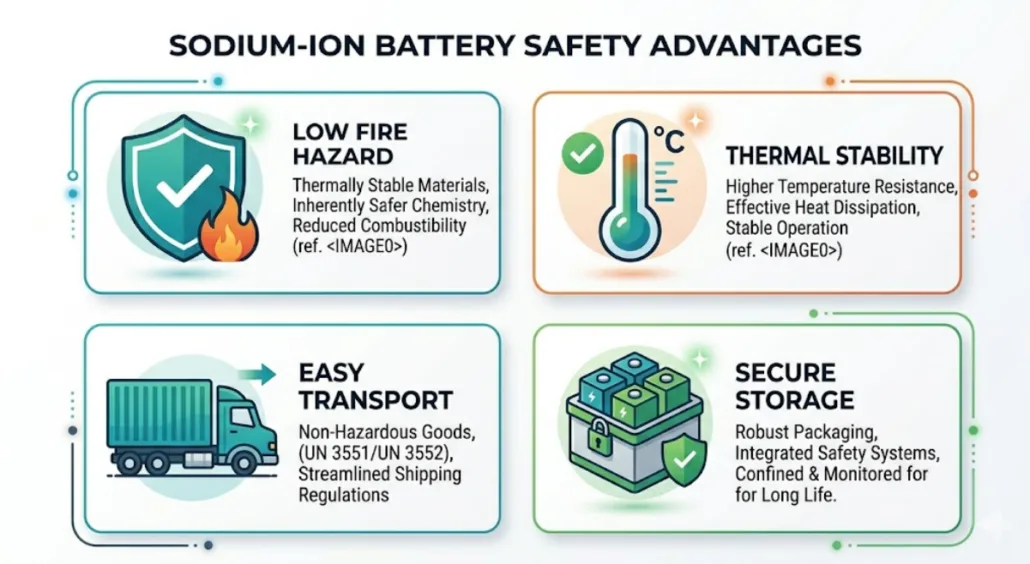
- Low fire risk
- Strong thermal stability
- Safe transport at 0V
- Better storage performance
- Reduced system complexity
Current Challenges: Energy Density and Market Adoption
Every technology has trade-offs.
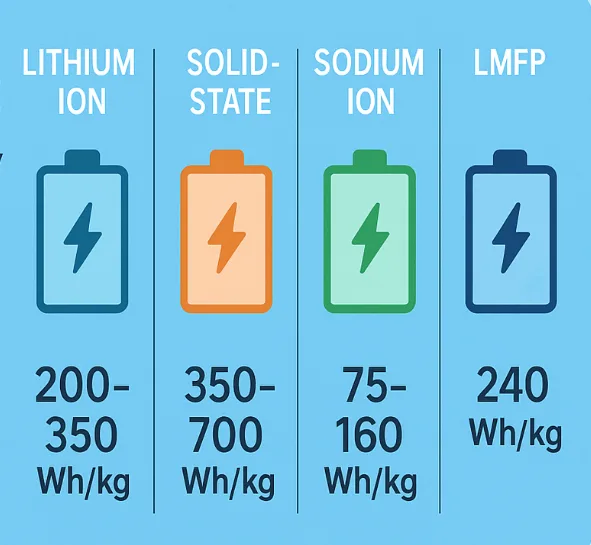
Energy density remains lower than lithium-ion. Larger systems may be required.
In addition, the market is still developing. Fewer suppliers are available today.
Even so, safety advantages often outweigh these limits in many use cases.
Frequently Asked Questions (FAQ)
Can sodium-ion batteries catch fire?
Fire is possible under extreme conditions. However, the risk is much lower than lithium-ion systems.
Are sodium-ion batteries safer than lithium-ion?
Yes. Lower heat generation and stable materials improve safety.
Do sodium-ion batteries need cooling?
Cooling is still required. However, simpler systems are usually enough.
Are sodium-ion batteries safe for indoor use?
Yes. Low fire risk makes them suitable for buildings and homes.
Can sodium-ion batteries be transported safely?
Yes. Zero-voltage storage allows safer shipping conditions.
Do sodium-ion batteries produce toxic fumes if they do fail
While any battery failure involves some gas release, the lack of heavy metals like Cobalt makes the profile generally less toxic
What safety certifications should I look for?
UL 1973 or IEC 62619
Conclusion
Sodium-ion battery safety offers clear benefits. Fire risk is lower, stability is higher, and transport is safer.
Because of these advantages, adoption is growing across energy storage systems.
Reference
Safety standards are guided by organizations such as UL Solutions and the International Electrotechnical Commission. These bodies define safety frameworks for battery systems worldwide.