
C&I BESS economics is becoming a critical consideration for businesses investing in energy storage solutions. By evaluating costs, return on investment (ROI), and key applications such as peak shaving, energy shifting, and renewable integration, companies can strategically plan how battery energy storage systems (BESS) deliver long-term financial and operational benefits. Why C&I BESS Economics Matters […]
https://sunlithenergy.com/wp-content/uploads/2025/08/ci-bess-economics.png775960Rahul Jaltharhttp://sunlithenergy.com/wp-content/uploads/2025/06/sunlith-logo-300x108.jpgRahul Jalthar2025-08-28 14:44:042025-09-07 00:42:51Understanding the Economics of C&I BESS Deployment
As renewable energy adoption accelerates, businesses are investing in solar and wind power to reduce costs, cut emissions, and achieve sustainability goals. However, the challenge of intermittency—the variability of renewable energy output—remains a barrier to full reliability. This is where C&I BESS with renewable energy plays a transformative role. By providing storage, flexibility, and stability, […]
https://sunlithenergy.com/wp-content/uploads/2025/08/CI-BESS-with-Renewable-Energy.png760809Rahul Jaltharhttp://sunlithenergy.com/wp-content/uploads/2025/06/sunlith-logo-300x108.jpgRahul Jalthar2025-08-27 14:57:352025-09-07 00:43:27How C&I BESS Enhances Solar and Wind Power Integration
C&I BESS economics is becoming a critical consideration for businesses investing in energy storage solutions. By evaluating costs, return on investment (ROI), and key applications such as peak shaving, energy shifting, and renewable integration, companies can strategically plan how battery energy storage systems (BESS) deliver long-term financial and operational benefits. Why C&I BESS Economics Matters […]
https://sunlithenergy.com/wp-content/uploads/2025/08/ci-bess-economics.png775960Rahul Jaltharhttp://sunlithenergy.com/wp-content/uploads/2025/06/sunlith-logo-300x108.jpgRahul Jalthar2025-08-28 14:44:042025-09-07 00:42:51Understanding the Economics of C&I BESS Deployment
As renewable energy adoption accelerates, businesses are investing in solar and wind power to reduce costs, cut emissions, and achieve sustainability goals. However, the challenge of intermittency—the variability of renewable energy output—remains a barrier to full reliability. This is where C&I BESS with renewable energy plays a transformative role. By providing storage, flexibility, and stability, […]
https://sunlithenergy.com/wp-content/uploads/2025/08/CI-BESS-with-Renewable-Energy.png760809Rahul Jaltharhttp://sunlithenergy.com/wp-content/uploads/2025/06/sunlith-logo-300x108.jpgRahul Jalthar2025-08-27 14:57:352025-09-07 00:43:27How C&I BESS Enhances Solar and Wind Power Integration
C&I BESS economics is becoming a critical consideration for businesses investing in energy storage solutions. By evaluating costs, return on investment (ROI), and key applications such as peak shaving, energy shifting, and renewable integration, companies can strategically plan how battery energy storage systems (BESS) deliver long-term financial and operational benefits.
For decision-makers, the economics provide the blueprint for determining whether a system is financially viable. Unlike traditional infrastructure, BESS generates multiple revenue streams—making it a compelling long-term investment.
Cost Components of C&I BESS
When evaluating C&I BESS economics, businesses need to consider all the cost components involved in deployment:
Capital Expenditure (CAPEX): Includes the cost of battery modules, power conversion systems (PCS), enclosures, and installation.
Integration Costs: Grid interconnection, compliance with utility standards, and renewable energy integration.
Safety & Compliance Costs: Fire safety systems, IP-rated enclosures, and certifications to meet international standards.
Understanding these costs ensures businesses can budget accurately and anticipate ROI timelines.
Return on Investment (ROI) for C&I BESS
ROI is one of the most attractive elements of C&I BESS economics. While upfront costs may seem high, the savings and revenue opportunities deliver significant returns. Key ROI drivers include:
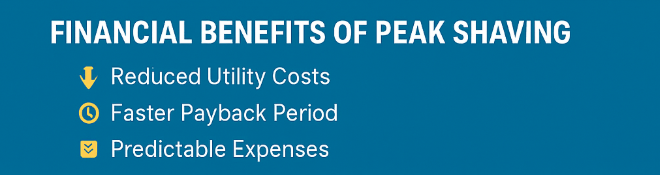
Energy Bill Savings: Demand charge reduction and peak shaving lower operational expenses.
Grid Services Revenue: Businesses can participate in frequency regulation and demand response programs.
Enhanced Renewable Utilization: Solar and wind power can be stored and used later, reducing reliance on expensive grid power.
Backup Power Value: Avoiding downtime and protecting operations ensures business continuity.
Typically, ROI periods range from 3–7 years, depending on system size, energy pricing, and incentive availability.
Peak Shaving: A Core Economic Benefit
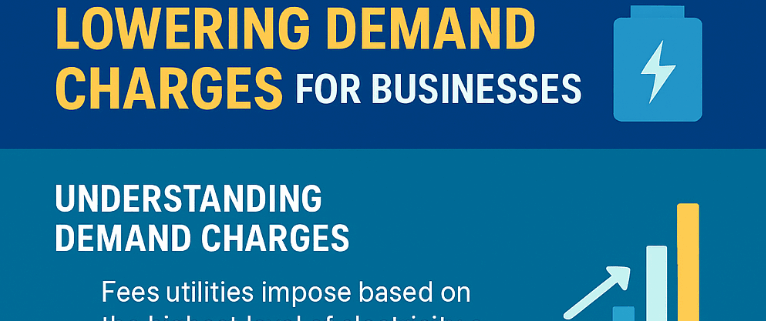
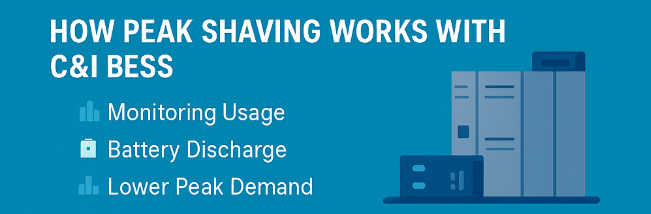
One of the strongest links in C&I BESS economics is peak shaving. Utilities often charge businesses based on their highest 15-minute demand interval each month. By deploying stored energy during peak demand, companies reduce these costly charges significantly.
By understanding these economics, businesses can make informed decisions, optimize their energy strategies, and strengthen both resilience and profitability in a rapidly evolving energy landscape.
https://sunlithenergy.com/wp-content/uploads/2025/08/ci-bess-economics.png775960Rahul Jaltharhttp://sunlithenergy.com/wp-content/uploads/2025/06/sunlith-logo-300x108.jpgRahul Jalthar2025-08-28 14:44:042025-09-07 00:42:51Understanding the Economics of C&I BESS Deployment
Solar and wind energy are inherently variable. Cloud cover can reduce solar production within minutes, while wind speed changes affect turbine output. Without a buffer, these fluctuations can lead to instability, grid imbalances, or even curtailment of renewable energy. For businesses that rely on consistent power for manufacturing, data centers, or logistics, unpredictability becomes a costly problem.
C&I BESS with renewable energy addresses this issue by storing excess electricity when generation is high and releasing it when demand spikes or output drops. This ensures steady energy delivery, even when renewable sources fluctuate.
Capture solar energy during peak sunlight hours and use it in the evening when demand and grid prices are higher.
Store wind power generated overnight and release it during working hours.
Reduce dependency on expensive peak-hour electricity.
By shifting energy use, C&I BESS with renewable energy ensures companies optimize both their operational costs and sustainability performance.
Supporting Microgrids for Energy Independence
Another growing trend is the deployment of microgrids, where localized power networks combine renewable generation, storage, and sometimes backup generators.
C&I BESS enhances microgrids by:
Providing islanded operation during grid outages, keeping facilities powered.
Enabling seamless integration of solar panels, wind turbines, and other distributed resources.
Balancing local supply and demand in real time.
For businesses operating in remote areas or regions with unstable grids, C&I BESS with renewable energy makes energy independence achievable.
Reduce reliance on fossil-fuel-based backup systems.
Meet Environmental, Social, and Governance (ESG) reporting requirements.
In this way, C&I BESS with renewable energy contributes not only to cost savings but also to long-term brand reputation and compliance with global sustainability frameworks.
Conclusion
The integration of C&I BESS with renewable energy is revolutionizing how businesses harness solar and wind power. By reducing intermittency, enabling energy shifting, supporting microgrids, and providing grid services, BESS empowers companies to take full advantage of renewable investments. For forward-looking enterprises, storage is no longer optional—it is essential to building a reliable, resilient, and sustainable energy future.
https://sunlithenergy.com/wp-content/uploads/2025/08/CI-BESS-with-Renewable-Energy.png760809Rahul Jaltharhttp://sunlithenergy.com/wp-content/uploads/2025/06/sunlith-logo-300x108.jpgRahul Jalthar2025-08-27 14:57:352025-09-07 00:43:27How C&I BESS Enhances Solar and Wind Power Integration