
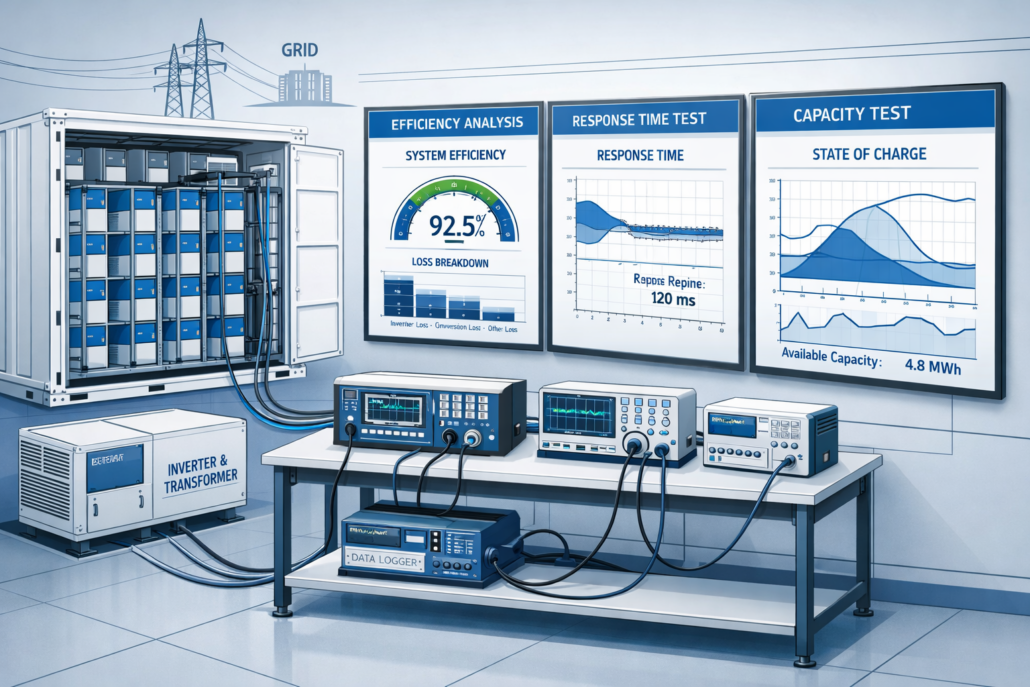
IEC 62933-2: ESS Performance Testing Methods & Benchmarks
Why Performance Testing Standards Matter
Performance claims without standardized testing create uncertainty for utilities, investors, and regulators. IEC 62933-2 ESS Performance testing addresses this gap by defining uniform test methods for evaluating how an electrical energy storage system performs under real operating conditions.
Unlike marketing specifications, IEC 62933-2 focuses on measurable, repeatable, and technology-neutral performance indicators. These benchmarks enable objective comparison between systems and support transparent procurement, certification, and grid integration.
IEC 62933-2 operates within the broader IEC 62933 Energy Storage Standards framework and relies on terminology defined in IEC 62933-1.
🔍 Summary: IEC 62933-2 ESS Performance Testing
IEC 62933-2 defines standardized performance testing methods for Electrical Energy Storage Systems (ESS). It establishes measurable benchmarks for efficiency, capacity, response time, and operational behavior under controlled conditions. The standard ensures consistent performance evaluation across technologies, enabling fair comparison, bankability, and grid compliance for battery energy storage systems (BESS) and other ESS technologies.
Scope of IEC 62933-2
IEC 62933-2 applies to electrical energy storage systems, regardless of technology type. This includes:
- Battery Energy Storage Systems (BESS)
- Electrochemical storage
- Hybrid ESS configurations
- Grid-connected and behind-the-meter systems
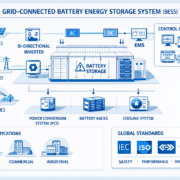
The standard evaluates system-level performance, not individual components. This distinction is critical, as real-world ESS performance depends on the interaction between batteries, power conversion systems, controls, and thermal management.
Key Performance Metrics Defined in IEC 62933-2
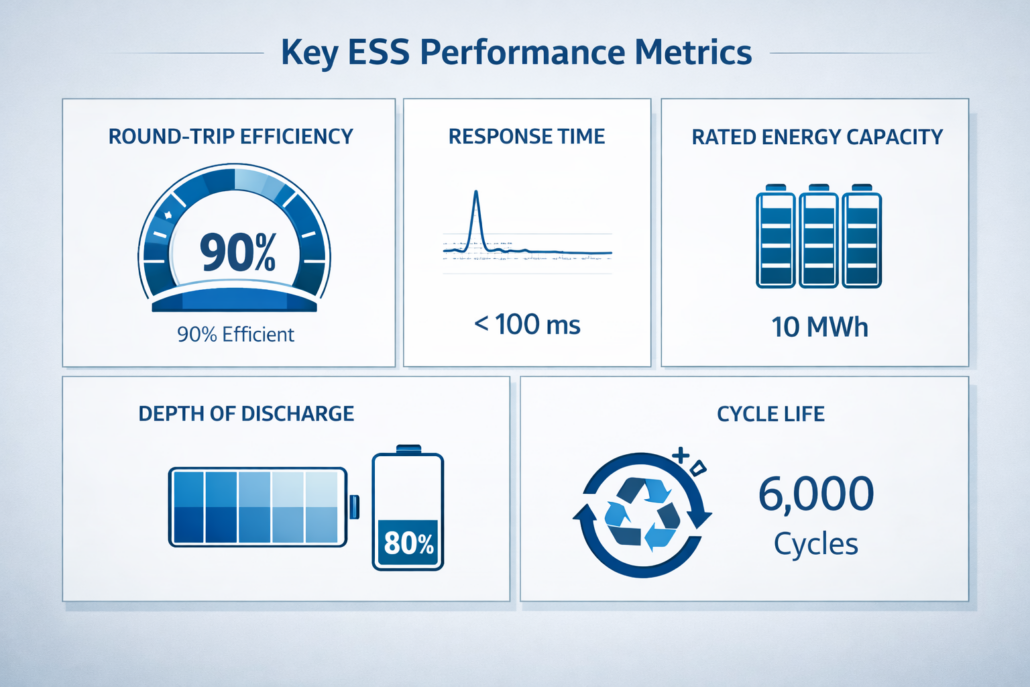
IEC 62933-2 establishes a common set of performance indicators that reflect how ESS behave during operation.
1. Rated Energy Capacity
Rated energy capacity represents the usable electrical energy an ESS can deliver under defined conditions. The standard specifies how capacity must be measured to avoid inflated claims.
2. Round-Trip Efficiency
Round-trip efficiency measures the ratio of energy output to energy input over a full charge-discharge cycle. IEC 62933-2 standardizes test conditions to ensure fair efficiency comparisons across systems.
3. Response Time
Response time evaluates how quickly an ESS can react to control signals. This metric is essential for grid services such as frequency regulation and voltage support.
4. Power Capability
The standard assesses both continuous and short-duration power output, reflecting real operational constraints imposed by system design and controls.
5. Capacity Retention
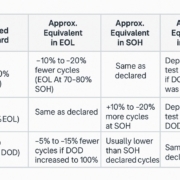
Capacity retention tracks performance degradation over repeated cycles, providing insight into long-term operational reliability.
IEC 62933-2 ESS Performance Testing Methodology
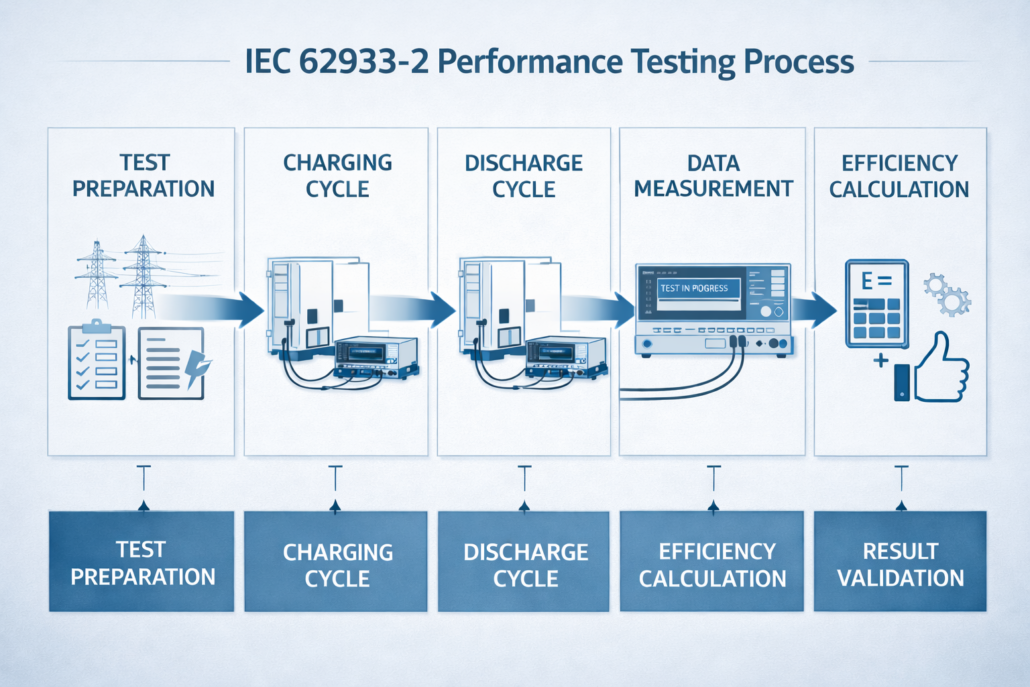
IEC 62933-2 defines structured testing procedures to ensure consistency and reproducibility.
Test Preparation
Before testing begins, the ESS must be configured according to defined operating parameters, including temperature, state of charge, and control settings.
Charging and Discharging Cycles
The system undergoes controlled charge and discharge cycles at specified power levels. These cycles simulate real operational use cases.
Measurement and Data Collection
All electrical parameters are measured at the point of connection (PoC), ensuring system-level accuracy rather than component-level approximation.
Result Validation
Collected data is analyzed against standardized calculation methods to validate performance metrics and eliminate test bias.
Laboratory Conditions for IEC 62933-2 Testing

IEC 62933-2 emphasizes controlled laboratory environments to ensure reliable results.
Key laboratory requirements include:
- Stable ambient conditions
- Calibrated measurement equipment
- Repeatable test configurations
- Documented test procedures
These conditions ensure that performance results are reproducible and comparable across manufacturers and testing facilities.
Performance Benchmarking and System Comparison
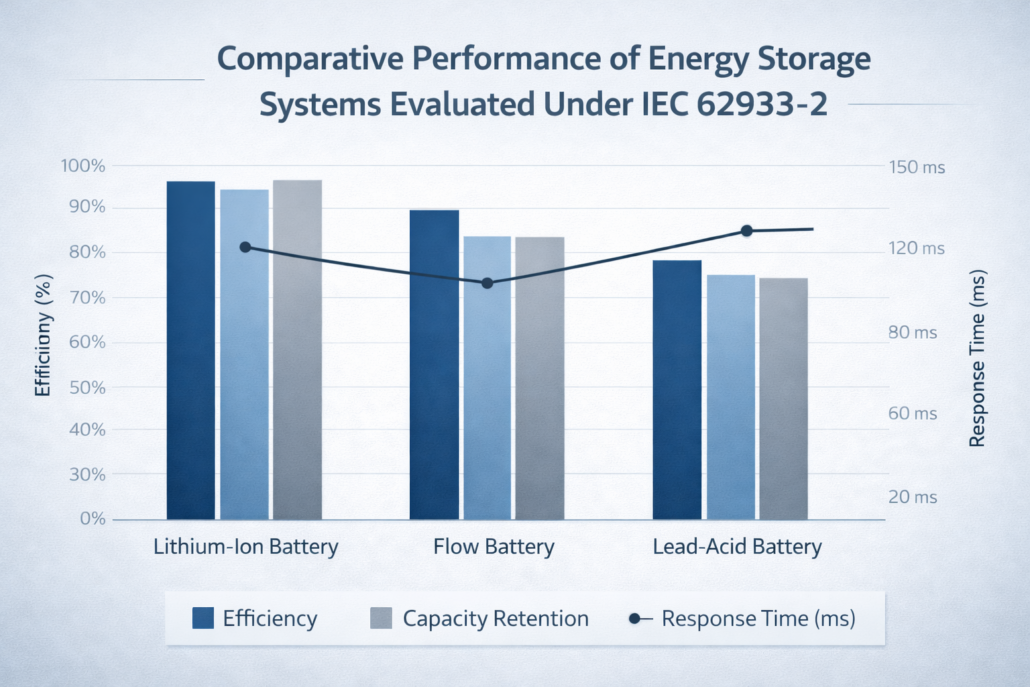
One of the most valuable outcomes of IEC 62933-2 is benchmarking. By applying the same test methods, stakeholders can compare ESS performance objectively.
Benchmarking supports:
- Technology selection decisions
- EPC procurement evaluations
- Utility grid qualification
- Financial due diligence
Performance benchmarking under IEC 62933-2 reduces project risk and improves transparency across the energy storage value chain.
Relationship Between IEC 62933-2 and ESS Safety Standards
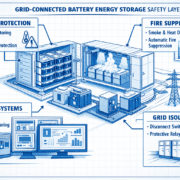
While IEC 62933-2 focuses on performance, it directly supports safety evaluation by identifying operational limits and stress conditions.
Performance data generated under IEC 62933-2 is often referenced during:
- Risk assessments
- Safety certification processes
- Compliance with IEC 62933-5 safety standards
For full compliance, performance testing should be aligned with system-level safety certification, such as UL Certifications for Battery Systems.
Grid Services and Operational Performance
IEC 62933-2 performance metrics are essential for ESS providing grid services, including:
- Frequency regulation
- Peak shaving
- Load shifting
- Renewable energy smoothing
Accurate performance testing ensures that ESS can meet contractual and regulatory obligations when deployed in grid-connected applications.
Global Regulatory and Commercial Importance
IEC 62933-2 is widely referenced by:
- Utilities
- Grid operators
- Certification bodies
- Financial institutions
Its standardized approach enables cross-border ESS deployment, reduces compliance ambiguity, and supports bankability for large-scale storage projects.
How IEC 62933-2 Fits into the IEC 62933 Series
| IEC Standard | Role |
|---|---|
| IEC 62933-1 | Terminology and classification |
| IEC 62933-2 | Performance testing and benchmarks |
| IEC 62933-4 | Environmental impact and end-of-life |
| IEC 62933-5-1/5-2 | Safety requirements |
| IEC 62933-5-3 | Grid integration safety |
Together, these standards form a complete lifecycle framework for energy storage systems.
FAQ – IEC 62933-2 ESS Performance Testing
What does IEC 62933-2 measure?
IEC 62933-2 measures system-level performance, including efficiency, capacity, response time, and power capability of electrical energy storage systems.
Is IEC 62933-2 mandatory?
IEC 62933-2 is not legally mandatory, but it is widely required for compliance, certification alignment, and project bankability.
Does IEC 62933-2 apply only to battery systems?
No. It applies to all electrical energy storage systems, regardless of technology.
How is IEC 62933-2 different from component testing?
IEC 62933-2 evaluates the complete ESS at the system level, not individual batteries or converters.
Conclusion
IEC 62933-2 ESS Performance Testing provides the technical foundation for credible, transparent, and comparable ESS performance evaluation. By standardizing how energy storage systems are tested and benchmarked, the standard reduces risk, improves confidence, and accelerates global ESS adoption.
For manufacturers, EPCs, utilities, and regulators, IEC 62933-2 is a critical step toward safe, efficient, and bankable energy storage deployment.






Leave a Reply
Want to join the discussion?Feel free to contribute!