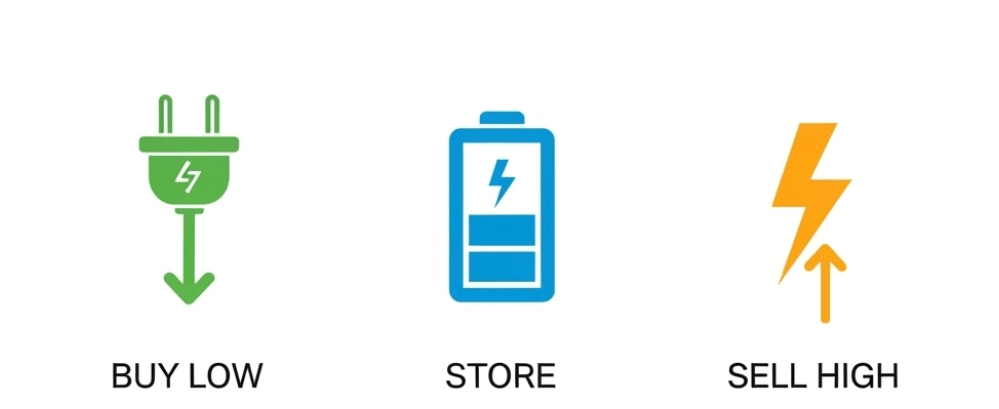
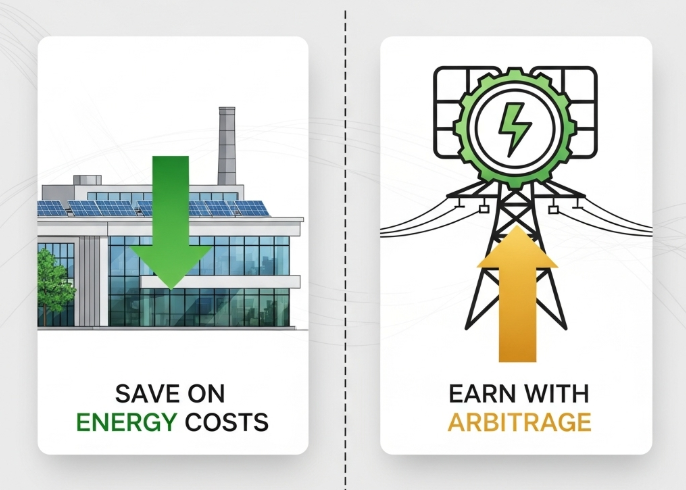
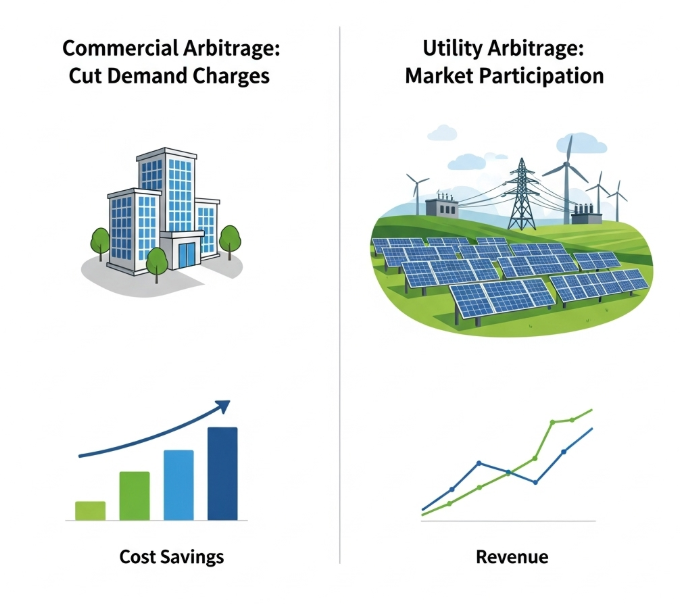
What is Energy Arbitrage? Energy arbitrage is one of the most powerful applications of Battery Energy Storage Systems (BESS). At its core, it means buying electricity when prices are low and selling it when prices are high. For grid operators, businesses, and renewable energy developers, energy arbitrage provides both financial returns and grid stability. At […]
🌞 Introduction: Why You Should Know About TOPCon Solar Cells Solar energy is one of the best ways to produce clean electricity. But to get the most from your solar panels, you need the right kind of solar cells. One of the newest and most powerful types is called TOPCon solar cells. Many experts believe […]
What is Energy Arbitrage? Energy arbitrage is one of the most powerful applications of Battery Energy Storage Systems (BESS). At its core, it means buying electricity when prices are low and selling it when prices are high. For grid operators, businesses, and renewable energy developers, energy arbitrage provides both financial returns and grid stability. At […]
🌞 Introduction: Why You Should Know About TOPCon Solar Cells Solar energy is one of the best ways to produce clean electricity. But to get the most from your solar panels, you need the right kind of solar cells. One of the newest and most powerful types is called TOPCon solar cells. Many experts believe […]
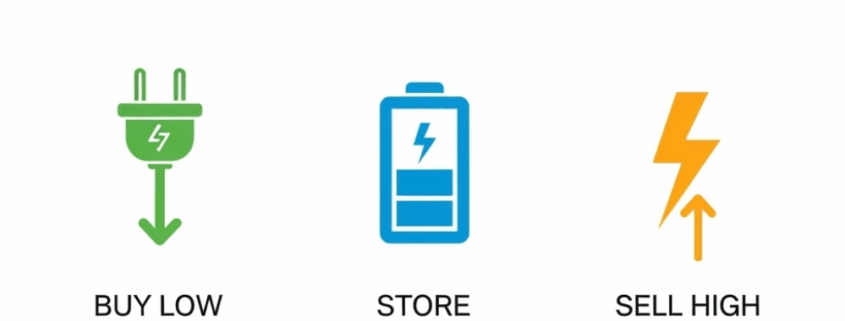
Energy arbitrage is one of the most powerful applications of Battery Energy Storage Systems (BESS). At its core, it means buying electricity when prices are low and selling it when prices are high. For grid operators, businesses, and renewable energy developers, energy arbitrage provides both financial returns and grid stability.
At Sunlith Energy, we specialize in advanced BESS solutions that make energy arbitrage practical, profitable, and sustainable.
In this guide, we will explain everything in a simple and easy-to-understand way.
🔍 What Are TOPCon Solar Cells?
TOPCon stands for Tunnel Oxide Passivated Contact. It is a new type of solar cell that increases power generation by reducing energy loss.
These solar cells use a special design that helps move electricity more smoothly. This means you get more energy from the same amount of sunlight.
Unlike older types of cells, TOPCon solar cells use n-type silicon, which does not degrade as fast and works better in all weather conditions.
🧱 How TOPCon Solar Cells Are Built
Here’s how the structure of a TOPCon solar cell looks:
Layer
Function
N-type Silicon Wafer
Main base of the cell, long-lasting
Tunnel Oxide Layer
Ultra-thin layer to stop energy loss
Polycrystalline Silicon Layer
Helps carry electricity smoothly
Anti-Reflective Coating
Catches more sunlight
Metal Contacts
Transfers electricity to the system
Thanks to this advanced structure, TOPCon solar cells can deliver better results than regular monocrystalline or PERC cells.
⚙️ How Do TOPCon Solar Cells Work?
Solar cells work by changing sunlight into electricity. But some of that energy gets lost along the way.
TOPCon cells solve this problem by using a very thin oxide layer and a special contact layer. This combo helps electrons move faster without getting lost.
Here’s a simple explanation:
Sunlight hits the cell.
Electrons are created.
These electrons move through the tunnel oxide.
The special contact layer helps collect them.
Electricity is sent to your home or battery.
Because there’s less waste, TOPCon solar cells are more efficient.
📈 Efficiency of TOPCon Solar Cells
One of the biggest reasons people are excited about TOPCon technology is its high efficiency.
TOPCon panels can reach 22% to 23.5% efficiency.
Standard panels like polycrystalline reach only 15%–17%.
Monocrystalline and PERC usually reach 18%–21%.
That means with TOPCon, you get more power using the same space.
🔄 TOPCon vs PERC vs Other Solar Cells
Let’s look at how TOPCon solar cells compare to other common technologies:
Feature
Polycrystalline
Monocrystalline
PERC
TOPCon
Silicon Type
P-type
P-type
P-type
N-type
Efficiency Range
15%–17%
18%–20%
20%–21.5%
22%–23.5%
Degradation Rate
Higher
Medium
Medium
Very Low
Low-Light Performance
Poor
Average
Good
Excellent
Cost
Low
Medium
Medium
Slightly High
Lifespan
20–25 years
25–30 years
25–30 years
30+ years
As you can see, TOPCon solar cells are one of the best in almost every category.
✅ Key Benefits of TOPCon Solar Cells
Here are the top reasons why more people are choosing TOPCon technology:
1. Higher Energy Output
TOPCon cells are more efficient. You get more power per panel.
2. Better in Cloudy or Low-Light Conditions
Because of the n-type silicon and advanced design, TOPCon works even when sunlight is not strong.
3. Longer Life and Better Stability
These panels degrade very slowly. That means they keep performing well for more years.
4. Lower Temperature Loss
In hot weather, normal panels lose efficiency. TOPCon handles heat better, so you don’t lose as much energy.
5. Bifacial Ready
Many TOPCon panels are bifacial, which means they generate electricity from both the front and the back side. That adds even more power!
❌ Are There Any Drawbacks?
Even though TOPCon is amazing, it’s not perfect.
Here are some minor drawbacks:
Slightly Higher Price – Because of the advanced structure, TOPCon costs more than regular panels.
Newer Technology – Not all installers are familiar with it yet.
More Precise Manufacturing Needed – It takes better equipment and control to make these cells.
Still, for the performance you get, many believe it’s worth the extra investment.
🌍 Where Can TOPCon Be Used?
TOPCon solar cells are perfect for:
Rooftop solar systems (homes and businesses)
Solar farms and utility-scale projects
Projects where space is limited but high output is needed
Areas with high temperatures or frequent cloudy weather
If you’re planning a long-term project and want high return, TOPCon is a great choice.
🏭 Who Makes TOPCon Panels?
Several major companies have already launched TOPCon-based solar panels:
These manufacturers are expanding their production lines, and prices are slowly becoming more affordable.
🧠 Frequently Asked Questions
🔹 Is TOPCon better than PERC?
Yes, in most ways. It offers more efficiency, better performance in heat and shade, and longer life.
🔹 Does TOPCon cost more?
A little, yes. But the extra power and longer lifespan can make up for that cost over time.
🔹 Is TOPCon good for home solar?
Absolutely! Especially if your roof space is limited and you want to get the most energy per panel.
🚀 Final Thoughts: Is TOPCon the Right Choice for You?
If you care about performance, future value, and reliability, then TOPCon solar cells are a smart pick.
They give you:
More energy
Less loss
Longer life
Better value over time
Yes, the initial price is slightly higher—but the long-term gain is much greater.
TOPCon is not just a technical upgrade—it’s a smarter solar decision.
🔧 Need Help Choosing the Right Solar Panels?
As a sourcing and procurement consultant in the new energy field, I help clients select the best-fit solar technology for their project’s location, budget, and performance needs.