What is UL 1642 Certification?: Lithium-ion batteries power nearly every aspect of our modern lives—electric vehicles, energy storage systems (ESS), consumer electronics, and medical devices. With this widespread adoption comes a heightened need for safety. UL 1642 Certification is one of the most widely recognized safety standards for lithium-ion cells. It provides rigorous testing criteria […]
https://sunlithenergy.com/wp-content/uploads/2025/09/ul-1642-certification.png595908Rahul Jaltharhttp://sunlithenergy.com/wp-content/uploads/2025/06/sunlith-logo-300x108.jpgRahul Jalthar2025-09-25 09:21:512025-09-25 09:21:56UL 1642 Certification: Why It Matters for Lithium-Ion Battery Safety
UL 2271 Certification: A Safety Standard for Modern Mobility The popularity of light electric vehicles (LEVs) such as e-bikes and scooters has surged in cities worldwide. With this growth comes an urgent need for reliable and safe batteries. UL 2271 certification provides a trusted benchmark, ensuring lithium-ion batteries used in LEVs are tested for safety, […]
https://sunlithenergy.com/wp-content/uploads/2025/09/UL-2271-Certification.png605913Rahul Jaltharhttp://sunlithenergy.com/wp-content/uploads/2025/06/sunlith-logo-300x108.jpgRahul Jalthar2025-09-24 02:14:332025-09-28 02:15:14UL 2271 Certification: Ensuring Safe Lithium Batteries for Light Electric Vehicles
What is UL 1642 Certification?: Lithium-ion batteries power nearly every aspect of our modern lives—electric vehicles, energy storage systems (ESS), consumer electronics, and medical devices. With this widespread adoption comes a heightened need for safety. UL 1642 Certification is one of the most widely recognized safety standards for lithium-ion cells. It provides rigorous testing criteria […]
https://sunlithenergy.com/wp-content/uploads/2025/09/ul-1642-certification.png595908Rahul Jaltharhttp://sunlithenergy.com/wp-content/uploads/2025/06/sunlith-logo-300x108.jpgRahul Jalthar2025-09-25 09:21:512025-09-25 09:21:56UL 1642 Certification: Why It Matters for Lithium-Ion Battery Safety
UL 2271 Certification: A Safety Standard for Modern Mobility The popularity of light electric vehicles (LEVs) such as e-bikes and scooters has surged in cities worldwide. With this growth comes an urgent need for reliable and safe batteries. UL 2271 certification provides a trusted benchmark, ensuring lithium-ion batteries used in LEVs are tested for safety, […]
https://sunlithenergy.com/wp-content/uploads/2025/09/UL-2271-Certification.png605913Rahul Jaltharhttp://sunlithenergy.com/wp-content/uploads/2025/06/sunlith-logo-300x108.jpgRahul Jalthar2025-09-24 02:14:332025-09-28 02:15:14UL 2271 Certification: Ensuring Safe Lithium Batteries for Light Electric Vehicles
What is UL 1642 Certification?: Lithium-ion batteries power nearly every aspect of our modern lives—electric vehicles, energy storage systems (ESS), consumer electronics, and medical devices. With this widespread adoption comes a heightened need for safety.
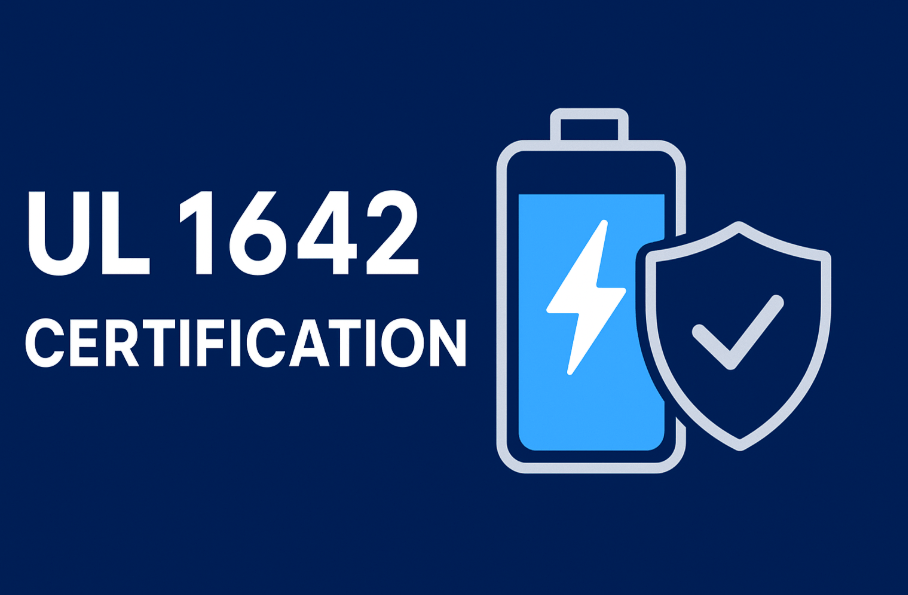
UL 1642 Certification is one of the most widely recognized safety standards for lithium-ion cells. It provides rigorous testing criteria to ensure that these cells perform reliably and minimize risks of fire, explosion, or leakage. For companies like Sunlith Energy, aligning products with UL 1642 builds trust and demonstrates commitment to global safety standards.
Understanding UL 1642: The Scope of Certification
UL 1642 specifically applies to lithium-ion and lithium-metal cells, not complete battery packs or energy storage systems.
Scope: Evaluates individual battery cells.
Objective: Ensures cells resist hazardous conditions such as overcharging, short circuits, and high temperatures.
Coverage: Tests for mechanical, electrical, and environmental stress conditions.
By certifying cells under UL 1642, manufacturers establish a solid foundation for further certifications like UL 1973 (batteries for stationary use) and UL 9540 (energy storage systems).
To achieve UL 1642 compliance, lithium-ion cells undergo rigorous testing protocols designed to simulate real-world hazards. These include:
1. Electrical Abuse Testing
Overcharge tests
Forced discharge conditions
Short-circuit simulation
2. Mechanical Stress Testing
Crush resistance
Impact/shock exposure
Vibration endurance
3. Environmental Testing
High and low temperature cycles
Humidity and pressure variations
Altitude simulations
4. Fire and Safety Checks
Flammability and explosion risk assessment
Venting and leakage monitoring
These tests ensure that cells can handle extreme operating environments without catastrophic failure.
Why UL 1642 Certification Matters
Lithium-ion batteries are known for their high energy density, but that also makes them prone to thermal runaway if not properly managed. UL 1642 provides manufacturers, regulators, and end-users with confidence in battery safety.
Benefits of UL 1642:
✅ Safety Assurance: Demonstrates resistance to overheating and fire risks.
✅ Regulatory Compliance: Required for global exports and OEM partnerships.
✅ Market Trust: Strengthens brand reputation and product acceptance.
✅ Foundation for System Certification: A stepping stone for UL 1973 and UL 9540.
For Sunlith Energy, integrating UL 1642-certified cells into solutions ensures maximum reliability in battery energy storage systems (BESS) and beyond.
UL 1642 vs. Other UL Standards
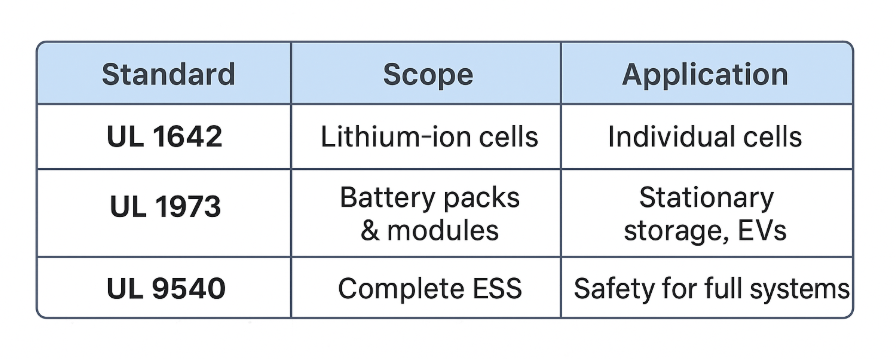
Many people confuse UL 1642 with other UL certifications. Here’s how they differ:
By ensuring compliance, companies reduce liability and improve adoption across global markets.
Sunlith Energy and UL Compliance
At Sunlith Energy, we prioritize safety and compliance in every solution. Our expertise in battery energy storage systems (BESS) integrates UL-certified components, ensuring our clients meet international safety standards without compromise.
Whether you’re developing grid-scale energy projects or industrial ESS solutions, choosing UL 1642-certified cells is the first step in building a safe, reliable, and future-ready system.
Conclusion: Building Trust with UL 1642 Certification
As the global demand for lithium-ion batteries accelerates, UL 1642 certification remains the gold standard for cell-level safety assurance. It reduces risks, improves market acceptance, and lays the groundwork for advanced certifications like UL 1973 and UL 9540.
For energy storage innovators and partners working with Sunlith Energy, compliance isn’t just a checkbox—it’s a commitment to safety, reliability, and global leadership.
✅ Key Takeaway: UL 1642 Certification ensures lithium-ion cells meet the highest safety standards, making it a cornerstone for trusted energy storage solutions.
1. What is UL 1642 Certification?
UL 1642 is a safety standard that applies to lithium-ion and lithium-metal cells. It ensures cells can withstand electrical, mechanical, and environmental stress without causing fire, explosion, or leakage.
Frequently Asked Questions (FAQ) about UL 1642 Certification
2. Does UL 1642 cover battery packs or just cells?
UL 1642 applies only to individual cells. Battery packs and modules require additional certifications such as UL 1973 for stationary applications and UL 9540 for full energy storage systems.
3. Why is UL 1642 Certification important for lithium-ion batteries?
Because lithium-ion cells have high energy density, they can pose fire or explosion risks if not properly designed. UL 1642 testing validates that cells meet the highest safety standards, reducing liability and building market trust.
4. How does UL 1642 Certification differ from UL 1973 and UL 9540?
UL 1642: Tests individual lithium-ion cells.
UL 1973: Covers full battery modules and packs for stationary storage and EVs.
UL 9540: Ensures complete energy storage systems (ESS) meet fire and safety requirements.
While not legally required in every country, UL 1642 is considered a global benchmark for lithium-ion cell safety. Most manufacturers and system integrators require it for compliance and international trade.
6. Which industries rely on UL 1642-certified cells?
UL 1642 is critical in:
Aerospace & Defense
Energy Storage Systems (ESS)
Electric Vehicles (EVs)
Medical Devices
Consumer Electronics
7. How does Sunlith Energy use UL 1642-certified cells?
At Sunlith Energy, we integrate UL 1642-certified cells into our battery energy storage systems (BESS) to ensure maximum safety, reliability, and compliance for our global partners.
https://sunlithenergy.com/wp-content/uploads/2025/09/ul-1642-certification.png595908Rahul Jaltharhttp://sunlithenergy.com/wp-content/uploads/2025/06/sunlith-logo-300x108.jpgRahul Jalthar2025-09-25 09:21:512025-09-25 09:21:56UL 1642 Certification: Why It Matters for Lithium-Ion Battery Safety
UL 2271 Certification: A Safety Standard for Modern Mobility
The popularity of light electric vehicles (LEVs) such as e-bikes and scooters has surged in cities worldwide. With this growth comes an urgent need for reliable and safe batteries. UL 2271 certification provides a trusted benchmark, ensuring lithium-ion batteries used in LEVs are tested for safety, reliability, and durability.
At Sunlith Energy, we understand that safety is not optional—it is the foundation of innovation in clean mobility. That is why UL 2271 plays a vital role in our approach to powering the next generation of transport solutions.
What is UL 2271?
UL 2271 is a standard developed by UL Solutions, titled “Batteries for Use in Light Electric Vehicle Applications.” It applies to rechargeable lithium-ion batteries and battery packs designed for vehicles like:
Electric bicycles (e-bikes)
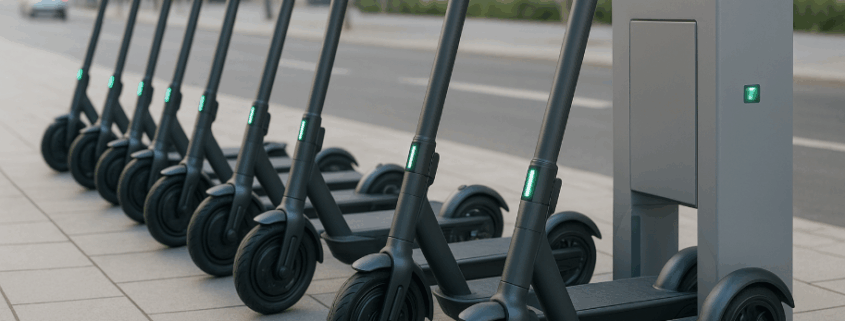
Electric scooters
Utility carts and campus shuttles
Personal mobility devices
This certification addresses risks such as fire, thermal runaway, and electrical failure, giving users peace of mind while adopting electric transport.
Why UL 2271 Matters for LEVs
Lithium-ion batteries can fail under stress or misuse, sometimes causing dangerous incidents. UL 2271 reduces these risks through rigorous testing and quality checks. The benefits extend across the ecosystem:
For Consumers – Safer rides with fewer risks of overheating or fires.
For Manufacturers – Compliance that strengthens brand trust and accelerates market approval.
For Regulators – A standardized approach to evaluating battery safety. Agencies such as the U.S. Consumer Product Safety Commission (CPSC) reference UL certifications when assessing risks.
For Fleet Operators – Fewer breakdowns, lower insurance risks, and higher uptime.
By aligning with UL 2271, manufacturers demonstrate a commitment to safety and long-term reliability.
Core Testing Areas in UL 2271
The certification process is extensive, covering every aspect of battery behavior:
Electrical Performance
Overcharge and discharge protection
Short-circuit resistance
Abnormal charging safety
Mechanical Safety
Crush resistance
Drop impact testing
Vibration endurance
Environmental Conditions
Temperature cycling (hot and cold)
Humidity and corrosion exposure
Thermal stability
Abuse Scenarios
Nail penetration
Fire exposure
Forced discharge tests
These simulations ensure that batteries are safe not only under normal use but also in extreme and unexpected conditions.
Where UL 2271 Certified Batteries Are Used
Certified batteries can be found across a variety of mobility applications:
Micromobility fleets – Shared e-scooters and bikes in urban environments
Logistics and delivery – Small electric utility vehicles for last-mile transport
Campus and industrial transport – Electric carts in universities, resorts, and warehouses
Personal recreation – Electric skateboards, hoverboards, and other small vehicles
As cities embrace greener mobility, UL 2271 ensures these devices meet the highest standards of safety.
How UL 2271 Compares to Other Standards
Different UL standards apply to batteries depending on their use case. Here’s how UL 2271 fits into the bigger picture:
This distinction makes UL 2271 the go-to certification for smaller mobility solutions, bridging the gap between consumer electronics and large electric vehicles.
Benefits for Manufacturers
For companies producing batteries and light mobility systems, UL 2271 certification unlocks significant advantages:
Global Market Access – Many import and sales channels require UL approval.
Consumer Trust – Certified products carry the UL mark, a symbol of safety.
Fewer Recalls – Certified designs lower the risk of costly failures.
Brand Differentiation – Compliance shows leadership in product responsibility.
At Sunlith Energy, we believe certification is not only about meeting regulations but also about earning customer confidence.
Global Adoption of UL 2271
Though it originates in the United States, UL2271 is recognized worldwide. European markets, as well as regions in Asia-Pacific, increasingly request UL-certified products. Organizations like the European Committee for Electrotechnical Standardization (CENELEC) often align their safety requirements with UL or IEC standards such as IEC 62133.
Challenges in Certification
Adopting UL 2271 isn’t without hurdles:
Testing and approval costs can be high.
Certification takes time, which may affect product launches.
Standards evolve as technology advances, requiring ongoing compliance updates.
However, for manufacturers committed to long-term success, the benefits outweigh the costs.
The Future of UL 2271
As micromobility grows, the importance of UL2271 will only increase. We expect:
Tighter adoption by regulators and fleet operators.
Integration with international standards like IEC 62133.
Adjustments for new technologies such as semi-solid and solid-state batteries.
UL2271 will remain a critical part of ensuring that e-mobility remains safe, sustainable, and trusted.
Conclusion
UL 2271 certification is more than a technical requirement—it is a safety guarantee. For consumers, it provides assurance that their rides are reliable. For manufacturers, it opens global markets and builds trust. For regulators, it creates consistency.
At Sunlith Energy, we see UL2271 as a cornerstone in shaping a secure, innovative, and eco-friendly mobility future. Learn more about our work in certification and compliance by exploring global battery certifications.
FAQs
Q1: Does UL 2271 apply to large EVs like cars?
No. Large EVs fall under UL 2580. UL2271 is specifically designed for smaller vehicles such as scooters and e-bikes.
Q2: Is certification mandatory?
While not always legally required, many retailers, regulators, and fleet programs demand UL compliance before accepting products.
Q3: How long does certification take?
Timelines vary, but manufacturers should prepare for several weeks to months depending on design complexity.
Q4: Does UL 2271 cover battery management systems (BMS)?
Yes. The standard includes evaluations of cells, packs, and electronic control systems.
Q5: Can UL 2271 certified batteries be used in storage systems?
No. Stationary energy storage solutions fall under UL 9540/9540A.
https://sunlithenergy.com/wp-content/uploads/2025/09/UL-2271-Certification.png605913Rahul Jaltharhttp://sunlithenergy.com/wp-content/uploads/2025/06/sunlith-logo-300x108.jpgRahul Jalthar2025-09-24 02:14:332025-09-28 02:15:14UL 2271 Certification: Ensuring Safe Lithium Batteries for Light Electric Vehicles