
UL 2054 Certification Guide: Battery Pack Safety
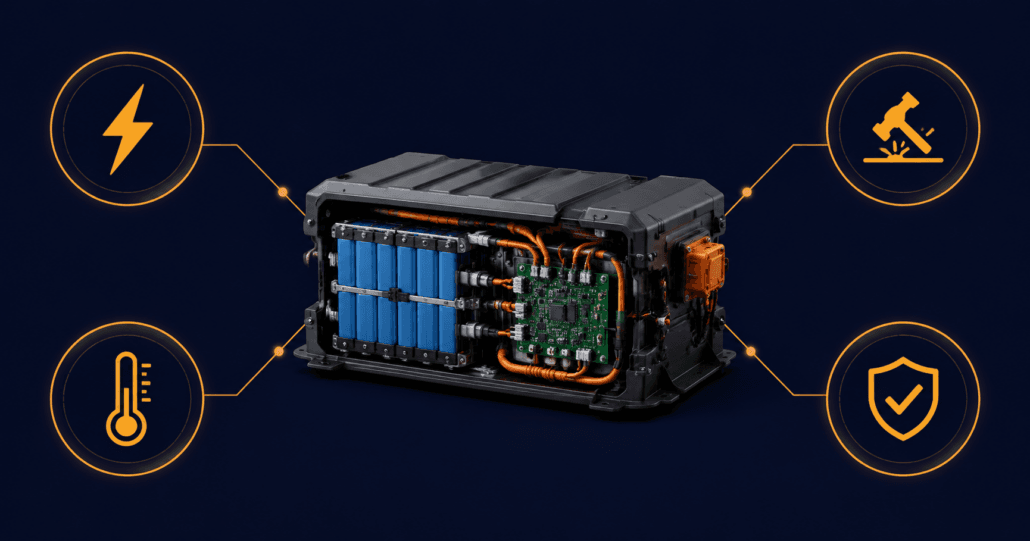
UL 2054 certification is the core safety standard for complete battery packs sold in North America. Underwriters Laboratories publishes it. A cell-level standard tests one component. UL 2054, on the other hand, tests the finished pack as a whole — the housing, the wiring, and the protection circuits, all working together.
This guide covers what actually sets UL 2054 apart. First, you’ll see the Single Fault Condition test. Next, you’ll learn the two paths to certification. Then, we’ll explain why the cells inside your pack need their own approval first. For the cell-level standard this builds on, see our UL 1642 certification guide. Or, browse our full UL certifications overview for the complete compliance picture. The U.S. Consumer Product Safety Commission also lists UL 2054 as a recognized voluntary standard for household and commercial batteries.
What UL 2054 Covers — and What It Doesn’t
UL 2054 applies to complete battery packs. This includes both primary, non-rechargeable batteries and secondary, rechargeable ones. It covers several chemistries too: lithium-ion, lithium-polymer, NiMH, and NiCd.
However, the standard doesn’t test individual cells on its own. Instead, it points to UL 1642 for the lithium cells used inside a pack. In practice, this means the cells need UL 1642 approval first, before the finished pack goes to a lab for UL 2054 testing. Skipping this step doesn’t skip the requirement. It just shifts the burden. If a pack arrives with uncertified cells, the lab has to run the full UL 1642 cell tests too. As a result, this roughly doubles both the testing cycle and the cost.
UL 2054 also stops at a certain scale. It doesn’t cover electric vehicle batteries, since those fall under UL 2580. It doesn’t cover industrial or stationary storage batteries either, since those fall under UL 1973. Think of UL 2054 as the standard for everything in between: the packs inside laptops, power tools, e-bikes, medical devices, and household energy storage products.
The Testing Categories
UL 2054 groups its requirements into four areas. Each one targets a different way a pack can fail.
- Electrical — short-circuit testing at multiple temperatures, an abnormal charging test, an abusive overcharge test at an elevated charge rate, a forced-discharge test for multi-cell configurations, and a Limited Power Source (LPS) test.
- Mechanical — a crush test using a hydraulic ram, an impact test with a drop weight, shock testing, and vibration testing that simulates shipping and handling.
- Environmental — temperature cycling, humidity exposure, and low-pressure altitude simulation.
- Enclosure — a mold stress test, a drop test, and a static force test on the housing itself. After all, the casing is the pack’s first line of defense if something goes wrong internally.
Across every category, the underlying requirement stays the same: no fire, and no explosion. For pack-level samples specifically, the pack also can’t leak electrolyte through a cracked or ruptured cell casing. For a broader look at how labs approach battery testing generally, UL’s own battery safety testing overview is a useful reference.
The Single Fault Condition Test
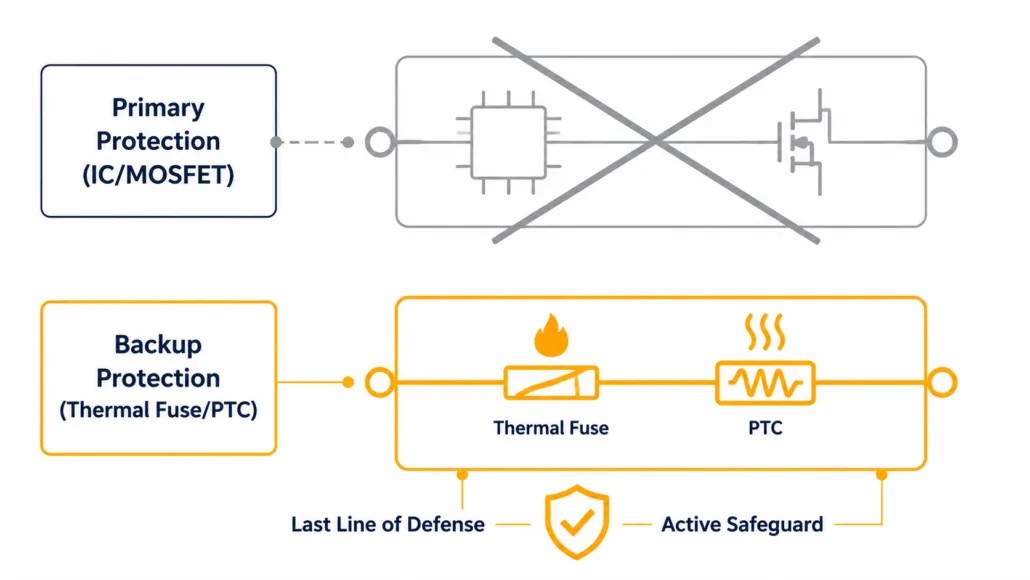
This is the detail that most separates UL2054 from a simpler pack test. Yet it rarely gets explained clearly. Most battery packs ship with two layers of protection: a primary IC-based circuit, and a secondary fuse or protection device.
During testing, the lab doesn’t just check that both layers work. Instead, it deliberately disables one. Typically, this means intentionally shorting the primary protection MOSFET or IC, to simulate a real-world failure of that first layer. The pack then has to survive on its remaining protection alone — commonly a thermal fuse or PTC device — during an overcharge event. A pack that depends entirely on its primary IC, with no independent hardware backup, tends to fail here. In fact, this is the most common reason a first submission doesn’t pass.
Two Paths to UL 2054 Certification
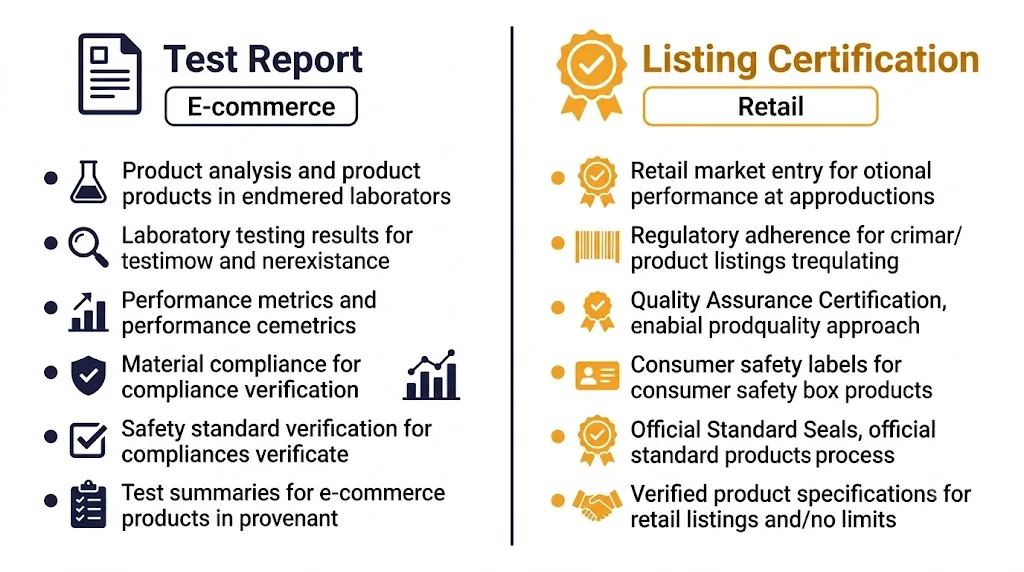
Manufacturers can pursue UL 2054 compliance in two different ways. The right choice depends on where the product is sold.
| UL 2054 Test Report | UL 2054 Listing Certification | |
|---|---|---|
| What it includes | Lab testing only, no factory audit | Lab testing plus ongoing quarterly factory inspections |
| Speed and cost | Faster and lower cost | Slower and more expensive, due to the audit program |
| Allows the UL Mark? | No | Yes |
| Typical use case | E-commerce platforms like Amazon | Offline retail and big-box distribution |
Amazon specifically requires a UL 2054 test report from an ISO 17025-accredited lab for lithium battery listings. If a listing gets flagged for missing documentation, sellers typically get a narrow window — often 14 to 30 days — to submit a valid report. Otherwise, the listing faces removal. For manufacturers targeting physical retail instead, the full Listing Certification with the UL Mark is usually the better long-term investment. Many retail buyers specifically require it.
How UL 2054 Fits With Other UL Battery Standards
UL 2054, UL 1642, UL 1973, UL 2580, and UL 9540 get confused constantly. That’s because they all show up in battery compliance conversations. However, each one certifies a different scope.
| Standard | What It Covers |
|---|---|
| UL 1642 | Individual lithium-ion or lithium-metal cells |
| UL 2054 | Complete battery packs for consumer and commercial products |
| UL 1973 | Batteries for stationary storage (BESS), light electric rail, and similar applications |
| UL 2580 | Battery packs and modules used in electric vehicles |
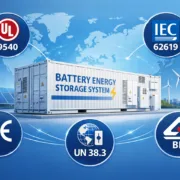
| UL 9540 | The complete energy storage system — batteries, PCS, controls, and enclosure together |
In short, UL 2054 sits between cell-level and system-level safety. It confirms the pack itself is safe, before that pack goes into a larger product or system. For the standard that governs full BESS installations, see our UL 9540A test method guide.
Why UL 2054 Certification Matters
- Market access — most major retailers and e-commerce platforms require it before listing a lithium battery product.
- Liability protection — a UL 2054 report demonstrates due diligence if a product safety issue is ever challenged.
- Foundation for trust — for household energy storage products specifically, pack-level certification reassures buyers that the same rigor applies as it does to larger BESS installations.
At Sunlith Energy, every battery pack we source starts with UL 1642-certified cells before pack-level testing begins. See our BESS certifications overview for a buyer’s-side breakdown of what to verify before purchasing.
Frequently Asked Questions
Does UL 2054 test individual battery cells?
No. UL 2054 tests the complete pack — housing, wiring, and protection circuits. It references UL 1642 for the lithium cells inside the pack. So, those cells need separate UL 1642 approval first.
What is the Single Fault Condition test?
It’s a test where the lab intentionally disables one layer of a pack’s protection circuit. Then, it checks whether the remaining protection can still prevent fire or explosion during an overcharge event. This is one of the most common reasons a first test submission fails.
What’s the difference between a UL 2054 Test Report and Listing Certification?
A Test Report covers lab testing only. It’s typically enough for e-commerce platforms like Amazon. Listing Certification adds ongoing factory audits and allows use of the UL Mark, which offline retail distribution usually requires.
Does UL 2054 cover EV or stationary storage batteries?
No. EV battery packs fall under UL 2580. Stationary storage batteries fall under UL 1973 instead. UL 2054 covers the range in between: consumer and commercial products like power tools, e-bikes, medical devices, and household energy storage.
Related UL Certifications
For the certification layers before and after UL 2054, see our guides to UL 1642 certification, UL 1973 certification, and UL 9540A test methodology.





Trackbacks & Pingbacks
[…] A cell typically earns UL 1642 certification before a manufacturer can integrate it into a UL 1973-certified pack. That pack, in turn, supports UL 9540 certification for the complete system. For the pack-level standard specifically, see our UL 2054 certification guide. […]
[…] UL 2054 […]
Leave a Reply
Want to join the discussion?Feel free to contribute!