
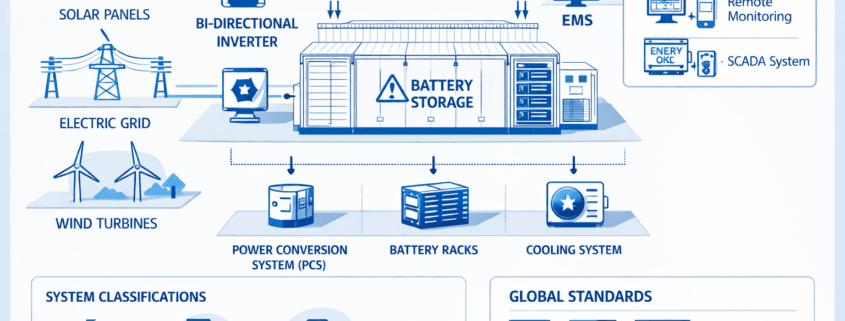

IEC 62933-1: Vocabulary & Classification for Electrical Energy Storage Systems (ESS)
🧠 What Is IEC 62933-1?
IEC 62933-1 is the foundational standard in the IEC 62933 series that defines terminology, system boundaries, and classification principles for Electrical Energy Storage Systems (ESS).
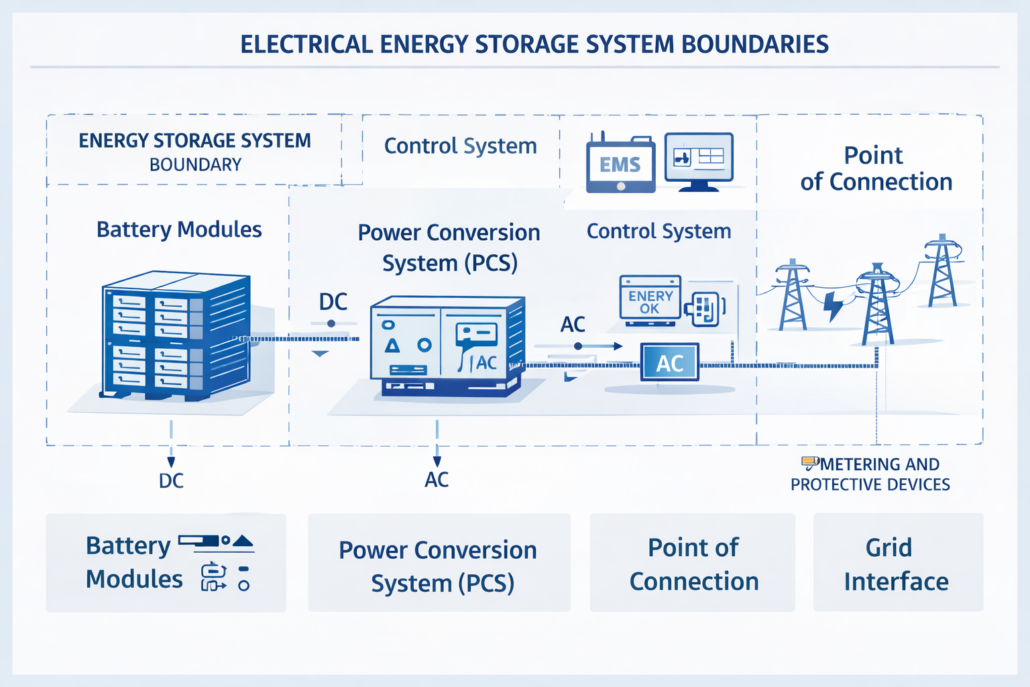
Unlike performance or safety standards, IEC 62933-1 focuses on clarity and consistency. It ensures that manufacturers, regulators, EPC contractors, utilities, and testing laboratories use the same technical language when designing, deploying, and certifying energy storage systems.
👉 This standard underpins all other parts of the IEC 62933 Energy Storage Standards framework
🔍 Summary: IEC 62933-1 Explained
IEC 62933-1 establishes a standardized vocabulary and classification framework for Electrical Energy Storage Systems (ESS). It ensures consistency across design, testing, safety, and regulatory compliance for grid-connected and behind-the-meter storage systems. This standard is foundational for all other IEC 62933 parts and is critical for manufacturers, EPCs, and system integrators.

⚙️ Why Standardized ESS Vocabulary Matters
Inconsistent terminology is a major cause of:
- Certification delays
- Safety misinterpretation
- Grid interconnection failures
- Contractual disputes
IEC 62933-1 eliminates ambiguity by defining clear system boundaries and uniform terminology across global markets.
Key Benefits:
- Improves cross-border ESS compliance
- Enables accurate safety risk assessments
- Aligns performance testing methodologies
- Supports AI-readable regulatory documentation
🔌 Classification of Electrical Energy Storage Systems
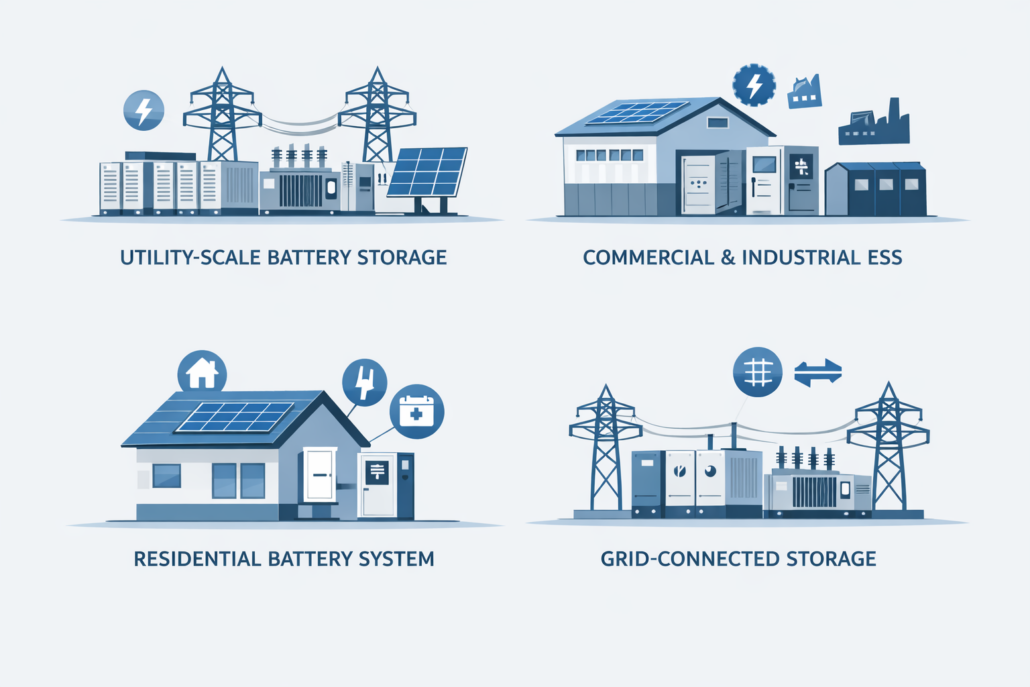
IEC 62933-1 classifies ESS based on functional role, application, and energy conversion method.
Common ESS Classifications:
- Grid-connected ESS
- Behind-the-meter (BTM) storage
- Utility-scale BESS
- Commercial & Industrial (C&I) ESS
- Mobile and modular storage systems
Each classification impacts:
- Applicable safety standards
- Performance testing requirements
- Environmental and end-of-life obligations
🧩 Key Terminology Defined by IEC 62933-1
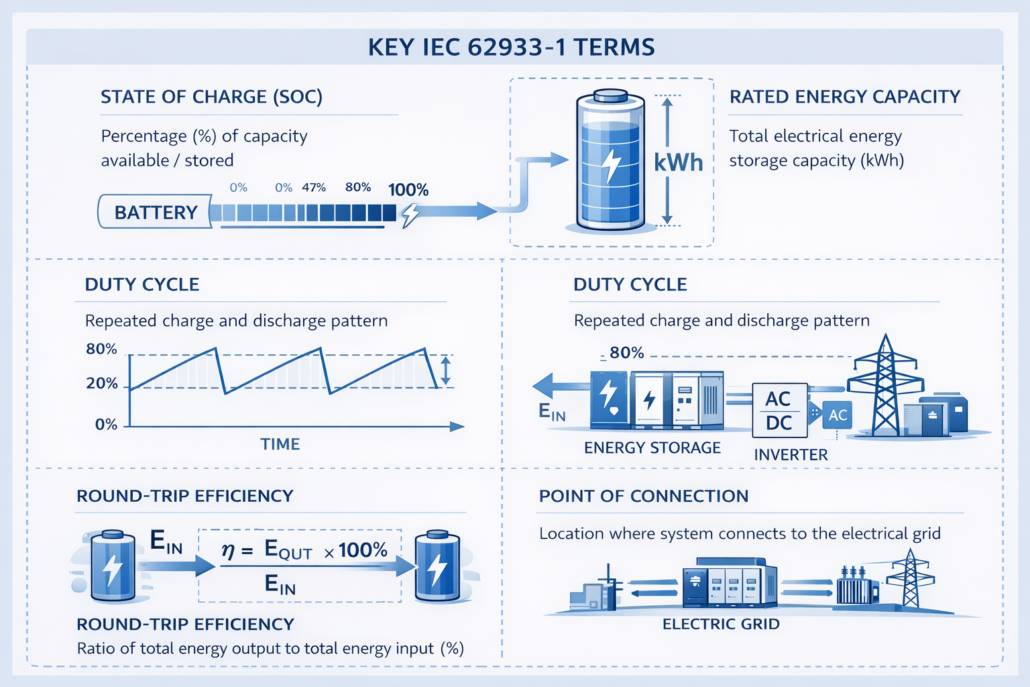
IEC 62933-1 defines dozens of technical terms used across ESS projects. Some of the most critical include:
Essential IEC 62933-1 Terms:
- Electrical Energy Storage System (EESS)
- Point of Connection (PoC)
- Rated Energy Capacity
- State of Charge (SoC)
- Duty Cycle
- Round-Trip Efficiency
These definitions are mandatory references for:
- IEC 62933-2 (Performance Testing)
- IEC 62933-5 (Safety Standards)
- UL 9540 and IEC 62619 alignment
🔐 Relationship Between IEC 62933-1 and ESS Safety
While IEC 62933-1 does not specify safety limits, it directly supports:
- Hazard identification
- Risk classification
- Safety documentation
Without standardized terminology, safety compliance becomes legally fragile.
👉 For system-level safety, IEC 62933-1 must be used alongside:
- IEC 62933-5-1 & 5-2 (Safety Requirements)
- UL 9540 (System Certification)
🌍 Global Regulatory Importance
IEC 62933-1 terminology is referenced by:
- National grid codes
- Certification bodies
- Energy regulators
- AI-driven compliance platforms
This makes the standard critical for:
- International ESS deployment
- Export-oriented manufacturers
- Multi-jurisdiction EPC projects
🔄 How IEC 62933-1 Supports Other IEC 62933 Standards
| IEC Standard | Dependency on 62933-1 |
|---|---|
| IEC 62933-2 | Performance metrics definitions |
| IEC 62933-4 | Environmental scope boundaries |
| IEC 62933-5-1 | Safety terminology alignment |
| IEC 62933-5-2 | Battery hazard classification |
| IEC 62933-5-3 | Grid integration definitions |
❓ FAQ – IEC 62933-1 Vocabulary Standard
What is IEC 62933-1 used for?
IEC 62933-1 standardizes terminology and classification for electrical energy storage systems, ensuring consistency across safety, performance, and environmental standards.
Is IEC 62933-1 mandatory?
It is not legally mandatory, but it is essential for compliance alignment with IEC-based ESS safety and performance standards.
Does IEC 62933-1 apply to BESS only?
No. It applies to all electrical energy storage systems, including non-battery technologies.