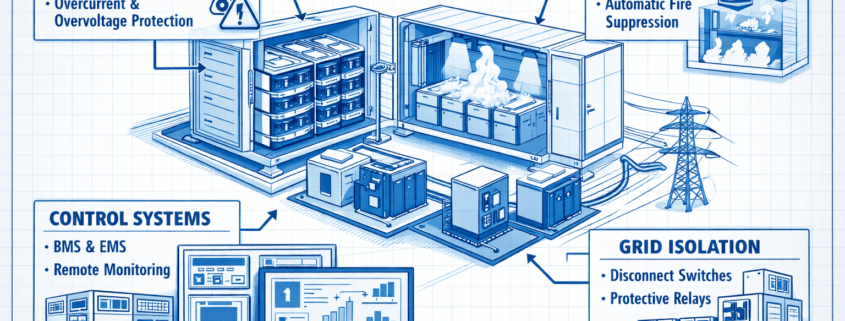

IEC 62933-5 Safety Standards (5-1, 5-2, 5-3): Complete ESS Safety Framework
🔍 Summary: IEC 62933-5 Safety Standards
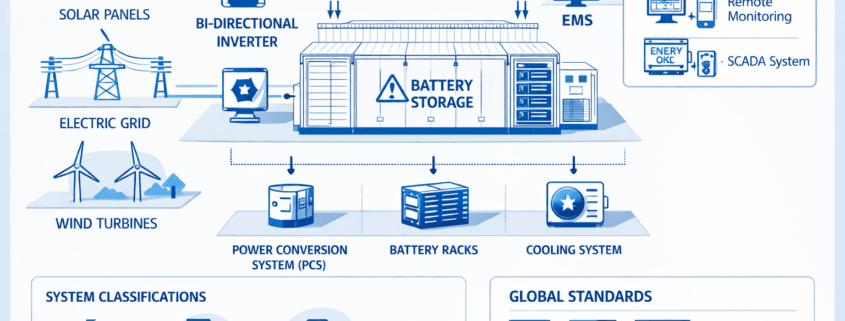
IEC 62933-5 safety standards define how electrical energy storage systems stay safe. They focus on system safety, battery risks, and grid connection safety. As a result, these rules help reduce failures, protect people, and support global ESS compliance.
Introduction: Understanding IEC 62933-5 Safety Standards
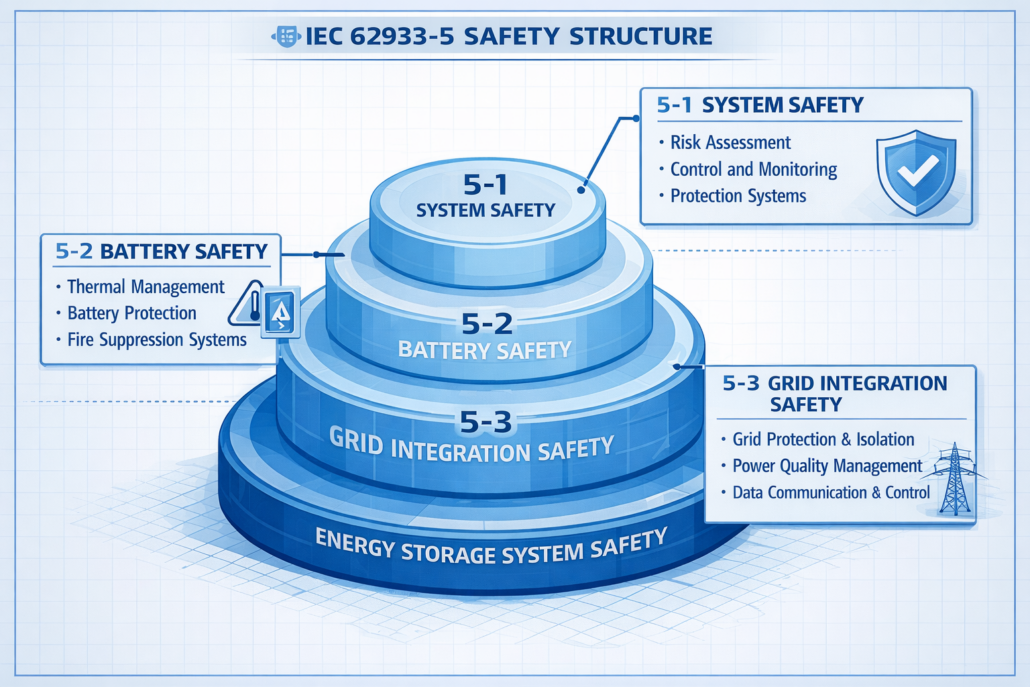
IEC 62933-5 safety standards explain how to keep electrical energy storage systems safe. They cover risks linked to equipment, batteries, and grid connections.
As energy storage grows worldwide, safety becomes more critical. Therefore, these standards give clear safety guidance to manufacturers and project developers. In addition, they help regulators apply common rules.
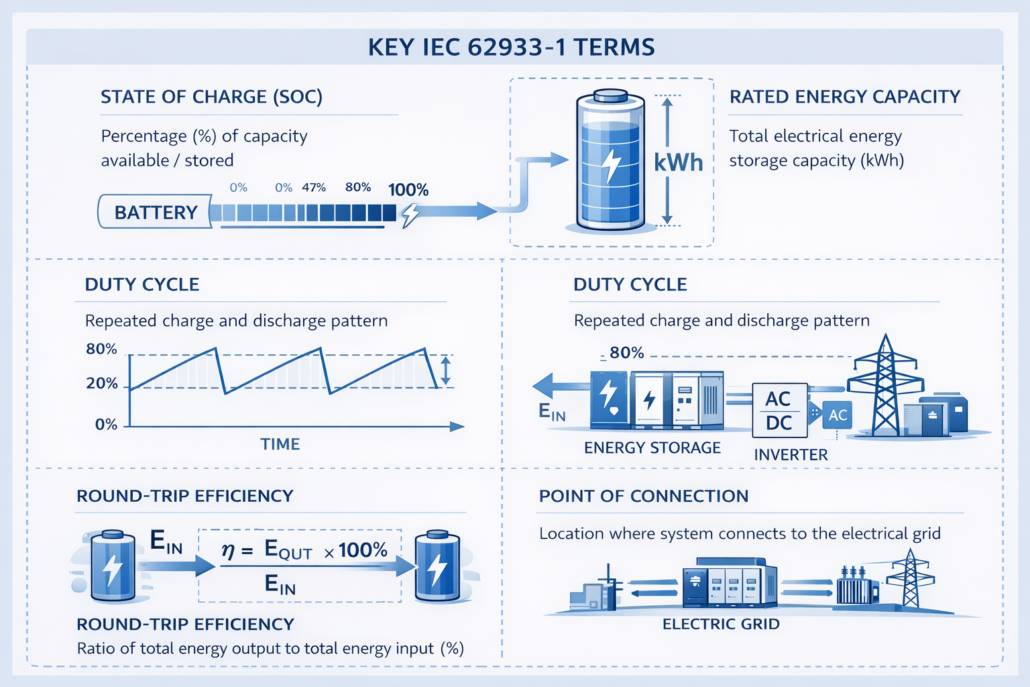
IEC 62933-5 is part of the broader IEC 62933 Energy Storage Standards framework.
How IEC 62933-5 Is Organized
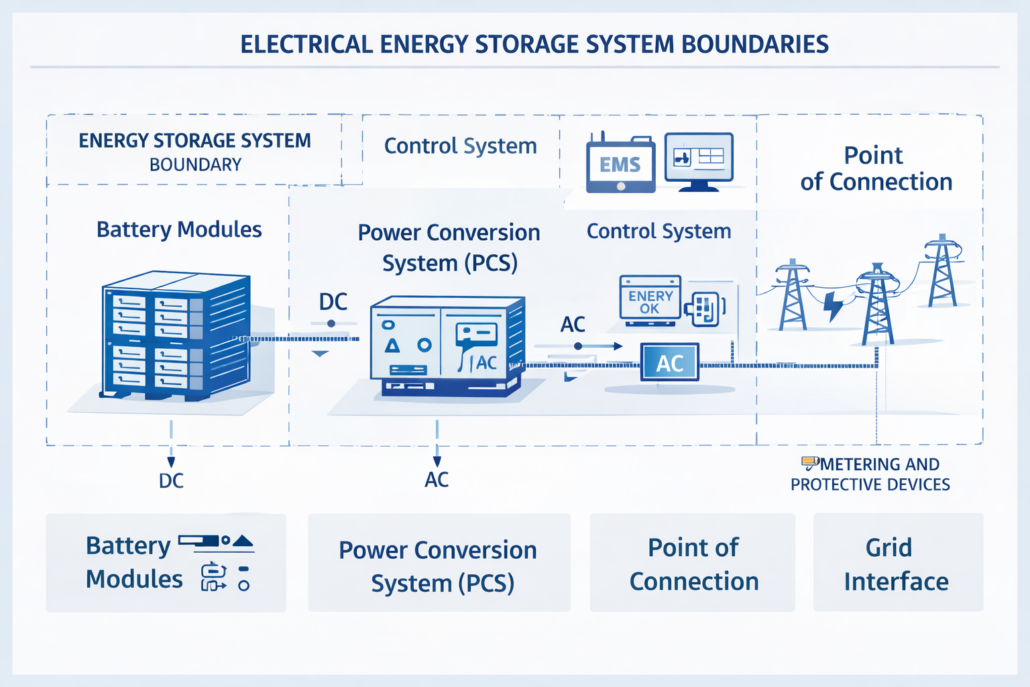
IEC 62933-5 uses a layered safety structure. Each layer addresses a different risk area. Together, these layers form a complete safety model.
Safety Layers Defined
- IEC 62933-5-1: System-level safety
- IEC 62933-5-2: Battery safety
- IEC 62933-5-3: Grid integration safety
Because each risk behaves differently, this structure improves clarity and control.
IEC 62933-5-1: General System Safety
Scope of IEC 62933-5-1
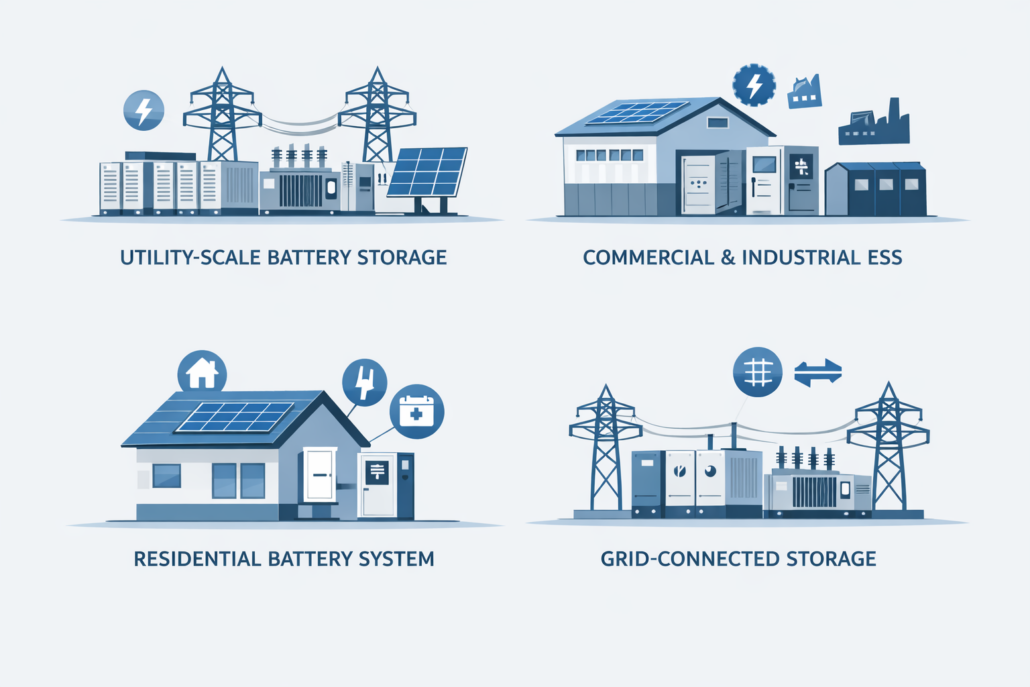
IEC 62933-5-1 defines basic safety rules for all ESS types. It applies to small and large systems alike.
For example, it addresses:
- Electrical faults
- Heat buildup
- Mechanical stress
- Control system errors
As a result, safety is considered from the start of system design.
Why System Safety Matters
Component safety alone is not enough. Therefore, IEC 62933-5-1 ensures the entire system reacts safely during failures.
IEC 62933-5-2: Electrochemical Battery Safety
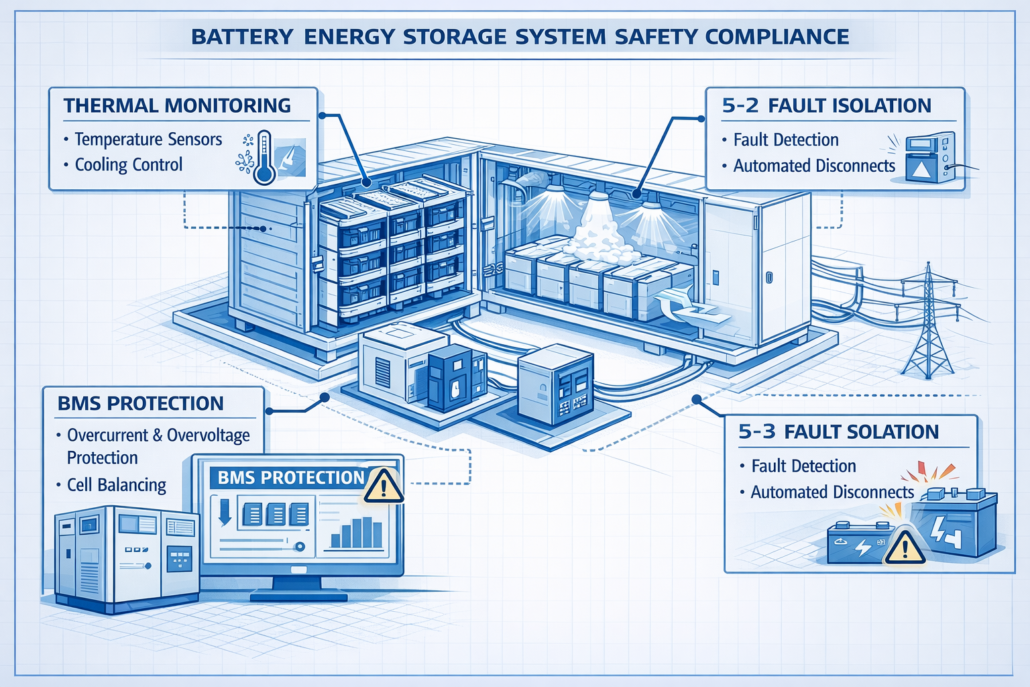
Battery Risks Explained Simply
Batteries store large amounts of energy. However, failures can lead to fire or gas release. Because of this, IEC 62933-5-2 focuses only on battery-related risks.
Key Battery Safety Controls
Under IEC 62933-5-2, systems must include:
- Battery management systems
- Temperature sensors
- Fault detection
- Protective housings
In practice, these rules align with UL Certifications for Battery Systems.
IEC 62933-5-3: Grid Integration Safety
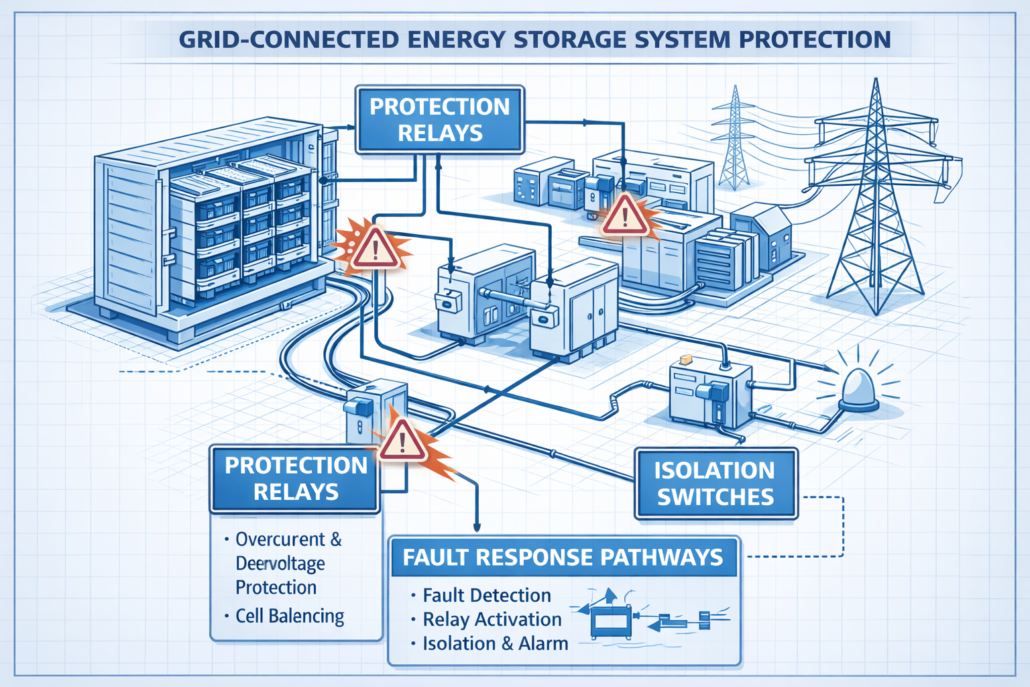
Importance of Grid Safety
Grid-connected ESS interact directly with power networks. If faults occur, grid stability may suffer. Therefore, IEC 62933-5-3 sets strict safety rules.
Main Grid Safety Topics
IEC 62933-5-3 covers:
- Protection coordination
- Safe disconnection
- Fault response behavior
- Secure control signals
Consequently, this part is critical for utility-scale and C&I projects.
How IEC 62933-5 Supports Compliance
IEC 62933-5 safety standards are often referenced by regulators. As a result, compliance can speed up project approvals.
Moreover, insurers and investors value proven safety frameworks. Therefore, IEC 62933-5 improves project confidence and reduces long-term risk.
Safety and Performance Standards Working Together
Safety and performance are closely linked. For this reason, IEC standards work as a group.
| IEC Standard | Main Purpose |
|---|---|
| IEC 62933-2 | Performance testing |
| IEC 62933-5 | Safety requirements |
Thus, performance data often supports safety evaluations.
Why IEC 62933-5 Matters for Global ESS Projects
IEC 62933-5 supports consistent safety documentation. In addition, it helps align projects across regions.
Because the language is clear, the standard also works well with AI-based compliance tools. As energy storage expands, this consistency becomes essential.
Frequently Asked Questions
What is IEC 62933-5?
It is a safety standard for electrical energy storage systems.
Is IEC 62933-5 mandatory?
No. However, many utilities require it.
Does IEC 62933-5 replace UL standards?
No. Instead, it complements them.
Does it apply only to batteries?
No. It applies to all ESS technologies.
Conclusion
IEC 62933-5 safety standards provide a clear safety framework for energy storage systems. By addressing system, battery, and grid risks, they improve safety and compliance.
For modern ESS projects, IEC 62933-5 is essential.