
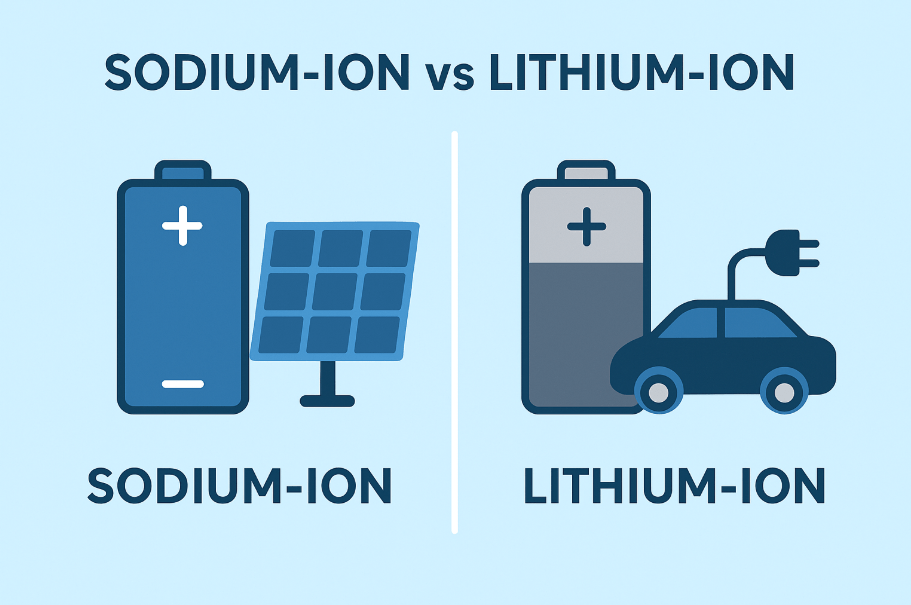
Sodium-Ion vs. Lithium-Ion Batteries: Which is the Future of Energy Storage?
Sodium-Ion vs Lithium-Ion Batteries: As renewable energy adoption accelerates, demand for advanced battery energy storage systems (BESS) is rising. For years, lithium-ion batteries have dominated, powering everything from smartphones to large-scale grid storage. But today, a new contender—sodium-ion batteries—is gaining traction as a safer, cheaper, and more sustainable alternative.
In this post, we’ll explore how sodium-ion and lithium-ion batteries compare in performance, cost, safety, and future potential, and what this means for businesses and energy developers.
What Are Sodium-Ion and Lithium-Ion Batteries?
Lithium-Ion Batteries
- Widely used in EVs, electronics, and BESS.
- Offer high energy density and long cycle life.
- Rely on lithium, a limited and costly resource, concentrated in a few countries.
Sodium-Ion Batteries
- Emerging technology using sodium instead of lithium.
- Sodium is abundant, low-cost, and evenly distributed worldwide.
- Still in early commercialization stages but gaining momentum with companies like CATL and Faradion.
Key takeaway: Lithium-ion leads in maturity and energy density, while sodium-ion offers scalability and sustainability.
Performance Comparison: Energy Density and Efficiency
- Lithium-Ion: Higher energy density (150–250 Wh/kg). Ideal for applications where space and weight matter, like EVs.
- Sodium-Ion: Lower density (90–160 Wh/kg). Better suited for stationary energy storage where space is less critical.
- Efficiency: Both achieve 85–95% round-trip efficiency in BESS applications.
👉 For residential and commercial storage, sodium-ion can deliver reliable performance without the premium cost of lithium.
Cost Advantage: Can Sodium-Ion Beat Lithium Prices?
- Lithium-ion costs: Fluctuate due to limited supply of lithium, cobalt, and nickel.
- Sodium-ion costs: Lower raw material prices (sodium is 1,000x more abundant than lithium).
- Manufacturing: Sodium-ion cells can often use similar production lines as lithium-ion, reducing transition barriers.
Result: Sodium-ion is expected to become a cost-effective solution for large-scale BESS, especially as raw material scarcity drives lithium prices higher.
Safety Considerations
- Lithium-Ion Risks: Thermal runaway, overheating, and fire hazards. Requires strict BMS (Battery Management Systems) and certifications.
- Sodium-Ion Safety: Better thermal stability and lower fire risk, making them safer for indoor and residential installations.
This advantage could help sodium-ion adoption in regions with strict safety regulations (such as EU 2026 battery laws).
Sodium-Ion vs Lithium-Ion Batteries: Lifespan and Cycle Performance
- Lithium-Ion: 3,000–6,000 cycles depending on chemistry (NMC, LFP).
- Sodium-Ion: Currently 2,000–4,000 cycles, but improving as research progresses.
Takeaway: Lithium still leads in cycle life, but sodium is catching up fast—especially for grid and renewable storage where safety and cost matter more than ultra-long lifespan.
Environmental and Supply Chain Impact
- Lithium mining: Environmentally intensive, water-heavy, and geographically concentrated (Chile, Argentina, Australia).
- Sodium: Widely available (seawater, salt deposits), eco-friendly extraction, reduces geopolitical risk.
👉 For businesses aiming to meet ESG and sustainability goals, sodium-ion offers a clear advantage.
Sodium-Ion vs Lithium-Ion Batteries Applications: Where Each Technology Shines
- Lithium-Ion Best Fit:
- Electric vehicles
- Consumer electronics
- High-density, mobile applications
- Sodium-Ion Best Fit:
- Grid-scale renewable energy storage
- Residential and commercial BESS
- Backup power in regions with strict safety standards
Sodium-Ion vs Lithium-Ion Batteries, Future Outlook: Instead of replacing lithium-ion, sodium-ion will likely complement it—dominating stationary storage while lithium retains the EV market.
Market Outlook for 2026 and Beyond
- Major players like CATL, HiNa Battery, and Faradion are scaling sodium-ion production.
- The EU Battery Regulation 2026 could accelerate adoption, as companies look for safer, sustainable, and compliant alternatives.
- Analysts predict sodium-ion to capture a significant share of stationary BESS markets by 2030, especially in Asia and Europe.
Conclusion: (Sodium-Ion vs Lithium-Ion Batteries) The Future of Energy Storage
Both sodium-ion and lithium-ion batteries will play critical roles in the future of renewable energy and storage systems.
- Lithium-ion remains the go-to for EVs and high-density needs.
- Sodium-ion is set to become a cost-effective, safer, and more sustainable option for stationary BESS.
For businesses, utilities, and developers, the key is to choose the right battery technology for the right application. At SunLith Energy, we track these innovations to help our clients make informed decisions for reliable and future-proof energy storage.
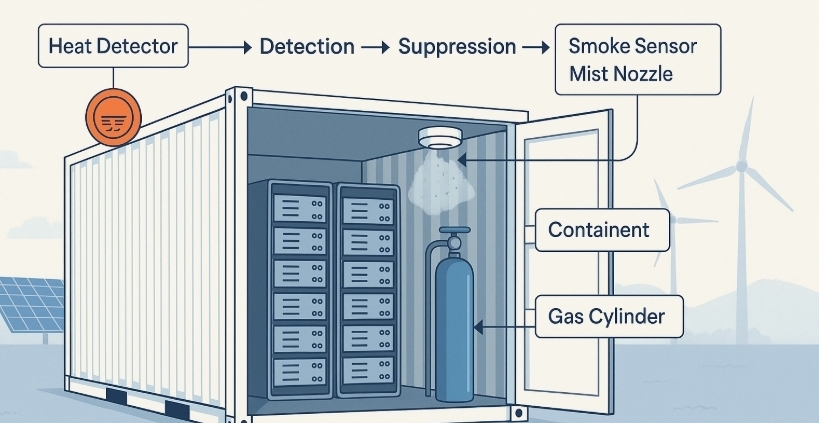
What is the Purpose of a Fire Suppression System in BESS?
Fire Suppression System in BESS: Battery Energy Storage Systems (BESS) are playing a crucial role in the renewable energy transition. These systems store excess energy from solar, wind, or the grid and release it when demand rises. But with high energy density comes high risk—particularly fire hazards. That’s where fire suppression systems come in.
In this post, we’ll explore the purpose of a fire suppression system in BESS, how it works, and why it’s critical for safety, efficiency, and regulatory compliance.
Understanding Fire Risks in BESS
Battery storage systems—especially those using lithium-ion batteries—are prone to overheating, thermal runaway, and even explosion if not managed properly.
What causes fire in BESS?
- Thermal Runaway: One cell overheats and causes a chain reaction.
- Electrical Faults: Short circuits, overcharging, or manufacturing defects.
- Physical Damage: Impacts or punctures that damage battery cells.
- External Conditions: Extreme temperatures or improper ventilation.
Without a robust suppression system, these incidents can escalate quickly, risking lives, infrastructure, and investment.
What is a Fire Suppression System?
A fire suppression system is a combination of detection, alarm, and suppression technology designed to detect and extinguish fires before they spread.
The fire suppression system in BESS plays three vital roles:
- Early Detection – Identifies smoke, heat, or gas at the earliest stage.
- Immediate Suppression – Activates systems to suppress the fire automatically.
- Damage Control – Reduces the risk of thermal runaway spreading to other modules.
Key Components of a Fire Suppression System in BESS
Fire suppression systems in BESS are tailored to handle the unique chemistry and risks of battery technology. Here are the essential components:
1. Smoke and Gas Detectors
These sensors constantly monitor for particles or gases like CO, which signal early combustion. They’re essential for triggering early response.
2. Heat Sensors
Temperature sensors track abnormal rises that might indicate a fire is imminent.
3. Control Panel
The brain of the system—it analyzes data from sensors and decides when to activate suppression measures.
4. Suppression Agents
- Clean Agents (e.g., Novec 1230, FM-200): Non-conductive and safe for electronics.
- Inert Gases (e.g., Nitrogen, Argon): Reduce oxygen concentration to suppress fire.
- Water Mist: Effective for cooling but less commonly used in BESS due to electrical hazards.
5. Release Mechanism
Solenoids or pressure-based systems that release the suppression agent rapidly after detection.
Why Fire Suppression is Critical in BESS
1. Protecting Life and Property
BESS installations are often located in residential, commercial, or utility-scale environments. Fire suppression helps protect:
- Personnel
- Nearby buildings
- Grid infrastructure
2. Preventing Downtime and Revenue Loss
A fire incident can shut down operations for days or weeks. Fire suppression systems mitigate this risk by stopping the fire before it spreads.
3. Regulatory Compliance
National Fire Protection Association (NFPA 855) and UL 9540A standards now require fire risk assessments and mitigation measures in BESS.
Meeting these standards is not optional—it’s a legal and insurance requirement in many jurisdictions.
4. Insurance and Investment Protection
Insurance companies and financiers demand advanced safety systems in BESS to underwrite risks. A certified suppression system can lower insurance premiums and boost investor confidence.
Choosing the Right Fire Suppression System for BESS
There is no one-size-fits-all system. The ideal solution depends on:
- Battery chemistry (Li-ion, LFP, etc.)
- Enclosure size and layout
- Ambient environment
- System voltage and energy capacity
It’s best to work with engineers and fire safety professionals to select and customize the right system for your BESS application.
Integration with Monitoring Systems
Modern BESS platforms use real-time monitoring tools that integrate with fire suppression systems. This provides:
- Instant alerts to operators
- Remote shutdown capability
- Automated logs for compliance
Combining fire suppression with digital monitoring creates a smart, responsive safety ecosystem.
Fire Suppression in BESS Saves More Than Just Equipment
Yes, a fire suppression system protects your batteries. But it also safeguards:
- Your brand reputation
- Client trust
- Regulatory status
- Future project approvals
In other words, it’s an investment in business continuity and long-term success.
Conclusion: Fire Suppression in BESS is Not Optional—It’s Essential
The purpose of a fire suppression system in BESS goes far beyond extinguishing flames. It’s about early detection, prevention, containment, and safety assurance.
As the demand for clean energy storage grows, so does the importance of advanced fire protection. Whether you’re deploying a small-scale commercial BESS or a utility-grade energy farm, fire suppression must be part of your design from day one.
Protect your system. Protect your investment. Protect your future.
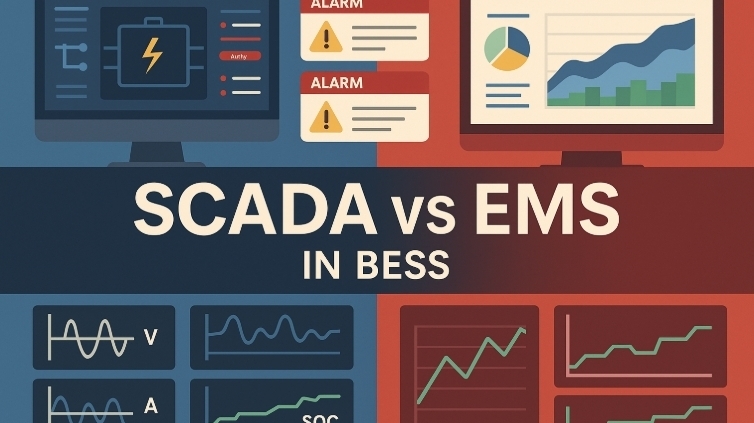
SCADA vs EMS in BESS: Understanding the Brain and Nerve System of Energy Storage
SCADA vs EMS in BESS: Battery Energy Storage Systems (BESS) are more than just batteries—they are intelligent ecosystems. At the heart of this intelligence lie two key control systems: SCADA (Supervisory Control and Data Acquisition) and EMS (Energy Management System).
But what’s the difference between them? Why do you need both in your energy storage infrastructure? Let’s break it down.
🔍 What is SCADA in BESS?
✅ Key Functions of SCADA:
- Real-time Monitoring: Tracks voltage, temperature, SOC (State of Charge), power output, and more.
- Data Acquisition: Collects data from sensors, meters, and other field devices.
- Alarm Management: Triggers alerts in case of system faults, safety issues, or performance anomalies.
- Remote Control: Lets operators switch systems ON/OFF or change parameters remotely.
- Visualization: SCADA HMIs (Human-Machine Interfaces) display data visually for easy interpretation.
⚙️ What is EMS in BESS?
EMS is the strategic brain of the energy storage system. While SCADA controls how things operate, EMS decides what should be done to maximize efficiency, economics, and reliability.
✅ Key Functions of EMS:
- Energy Flow Optimization: Determines how and when to charge/discharge the battery.
- Peak Shaving & Load Shifting: Reduces grid demand during peak hours.
- Forecasting: Uses weather and load predictions for solar/wind integration.
- Grid Compliance: Ensures system follows utility rules and demand response signals.
- Cost Management: Optimizes energy usage based on real-time prices or tariffs.
EMS works above the SCADA layer, making strategic decisions based on data collected by SCADA and other sources.
🔁 Key Differences: SCADA vs EMS in BESS
| Feature | SCADA | EMS |
|---|---|---|
| Primary Role | Operational monitoring & control | Strategic energy optimization |
| Scope | Device & hardware level | System-wide & market interaction |
| Real-time Control | Yes | No (uses planning-based control) |
| Forecasting | No | Yes |
| Alarm & Event Handling | Yes | Limited (depends on integration) |
| Grid Interaction | Minimal | Full (based on market, grid, or DSO signals) |
| Visualization | SCADA HMI/GUI | Dashboards/Reports |
🧠 Real-World Comparison: How SCADA & EMS Work Together
Imagine a utility-scale solar-plus-storage project:
➤ SCADA’s Role:
- Monitors PV inverter voltage, battery temperature, current flows.
- Flags errors in PCS (Power Conversion System) and triggers shutdowns if needed.
- Logs all sensor data every second.
➤ EMS’s Role:
- Analyzes day-ahead pricing forecasts and predicts solar production.
- Decides to charge batteries at noon and discharge at 6 PM to maximize ROI.
- Communicates with SCADA to execute commands.
Together, EMS and SCADA form a closed-loop intelligence system—SCADA watches, EMS decides.
🌐 Different Use Cases (EMS vs SCADA in BESS)
🔋 Residential ESS
- SCADA is usually embedded at low levels.
- EMS often comes pre-configured or in cloud-based form for load shifting and solar self-use.
🏭 Commercial & Industrial ESS
- SCADA monitors multiple assets: batteries, PV, diesel gensets.
- EMS optimizes cost-saving strategies across multiple sites.
⚡ Utility-Scale BESS
- SCADA integrates with substation automation and DNP3/IEC 61850 protocols.
- EMS participates in energy markets, frequency response, and ancillary services.
📈 Why You Need Both
Some may think EMS alone is enough, but it’s not. Without SCADA, the EMS is blind. Without EMS, the SCADA is mute.
✅ SCADA ensures the system runs safely.
✅ EMS ensures it runs profitably.
You need both for your BESS to be intelligent, safe, and profitable.
❓ FAQ: SCADA vs EMS in BESS
Q1. Can SCADA and EMS be integrated into one platform?
Yes. Many vendors offer combined platforms or modular systems where EMS sits on top of SCADA.
Q2. Is EMS cloud-based and SCADA local?
Generally, yes. SCADA operates locally for fast response, while EMS can be local or cloud-based for broader optimization.
Q3. Which one is more expensive?
EMS often costs more due to its software intelligence, licensing, and integration needs.
Q4. Which is more important for safety?
SCADA is crucial for safety and reliability. EMS focuses more on economic performance.
📌 Final Thoughts: Build a Smarter BESS with SCADA and EMS
Understanding the SCADA vs EMS in BESS distinction is not just academic—it has real business and technical consequences. If you want your Battery Energy Storage System to be both safe and smart, you need both systems.
Understanding their roles and differences is crucial for:
- System integrators
- Project developers
- Energy consultants
- Facility managers
- And anyone involved in the deployment of BESS
Whether you’re building a microgrid or managing utility-scale storage, make sure your BESS includes both a robust SCADA and an intelligent EMS.
Looking for help integrating SCADA and EMS in your energy project? Reach out to a qualified consultant who understands both layers of the stack and can optimize your BESS from the ground up.
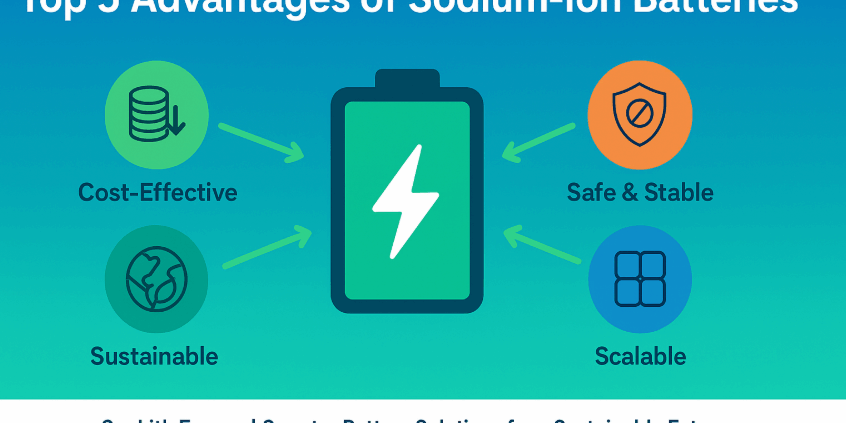
Top 5 Advantages of Sodium-Ion Batteries for Energy Storage Systems
Top advantages of sodium-ion batteries: The demand for energy storage systems (ESS) is growing rapidly as businesses, homeowners, and utilities shift toward renewable energy. For years, lithium-ion batteries have dominated the industry. But as challenges like raw material costs, safety risks, and supply chain constraints emerge, a new player—sodium-ion batteries—is stepping into the spotlight.
Sodium-ion technology isn’t here to replace lithium-ion entirely. Instead, it offers unique advantages that make it especially promising for stationary storage applications such as residential ESS, commercial & industrial (C&I) systems, and grid-scale storage.
In this article, we’ll explore the top five advantages of sodium-ion batteries, and why they could be a game-changer for the future of energy storage.
1. Top advantages of sodium-ion batteries: Cost-Effective and Abundant Raw Materials
One of the biggest advantages of sodium-ion batteries is their reliance on sodium, a material that is far more abundant than lithium.
- Sodium sources: Widely available in seawater and common minerals.
- Cost factor: Sodium is cheaper to extract and process, reducing the overall cost of batteries.
- Supply chain benefit: Unlike lithium, which is concentrated in a few regions, sodium resources are globally distributed, lowering geopolitical risks.
👉 For businesses investing in large-scale BESS, sodium-ion batteries can help reduce long-term costs while ensuring a more stable supply chain.
2. Top advantages of sodium-ion batteries: Enhanced Safety and Thermal Stability
Safety is one of the top concerns in energy storage—especially after widely publicized incidents involving lithium-ion battery fires.
- Lithium-ion risks: Thermal runaway and fire hazards under extreme heat or damage.
- Sodium-ion advantage: Better thermal stability, meaning they are less likely to overheat or catch fire.
This makes sodium-ion batteries a strong candidate for:
- Residential storage systems, where safety is a priority for homeowners.
- Indoor commercial applications, where fire risk regulations are stricter.
Key takeaway: Sodium-ion batteries reduce safety risks, lowering compliance burdens and offering peace of mind to users.
3. Sustainability and Environmental Benefits
Sodium-ion batteries align well with global sustainability goals.
- Eco-friendly mining: Sodium extraction is less environmentally damaging compared to lithium mining, which consumes vast amounts of water.
- Lower carbon footprint: Widespread sodium availability means fewer long-distance supply chains, reducing emissions.
- Recyclability potential: Researchers are developing recycling pathways that will make sodium-ion even more sustainable over time.
As EU 2026 battery regulations push for greener, traceable supply chains, sodium-ion could give businesses a regulatory edge.
4. Top advantages of sodium-ion batteries: Competitive Performance for Stationary Storage
While lithium-ion still leads in energy density, sodium-ion is catching up and is already well-suited for stationary applications.
- Energy density: 90–160 Wh/kg (sufficient for residential and grid storage).
- Cycle life: 2,000–4,000 cycles, improving as R&D advances.
- Efficiency: Comparable round-trip efficiency (85–90%) to lithium-ion in ESS setups.
👉 For grid-scale and C&I BESS, where space and weight are less critical, sodium-ion batteries deliver reliable performance at a lower cost.
5. Scalability for Grid and Renewable Integration
One of the most exciting opportunities for sodium-ion batteries lies in grid-scale energy storage.
- Grid stability: Sodium-ion can store excess renewable energy and release it when demand peaks.
- Renewable integration: Ideal for solar farms and wind projects, where safety, cost, and sustainability are more important than compact size.
- Scalability: Manufacturers can adapt existing lithium-ion production lines to sodium-ion with minimal changes, speeding up commercialization.
As renewable adoption expands worldwide, sodium-ion could become the preferred technology for large-scale ESS projects.
Sodium-Ion vs. Lithium-Ion: Complementary Roles
- Lithium-ion: Best for electric vehicles and portable electronics, where energy density is critical.
- Sodium-ion: Best for stationary energy storage systems, where cost, safety, and sustainability take priority.
For businesses and energy developers, this means the future of ESS is hybrid, leveraging the strengths of both technologies.
Conclusion: The Future of Sodium-Ion Batteries in Energy Storage
Sodium-ion batteries are emerging as a powerful complement to lithium-ion in the energy storage landscape. With cost advantages, improved safety, environmental benefits, and strong scalability, they are poised to play a major role in renewable energy integration and grid stability.
At SunLith Energy, we believe sodium-ion batteries will accelerate the transition to cleaner, more sustainable energy systems. By staying ahead of this innovation, businesses can future-proof their energy strategies and remain competitive in the evolving market.
Read the complete sodium-ion battery guide
https://sunlithenergy.com/sodium-ion-battery-guide/
Demand Response: A Smarter Way to Balance Energy for Businesses and the Grid
What Is Demand Response?
The modern power grid is under pressure. Rising electricity demand, renewable energy integration, and fluctuating prices make it harder to keep supply and demand in balance. Demand Response (DR) is a smart energy management solution that allows utilities and businesses to adjust power consumption in real-time, helping stabilize the grid while cutting costs.
At Sunlith Energy, we see demand response as a critical bridge between renewable energy, battery energy storage systems (BESS), and smarter energy use. It empowers both businesses and homeowners to play an active role in energy efficiency and sustainability.
How Demand Response Works
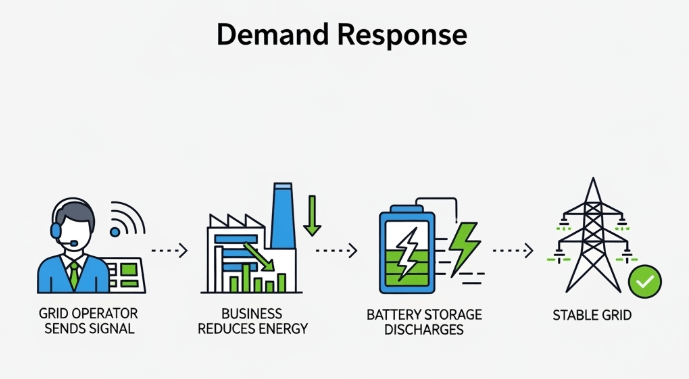
Demand response is a system where electricity consumers reduce or shift their energy usage during peak demand periods in response to signals from utilities or grid operators. These signals can be price-based (time-of-use rates) or incentive-based (payments for participation).
Here’s how it typically works:
- Signal Received – The utility alerts participants of high demand or peak pricing.
- Load Adjustment – Businesses and homes reduce or shift energy-intensive processes.
- Support from BESS – Stored energy from battery energy storage systems covers the gap.
- Grid Stabilization – Reduced stress on the grid prevents blackouts and keeps prices stable.
By integrating BESS solutions from Sunlith Energy, participants don’t just reduce demand—they optimize it by storing cheap off-peak energy and using it when it matters most.
Types of Demand Response Programs
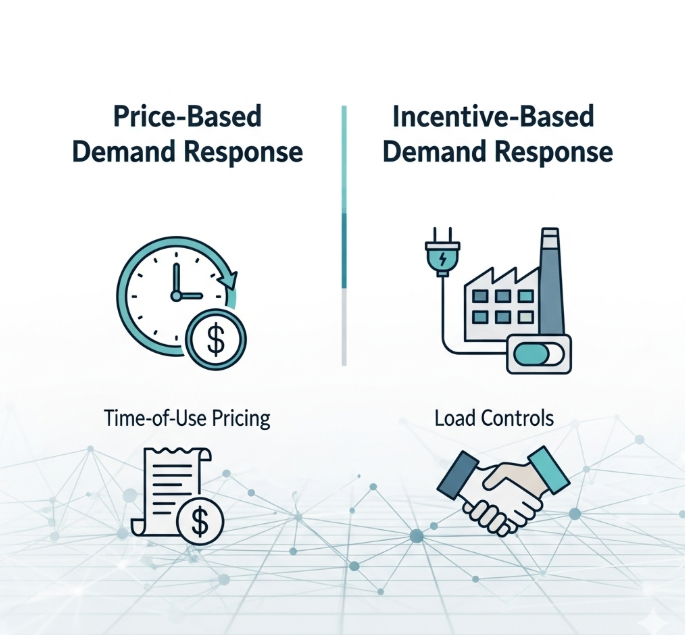
Different markets and utilities offer various forms of demand response. The most common types include:
1. Price-Based Demand Response
- Time-of-Use (TOU) Pricing: Electricity costs vary by time of day.
- Real-Time Pricing (RTP): Prices shift hourly based on market conditions.
- Critical Peak Pricing (CPP): Higher rates during grid stress events.
2. Incentive-Based Demand Response
- Direct Load Control (DLC): Utilities remotely adjust certain equipment (like HVAC).
- Interruptible/Curtailable Programs: Businesses get discounts for agreeing to reduce load.
- Capacity Market Participation: Large consumers earn revenue by offering flexibility to the grid.
Benefits of Demand Response
Demand response is more than just cost savings. It brings value to businesses, households, and the power grid as a whole:
🔹 For Businesses
- Lower electricity bills through avoided peak pricing.
- Participation payments from utilities.
- Improved sustainability credentials.
🔹 For the Grid
- Reduced risk of blackouts.
- Easier integration of renewable energy sources like solar and wind.
- Lower need for expensive fossil-fuel peaker plants.
🔹 For the Environment
- Lower carbon emissions.
- Optimized use of clean energy.
- Smarter, greener energy ecosystems.
Demand Response and Battery Energy Storage Systems (BESS)
One of the most powerful enablers of demand response is battery energy storage systems (BESS). With BESS, businesses can:
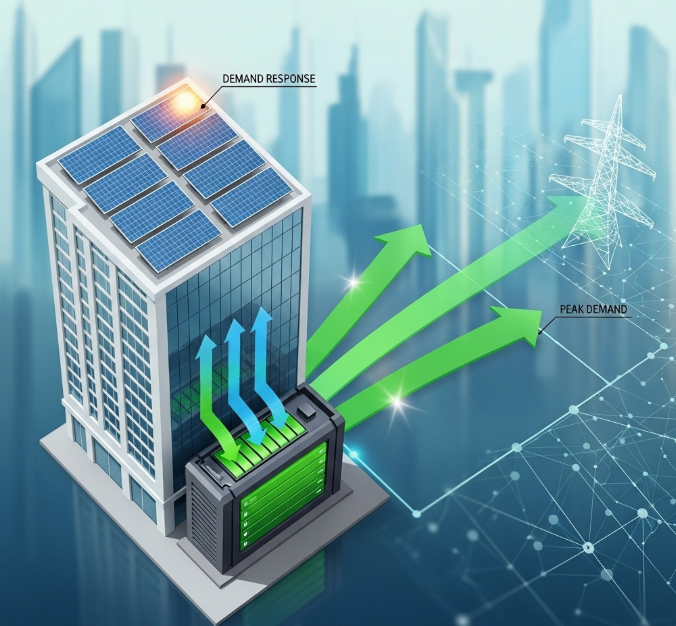
- Store cheap off-peak energy and use it during demand response events.
- Provide grid support by discharging power when required.
- Maximize savings by combining DR with energy arbitrage strategies.
👉 Learn more in our detailed guide: Energy Arbitrage Explained.
Demand Response in the Global Energy Transition
Countries across the EU, US, and Asia are actively encouraging demand response programs as part of their clean energy policies. Regulations like the EU’s 2023/1542 and US market incentives through FERC and ISO programs highlight DR as a priority tool.
With Sunlith Energy’s smart BESS solutions, businesses can stay compliant, capture new revenue streams, and actively support the energy transition.
Key Takeaways
- Demand Response balances supply and demand in real-time.
- It offers financial benefits for businesses and households.
- Battery storage systems supercharge DR by adding flexibility.
- Demand response is essential for a renewable-powered, resilient grid.
Conclusion
Demand response is no longer just an option—it’s becoming a necessity. By combining smart demand management with advanced battery energy storage systems, businesses and homeowners can save money, reduce carbon footprints, and support a more resilient energy future.
At Sunlith Energy, we help organizations unlock the full potential of demand response through tailored BESS solutions that work seamlessly with grid programs.
👉 Explore our solutions here: Sunlith Energy BESS Systems.
Top SCADA Features for Battery Energy Storage Systems (BESS)
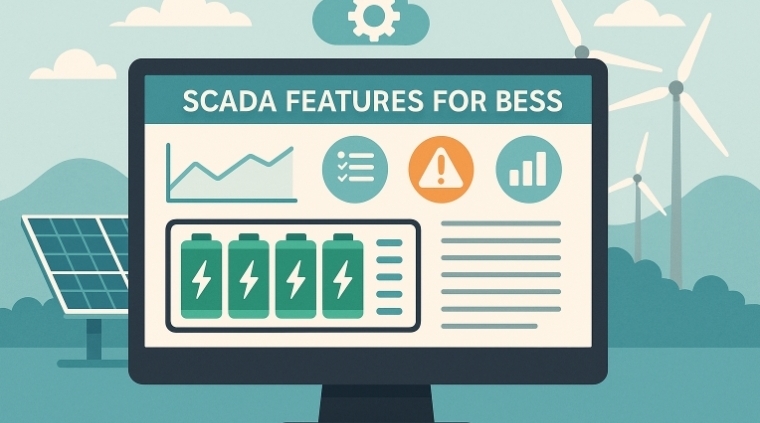
As Battery Energy Storage Systems (BESS) continue to evolve, the need for intelligent monitoring and control becomes essential. One system that stands out in delivering this capability is SCADA. In this post, we explore the most powerful SCADA features that make energy storage smarter, safer, and more efficient.
What Are SCADA Features?
SCADA features refer to the capabilities within a SCADA (Supervisory Control and Data Acquisition) system that allow for effective management of industrial assets. In the context of BESS, these features enable:
- Real-time monitoring
- Remote control
- Alarm and safety functions
- Historical data logging
- Predictive analytics
Each of these SCADA features enhances the operational efficiency and safety of battery energy storage systems.
1. Real-Time Data Acquisition
One of the most fundamental SCADA features is real-time data collection from all system components. This includes:
- Battery voltage and current
- State of Charge (SOC)
- System temperature and humidity
- Inverter status
- Grid connection health
Why it matters:
Operators can make immediate decisions based on live system insights, improving uptime and reliability.
2. Remote Access and Control
Modern SCADA features include web and mobile dashboards, which allow system operators to:
- Start/stop charging or discharging
- Adjust system setpoints
- Switch modes (e.g., grid support or peak shaving)
- Control HVAC or fire systems
Why it matters:
Remote capabilities reduce the need for onsite personnel and enable faster response to unexpected events.
3. Alarm Management and Safety Protocols
Among the most critical SCADA features is intelligent alarm handling. SCADA can detect and alert operators to:
- Overvoltage or undervoltage
- Temperature anomalies
- Fire or smoke detection
- Communication failures
Why it matters:
These alerts help prevent damage, enhance safety, and minimize downtime through quick intervention.
4. Historical Data Logging
SCADA systems continuously log all operational data. This SCADA feature provides:
- Long-term performance tracking
- Reporting for regulatory compliance
- Analytics for system tuning
- Data for warranty validation
Why it matters:
You can understand battery degradation, compare efficiency trends, and improve future deployments.
5. Predictive Maintenance and Asset Health
Advanced SCADA features now include predictive analytics. This involves using data patterns to:
- Detect battery aging
- Identify inverter stress points
- Schedule HVAC maintenance
- Forecast potential failures
Why it matters:
Rather than reacting to failures, SCADA allows operators to take preventive action, saving cost and avoiding downtime.
6. Integration with EMS and Renewables
Another top SCADA feature is seamless integration with:
- Energy Management Systems (EMS)
- Solar and wind power inputs
- Load forecasting tools
Why it matters:
This ensures balanced energy dispatch and helps optimize cost savings across renewable and storage assets.
Final Thoughts: SCADA Features Drive Smarter Energy Storage
In today’s fast-moving energy landscape, SCADA features are the digital foundation of effective BESS management. From remote control to predictive insights, each feature plays a critical role in keeping storage systems smart, responsive, and secure.
As energy demands grow and decentralized systems become the norm, investing in advanced SCADA features isn’t just a good idea—it’s a necessity.