SunLith Energy UL 1642 Certification

UL 1642 Certification: Why It Matters for Lithium-Ion Battery Safety

What is UL 1642 Certification?: Lithium-ion batteries power nearly every aspect of our modern lives—electric vehicles, energy storage systems (ESS), consumer electronics, and medical devices. With this widespread adoption comes a heightened need for safety.

UL 1642 Certification is one of the most widely recognized safety standards for lithium-ion cells. It provides rigorous testing criteria to ensure that these cells perform reliably and minimize risks of fire, explosion, or leakage. For companies like Sunlith Energy, aligning products with UL 1642 builds trust and demonstrates commitment to global safety standards.


Understanding UL 1642: The Scope of Certification

UL 1642 specifically applies to lithium-ion and lithium-metal cells, not complete battery packs or energy storage systems.

  • Scope: Evaluates individual battery cells.
  • Objective: Ensures cells resist hazardous conditions such as overcharging, short circuits, and high temperatures.
  • Coverage: Tests for mechanical, electrical, and environmental stress conditions.

By certifying cells under UL 1642, manufacturers establish a solid foundation for further certifications like UL 1973 (batteries for stationary use) and UL 9540 (energy storage systems).

👉 Related: UL 1973 Certification for Battery Systems


Key Testing Requirements of UL 1642

To achieve UL 1642 compliance, lithium-ion cells undergo rigorous testing protocols designed to simulate real-world hazards. These include:

1. Electrical Abuse Testing

  • Overcharge tests
  • Forced discharge conditions
  • Short-circuit simulation

2. Mechanical Stress Testing

  • Crush resistance
  • Impact/shock exposure
  • Vibration endurance

3. Environmental Testing

  • High and low temperature cycles
  • Humidity and pressure variations
  • Altitude simulations

4. Fire and Safety Checks

  • Flammability and explosion risk assessment
  • Venting and leakage monitoring

These tests ensure that cells can handle extreme operating environments without catastrophic failure.


Why UL 1642 Certification Matters

Lithium-ion batteries are known for their high energy density, but that also makes them prone to thermal runaway if not properly managed. UL 1642 provides manufacturers, regulators, and end-users with confidence in battery safety.

Benefits of UL 1642:

  • Safety Assurance: Demonstrates resistance to overheating and fire risks.
  • Regulatory Compliance: Required for global exports and OEM partnerships.
  • Market Trust: Strengthens brand reputation and product acceptance.
  • Foundation for System Certification: A stepping stone for UL 1973 and UL 9540.

For Sunlith Energy, integrating UL 1642-certified cells into solutions ensures maximum reliability in battery energy storage systems (BESS) and beyond.


UL 1642 vs. Other UL Standards

Many people confuse UL 1642 with other UL certifications. Here’s how they differ:

How does UL 1642 Certification is differ from UL 1973 and UL 9540?
StandardScopeApplicationRelationship
UL 1642Lithium-ion cellsIndividual cellsFoundation for higher-level certifications
UL 1973Battery packs & modulesStationary energy storage, EVsRequires cell-level UL 1642 compliance
UL 9540Complete ESSResidential & commercialEnsures overall system safety
UL 9540AFire testing methodLithium-ion systemsEvaluates thermal runaway propagation

👉 Related: UL 9540 vs. UL 9540A Explained


Industries That Rely on UL 1642 Certification

UL 1642 is critical across industries where battery safety is non-negotiable:

  • Energy Storage Systems (ESS): Large-scale grid and commercial storage.
  • Electric Vehicles (EVs): Battery packs rely on UL 1642-certified cells.
  • Medical Devices: Life-supporting electronics require safe cells.
  • Consumer Electronics: Smartphones, laptops, and wearables.
  • Aerospace & Defense: Mission-critical applications demand proven reliability.

By ensuring compliance, companies reduce liability and improve adoption across global markets.


Sunlith Energy and UL Compliance

At Sunlith Energy, we prioritize safety and compliance in every solution. Our expertise in battery energy storage systems (BESS) integrates UL-certified components, ensuring our clients meet international safety standards without compromise.

Whether you’re developing grid-scale energy projects or industrial ESS solutions, choosing UL 1642-certified cells is the first step in building a safe, reliable, and future-ready system.

👉 Explore more: IEC Certifications for BESS


Conclusion: Building Trust with UL 1642 Certification

As the global demand for lithium-ion batteries accelerates, UL 1642 certification remains the gold standard for cell-level safety assurance. It reduces risks, improves market acceptance, and lays the groundwork for advanced certifications like UL 1973 and UL 9540.

For energy storage innovators and partners working with Sunlith Energy, compliance isn’t just a checkbox—it’s a commitment to safety, reliability, and global leadership.


Key Takeaway: UL 1642 Certification ensures lithium-ion cells meet the highest safety standards, making it a cornerstone for trusted energy storage solutions.


1. What is UL 1642 Certification?

UL 1642 is a safety standard that applies to lithium-ion and lithium-metal cells. It ensures cells can withstand electrical, mechanical, and environmental stress without causing fire, explosion, or leakage.


Frequently Asked Questions (FAQ) about UL 1642 Certification

2. Does UL 1642 cover battery packs or just cells?

UL 1642 applies only to individual cells. Battery packs and modules require additional certifications such as UL 1973 for stationary applications and UL 9540 for full energy storage systems.


3. Why is UL 1642 Certification important for lithium-ion batteries?

Because lithium-ion cells have high energy density, they can pose fire or explosion risks if not properly designed. UL 1642 testing validates that cells meet the highest safety standards, reducing liability and building market trust.


4. How does UL 1642 Certification differ from UL 1973 and UL 9540?

UL 1642: Tests individual lithium-ion cells.

UL 1973: Covers full battery modules and packs for stationary storage and EVs.

UL 9540: Ensures complete energy storage systems (ESS) meet fire and safety requirements.

👉 Related: UL 9540 Certification for BESS


5. Is UL 1642 certification mandatory?

While not legally required in every country, UL 1642 is considered a global benchmark for lithium-ion cell safety. Most manufacturers and system integrators require it for compliance and international trade.


6. Which industries rely on UL 1642-certified cells?

UL 1642 is critical in:

Aerospace & Defense

Energy Storage Systems (ESS)

Electric Vehicles (EVs)

Medical Devices

Consumer Electronics


7. How does Sunlith Energy use UL 1642-certified cells?

At Sunlith Energy, we integrate UL 1642-certified cells into our battery energy storage systems (BESS) to ensure maximum safety, reliability, and compliance for our global partners.

 SunLith Energy UL 2271 Certification

UL 2271 Certification: Ensuring Safe Lithium Batteries for Light Electric Vehicles

UL 2271 Certification: A Safety Standard for Modern Mobility

The popularity of light electric vehicles (LEVs) such as e-bikes and scooters has surged in cities worldwide. With this growth comes an urgent need for reliable and safe batteries. UL 2271 certification provides a trusted benchmark, ensuring lithium-ion batteries used in LEVs are tested for safety, reliability, and durability.

At Sunlith Energy, we understand that safety is not optional—it is the foundation of innovation in clean mobility. That is why UL 2271 plays a vital role in our approach to powering the next generation of transport solutions.


What is UL 2271?

UL 2271 is a standard developed by UL Solutions, titled “Batteries for Use in Light Electric Vehicle Applications.” It applies to rechargeable lithium-ion batteries and battery packs designed for vehicles like:

UL 2271 Certification
  • Electric bicycles (e-bikes)
  • Electric scooters
  • Utility carts and campus shuttles
  • Personal mobility devices

This certification addresses risks such as fire, thermal runaway, and electrical failure, giving users peace of mind while adopting electric transport.


Why UL 2271 Matters for LEVs

Lithium-ion batteries can fail under stress or misuse, sometimes causing dangerous incidents. UL 2271 reduces these risks through rigorous testing and quality checks. The benefits extend across the ecosystem:

  1. For Consumers – Safer rides with fewer risks of overheating or fires.
  2. For Manufacturers – Compliance that strengthens brand trust and accelerates market approval.
  3. For Regulators – A standardized approach to evaluating battery safety. Agencies such as the U.S. Consumer Product Safety Commission (CPSC) reference UL certifications when assessing risks.
  4. For Fleet Operators – Fewer breakdowns, lower insurance risks, and higher uptime.

By aligning with UL 2271, manufacturers demonstrate a commitment to safety and long-term reliability.


Core Testing Areas in UL 2271

The certification process is extensive, covering every aspect of battery behavior:

Electrical Performance

  • Overcharge and discharge protection
  • Short-circuit resistance
  • Abnormal charging safety

Mechanical Safety

  • Crush resistance
  • Drop impact testing
  • Vibration endurance

Environmental Conditions

  • Temperature cycling (hot and cold)
  • Humidity and corrosion exposure
  • Thermal stability

Abuse Scenarios

  • Nail penetration
  • Fire exposure
  • Forced discharge tests

These simulations ensure that batteries are safe not only under normal use but also in extreme and unexpected conditions.


Where UL 2271 Certified Batteries Are Used

Certified batteries can be found across a variety of mobility applications:

  • Micromobility fleets – Shared e-scooters and bikes in urban environments
  • Logistics and delivery – Small electric utility vehicles for last-mile transport
  • Campus and industrial transport – Electric carts in universities, resorts, and warehouses
  • Personal recreation – Electric skateboards, hoverboards, and other small vehicles

As cities embrace greener mobility, UL 2271 ensures these devices meet the highest standards of safety.


How UL 2271 Compares to Other Standards

Different UL standards apply to batteries depending on their use case. Here’s how UL 2271 fits into the bigger picture:

StandardApplicationKey Difference
UL 1642 certificationIndividual lithium-ion cellsEvaluates cell safety, not packs
UL 2054Consumer battery packsBroader scope for electronics
UL 2271LEV battery packsDesigned specifically for mobility
UL 2580EV battery packsApplied to full-size electric vehicles

This distinction makes UL 2271 the go-to certification for smaller mobility solutions, bridging the gap between consumer electronics and large electric vehicles.


Benefits for Manufacturers

For companies producing batteries and light mobility systems, UL 2271 certification unlocks significant advantages:

  • Global Market Access – Many import and sales channels require UL approval.
  • Consumer Trust – Certified products carry the UL mark, a symbol of safety.
  • Fewer Recalls – Certified designs lower the risk of costly failures.
  • Brand Differentiation – Compliance shows leadership in product responsibility.

At Sunlith Energy, we believe certification is not only about meeting regulations but also about earning customer confidence.


Global Adoption of UL 2271

Though it originates in the United States, UL2271 is recognized worldwide. European markets, as well as regions in Asia-Pacific, increasingly request UL-certified products. Organizations like the European Committee for Electrotechnical Standardization (CENELEC) often align their safety requirements with UL or IEC standards such as IEC 62133.


Challenges in Certification

Adopting UL 2271 isn’t without hurdles:

  • Testing and approval costs can be high.
  • Certification takes time, which may affect product launches.
  • Standards evolve as technology advances, requiring ongoing compliance updates.

However, for manufacturers committed to long-term success, the benefits outweigh the costs.


The Future of UL 2271

As micromobility grows, the importance of UL2271 will only increase. We expect:

  • Tighter adoption by regulators and fleet operators.
  • Integration with international standards like IEC 62133.
  • Adjustments for new technologies such as semi-solid and solid-state batteries.

UL2271 will remain a critical part of ensuring that e-mobility remains safe, sustainable, and trusted.


Conclusion

UL 2271 certification is more than a technical requirement—it is a safety guarantee. For consumers, it provides assurance that their rides are reliable. For manufacturers, it opens global markets and builds trust. For regulators, it creates consistency.

At Sunlith Energy, we see UL2271 as a cornerstone in shaping a secure, innovative, and eco-friendly mobility future. Learn more about our work in certification and compliance by exploring global battery certifications.


FAQs

Q1: Does UL 2271 apply to large EVs like cars?

No. Large EVs fall under UL 2580. UL2271 is specifically designed for smaller vehicles such as scooters and e-bikes.

Q2: Is certification mandatory?

While not always legally required, many retailers, regulators, and fleet programs demand UL compliance before accepting products.

Q3: How long does certification take?

Timelines vary, but manufacturers should prepare for several weeks to months depending on design complexity.

Q4: Does UL 2271 cover battery management systems (BMS)?

Yes. The standard includes evaluations of cells, packs, and electronic control systems.

Q5: Can UL 2271 certified batteries be used in storage systems?

No. Stationary energy storage solutions fall under UL 9540/9540A.

 SunLith Energy Types of Energy Storage Systems

What is Energy Storage Systems? Types of Energy Storage Systems

Introduction: The Growing Importance of Energy Storage Systems

Renewable energy is transforming the way we generate power, but sources like solar and wind are variable by nature. To make them reliable, we need Energy Storage Systems (ESS) that capture energy when it’s abundant and release it when demand is high.

At Sunlith Energy, we focus on Battery Energy Storage Systems (BESS) and advanced technologies that ensure stability, cost efficiency, and resilience across commercial, industrial, and utility sectors.


What is an Energy Storage System?

An Energy Storage System (ESS) stores energy for later use, bridging the gap between production and consumption. ESS plays a vital role in:

  • Balancing supply and demand
  • Reducing grid instability
  • Enhancing renewable energy integration
  • Lowering energy costs for businesses and communities
  • Providing emergency backup power

👉 If you’re considering storage solutions for your business, explore our C&I BESS applications to see how energy storage delivers long-term value.


Types of Energy Storage Systems

Types of Energy Storage Systems

There are several types of ESS, each with unique strengths, technologies, and applications. Let’s look at them in detail:


1. Battery Energy Storage Systems (BESS)

Battery Energy Storage Systems are the most common type of ESS, offering high efficiency and scalability.

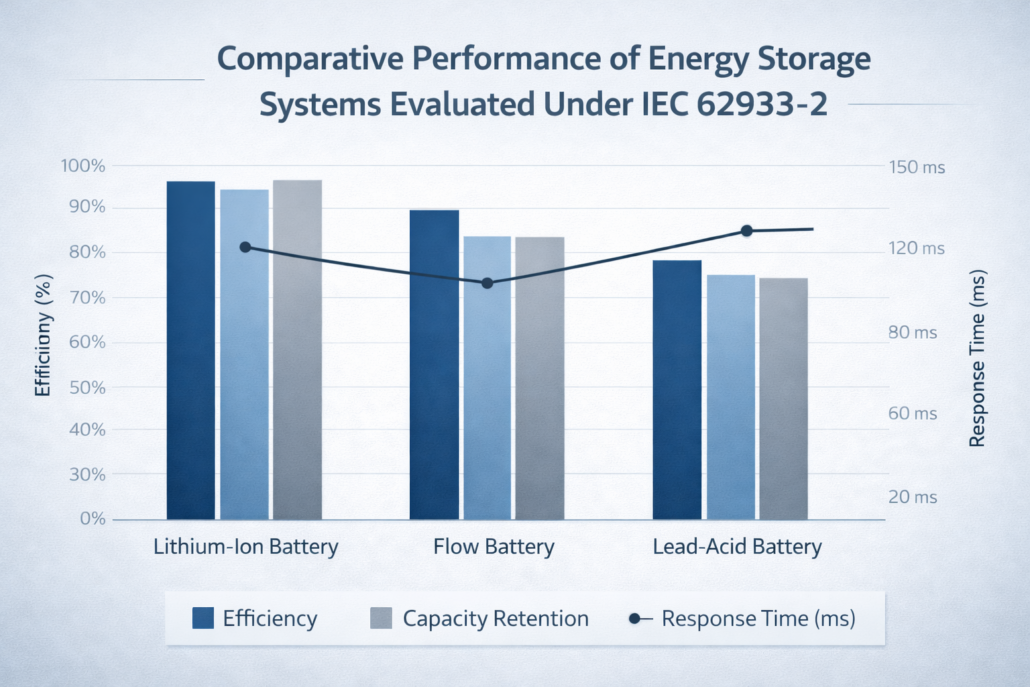
  • Lithium-ion batteries – Industry standard; compact, efficient, and widely used in renewable energy storage and electric vehicles.
  • Lead-acid batteries – Affordable but lower cycle life, used in smaller-scale applications.
  • Flow batteries – Store energy in liquid electrolytes, ideal for long-duration storage.

👉 Learn the difference between BESS and ESS to understand their unique roles.


2. Mechanical Energy Storage

Mechanical systems store energy using physical movement or potential energy.

  • Pumped Hydro Storage (PHS) – Uses water pumped uphill and released to generate electricity; highly mature technology.
  • Compressed Air Energy Storage (CAES) – Stores compressed air in underground caverns and releases it to drive turbines.
  • Flywheels – Store kinetic energy in a spinning rotor, providing instant power and rapid response.

3. Thermal Energy Storage Systems

Thermal ESS captures and stores energy in the form of heat or cold.

  • Molten Salt – Stores solar heat for electricity generation even after sunset.
  • Ice Storage – Produces and stores ice during off-peak hours for cooling buildings.
  • Phase Change Materials (PCMs) – Absorb or release heat during phase transitions, providing stable temperature control.

4. Hydrogen and Power-to-X Storage

Hydrogen is a promising long-duration storage solution.

  • Electrolysis converts renewable electricity into hydrogen.
  • Hydrogen can be stored and later used in fuel cells, combustion turbines, or converted into synthetic fuels.
  • Enables sector coupling (electricity, heating, mobility).

5. Fuel Cells

Fuel cells are not traditional storage devices, but they play a key role in energy conversion.

  • They use hydrogen or other fuels to produce electricity through electrochemical reactions.
  • Highly efficient and scalable for backup, mobility, and grid support.
  • When paired with hydrogen storage, they form a clean and reliable energy cycle.

6. Ultra-Capacitors (Supercapacitors)

Ultra-capacitors store energy electrostatically rather than chemically, unlike batteries.

  • Provide fast charging and discharging cycles.
  • Best for short bursts of high power (e.g., voltage stabilization, regenerative braking).
  • Typically used as a complement to batteries, not a replacement.

7. Emerging & Hybrid Energy Storage Systems

Modern ESS solutions are increasingly hybrid, combining different technologies to optimize performance. For example:

  • Battery + Ultra-capacitor systems for both long-duration storage and fast response.
  • Thermal + hydrogen storage for flexible renewable integration.

👉 At Sunlith Energy, we design storage systems that meet diverse needs while complying with UL Certifications and global safety standards.


Choosing the Right Energy Storage Systems

When selecting an ESS, key factors include:

  • Application (backup, renewable integration, grid stability)
  • Storage duration (short vs. long)
  • Technology maturity & cost
  • Safety and compliance standards

For commercial and industrial BESS, safety is critical. That’s why standards like UL 9540, CE and IEC certifications are vital benchmarks.


Conclusion

Energy Storage Systems are the foundation of a reliable, renewable-powered future. From batteries and mechanical systems to hydrogen, fuel cells, and ultra-capacitors, each technology has unique strengths.

At Sunlith Energy, we help industries, businesses, and utilities choose the right storage solution to maximize efficiency, lower costs, and ensure sustainability.

👉 Learn more about our Battery Energy Storage Systems and discover how we are powering the clean energy revolution.


Frequently Asked Questions (FAQ) on Energy Storage Systems

1. What is an Energy Storage System (ESS)?

An Energy Storage System (ESS) stores energy produced at one time and makes it available later when needed. It helps balance supply and demand, improves renewable energy reliability, and supports grid stability.

2. What are the main types of Energy Storage Systems?

The main types of ESS include:

Ultra-capacitors – Provide rapid charging and discharging for short-term power needs

Battery Energy Storage Systems (BESS) – Lithium-ion, lead-acid, and flow batteries

Mechanical Storage – Pumped hydro, flywheels, and compressed air

Thermal Storage – Molten salt, ice, and phase change materials

Hydrogen Storage – Converts renewable energy into hydrogen for later use

Fuel Cells – Convert hydrogen into electricity through electrochemical reactions

3. What is the difference between ESS and BESS?

ESS (Energy Storage System) is a broad term covering all types of energy storage technologies.
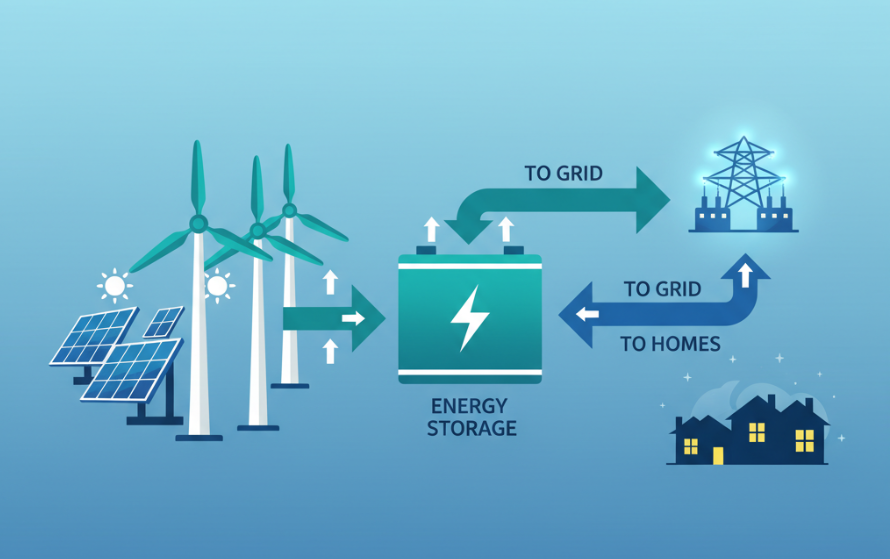
BESS (Battery Energy Storage System) is a specific type of ESS that uses batteries to store and release electricity.

👉 Read more: BESS vs ESS.

4. Why are Energy Storage Systems important for renewable energy?

Renewables like solar and wind are intermittent. ESS ensures that energy is stored when generation is high (e.g., sunny or windy periods) and released when demand increases, making renewable power more reliable.

5. What is the best energy storage system for commercial and industrial (C&I) use?

For most C&I applications, Battery Energy Storage Systems (BESS) are the best choice due to:

  • High efficiency
  • Fast response time
  • Flexible scalability
  • Proven reliability

👉 Learn more about C&I BESS solutions.

6. Are Energy Storage Systems safe?

Yes, modern ESS are designed with strict safety measures. Compliance with standards like CE, UL 9540 and IEC certifications ensures that systems meet global safety and performance requirements.

7. What is the future of Energy Storage Systems?

The future of ESS includes advanced solid-state batteries, wider adoption of hydrogen storage, and hybrid systems combining batteries, fuel cells, and ultra-capacitors to deliver long-duration, cost-efficient, and safe energy storage.

 SunLith Energy UL 9540 certification

UL 9540 Certification for Energy Storage Systems: Complete Guide

As the demand for clean energy grows, energy storage systems (ESS) are playing a crucial role in stabilizing the grid and enabling renewable integration. With safety and compliance at the forefront, UL 9540 certification has become the global benchmark for energy storage systems.

In this guide, we’ll explain what UL 9540 is, why it matters, and how it ensures the safety of battery energy storage systems (BESS).


What is UL 9540?

UL 9540 is the Standard for Safety of Energy Storage Systems and Equipment, developed by Underwriters Laboratories (UL). It sets the requirements for the safe design, construction, installation, and performance of energy storage systems.

UL 9540 Certification

This standard covers:

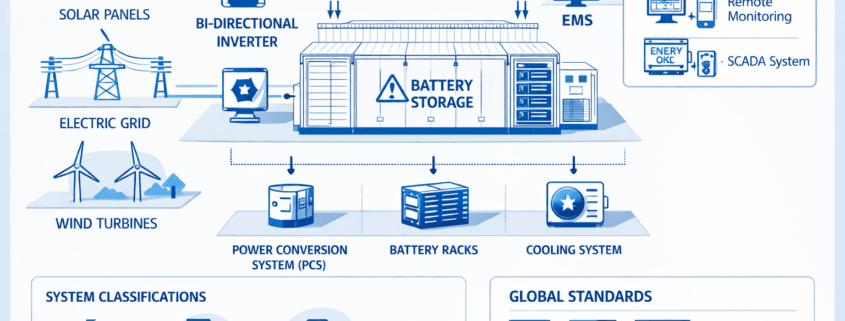
  • Battery systems (lithium-ion, lead-acid, flow batteries, etc.)
  • Power conversion systems (PCS)
  • Control and protection systems
  • Thermal management
  • Fire safety measures

By meeting UL 9540 certification, an ESS demonstrates that it can operate safely under normal and fault conditions.


Why UL 9540 Certification is Important

Energy storage systems involve high energy densities, complex electronics, and thermal risks. UL 9540 provides a structured safety framework that:

  • Prevents fire hazards through strict testing protocols.
  • Protects end-users by ensuring reliable and safe operation.
  • Simplifies compliance with local building and fire codes.
  • Supports market acceptance by meeting utility, AHJ (Authorities Having Jurisdiction), and global standards.

Without UL 9540, energy storage projects may face delays, higher insurance costs, or rejection from local authorities.


Key Components of UL 9540

UL 9540 Certification

UL 9540 certification is not just a single test. It integrates results from multiple safety standards, including:

Together, these ensure the system-level safety of the ESS.


The UL 9540 Certification Process

The certification involves a step-by-step process:

  1. Application & Documentation
    Manufacturers submit system specifications, schematics, and safety features.
  2. Component Verification
    Sub-systems like batteries, PCS, and BMS must comply with relevant UL standards.
  3. System-Level Testing
    The complete ESS is evaluated for electrical, mechanical, and thermal safety.
  4. UL 9540A Fire Test (if required)
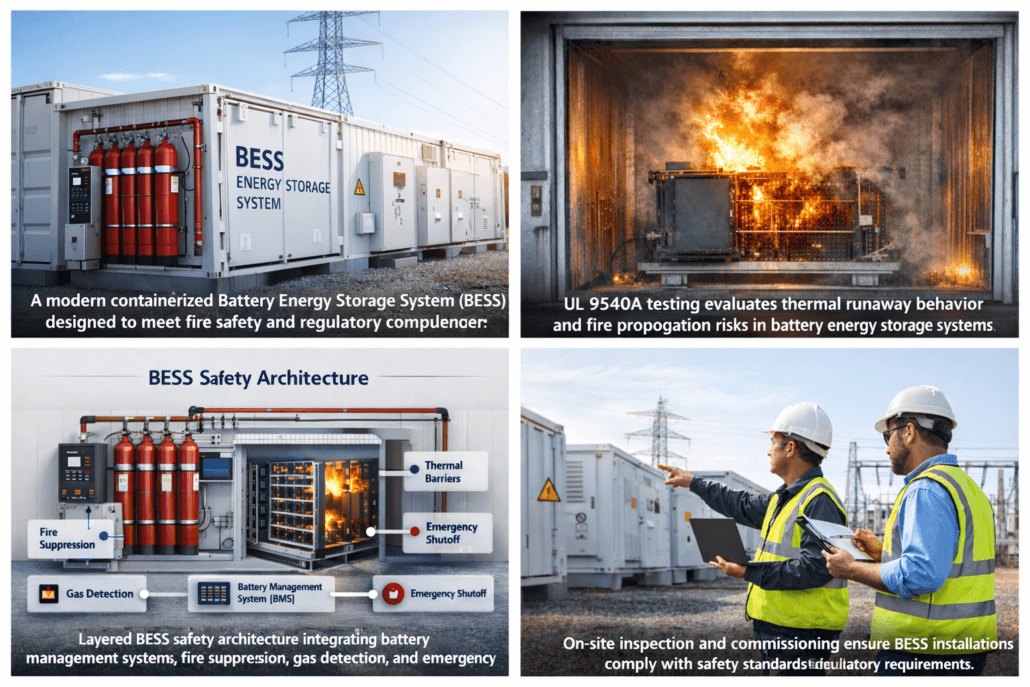
    Evaluates thermal runaway risks and fire propagation between cells/modules.
  5. Factory Audits & Quality Checks
    Ensures consistent production safety.

Benefits of UL 9540 Certification

For manufacturers, developers, and customers, UL 9540 offers clear benefits:

  • Market access – Approved by U.S. and international authorities.
  • Insurance acceptance – Reduces risk premiums.
  • Customer trust – Proof of safe and reliable operation.
  • Regulatory compliance – Helps meet building codes like NFPA 855.

UL 9540 vs. UL 9540A

UL 9540 vs UL 9540A

It’s common to confuse UL 9540 with UL 9540A.

  • UL 9540 → System-level safety certification.
  • UL 9540A → Fire safety test method to evaluate thermal runaway and propagation.

In practice, many jurisdictions require both UL 9540 certification and UL 9540A test reports before granting project approval.

👉 You can read our in-depth article on UL 9540A Test Method to understand how fire safety testing complements UL 9540 certification.


Applications of UL 9540 Certified Systems

UL 9540 certified systems are used across various industries:

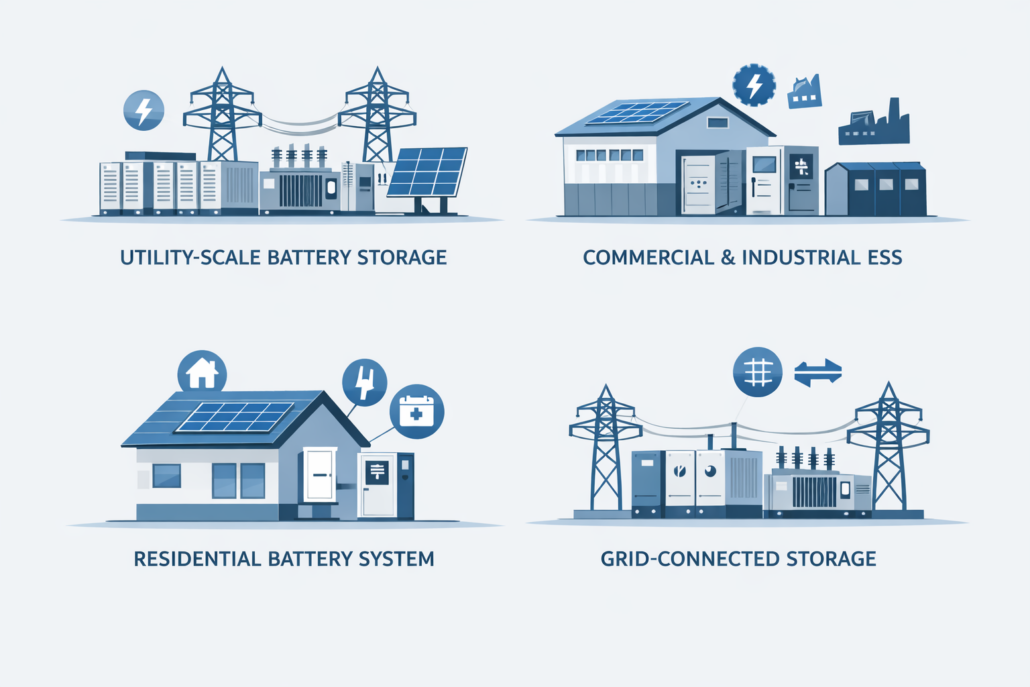
  • Commercial & Industrial facilities – backup power and peak shaving.
  • Residential ESS – safe home battery storage.
  • Utility-scale projects – grid balancing and renewable integration.
  • Microgrids – reliable off-grid power supply.

Challenges in Achieving UL 9540 Certification

While critical, certification is not always easy. Common challenges include:

  • Cost and testing timelines – Full certification can take months.
  • System design complexity – Integrating batteries, PCS, and controls safely.
  • Evolving standards – New revisions often add requirements.

Manufacturers must work with experienced certification partners to streamline the process.


Future of UL 9540

As energy storage technology evolves, UL continues to update its standards. Upcoming editions are expected to address:

UL-9540A-2025
  • Hydrogen detection systems
  • Enhanced rooftop installation guidelines
  • New battery chemistries (like sodium-ion and solid-state)

Staying aligned with these updates will be key for manufacturers and developers.


Conclusion

UL 9540 certification is the cornerstone of safety for energy storage systems. It combines multiple safety evaluations, ensures compliance with fire codes, and builds confidence among regulators, insurers, and end-users.

For anyone developing or deploying ESS solutions, UL 9540 is not optional—it’s essential.

👉 Learn more about how we support certification-ready solutions at Sunlith Energy.


FAQ: UL 9540 Certification

Q1. What does UL 9540 cover?

UL 9540 covers the safety of energy storage systems, including batteries, power conversion systems, and fire safety measures.

Q2. Is UL 9540 mandatory?

While not always legally required, many local codes and utilities demand UL 9540 certification for permitting and grid connection.

Q4. How long does certification take?

Depending on system complexity, UL 9540 certification can take 3–12 months.

Q5. Can older ESS be retrofitted for UL 9540?

Yes, but it may require re-testing and upgrades to meet safety standards.

 SunLith Energy UL 9540 vs UL 9540A

UL 9540 vs UL 9540A: Understanding the Key Differences in Energy Storage Certification

UL 9540 vs UL 9540A: As the adoption of battery energy storage systems (BESS) grows, safety and compliance remain top priorities for regulators, manufacturers, and end-users. Two of the most recognized standards in this space are UL 9540 and UL 9540A.

Although these terms are often used together, they play very different roles in certification and safety testing. UL 9540 is a system-level certification that validates the overall safety of an energy storage system. In contrast, UL 9540A is a test method that evaluates fire risks, specifically thermal runaway and fire propagation.

At Sunlith Energy, we help manufacturers and developers navigate these certifications to ensure safe and compliant energy storage deployments.


What is UL 9540?

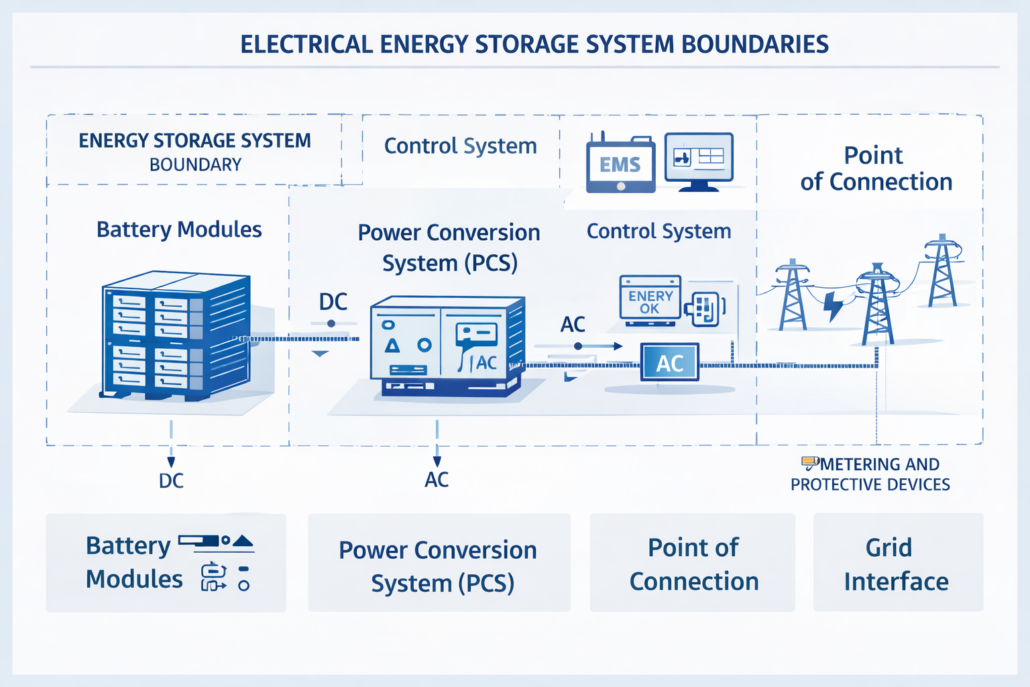
UL 9540 is the Standard for Safety of Energy Storage Systems and Equipment. It ensures that an entire ESS—from batteries and power conversion systems (PCS) to cooling, controls, and housing—meets strict safety requirements.

Key Features of UL 9540:

  • Scope: Applies to the entire system, not just components.
  • Integration: Requires batteries certified to UL 1973 and inverters certified to UL 1741.
  • Safety Focus: Covers electrical, mechanical, thermal, and fire safety aspects.
  • Market Approval: Often mandatory for utility-scale and commercial projects.

👉 If you’re exploring how PCS technology integrates into storage systems, check our detailed guide on Energy Storage PCS.


What is UL 9540A?

UL 9540A is the Test Method for Evaluating Thermal Runaway Fire Propagation in Battery Energy Storage Systems. Unlike UL 9540, it is not a certification but a test procedure.

This method provides critical data on how batteries behave under extreme conditions. It identifies risks such as fire spread, explosion potential, and gas emissions.

Testing Levels in UL 9540A:

  1. Cell Level – Individual cell behavior under failure.
  2. Module Level – How cells interact inside a battery module.
  3. Unit Level – Fire propagation within a system enclosure.
  4. Installation Level – Real-world system performance in buildings or outdoor setups.

👉 To understand why thermal management matters in these tests, see our post on Cooling Solutions for BESS.


UL 9540 vs UL 9540A: The Core Differences

UL 9540 vs UL 9540A
FeatureUL 9540UL 9540A
TypeCertificationTest Method
ScopeFull ESS (system-level)Fire & thermal runaway evaluation
FocusElectrical, mechanical, and fire safetyFire propagation, gas hazards
ApplicationRequired for deploymentSupports certification & AHJ approval
OutputCertification markTest report (not a certification)

In simple terms:


Why Both UL 9540 and UL 9540A Matter

The two standards work hand-in-hand:

Authorities Having Jurisdiction (AHJs) frequently demand UL 9540A reports before granting installation permits. Manufacturers, meanwhile, use test results to design safer enclosures, improve fire suppression systems, and integrate better thermal management.

👉 For more insights, see our guide on Fire Safety in BESS.


UL 9540 vs UL 9540A: Benefits of Compliance

Meeting both UL 9540 and UL 9540A requirements provides multiple advantages:

  • Regulatory Compliance: Smooth permitting with AHJs and fire authorities.
  • Improved Safety: Minimizes risks of fire, explosion, or hazardous gas emissions.
  • Customer Confidence: Certified systems are more trusted in commercial and utility projects.
  • Faster Market Access: Certification accelerates deployment timelines.

👉 Explore our complete overview of UL Certifications for Battery Systems for a deeper dive into related standards.


The Future of UL Certifications

UL-9540A-2025

UL standards are continuously evolving to address new technologies and risks. For example, the UL 9540A Fifth Edition (March 2025) introduced updates covering:

  • Hydrogen gas detection requirements
  • Fire safety for rooftop ESS installations
  • Stronger casing and housing evaluations

At Sunlith Energy, we monitor these regulatory changes to help our partners stay ahead in compliance and safety.


Conclusion

When comparing UL 9540 vs UL 9540A, the key takeaway is that they are complementary, not alternatives:

Together, they provide the foundation for safe, compliant, and market-ready energy storage systems.

👉 Need guidance on achieving compliance? Connect with Sunlith Energy for expert support in certification, testing, and deployment.

 SunLith Energy UL Certifications for Battery Systems

UL Certifications for Battery Systems: A Complete Guide

Battery Energy Storage Systems (BESS) are becoming essential in today’s energy landscape. Whether for renewable integration, grid stability, or backup power, ensuring the safety and reliability of these systems is critical. This is where UL certifications for battery systems play a crucial role.

UL (Underwriters Laboratories) is one of the most trusted global safety certification organizations. Its standards verify that battery energy storage systems meet strict safety, fire prevention, and performance requirements. For project developers, manufacturers, and operators, understanding these certifications is not optional—it’s necessary.

In this guide, we’ll explore key UL standards such as UL 9540, UL 9540A, UL 1973, and others. You’ll also learn how these certifications impact compliance, insurance, and deployment.

At Sunlith Energy, we help businesses navigate energy storage safety and compliance while building reliable battery solutions.


Why UL Certifications Matter for Battery Energy Storage

1. Safety and Risk Mitigation

Battery systems, if not designed properly, can pose fire hazards or thermal runaway risks. UL standards ensure that systems undergo rigorous testing to minimize these risks.

2. Regulatory Approval

Most jurisdictions require UL-certified equipment for permitting. Without it, projects can face delays, redesigns, or rejection.

3. Market Trust and Bankability

Investors, insurers, and end-users trust certified systems. A BESS with UL certifications demonstrates credibility and long-term reliability.

👉 Related Read: Complete Guide to Battery Energy Storage Certification


Key UL Certifications for Battery Systems

UL Certifications for Battery Systems

UL 9540 – Standard for Energy Storage Systems and Equipment

UL 9540 is the primary certification for energy storage systems. It evaluates the safety, performance, and construction of complete systems, not just individual components.

  • Covers batteries, Power Conversion Systems (PCS), control systems, and enclosures.
  • Required for grid-scale, commercial, and residential BESS installations.
  • Ensures systems meet fire safety and electrical safety standards.

Why it matters: Without UL 9540, your BESS may not receive local authority approval.

👉 Learn more about Energy Storage PCS and how it integrates into certified systems.


UL 9540A – Test Method for Evaluating Thermal Runaway Fire Propagation

UL 9540A is not a certification itself but a test method. It assesses how thermal runaway in one cell can propagate through modules, units, and installations.

  • Provides data on fire propagation and suppression.
  • Often required by fire marshals and building authorities.
  • Supports UL 9540 certification by demonstrating safe design.

👉 Explore our article: UL 9540A Test Method Explained


UL 1973 – Batteries for Use in Stationary and Vehicle Auxiliary Power Applications

UL 1973 focuses on individual battery modules and packs used in stationary systems.

  • Tests electrical, mechanical, and environmental safety.
  • Covers BESS, telecom backup, and EV auxiliary batteries.
  • Often a prerequisite before seeking UL 9540 certification.

Example: A lithium-ion module must first pass UL 1973 before being integrated into a UL 9540-certified system.


UL 1741 – Inverters, Converters, Controllers

Since BESS includes PCS (Power Conversion Systems), UL 1741 applies to inverters and related power electronics.

  • Validates PCS for interconnection safety with the grid.
  • Ensures compatibility with renewable energy and microgrids.
  • Critical for hybrid solar + storage projects.

👉 Read our guide: PCS vs Inverter – Key Differences


UL 1974 – Evaluation for Repurposing Batteries

As second-life batteries become more common, UL 1974 helps ensure repurposed cells are safe for reuse.

  • Evaluates used EV or industrial batteries for BESS applications.
  • Supports sustainability by extending battery life.
  • Ensures recycled batteries meet minimum safety standards.

Benefits of UL-Certified Battery Systems

  1. Regulatory Compliance – Smooth project approvals and grid interconnection.
  2. Enhanced Safety – Reduced risk of fire, explosion, and system failure.
  3. Market Acceptance – Easier financing and insurance.
  4. Long-Term Reliability – Certified systems undergo rigorous life-cycle testing.
  5. Future-Proofing – UL standards evolve with technology, ensuring systems stay relevant.

Challenges in Achieving UL Certification

  • Cost and Time: Certification requires extensive testing, which can delay projects.
  • Design Changes: If a component fails testing, redesign may be necessary.
  • Complex Standards: Navigating multiple UL standards can overwhelm new manufacturers.

This is where industry partners like Sunlith Energy provide support—helping companies design systems aligned with certification requirements from day one.


UL Certifications for Battery Systems

How Sunlith Energy Helps with UL-Compliant Solutions

At Sunlith Energy, we ensure that every battery system we design aligns with UL safety and certification standards. Our approach includes:

  • Design Consulting: Guiding OEMs and EPCs on compliance from the design phase.
  • Testing Support: Preparing systems for UL 9540, UL 9540A, and UL 1973 evaluations.
  • End-to-End Solutions: Delivering certified-ready BESS with integrated PCS, battery modules, and fire safety systems.

Whether you’re deploying grid-scale storage, C&I projects, or hybrid solar + storage, our certified solutions meet the highest safety benchmarks.

👉 Learn more about our Battery Energy Storage Systems


FAQs on UL Certifications for Battery Systems

1. What is UL certification for battery systems?

It is a safety and performance evaluation that ensures battery energy storage systems meet global standards for fire safety, electrical reliability, and environmental resilience.

2. Do all BESS need UL 9540 certification?

Yes. For commercial and residential deployment in most regions, UL 9540 is mandatory.

4. How long does certification take?

Depending on system complexity, UL certification can take 6–12 months.

5. Can second-life batteries be certified?

Yes, through UL 1974, which evaluates repurposed batteries for safe use in stationary storage.


Conclusion

UL certifications for battery systems are the foundation of safe, compliant, and bankable energy storage projects. From UL 9540 system-level approvals to UL 9540A fire safety testing and UL 1973 battery-level compliance, these standards ensure that energy storage systems perform reliably under real-world conditions.

As energy storage adoption accelerates, ensuring compliance with UL standards will not just be a regulatory requirement—it will be a competitive advantage.

At Sunlith Energy, we’re committed to helping businesses deploy safe, certified, and future-ready energy storage systems.

 SunLith Energy UL 9540A Test Method: Complete Guide for Battery Energy Storage Safety

UL 9540A Test Method: The Ultimate Guide for Battery Energy Storage Safety

UL 9540A Test Method: Battery Energy Storage Systems (BESS) are growing rapidly as renewable energy, electric vehicles, and grid-scale projects expand worldwide. While storage technology brings efficiency and sustainability, it also raises safety challenges—especially related to thermal runaway and fire propagation.

This is where the UL 9540A Test Method plays a vital role. It is the most widely accepted safety test for energy storage systems, referenced by codes such as NFPA 855 and the International Fire Code.

In this guide, we’ll explain:

  • What UL 9540A is
  • The four levels of testing
  • How it relates to UL 9540 and UL 9540B
  • The major 2025 updates
  • Why manufacturers and project developers should care
UL 9540A Test Method: Complete Guide for Battery Energy Storage Safety

What is the UL 9540A Test Method?

The UL 9540A Test Method for Evaluating Thermal Runaway Fire Propagation in BESS is the only national standard designed to measure how battery systems react under thermal runaway conditions.

It answers critical safety questions such as:

  • Will a single cell failure spread to neighboring cells?
  • How will a battery module or system behave in case of fire?
  • Can suppression systems prevent explosions, flames, or reignition?

Unlike general safety certifications, UL 9540A focuses only on fire propagation risks, making it the go-to test for engineers, installers, and regulators.

👉 Related: UL Certifications for Battery Systems


Why is UL 9540A Important for BESS?

Battery systems are often installed in homes, businesses, and utility-scale projects. If a fire starts and spreads, it can have devastating consequences. UL 9540A ensures that:

  • Manufacturers can prove their systems are safe.
  • Installers get clear installation requirements, such as spacing and suppression.
  • Authorities have a reliable, consensus-based safety test.

It is directly referenced in NFPA 855, which governs the installation of stationary energy storage systems, making it essential for compliance.

👉 Explore more: CE for BESS: Complete Guide


The Four Levels of UL 9540A Testing

UL 9540A follows a hierarchical four-level structure. Testing may stop early if performance criteria are met.

UL 9540A Test Method: Complete Guide for Battery Energy Storage Safety

1. Cell-Level Testing

The test begins with individual cells. The goal is to induce thermal runaway and analyze gas emissions, flames, and heat release.

  • If cells show no propagation risk, testing can stop here.

2. Module-Level Testing

If cell risks exist, groups of cells (modules) are tested. This step checks whether failures propagate across the module, creating larger hazards.

3. Unit-Level Testing

The full battery system (ESS unit) is tested. Suppression systems are often disabled unless they are built-in. Engineers assess:

  • Flame spread
  • Explosion risk
  • Gas emissions

4. Installation-Level Testing

The final stage evaluates the system in real-world conditions with fire suppression included. It ensures:

  • No detonation or deflagration
  • Effective fire suppression
  • No reignition after the event

👉 Related: What is BESS?


UL 9540A vs. UL 9540 and UL 9540B

It’s easy to confuse these standards, but they serve different purposes:

UL 9540A Test Method: Complete Guide for Battery Energy Storage Safety
  • UL 9540: Certification standard for energy storage equipment. Covers overall safety, performance, and compliance.
  • UL 9540A: Test method for fire propagation in thermal runaway scenarios. Supports UL 9540 certification.
  • UL 9540B: Designed specifically for residential-scale BESS, focusing on large-scale fire tests and vent gas ignition.

Together, these standards provide a complete safety framework for energy storage systems.


2025 Updates: What Changed in UL 9540A Fifth Edition?

UL 9540A Test Method: Complete Guide for Battery Energy Storage Safety

The fifth edition of UL 9540A, released on March 12, 2025, brings significant improvements to reflect evolving technology and chemistries.

Key Updates:

  • Optional hydrogen detection and heat flux measurements.
  • Clarified rest times after conditioning/charging.
  • Replacement of NFPA 286 fire room with an instrumented wall for residential testing.
  • More precise thermocouple placement and continuous ramping in cell tests.
  • Specific temperature limits for module casings.
  • Extended protocols for new chemistries like lead-acid, NiCd, and flow batteries.
  • Added requirements for rooftop and open garage installations.

These updates make UL 9540A more adaptable, helping manufacturers meet stricter fire codes and regulators enforce safer installations.

👉 Related: Green Hydrogen Storage


Who Needs UL 9540A Testing?

UL 9540A applies to:

  • Battery manufacturers – proving technology safety.
  • BESS integrators – ensuring compliance with NFPA 855 and local fire codes.
  • Developers and EPCs – gaining project approvals faster.
  • Home and commercial installers – understanding spacing and suppression requirements.

Without UL 9540A testing, it becomes nearly impossible to get approval for large BESS installations in the U.S.


Benefits of UL 9540A Testing

  • Compliance: Meets NFPA 855 and IFC requirements.
  • Design Optimization: Provides data for safe spacing and fire suppression.
  • Market Access: Required for many U.S. and Canadian projects.
  • Risk Reduction: Lowers fire and explosion risks in installations.

Conclusion

The UL 9540A Test Method is the backbone of energy storage safety in 2025. With its updated fifth edition, it provides a clear, science-based framework to evaluate thermal runaway risks at cell, module, unit, and installation levels.

For manufacturers, passing UL9540A testing means faster certifications, safer designs, and wider market acceptance. For regulators and installers, it provides confidence that battery energy storage systems meet the highest safety standards.

As BESS technology evolves, UL 9540A will continue to be the key standard shaping how we store renewable energy safely and effectively.

👉 Learn more: UL Certifications for Battery Systems


FAQs: UL 9540A Test Method

Q1. What is the UL 9540A Test Method?

The UL 9540A Test Method is a fire safety test designed to evaluate the thermal runaway characteristics of battery energy storage systems (BESS). It helps manufacturers and system designers understand how a battery reacts under stress, including fire, gas release, and propagation risks.


Q3. How does UL 9540A differ from UL 9540 certification?

UL 9540 is a system-level certification for battery energy storage systems, while UL 9540A is a fire test method. UL 9540A is often used to provide supporting safety data required to achieve UL 9540 certification or to meet local fire codes.


Q2. Why is UL 9540A testing important for energy storage systems?

UL 9540A testing provides critical data for fire safety, helping system integrators, regulators, and building authorities approve energy storage projects. It ensures that batteries are safe for use in residential, commercial, and grid-scale installations.


Q4. What are the levels of UL 9540A testing?

UL 9540A includes four test levels:

  1. Cell level – Tests how a single cell behaves in thermal runaway.
  2. Module level – Examines propagation within a battery module.
  3. Unit level – Assesses fire and gas risks in the entire system.
  4. Installation level – Evaluates safety in a real-world installed environment.

For more details on BESS safety, see our guide on energy storage PCS.


Q5. Who requires UL 9540A testing?

UL 9540A testing is often required by:

  • Battery manufacturers seeking UL 9540 certification.
  • System integrators installing BESS in commercial or residential sites.
  • Authorities Having Jurisdiction (AHJs) and fire marshals reviewing projects.

Learn more about BESS certifications required glo


Q6. What are the latest updates in UL 9540A (Fifth Edition, 2025)?

The March 2025 update to UL 9540A (5th Edition) added requirements for:

  • Hydrogen detection sensors.
  • Module casing integrity.
  • Testing for rooftop energy storage systems.

Check our post on battery regulations in the EU for related compliance u


Q7. Does passing UL 9540A mean a battery is certified?

No, UL 9540A is not a certification. It is a test method that provides data used to achieve UL 9540 certification or to comply with fire codes. Certification comes from successfully meeting UL 9540 requirements.


Q8. How long does UL 9540A testing take?

The duration depends on system size and complexity. A full series of tests (cell, module, unit, installation) can take several weeks to months, depending on scheduling and regulatory requirements.


Q9. Can UL 9540A testing be skipped if a battery is already safe?

No. Even if a system has proven safety records, AHJs and certification bodies often require UL 9540A data as part of the approval process, especially for large-scale installations.


Q10. How does UL 9540A testing impact project approval timelines?

Providing UL 9540A data often accelerates permitting and approval by demonstrating compliance with NFPA 855, IFC, and local fire codes. Without it, projects may face delays or additional scrutiny.

 SunLith Energy Liquid vs Air Cooling System in BESS

Liquid vs Air Cooling System Use in BESS: Choosing the Right Thermal Management

Liquid vs Air Cooling System in BESS – Complete Guide: Battery Energy Storage Systems (BESS) are transforming how we store and manage renewable energy. But one often overlooked factor that determines their safety, performance, and lifespan is the cooling system. Effective thermal management ensures batteries operate within safe temperature ranges, preventing overheating, fire risks, and performance drops.

Among the various methods available, liquid cooling and air cooling stand out as the two most common approaches. Each has unique advantages, costs, and applications. In this post, we’ll compare liquid vs air cooling in BESS, and help you understand which method fits best depending on scale, safety, and compliance needs.


Why Cooling Matters in BESS

Battery cells generate heat during charging and discharging. If not managed properly, this heat can cause:

Liquid vs Air Cooling System in BESS
  • Reduced battery efficiency
  • Shortened lifespan
  • Higher risk of thermal runaway

That’s why global standards such as UL certifications for battery systems and CE for BESS require strict compliance with safety and thermal management protocols.

Simply put: cooling = safety + performance.


Air Cooling Systems in BESS

Air cooling is the most widely used thermal management method in small to medium BESS setups. It works by blowing cool air across the battery racks with fans or forced ventilation.

Liquid vs Air Cooling System in BESS (AIR COOLING)

Advantages of Air Cooling

  • Lower upfront cost
  • Simpler system design
  • Easier maintenance

Limitations of Air Cooling

  • Less effective for high-density, utility-scale systems
  • Struggles in hot or humid climates
  • Uneven cooling across battery modules

Best Use Case: Residential or small commercial BESS paired with solar PV or EV charging.


Liquid Cooling Systems in BESS

Liquid cooling uses water-glycol mixtures or dielectric fluids circulated through cold plates or coolant channels around the battery cells. This method transfers heat more efficiently than air cooling.

Liquid vs Air Cooling System in BESS (Liquid Cooling)

Advantages of Liquid Cooling

  • High thermal efficiency
  • Better temperature uniformity
  • Ideal for grid-scale energy storage PCS and high-density BESS
  • Scalable and safer in demanding climates

Limitations of Liquid Cooling

  • Higher initial investment
  • More complex installation and monitoring
  • Requires leak-proof design and maintenance

Best Use Case: Utility-scale BESS, energy storage PCS integration, and applications requiring long-duration reliability.

👉 Learn more about Energy Storage PCS and how cooling supports PCS performance.


Liquid vs Air Cooling: Side-by-Side Comparison

Liquid vs Air Cooling System in BESS
FactorAir CoolingLiquid Cooling
CostLowHigher
EfficiencyModerateHigh
ScalabilityLimitedExcellent
MaintenanceSimpleTechnical
Best forResidential & small commercialUtility-scale & grid applications

In large-scale deployments, liquid cooling dominates due to higher efficiency and better safety margins. For smaller systems, air cooling remains cost-effective.


Cooling and Compliance

Thermal management directly influences regulatory compliance. Global frameworks such as:

All emphasize the role of cooling in preventing fire hazards.

This makes cooling systems a critical design choice, not just an engineering afterthought.


Choosing the Right Cooling System

When selecting between liquid vs air cooling, consider:

  • System Size: Larger BESS requires liquid cooling.
  • Environment: Hot climates favor liquid systems.
  • Cost vs Performance: Air cooling suits budget-sensitive projects.
  • Compliance Needs: Regulatory approvals may depend on cooling efficiency.

For projects exploring advanced storage technologies such as green hydrogen storage, cooling strategies also play a role in integrated system safety.


Conclusion

The debate of liquid vs air cooling in BESS isn’t about which is better overall—it’s about which is better for your application.

  • Air cooling is cost-effective and simple for residential or small commercial setups.
  • Liquid cooling is the gold standard for utility-scale, high-capacity BESS where safety, scalability, and compliance are critical.

As energy storage adoption grows, smart cooling design will define the future of battery system safety and efficiency.


FAQs – Liquid vs Air Cooling in BESS

1. What is the difference between liquid and air cooling in BESS?

Air cooling uses fans to move air across battery modules, while liquid cooling uses fluids circulated through channels or plates to absorb heat more effectively.

2. Which cooling system is better for large-scale BESS?

Liquid cooling is preferred for utility-scale and high-density BESS because it provides superior thermal management, reduces hot spots, and improves safety.

3. Is air cooling still used in modern BESS?

Yes, air cooling is still used in residential and small commercial BESS where costs are lower and power density is moderate.

4. How does cooling affect battery safety?

Proper cooling reduces the risk of overheating and thermal runaway. Standards like UL 9540A Test Method specifically evaluate how BESS cooling impacts fire safety.

5. Does cooling impact regulatory compliance for BESS?

Yes. Certifications such as UL certifications for battery systems and CE for BESS require effective thermal management to meet safety standards.

6. Which cooling system is more cost-effective?

Air cooling is more affordable upfront. However, liquid cooling may deliver better long-term value by extending battery lifespan and ensuring compliance in large-scale systems.

Next Step: Learn more about Energy Storage PCS and how Sunlith Energy helps integrate cooling with PCS design for optimal BESS performance.

 SunLith Energy C&I BESS Thermal Management: Optimizing Performance, Safety & Lifespan

C&I BESS Thermal Management: Optimizing Performance, Safety & Lifespan

C&I BESS thermal management is a foundational aspect of creating a robust, safe, and high-performing Battery Energy Storage System. As SunLith highlights in their Key Components of a C&I BESS article, maintaining the right operating temperature via thermal systems dramatically reduces risks of overheating and battery degradation.
Effective thermal control not only prevents thermal runaway and improves safety—but also extends battery lifespan and operational efficiency.


Why Thermal Management Matters

Temperature extremes significantly impact battery performance. High heat accelerates wear and increases fire risk; cold slows reaction rates and lowers efficiency.
With proper thermal control, a C&I BESS achieves:

  • Enhanced safety and fire mitigation
  • Consistent performance and capacity
  • Extended system lifespan and reliability

Key Components of Thermal Management

C&I BESS Thermal Management: Optimizing Performance, Safety & Lifespan

A robust thermal management system within a C&I BESS typically includes:

  • Cooling Systems: Air, liquid, or hybrid solutions tailored to system scale
  • Thermal Sensors: Providing real-time temperature data for EMS response
  • Control Logic: Integrated into EMS to automate cooling actions
  • Enclosure Design: Providing insulation with airflow control and heat dissipation
    These align with SunLith’s component breakdown in their Key Components of a C&I BESS article.

Cooling Strategies for C&I BESS

ApproachBest ForProsTrade-Offs
Air CoolingSmall to medium-scaleCost-effective and simpleLess efficient in dense setups
Liquid CoolingHigh-density, heat-intensive systemsExceptional heat controlHigher cost, maintenance needs
Hybrid SystemsCritical applicationsRedundancy + efficiencyComplex system design

Markets are increasingly favoring liquid and hybrid cooling for enhanced safety in large C&I BESS projects.


Performance, Safety & Regulatory Compliance

Consistent thermal regulation contributes to enhanced charge/discharge efficiency and durability. Regulatory standards such as UL 9540A and IEC 62933 emphasize the importance of thermal protection in ensuring BESS safety certification—reinforced in SunLith’s insights into safety protocols.

Learn more about C&I BESS Safety Standards at SunLith Energy


Trends in Thermal Management

The future of C&I BESS thermal management incorporates:

  • AI-Enabled Cooling Control: Predicting heat patterns and adjusting cooling dynamically
  • Phase-Change Materials (PCM): Buffering peaks in heat passively
  • Liquid Immersion Cooling: Advanced, high-efficiency thermal control for dense systems
    These advancements are key building blocks for safer and longer-lasting energy storage.

Conclusion

C&I BESS thermal management is not a luxury—it’s a critical pillar for safety, efficiency, and longevity. A SunLith-style system uses innovative cooling, real-time monitoring, and smart control to unlock full potential. By integrating these best practices, businesses ensure their BESS assets remain secure, efficient, and future-ready.


FAQs

Q1: What is C&I BESS thermal management?

A: C&I BESS thermal management refers to the systems and controls that keep battery modules within safe operating temperatures (cooling, sensing, and control). Proper thermal management ensures consistent performance, reduces degradation, and prevents overheating-related safety incidents.

Q2: Why is thermal management important for C&I BESS?

A: Temperature extremes shorten battery life and raise safety risks (including thermal runaway). Good thermal management improves efficiency, extends lifespan, and reduces maintenance and insurance costs.

Q3: What are the common thermal management methods?

A: Typical approaches are air cooling, liquid cooling, and hybrid systems. Advanced options include phase-change materials (PCM) and liquid immersion for very high-density systems.

Q4: How does thermal management extend battery lifespan?

A: By keeping cell temperatures in the optimal range, thermal systems slow chemical degradation, reduce capacity fade, and enable more charge/discharge cycles — all of which improve lifecycle economics.

Q5: Can thermal management prevent thermal runaway?

A: It significantly reduces the probability and severity of thermal runaway by removing excess heat early, enabling the BMS and EMS to act, and triggering suppression/venting when needed.

Q6: What’s the difference between air cooling and liquid cooling?

A: Air cooling is simpler and lower cost, best for small–medium systems. Liquid cooling offers much better heat transfer for high-density, continuous-duty C&I installations but has higher complexity and maintenance needs.

Q7: How does thermal management integrate with an EMS?

A: Thermal sensors feed real-time temperature data into the EMS, which then adjusts dispatch and cooling setpoints proactively. See our Key Components of a C&I BESS guide.

Q8: Which safety standards relate to thermal control in C&I BESS?

A: Important standards include UL 9540/9540A, IEC 62933, and local fire codes. For more details, see our C&I BESS Safety Standards.

Q9: How often should thermal systems be inspected and serviced?

A: Routine inspections are typically quarterly or semi-annual. Tasks include sensor calibration, coolant checks/pumps, filter replacement, and EMS updates. High-risk or 24/7 sites should use predictive maintenance.

Q10: How does thermal management affect the economics of C&I BESS?

A: Better thermal control reduces replacement and downtime costs, improves efficiency, and increases usable lifetime — all of which improve C&I BESS economics

 SunLith Energy C&I BESS Future Trends | AI-Driven EMS, Smart Grids & Advanced Chemistries

Future Trends in C&I BESS — AI, Smart Grids & Next-Gen Chemistries

C&I BESS future trends are rapidly advancing, reshaping how businesses manage energy. As seen in the SunLith blog’s recent overview of renewable integration challenges and solutions, the next generation of C&I Battery Energy Storage Systems (BESS) goes well beyond solar, wind, and basic load shifting SunLith Energy. Forward-looking enterprises are now embracing smart energy flows through AI, grid interaction, advanced chemistries, enhanced safety, and sustainability to unlock new benefits.


Trend 1: AI-Powered Energy Management Systems

C&I BESS Future Trends | AI-Driven EMS, Smart Grids & Advanced Chemistries

AI is transforming the Energy Management System (EMS) that lies at the heart of every C&I BESS:

  • Smart Forecasting anticipates renewable generation and load peaks.
  • Self-Optimizing Dispatch dynamically times charge/discharge for cost and efficiency.
  • Market Intelligence enables real-time participation in demand-response and energy arbitrage.

This trend directly links to the EMS component in our earlier “Key Components” post for seamless integration.


Trend 2: Greater Smart Grid Integration

C&I BESS Future Trends | AI-Driven EMS, Smart Grids & Advanced Chemistries

As SunLith points out, powering microgrid autonomy is crucial for renewable alignment SunLith Energy. Future C&I BESS systems will:

  • Instantly counter grid fluctuations through two-way communication.
  • Enable microgrids to operate independently during outages.
  • Facilitate virtual power plant (VPP) networks, aggregating storage across sites.

These features bolster both reliability and system flexibility.


Trend 3: Next-Generation Battery Chemistries

C&I BESS Future Trends | AI-Driven EMS, Smart Grids & Advanced Chemistries

Lithium-ion dominates today—but tomorrow’s storage will include:

  • Solid-State Batteries: higher density with enhanced safety.
  • Flow Batteries: ideal for extended-duration, modular storage.
  • Sodium-Ion & Hybrid Cells: cost-effective and resource-abundant options.

These chemistries will support long-duration applications and reduce resource constraints.


Trend 4: Enhanced Safety & Compliance

C&I BESS Future Trends | AI-Driven EMS, Smart Grids & Advanced Chemistries

With rapid market growth (projected BESS reaching 500 GW by 2031) comes increased focus on safety standards SunLith Energy. Upcoming trends include:

  • AI-enabled early detection and fire suppression systems.
  • IP-rated enclosures for robust environmental protection.
  • New certification standards—addressing fire, enclosures, and operational resilience.

Safety now intersects deeply with innovation and performance.


Trend 5: Sustainability, Second-Life & Circularity

Sustainability is central to future C&I BESS design:

  • Second-Life Batteries (e.g., retired EV packs) are gaining traction for cost-effective reuse.
  • Circular design and recycling strategies will reduce lifecycle impacts.
  • Eco-friendly chemistries and lower resource footprints align with ESG goals.

These trends make energy storage not just smart, but also sustainable.


Business Implications of C&I BESS Future Trends

Adopting these trends provides tangible business advantages:

  • Improved ROIs through intelligent dispatch and grid revenue.
  • Operational independence, especially with smart grid and microgrid support.
  • Alignment with decarbonization mandates and sustainability strategies.

Integrating these advancements reinforces your energy infrastructure for years to come.

Conclusion

The evolving landscape of C&I BESS future trendsfrom AI-powered EMS and smart grid integration to advanced chemistries and circular strategies—is setting the stage for next-level energy storage. As energy complexity rises, businesses must keep pace. Staying at the forefront of these innovations ensures operations that are efficient, resilient, compliant, and sustainable.

Explore how these trends tie into our earlier deep dives on EMS components and renewable integration for a cohesive energy strategy.