
Pros and Cons of Solar Energy: The Complete Guide for Homeowners
The pros and cons of solar energy matter more than ever. Panel prices keep falling, and utility rates keep climbing. This guide breaks down the real benefits and drawbacks of solar power in plain terms. Once you understand the pros and cons of solar energy, you can decide with confidence whether it fits your home.
| QUICK ANSWER Solar energy’s biggest pros are lower electricity bills, minimal maintenance, and a smaller carbon footprint. Its main cons are the high upfront cost, weather-dependent output, and extra expense for battery storage. Most homeowners still come out ahead over a system’s 25-year lifespan, even after the initial investment. |
Pros and Cons of Solar Energy at a Glance
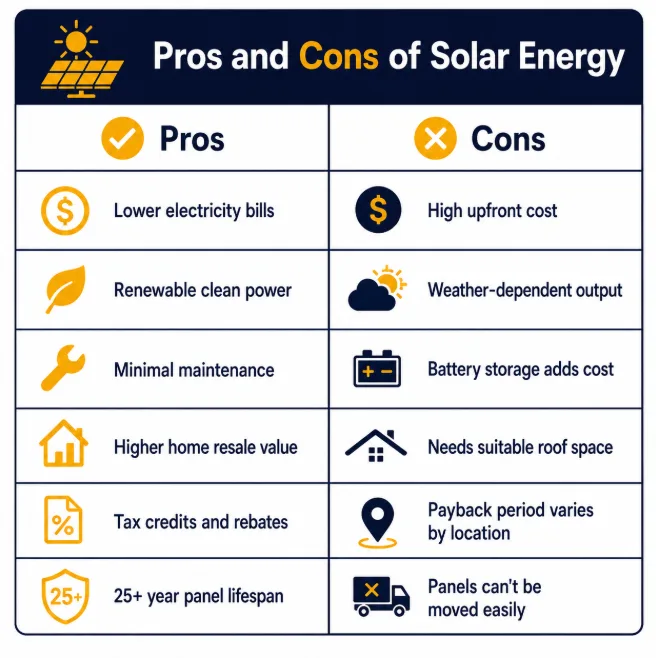
Here’s a quick side-by-side view of the pros and cons of solar energy before we get into the details. Scan the table below to see the trade-offs in seconds.
| Pros | Cons |
| Lower electricity bills | High upfront cost |
| Renewable, clean power | Weather-dependent output |
| Minimal maintenance | Battery storage adds cost |
| Higher home resale value | Needs suitable roof space |
| Tax credits and rebates | Payback period varies by location |
| 25+ year panel lifespan | Panels can’t be moved easily |
Now let’s look at each point in more detail, starting with the upside.
Pros and Cons of Solar Energy: The Advantages
Solar power offers real, measurable benefits for most homeowners. Here are the five advantages that matter most.
Lower Electricity Bills
Solar is a proven way to cut your monthly power costs. Depending on your system size and local rates, you could save thousands of dollars over the system’s life.
Many utilities also offer net metering, so surplus power you send back to the grid earns you a bill credit. Over 20 to 25 years, that credit adds up to a meaningful chunk of savings.
Renewable and Clean Energy
Solar panels convert sunlight into power without burning fuel. The sun delivers more energy in one hour than the world uses in an entire year.
Unlike coal or gas plants, solar panels produce no emissions once they’re installed and running. That makes solar one of the cleanest ways to power a home.
Minimal Maintenance Once Installed
Most solar panels are built to last 25 years or longer. They need very little upkeep beyond occasional cleaning and a yearly inspection to keep the system operating efficiently.
Once your system is installed, it largely takes care of itself. Compare that to a furnace or water heater, which both need regular servicing.
Higher Home Resale Value
Homes with solar panels tend to attract more buyers in most markets. Many sellers recover part of their installation cost through a higher sale price.
Buyers increasingly see solar as a built-in utility discount rather than an extra expense. That perception alone can speed up a sale.
Government Incentives and Tax Credits
Many governments still offer credits, rebates, or grants for home solar installs, according to the U.S. Department of Energy’s Homeowner’s Guide to Going Solar.
These programs can shrink your upfront cost significantly and shorten your payback period. You can calculate your own return on investment before you budget for a system, since availability and value change often.
Pros and Cons of Solar Energy: The Drawbacks
Solar isn’t free of trade-offs, and it’s worth knowing them upfront. Here are the five drawbacks that matter most.
High Upfront Cost
A full system, including panels, inverter, and installation, can still cost thousands of dollars. Prices have dropped sharply over the past decade. Your exact output depends on your local peak sun hours, which can run from under 3 hours a day in winter to over 6 in sunnier regions.
Even so, the initial outlay remains the single biggest barrier for most households. Financing and incentives can soften this, though they don’t erase it.
Weather and Location Dependence
Solar panels need sunlight to generate power. Output drops on cloudy days, during rainy seasons, or in far-northern locations with short winter daylight.
You’ll likely still draw some power from the grid during these low-sun stretches. A well-sized system accounts for this seasonal swing from the start.
Battery Storage Adds Cost
Batteries let you store daytime power for use at night or during outages. But they add real cost to a system.
They also typically need replacing after several thousand charge cycles. Weigh this cost against how you’d size a home battery for your actual backup needs before adding one.
Roof and Space Requirements
Not every roof suits solar. Shading, a steep pitch, or an awkward angle can all cut into a system’s output.
Some homes may need ground-mounted panels instead, which adds cost and requires open land. Checking your roof’s solar panel tilt angle before you buy will catch these issues early.
Pros and Cons of Solar Energy: Payback Period Varies by Location
Your break-even point depends heavily on local electricity rates and available incentives. In areas with cheap grid power, payback can stretch well past a decade.
In high-rate regions, it can happen in under six years. This variation is a core part of any solar decision for a specific address.
Pros and Cons of Solar Energy: Is It Worth It for Your Home?
The pros and cons of solar energy depend on your roof, your rates, and your timeline, not on generic averages. Solar tends to pay off fastest for homeowners with high electricity bills, a sun-facing roof, and plans to stay put for at least ten years.
It’s a weaker fit if your roof is heavily shaded, your local rates are already low, or you plan to move soon. A quick roof assessment and a local rate comparison will tell you most of what you need to know before you commit.
Pros and Cons of Solar Energy: Questions to Ask Before You Install
Ask these four questions before you sign a contract.
First, is your roof’s angle and sun exposure strong enough for good output?
Second, how many years do you plan to stay in the home?
Third, what local rebates or net metering programs apply to you?
Fourth, should you add batteries now, or wait?
Either way, work with a certified, reputable installer to keep your system safe and eligible for incentives.
FAQs About the Pros and Cons of Solar Energy
Does solar energy really save you money?
Yes. Most homeowners save money over time, though the exact amount depends on system size, local rates, and available incentives.
What is the biggest disadvantage of solar energy?
For most homeowners, it’s the high upfront cost. A full system can run into the thousands, even though incentives and falling panel prices have narrowed that gap in recent years.
How long does it take to break even on solar panels?
Most systems break even in six to ten years, depending on installation costs, local incentives, and how much power your household uses.
Can I run my home on solar power alone?
With enough panels and battery storage, yes. Most homes still stay connected to the grid for backup during extended low-sun periods.
Is solar energy worth it in 2026?
For most homeowners with a sun-facing roof and average or above-average electricity bills, yes. Falling equipment costs and continued incentives have shortened payback periods across most regions this year.
Key Takeaway: Weighing the Pros and Cons of Solar Energy
Knowing the real pros and cons of solar energy helps you make a confident, informed choice. Solar rewards homeowners who plan around its upfront cost and weather dependence with decades of lower bills and a smaller footprint.
Weigh your roof, your rates, and your timeline first, and the right decision becomes obvious.
Further Reading
Your Detailed Guide to a Home Solar Power System
Battery Energy Storage System Safety
How to Calculate the ROI of Your Commercial Solar Installation
Choosing a Solar Battery for a 100kWh Load
DIY Solar Panel Installation vs. Hiring a Professional
What Is a Home Energy Storage System?
Solar Panel Tilt Angle by Location




Trackbacks & Pingbacks
[…] Solar energy […]
[…] When people talk about clean energy, green hydrogen often comes up. But what is green hydrogen? Simply put, it’s hydrogen made using clean, renewable energy — no pollution, no carbon emissions. In this post, you’ll learn how green hydrogen is produced, how it’s stored, and why it’s so important for a carbon-neutral future. […]
Leave a Reply
Want to join the discussion?Feel free to contribute!