

Supplier Red Flags: What Poor Exhibition Follow-Up Reveals
Supplier red flags often appear long before you place a purchase order. How a supplier behaves after a trade exhibition shows how it may treat your order after it receives your money.
Imagine you meet a supplier at an international exhibition. You explain your requirements, discuss technical specifications, and exchange business cards.
You expect a professional follow-up. Instead, nothing happens.
A week later, a generic catalog arrives with one line: “If you need any products, please feel free to contact us.”
Nothing refers to your discussion. Nobody asks about your project or tries to build a business relationship.
This is more than poor salesmanship, because it may reveal weak management, loose customer processes, and low operational discipline.
Fraud adds another risk. The FBI warns that business email compromise targets businesses that work with foreign suppliers.
In international B2B sourcing, price alone is not enough because you need a partner who delivers what they promise.
This guide covers 30 numbered supplier red flags, eight critical risk areas, and a 9-step qualification process. Use it before your first purchase order (PO).
What Are the Most Important Supplier Red Flags?
1. Supplier Red Flags After the Exhibition: Poor Follow-Up
These supplier red flags appear right after the show, while your inquiry is still fresh.
Early Supplier Red Flags: Silence and Generic Catalogs
Red flag 1: Complete silence after the exhibition. You showed interest, discussed requirements, and shared contact details. Yet the supplier never contacts you.
What it reveals: Poor lead management, no structured customer relationship management (CRM), and weak sales accountability.
A busy exhibition produces hundreds of leads, so a short delay is fine. Still, continued silence without any acknowledgment is a warning.
If a company cannot manage your inquiry, can you trust it to manage your production schedule?
Red flag 2: The copy-paste catalog approach. You receive a generic catalog unrelated to your discussion. Nobody mentions the product or project you discussed.
What it reveals: The sales representative processes contacts instead of developing opportunities. As a result, your specifications, packaging instructions, and commercial terms may not get the attention they deserve.
Weak Research and Passive Selling
Red flag 3: Zero research about the buyer. The supplier asks basic questions that your business card or website already answers. As a result, they do not understand your business, market, or buying needs.
What it reveals: A lack of preparation and weak B2B account management.
Good suppliers know that buyers differ. For example, importers, distributors, developers, and Original Equipment Manufacturer (OEM) customers need different approaches.
Red flag 4: The passive salesperson. The conversation ends with “If you need anything, please contact us.” Then nothing follows.
There is no follow-up, no talk about your timeline, and no product recommendation.
What it reveals: The company may lack a structured business development process. A professional representative stays in touch without pressuring you.
Red flag 5: The catalog-and-wait mentality. Sending a catalog is not relationship building. Instead, a serious supplier asks about your needs, suggests suitable products, and answers questions.
If the supplier expects you to do all the work, why would it take responsibility when problems arise?
2. Supplier Red Flags You Can Spot at the Exhibition
Your evaluation starts at the booth, not after you return home. Watch for these supplier red flags during the show.
Red flag 6: Booth representatives cannot answer technical questions. Every technical question gets the same reply: “I will check with our engineer.” Involving engineers is fine. But repeated failure to return with answers signals weak coordination or limited product knowledge.
This becomes serious when you buy lithium batteries or battery energy storage systems (BESS). It also applies to solar inverters, power conversion systems (PCS), and battery management systems (BMS).
Red flag 7: The booth does not match the company. The displayed products look impressive, but the website, factory information, and business profile tell a different story.
Ask yourself:
- Are these actually their products?
- Do they manufacture them?
- Do they have their own engineering team?
- Can they show their production facilities?
- Do the displayed products come from other manufacturers?
However, a polished booth does not prove production skill.
Red flag 8: Nobody owns your inquiry. You talk to one representative, but later you get a different contact and discover nobody knows your discussion.
What it reveals: Poor internal communication and unclear responsibility. Instead, a serious supplier assigns an accountable person to your inquiry.
3. Communication Problems That Predict Operational Issues
Communication habits are supplier red flags too, because they predict how the supplier will run your order.
Red flag 9: Inconsistent response times. The first reply arrives in minutes. The next takes three days, and then another week passes.
A busy sales team is fine. However, unexplained delays create doubt.
Red flag 10: Vague answers without commitments. You ask about delivery, specifications, or customization. The answer is always “Yes, no problem,” with no numbers, dates, or written commitments.
But a good supplier separates what is possible, what is affordable, and what is confirmed.
Red flag 11: Avoiding written communication. The representative prefers informal chats on instant messaging apps but avoids formal quotations, proforma invoices, specifications, and written agreements.
Informal communication is normal in international trade. However, all important commercial and technical commitments should be documented.
Red flag 12: Contradictory information. The catalog states one specification, the website shows another, and the salesperson gives a third.
This can signal poor document control or outdated product data. Never assume the latest verbal answer is correct. Instead, request an approved technical datasheet.
4. Manufacturing and Technical Capability: What Buyers Should Verify
This is where buyers must be especially careful. Weak answers here are supplier red flags that separate real factories from polished presentations.
Identity and Documentation
Red flag 13: Unclear factory or trading company identity. The supplier presents itself as a manufacturer but avoids direct questions about its production facilities.
Trading companies are not a problem in themselves, and many provide valuable sourcing services. The problem is misrepresentation, so you must know who makes your products.
Red flag 14: No genuine technical documentation. The supplier cannot provide:
- Product datasheets.
- Material specs.
- Certifications and supporting reports.
- Quality inspection records.
- Product test reports.
- Production and process information.
For battery and energy storage projects, also examine cell traceability, BMS specifications, protection functions, cycle-life test conditions, and safety certifications.
But a certificate alone does not prove that the supplied product matches the tested product.
Claims, Audits, and Capacity
Red flag 15: Unrealistic product claims. The supplier promises exceptional performance, extremely long cycle life, or unusually low prices. Yet it cannot provide reliable evidence.
For example, a battery maker claims 8,000 cycles. Yet it cannot explain the test temperature, charge and discharge rate, depth of discharge (DOD), or end-of-life capacity.
Claims without test conditions are marketing, not engineering evidence.
Red flag 16: Resistance to factory audits and video inspections. The supplier makes repeated excuses when you ask for a live video inspection or factory audit. A legitimate manufacturer may have confidentiality limits but should offer a reasonable alternative.
Red flag 17: No clear production capacity. The supplier promises large orders but cannot explain:
- Monthly output.
- Current production loading.
- Available production lines.
- Raw-material supply.
- Typical production lead times.
- Subcontracting plans.
Paper capacity is not free capacity, so check it against your order size and delivery date.
5. Supplier Red Flags in Commercial Behavior
Commercial pressure is one of the clearest supplier red flags. Watch how the supplier handles price, payment, and warranty.
Red flag 18: Price is the only selling point. The supplier focuses on the lowest price. Yet it rarely discusses quality, materials, engineering, certifications, warranty, or support.
An unusually low price deserves investigation, so understand exactly what the quote includes and excludes.
Red flag 19: Pressure for an advance payment. You receive special discounts, urgent payment requests, or claims that prices rise tomorrow. The supplier wants a deposit before technical verification and secure contract terms.
Never let sales pressure replace due diligence, because rushed payments are hard to reverse.
Red flag 20: No meaningful warranty or after-sales support. The supplier speaks enthusiastically about sales but turns vague about defects, replacements, warranty, and technical support.
Ask who handles claims, who pays freight, what evidence is required, and how fast problems get resolved.
Red flag 21: Unclear payment beneficiary. The quotation, company registration, and bank account details do not match. The supplier asks you to pay an unrelated company or an individual without a documented reason.
This is a serious payment-fraud warning, so verify the beneficiary independently before you transfer funds. Section 10 explains how.
6. The Hidden Problem: Order Takers Instead of Business Developers
Many companies employ sales representatives who act as order takers instead of account managers. Order takers create many supplier red flags, because they never look beyond the quotation.
An order taker waits for requests and sends quotations. But a professional B2B salesperson understands your business, finds opportunities, builds relationships, and solves problems internally.
Common skill gaps include:
- Weak understanding of customer value: They treat an importer with long-term potential like a one-time retail buyer.
- No relationship management: They send a catalog and forget the lead if you do not reply.
- Little grasp of vendor onboarding: They expect an immediate PO but ignore supplier qualification, compliance documents, factory audits, and approved vendor list (AVL) procedures.
- No ability to add value: They discuss only price and standard products.
- No ownership: They cannot coordinate engineering, production, and quality control.
International B2B business is not about sending quotations. Instead, it is about becoming a reliable, approved partner.
7. The Human Factor: When an Unhappy Salesperson Affects Your Business
Not every communication problem comes from company process. Sometimes the salesperson is simply unhappy, and that creates supplier red flags too.
The person may be underpaid, overworked, denied commission, overlooked for promotion, or planning to leave. As a result, disengaged employees may stop following up or give only minimum service.
Possible warning signs include:
- Communication was excellent, then suddenly got worse.
- Replies become short and mechanical.
- Promised quotations, samples, or documents never arrive.
- The representative cannot resolve basic issues.
- Another employee or a manager answers much faster.
These signs do not prove the salesperson is unhappy. However, other explanations exist.
The real issue is accountability. A well-run company protects customer relationships even when an employee leaves, so your business should never depend on one salesperson. Section 10 also shows how to prevent this.
8. The Root Cause: Companies That Do Not Invest in Their People
A company that will not invest in employees may struggle to invest in customer success. Supplier red flags can appear at every stage of the order.
Three problems appear most often:
- Insufficient training: Sales staff cannot explain products, understand requirements, or coordinate technical talks.
- High employee turnover: The person handling your inquiry leaves. The replacement does not know your history, requirements, or earlier commitments.
- No authority to solve problems: The salesperson cannot challenge wrong production decisions, escalate quality issues, or win management support.
This worries buyers most when they order customized products. Therefore, a good salesperson should act as your representative inside the supplier.
9. Additional Supplier Red Flags Many International Buyers Overlook
These supplier red flags matter most when you source from overseas manufacturers.
Identity, Subcontracting, and Quality Control
Red flag 22: Frequent changes in company identity. The company name, registered address, quotation details, or contracting entity change during negotiations without explanation.
Red flag 23: Unapproved subcontracting. The supplier promises in-house manufacturing, then moves production to another factory without your knowledge or approval. Section 10 lists contract terms that prevent this.
Red flag 24: No proper quality-control system. The supplier cannot explain incoming quality control (IQC), in-process quality control (IPQC), final quality control (FQC), or outgoing quality control (OQC).
Red flag 25: No production traceability. The supplier cannot trace materials, components, batches, or finished products when a quality issue occurs.
Change Control, Delivery, and Complaints
Red flag 26: Unclear change-control procedures. The supplier changes components, materials, firmware, cell brands, or processes without telling you.
This is especially dangerous in battery and energy storage projects.
Red flag 27: No realistic delivery planning. The supplier promises very short lead times but has not checked material supply, production schedules, or testing needs.
Red flag 28: Poor packaging and export preparation. The supplier cannot explain export packaging, labeling, shipping documents, or dangerous-goods requirements.
Red flag 29: No clear complaint-handling process. There is no defined procedure for defective products, corrective actions, root-cause analysis, or replacement claims.
Red flag 30: Unwillingness to accept independent inspection. The supplier resists third-party inspection, pre-shipment inspection, or an agreed factory acceptance test (FAT).
A supplier should also prove that delivered products meet the agreed specifications.
10. Eight Critical Supplier Risk Areas Most Buyers Overlook
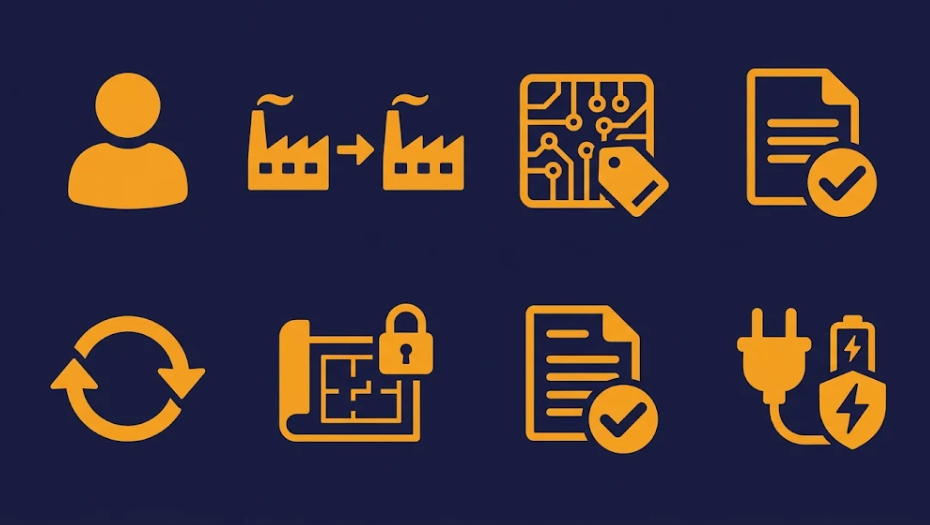
These eight risk areas reveal deeper supplier red flags than poor exhibition follow-up. Each one hides a risk that only appears after you place the purchase order.
Together, they show whether a supplier can protect your project when people, factories, parts, and payments change.
Account Ownership: Dependence on One Salesperson
Many suppliers run your project through a single salesperson. That works until the person leaves, changes roles, or stops caring.
Then your specifications, price agreements, and promises vanish with them. As a result, a replacement often starts from zero.
Watch for these warning signs:
- Only one person knows your technical requirements.
- Quotations and approvals sit in private chat threads.
- No manager or engineer appears on key emails.
- The supplier refuses to name a backup contact.
- A colleague cannot answer simple questions about your order.
Ask the supplier to assign three named roles:
- A sales contact for commercial questions.
- A technical contact for specs and changes.
- A senior contact for urgent problems.
Also keep your own project file. Store the approved specification, quotation history, and meeting notes in your records, not only theirs.
Unauthorized Subcontracting: Who Really Builds Your Order?
Some suppliers promise in-house production, then outsource the work to another factory. The quotation looks identical, but quality control changes completely.
Hidden subcontracting also breaks traceability. You cannot audit a factory when you do not know it exists.
Watch for these warning signs:
- The factory audit covers a site that never produces your order.
- Production photos show a different workshop each time.
- The supplier cannot name the plants that make critical components.
- Lead times shrink without a clear explanation.
- Labels or serial numbers show another factory’s name.
Protect yourself with clear contract terms:
- List the approved manufacturing sites in the purchase contract.
- Require written approval before the supplier uses another factory.
- Reserve the right to audit every site that handles your order.
- Define the remedy, such as rejection or replacement at the supplier’s cost.
Ask your legal adviser to review the final wording.
Engineering Change Management: The Silent Risk in Batteries, BESS, and Inverters
Engineering change management controls how a supplier changes materials, parts, firmware, or processes. Without it, the product you approved is not the product you receive.
This matters most when you buy lithium batteries, BESS, solar inverters, PCS, or BMS. For example, a small substitution can change safety, performance, or certification status.
Uncontrolled changes can look like this:
- A different cell brand or cell grade.
- New BMS firmware without validation.
- A replacement contactor, fuse, or sensor.
- Altered busbar, enclosure, or cooling design.
- A new production line with different process settings.
Look for these good practices:
- A formal change request and approval procedure.
- A revision-controlled bill of materials (BOM) and datasheet.
- Written notice before any change to a critical item.
- Retesting after a change.
- A check that the change stays inside the certified design.
OEM and Original Design Manufacturer (ODM) projects need extra care. Your custom design stays safe only when the supplier cannot change it without your signature.
Payment Beneficiary Verification: Protect Every Transfer

Payment fraud often strikes right before a deposit or final payment. Fraudsters copy a real supplier’s emails, then swap in a different bank account.
The FBI describes business email compromise (BEC) as a scam that targets businesses working with foreign suppliers. It advises a second sign-off on vendor payment changes and phone checks using previously known numbers.
Watch for these warning signs:
- Bank details arrive late, by email, with urgent wording.
- The account name differs from the company on the contract.
- The payee is a person or an unrelated firm.
- Bank details change after the proforma invoice is issued.
- The sender uses a look-alike email domain.
Use this simple routine:
- Match the beneficiary name to the business license and signed contract.
- Confirm any bank detail change by phone, using a number you already know.
- Require a second internal approver before you release funds.
- Keep bank details inside the signed contract or proforma invoice, not only in a chat message.
Root-Cause Analysis and Corrective Action: Can the Supplier Fix Recurring Problems?
Every factory ships a bad unit sooner or later, but what matters is how the supplier responds.
An 8D problem-solving report is a structured, eight-step method for solving one specific problem. But corrective and preventive action (CAPA) is a wider quality process that fixes the cause and stops it from returning.
Watch for these warning signs:
- The supplier blames shipping or the customer without proof.
- Replacement parts arrive, but nobody explains the failure.
- The same defect returns in the next batch.
- Reports are vague, late, or missing photos and test data.
- Nobody owns the corrective action.
Before you order, ask for:
- A sample 8D or CAPA report with sensitive data removed.
- Target response times for containment, root cause, and the final report.
- Details of the failure analysis equipment and test records.
- The process for tracing a defect to a batch, material lot, and production date.
A strong answer shows evidence, not promises.
Intellectual Property and Design Ownership: Who Controls Your Custom Design?
Custom products create intellectual property (IP) risk. For example, a supplier may reuse your design, share your drawings, or claim ownership of tooling and firmware.
This matters most for OEM and ODM projects. Watch for suppliers that:
- Reuse customer designs for other buyers without permission.
- Share confidential drawings with subcontractors.
- Refuse to clarify who owns tooling, molds, firmware, or custom designs.
- Have no NDA or confidentiality process.
Protect yourself with these steps:
- Sign a non-disclosure agreement (NDA) before you share drawings.
- State ownership of designs, tooling, molds, and firmware in the contract.
- Limit which subcontractors may see your files.
- Ask a legal adviser who knows local law to review the wording.
Certification Validity and Traceability: Does the Certificate Cover Your Exact Model?
A supplier may show a genuine certificate that does not cover the exact model it offers. Because of this, always match the certificate to the product you will receive.
Verify these points:
- Certificate holder and manufacturer identity.
- Exact model and product configuration.
- Applicable market and standards.
- Validity date and issuing organization.
- Whether engineering changes affect certification.
Request the full certificate and test report, not only a summary page.
Contingency Planning: What Happens When Production Is Disrupted?
Even good factories face power outages, material shortages, production failures, and logistics delays. A strong supplier plans for these events before they affect your order.
Ask suppliers about:
- Alternative material sources.
- Business continuity planning.
- Emergency production arrangements.
- Critical component availability.
- Recovery plans for delayed shipments.
This matters most for long-term supply agreements, because delays compound over time.
11. Why These Supplier Red Flags Become Expensive Problems
Poor exhibition follow-up does not prove poor manufacturing. However, when several supplier red flags appear together, investigate before you proceed.
The potential consequences include:
- Wrong product specs.
- Delayed production and shipment.
- Hidden subcontracting.
- Poor material quality.
- Certification and compliance problems.
- Payment disputes and financial losses.
- Unresolved warranty claims.
- Broken communication.
- Damage to your company’s reputation.
- Loss of valuable time and business opportunities.
The real cost of the wrong supplier is often far higher than the gap between two quotations.
12. How to Screen Out Supplier Red Flags: A 9-Step Process
Reliable suppliers pass a structured qualification process, not just a price comparison. Use these steps to screen out supplier red flags early.
Step 1: Evaluate the first response. Did the supplier remember your discussion, understand your requirements, and ask relevant questions?
Step 2: Test technical understanding. Include a specific technical question in your inquiry. Then check whether the answer is accurate, detailed, and documented.
Step 3: Verify company identity. Check business registration, legal entity, factory address, and who actually makes the product.
Step 4: Request supporting documents. Next, obtain datasheets, certificates, test reports, quality documents, and references.
Step 5: Conduct a factory assessment. Arrange a visit or live video inspection. Then evaluate equipment, test facilities, staff, and quality-control procedures.
Step 6: Verify production capacity. Check real workload, material supply, lead times, and subcontracting.
Step 7: Evaluate the commercial proposal. Then compare quotations on an equal technical and commercial basis. Examine payment terms, delivery, warranty, and commitments.
Step 8: Start with a controlled order. Where practical, begin with samples, a pilot order, or a smaller first purchase. Review performance before you raise volumes.
Step 9: Establish communication accountability. Finally, identify the sales contact, technical contact, and management escalation point. Never let your project depend on one person, since staff can leave.
13. The Supplier Evaluation Checklist
Before you add a supplier to your AVL, check each item below. Each unanswered item may be one of the supplier red flags covered above, so note it before you proceed.
- Did they follow up after the exhibition?
- Do they understand your actual requirements?
- Have they researched your company?
- Can their representatives answer technical questions?
- Is their factory or trading identity transparent?
- Can they provide real technical documents?
- Are their certificates real and relevant?
- Can they show real production capacity?
- Is their quality control documented?
- Do they have material and product traceability?
- Are they transparent about subcontracting?
- Do they provide realistic delivery schedules?
- Are quotations detailed and consistent?
- Have you verified each payee?
- Are warranty and after-sales terms clear?
- Are they willing to accept independent inspections?
- Can they demonstrate export experience?
- Do they have a proper complaint-handling process?
- Is one person clearly responsible for your project?
- Can they maintain consistent communication?
- Do they protect your designs and confidential files?
- Are their certificates valid for your exact model?
- Is there a contingency plan for disruptions?
Final Thoughts: Spot Supplier Red Flags Before the First Order
Trade exhibitions are an excellent place to find manufacturers and technologies. However, the best defense against supplier red flags is attention to what happens after the handshake.
A beautiful booth does not guarantee a professional factory. Likewise, a competitive quotation does not guarantee manufacturing capability. Nor does a friendly salesperson guarantee reliable after-sales support.
Ask yourself four questions. Does the supplier remember your requirements? Does it communicate professionally? Can it provide evidence? Does it take responsibility?
Do not choose a supplier for the lowest price or the biggest promises. Instead, choose one that can show what it is capable of delivering.
The best supplier is not the one that promises everything. Instead, it is the one that understands your requirements, proves its capabilities, and takes responsibility for its commitments.
A Question for International Buyers
Which supplier red flags have you seen? Perhaps a supplier looked highly professional at the booth but disappeared afterward.
Or perhaps one was excellent at winning the PO but unavailable when quality or delivery problems appeared. Share your experience in the comments, because your lessons can help other buyers avoid expensive sourcing mistakes.
Need Help Evaluating a Chinese Supplier?
Whether you are sourcing lithium batteries, BESS, solar inverters, PCS, or customized energy solutions, supplier verification and technical due diligence protect your investment.
Contact SunLith Energy to discuss your China sourcing and procurement requirements.
Supplier Red Flags: Frequently Asked Questions
These answers cover the supplier red flags buyers ask about most often.
What are the most serious supplier red flags?
The most serious supplier red flags involve fraud, false claims, safety, and payment security. For example, a mismatched bank account, hidden subcontracting, or unapproved design changes can qualify. Verify these before you pay any deposit.
Do supplier red flags after an exhibition prove a bad factory?
Not always. One slow reply may simply reflect a busy team. However, repeated silence, generic catalogs, and vague answers together suggest weak processes that may also affect production and service.
How do I verify a supplier’s bank account?
Match the beneficiary name to the business license and contract. Then confirm any bank detail change by phone, using a number you already know. Finally, add a second internal approval before you release funds.
What is the difference between 8D and CAPA?
An 8D report is an eight-step method for solving one specific problem. But CAPA is a wider quality process that corrects the cause and prevents it from returning across the system.
How many red flags are too many?
There is no fixed number, so judge severity, frequency, and combination. But one critical issue, such as payment fraud or misrepresentation, can justify walking away.
Further Reading
These SunLith guides complement this list of supplier red flags when you buy battery storage.


Leave a Reply
Want to join the discussion?Feel free to contribute!