
Sodium Ion Battery: Complete Guide to Next-Generation Energy Storage (2026)
The sodium ion battery is becoming a key solution in energy storage. Today, industries need safer and cheaper systems. Because of this, many experts are exploring new battery technologies.
Unlike lithium systems, sodium-based batteries use common materials. As a result, costs are lower. In addition, supply risks are reduced. Therefore, this technology is gaining global attention.
At the same time, energy demand is rising. So, better storage solutions are required. Because of these factors, sodium batteries are now seen as a strong alternative.
What Is a Sodium Ion Battery?
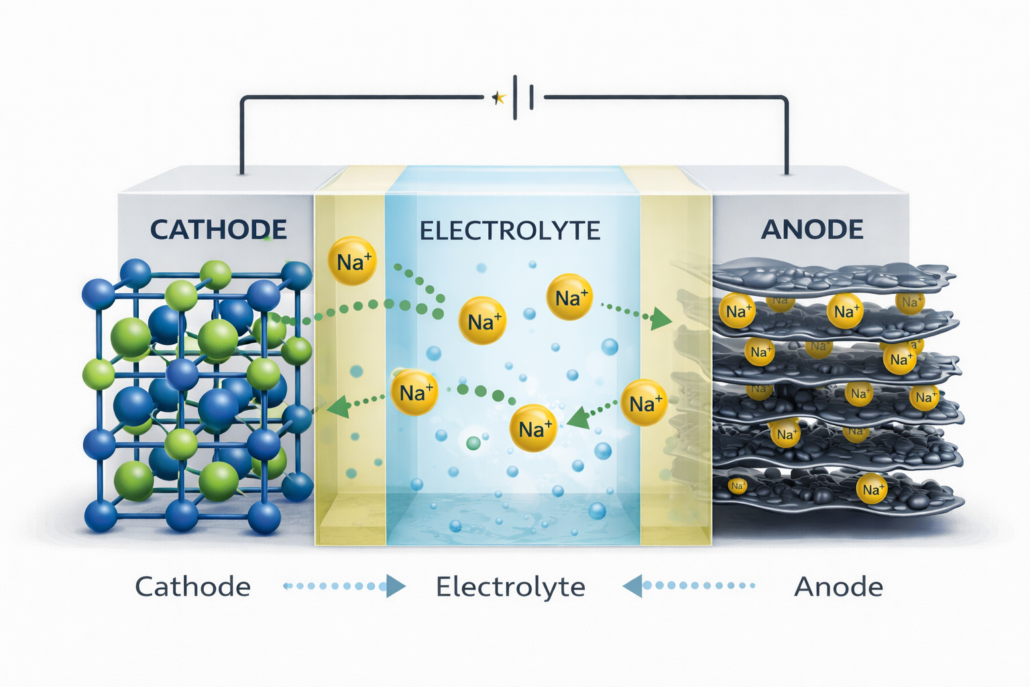
A sodium ion battery is a rechargeable system. It stores and releases energy using sodium ions.
It works in a similar way to lithium batteries. However, it replaces lithium with sodium. Because sodium is abundant, production becomes easier.
In simple terms, the battery moves ions between two electrodes. During this process, energy is stored and released. Therefore, it can power devices and systems efficiently.
👉 Learn how energy storage systems work:
https://sunlithenergy.com/ac-coupled-bess-explained/
How Sodium Ion Battery Technology Works
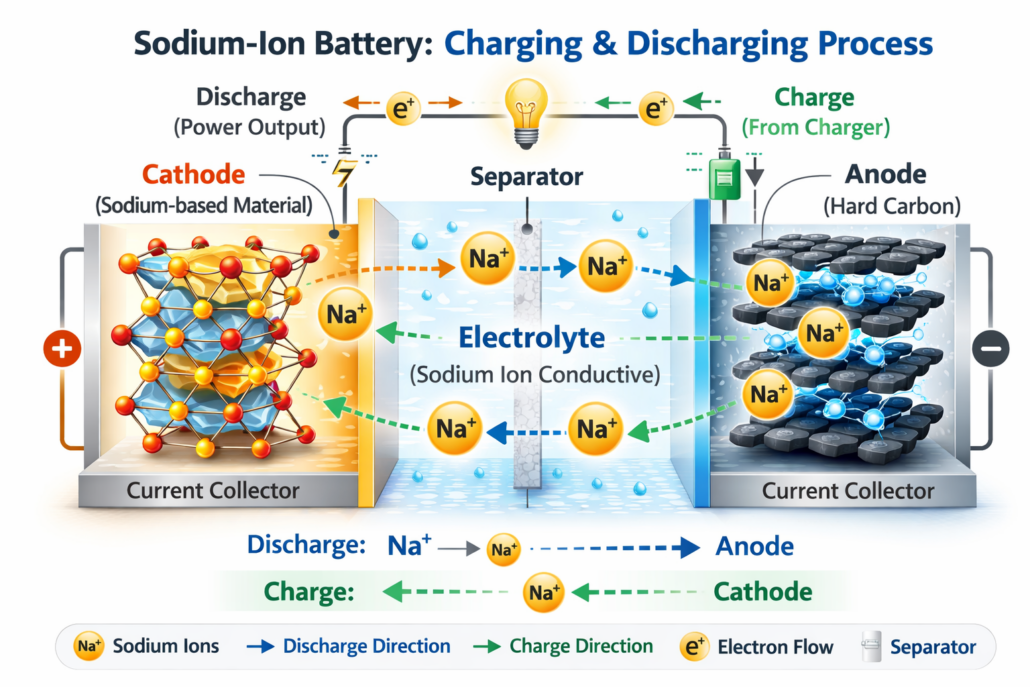
This battery follows a simple cycle. It includes charging and discharging stages.
Charging Process
First, electricity is applied to the system.
Then, sodium ions move toward the anode.
At the same time, electrons flow through an external circuit.
Because of this movement, energy is stored inside the battery.
Discharging Process
When energy is needed, the process reverses.
The ions move back to the cathode.
Meanwhile, electrons power connected devices.
As a result, stored energy becomes usable.
Key Components of the Sodium Ion Battery
Each battery has several important parts. These parts work together to store energy.
Cathode
The cathode stores sodium ions.
Common materials include layered oxides and Prussian blue.
Anode
The anode stores ions during charging.
Hard carbon is widely used because it is stable.
Electrolyte
The electrolyte allows ion movement.
Without it, the system would not work.
Separator
The separator prevents short circuits.
At the same time, it allows ion flow.
Sodium Ion Battery vs Lithium Batteries
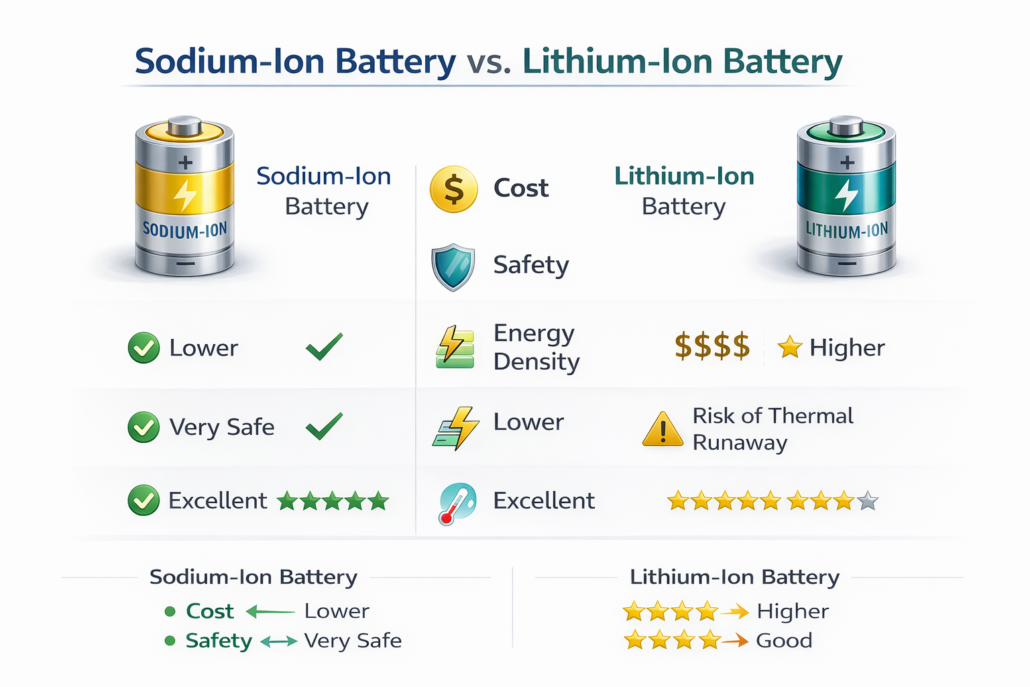
It is useful to compare both technologies. This helps in understanding their strengths.
| Feature | Sodium-Based Batteries | Lithium Batteries |
|---|---|---|
| Cost | Lower | Higher |
| Safety | Very High | High |
| Energy Density | Moderate | High |
However, lithium batteries store more energy.
On the other hand, sodium systems are safer and cheaper.
Because of this difference, both technologies serve different needs.
Advantages of Sodium Ion Battery
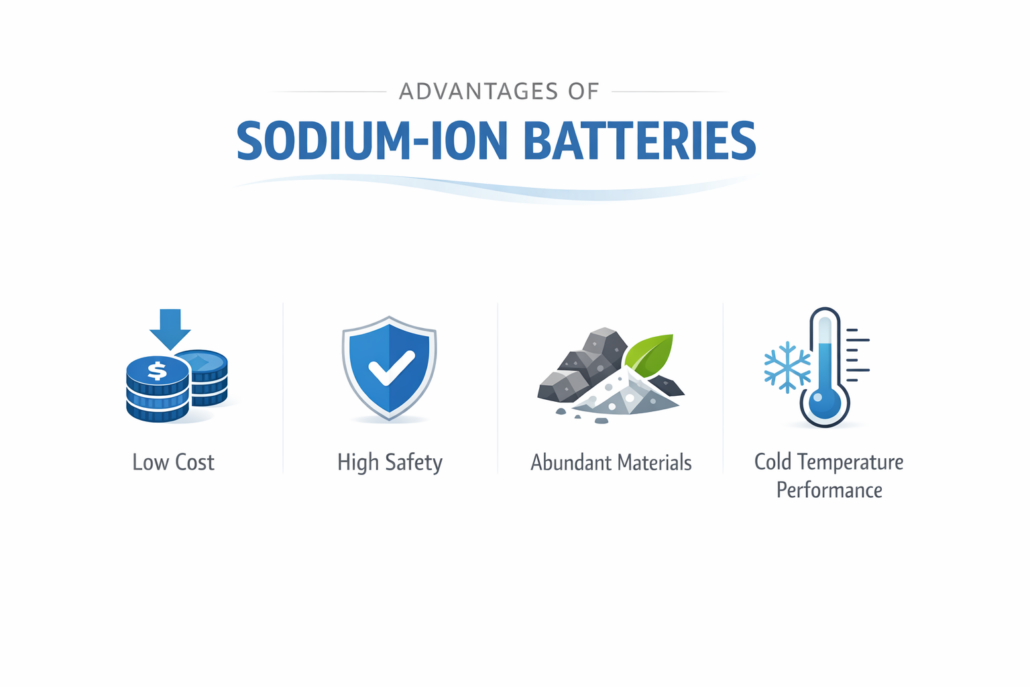
There are several reasons why this technology is growing fast.
1. Abundant Materials
Sodium is widely available.
Therefore, supply is stable and reliable.
2. Lower Cost
Raw materials are inexpensive.
As a result, total system cost decreases.
👉 Explore detailed advantages:
https://sunlithenergy.com/advantages-of-sodium-ion-batteries/
3. Improved Safety
These batteries are thermally stable.
Because of this, fire risks are lower.
4. Better Low-Temperature Performance
They work well in cold climates.
In addition, performance remains consistent.
5. Sustainable Supply Chain
They do not rely on rare metals.
Therefore, long-term production is more secure.
Sodium Ion Battery Limitations to Consider
Although the technology is promising, some challenges remain.
Lower Energy Density
These batteries store less energy per kilogram.
Therefore, they are not ideal for long-range vehicles.
Technology Still Developing
The technology is still improving.
However, progress is happening quickly.
Material Optimization Needed
Some materials need further research.
As a result, efficiency can still improve.
Applications of Sodium Ion Battery in Energy Storage
This technology is already used in many areas. It is especially useful for stationary storage.
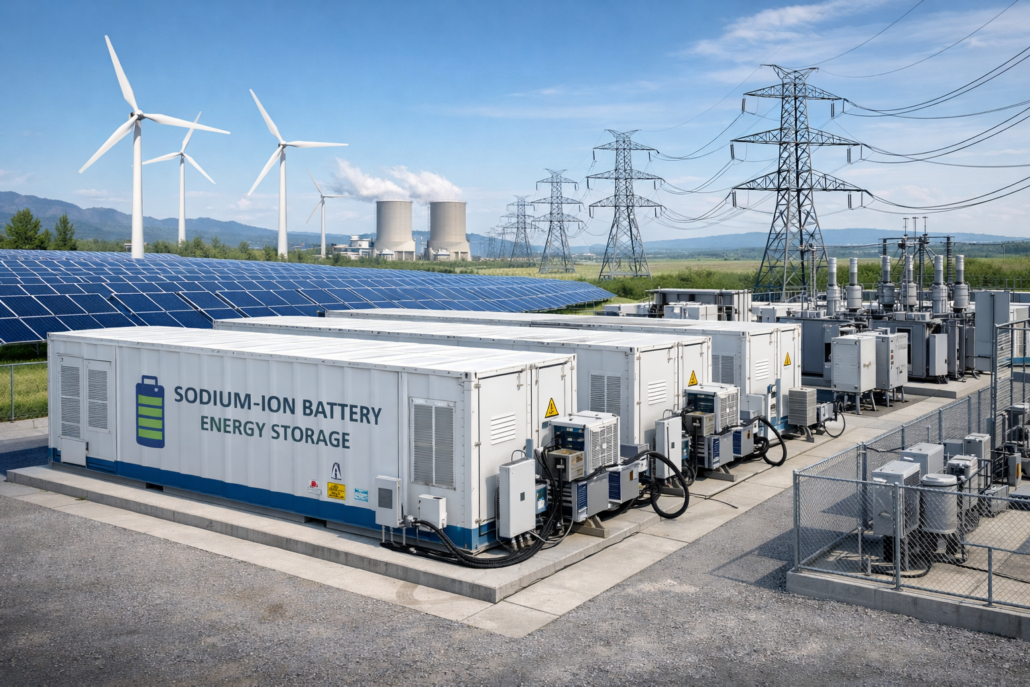
Grid Storage
These systems support renewable energy.
As a result, grid stability improves.
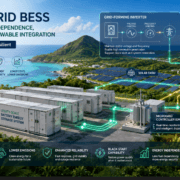
Sodium Ion Battery Based Battery Energy Storage Systems (BESS)
They are ideal for large storage projects.
In addition, they offer high safety.
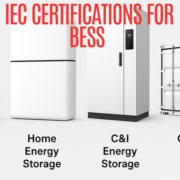
👉 Learn about global standards:
https://sunlithenergy.com/iec-62933-energy-storage-standards/
Residential Backup Power
They provide reliable backup energy.
Therefore, they are suitable for homes.
Electric Mobility
They are used in two-wheelers and small vehicles.
Because of lower cost, adoption is increasing.
Industrial Use of Sodium Ion Battery
They are used in warehouses and equipment.
Meanwhile, performance remains stable in cold storage.
Leading Companies in the Market
Several companies are developing this technology.
- CATL
- BYD
- Natron Energy
These companies are investing heavily. As a result, the market is growing quickly.
Future Outlook for Sodium Ion Battery
The future of this technology looks strong.
Cost Reduction
Production is increasing worldwide.
As a result, prices are expected to drop.
Performance Improvements
New materials are being developed.
Therefore, efficiency will improve.
Growing Adoption
More industries are testing these systems.
In addition, governments are supporting energy storage.
Hybrid Energy Systems
Sodium and lithium batteries will work together.
However, each will serve different applications.
👉 Global energy trends:
https://www.iea.org/reports/global-ev-outlook-2024
FAQ about Sodium Ion Battery
Are sodium batteries better than lithium batteries?
Sodium batteries are better in some areas. For example, they are cheaper and safer. However, lithium batteries store more energy. Therefore, each technology serves a different purpose.
Why are sodium-based batteries cheaper?
They are cheaper because sodium is widely available. In addition, it does not require rare metals. As a result, material costs are lower.
Can sodium batteries be used for solar storage?
Yes, they are suitable for solar storage. They provide stable performance. In addition, they are safe for long-term use. Therefore, they are ideal for renewable energy systems.
Do sodium batteries last long?
Yes, they offer good cycle life. However, performance depends on design and usage. In general, they are reliable for stationary storage.
Are sodium batteries safe?
Yes, they are considered very safe. They are less prone to overheating. As a result, fire risk is lower compared to many other battery types.
What is the biggest disadvantage of sodium batteries?
The main limitation is lower energy density. Therefore, they store less energy per weight. However, this is less important for grid storage.
Who is developing sodium battery technology?
Many companies are working on it, including CATL and BYD. As a result, development is moving quickly.
Can sodium batteries replace lithium batteries?
They will not fully replace lithium batteries. However, they will complement them. For example, they are ideal for large storage systems.
Are sodium batteries good for electric vehicles?
They are suitable for small vehicles. However, lithium batteries are still better for long-range EVs. Therefore, usage depends on application.
What is the future of sodium battery technology?
The future is promising. Production is increasing. As a result, costs will decrease. In addition, performance will improve over time.
Conclusion
The sodium ion battery is becoming a strong option for energy storage. It offers safety, low cost, and reliable performance.
Although it has some limitations, improvements are happening fast.
Therefore, Sodium Ion Battery will play an important role in future energy systems.






Trackbacks & Pingbacks
[…] 👉 Read more Sodium chemistry naturally prevents these growths. For a full look at how this technology works, check out our complete sodium-ion battery guide. […]
[…] Read the complete sodium-ion battery guidehttps://sunlithenergy.com/sodium-ion-battery-guide/ […]
Leave a Reply
Want to join the discussion?Feel free to contribute!