

Why EPC + Battery Integrator Partnerships Matter in the C&I Energy Sector
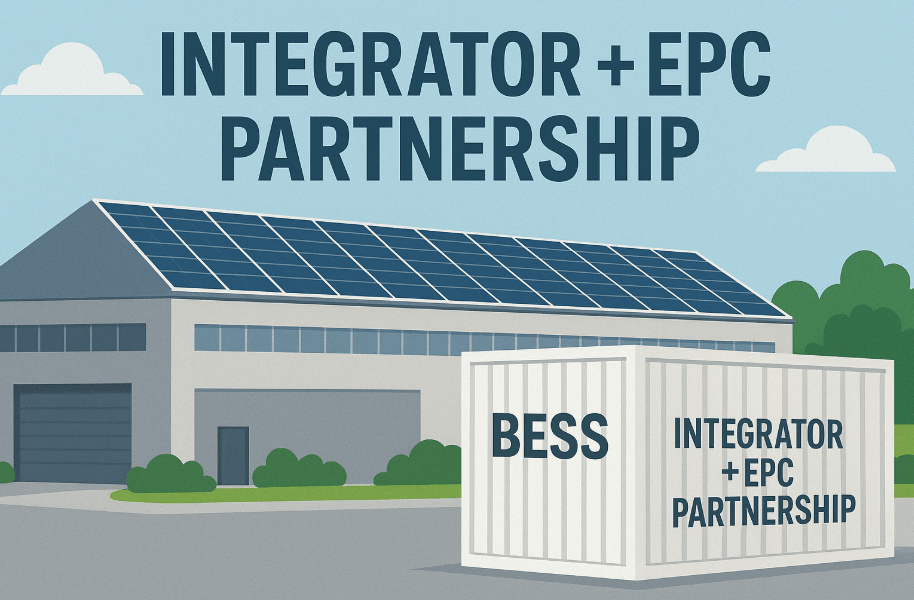
As commercial and industrial (C&I) energy projects evolve, the integration of solar and battery energy storage systems (BESS) has become the new standard for sustainability and cost efficiency. Engineering, Procurement, and Construction (EPC) companies are no longer just installers — they’re becoming orchestrators of hybrid energy ecosystems.
However, designing and commissioning a C&I BESS project requires expertise beyond traditional EPC capabilities. This is where battery integrators step in. They bring deep technical knowledge in battery selection, energy management systems (EMS), safety standards, and performance optimization.
Together, EPCs and battery integrators create synergy: one manages physical infrastructure and execution, while the other ensures the system performs safely and intelligently.

Roles and Responsibilities: EPC vs. Battery Integrator
What an EPC Brings
EPC contractors manage overall project delivery — from civil works to electrical layout, cabling, and grid connection. Their strengths lie in project management, quality control, and regulatory compliance.
What a Battery Integrator Contributes
Battery integrators focus on system architecture and safety compliance. They handle:
- Certified BESS design under UL Certifications for Battery Systems
- Compliance with IEC 62933, UL 9540, and BIS certification requirements
- Integration of battery management systems (BMS) and EMS for real-time control
Where Their Scopes Overlap
The line between EPC and integrator responsibilities often blurs during commissioning. Clear communication and well-defined scope documents can avoid rework, delays, and cost overruns.
Five Phases of Successful EPC + Integrator Collaboration
1. Pre-Design Feasibility
At this stage, both parties assess site load profiles and analyze peak-shaving and load-shifting opportunities. Using tools like digital twins can help simulate the expected performance of the system.
👉 Reference: Peak Shaving: A Smarter Way to Reduce Energy Costs and Boost Grid Efficiency
2. System Design & Sizing
The battery integrator designs the BESS layout, including inverter selection and control logic. The EPC aligns this with PV string design, switchgear, and protection devices.
3. Procurement & Logistics
Certified suppliers and verified products are crucial. Integrators should provide documentation for UL, CE, and BIS compliance, while the EPC ensures proper shipping and site handling.
4. Installation & Commissioning
Both teams coordinate on factory acceptance tests (FAT), site acceptance tests (SAT), and system handover. Safety and electrical synchronization checks must align with UL 9540A and NFPA 855 standards.
5. O&M and Performance Monitoring
After commissioning, performance reporting and EMS data sharing ensure optimized uptime. Shared O&M contracts simplify maintenance and warranty claims.
Contractual Models for EPC + Integrator Projects
Turnkey EPC Model
Here, the EPC leads the project and subcontracts BESS integration to a certified partner. This is ideal for large C&I clients seeking single-point accountability.
Joint Venture (JV) or Consortium Model
The EPC and integrator share responsibility for design and delivery. This suits complex hybrid or microgrid systems where each brings distinct expertise.
Owner–Integrator–EPC Triangle
A three-party approach where the project owner directly engages the integrator for battery systems, while the EPC handles site works and interconnection.
Risk and Warranty Allocation
Define warranty scope early — integrators cover battery modules, EMS, and safety controls, while EPCs handle mechanical, electrical, and civil reliability.
Integration Challenges and Mitigation Strategies
Even the best partnerships face technical hurdles. Common challenges include:
- Software communication gaps: mismatched data protocols between EMS and PV controllers
- Grid synchronization delays: unclear responsibilities for grid code compliance
- Documentation mismatches: especially in BIS or UL filing
Mitigation tip: Conduct joint pre-commissioning checklists and digital twin simulations. Using C&I BESS – Commercial and Industrial Battery Energy Storage Systems design references ensures alignment with tested configurations.
Case Example: Commercial Microgrid Deployment
A 1 MWp rooftop solar system paired with a 2 MWh BESS was developed for an industrial warehouse.
- The EPC handled PV system design, transformers, and cabling.
- The battery integrator provided certified LFP-based BESS, integrated EMS, and performed site acceptance testing.
Result:
- 20 % reduction in peak energy demand
- 15 % cost savings in annual electricity bills
- Enhanced resilience during outages through automatic islanding
This collaborative model demonstrates how EPC-integrator alignment drives project success.
Best Practices Checklist for EPCs Partnering with Integrators
✅ Engage the integrator early — ideally at concept design stage.
✅ Verify certifications: UL 9540, UL 1973, IEC 62619, and BIS.
✅ Align all drawings, protection systems, and communication interfaces.
✅ Share a unified documentation package (test reports, wiring diagrams, user manuals).
✅ Perform joint FAT and SAT before energization.
✅ Establish a shared O&M plan with clear escalation channels.
The Future of EPC + Integrator Alliances
As the energy storage market grows in India and globally, hybrid EPC models are becoming standard.
Emerging trends include:
- AI-driven project design tools that auto-size PV + BESS systems
- Digital twin simulations for faster commissioning
- Energy-as-a-Service (EaaS) contracts that extend EPC revenue beyond construction
Collaborations between certified integrators and EPCs will soon define how quickly industrial and commercial facilities adopt clean, resilient energy systems.
Conclusion
EPCs that partner strategically with battery integrators unlock new market segments, minimize risk, and deliver high-performance C&I energy projects.
In a world moving toward smart, decarbonized infrastructure, such collaborations aren’t optional—they’re essential for long-term competitiveness.
Explore related insights:
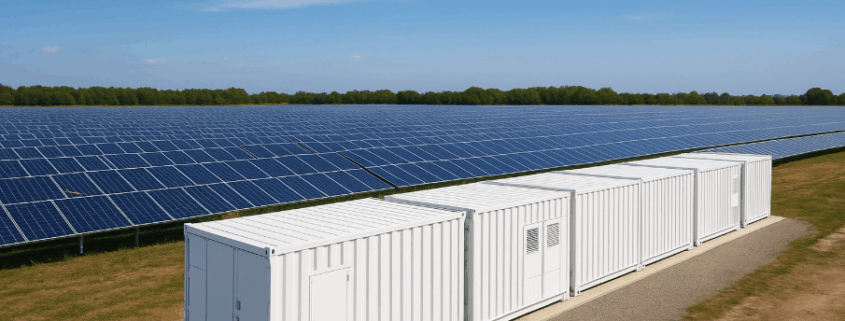
10+ Advantages of Battery Energy Storage System (BESS) — Benefits for Grid, Businesses, and Renewables
Introduction: Why Talk About the Advantages of Battery Energy Storage System (BESS)?
The advantages of Battery Energy Storage System (BESS) are shaping the future of clean energy. As renewable adoption accelerates, the need for reliable, flexible, and scalable energy storage has never been greater. From utilities struggling with grid fluctuations to businesses facing high demand charges, BESS offers a transformative solution.
At Sunlith Energy, we help industries, communities, and utilities realize the full advantages of Battery Energy Storage System (BESS) by providing solutions designed for safety, scalability, and sustainability. This article explores over 10 detailed advantages, supported with practical examples, financial impacts, and future trends.
What is a Battery Energy Storage System (BESS)?
Before diving into the advantages of Battery Energy Storage System (BESS), it’s important to understand what it is.
A BESS is a system that stores electrical energy in rechargeable batteries and releases it when required. It usually includes:
- Battery modules (Lithium Iron Phosphate (LFP) or Nickel Manganese Cobalt (NMC)).
- Battery Management System (BMS) to ensure safety.
- Power Conversion System (PCS) to manage DC-AC conversion.
- Thermal management system to control temperature.
- Energy management software to optimize charging, discharging, and grid interaction.
👉 Learn how Sunlith integrates these components in our Energy Storage Systems.
1. Grid Stability: A Key Advantage of Battery Energy Storage System (BESS)
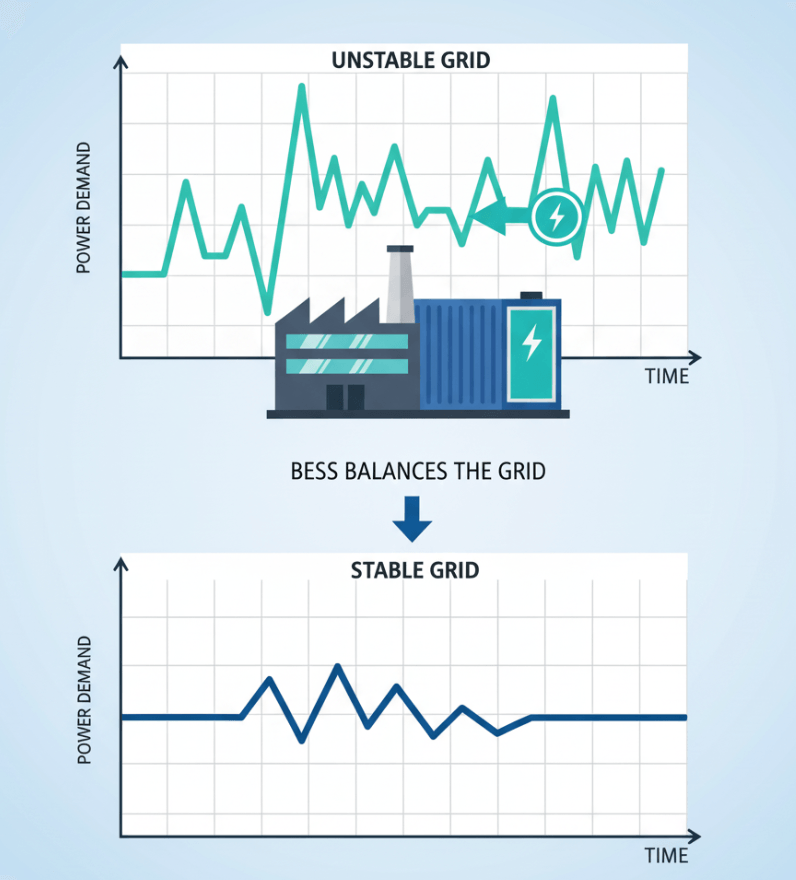
One of the greatest advantages of Battery Energy Storage System (BESS) is its role in stabilizing the electrical grid.
- Fast frequency response: BESS reacts within milliseconds.
- Voltage support: Keeps power quality consistent.
- Ancillary services: Replaces expensive fossil-fuel spinning reserves.
Unlike conventional power plants, which take minutes to respond, batteries act instantly, helping prevent outages.
🔗 Reference: IEA Energy Storage Report confirms that grid operators benefit from BESS deployment.
2. Renewable Energy Integration: Unlocking the Advantages of Battery Energy Storage System (BESS)
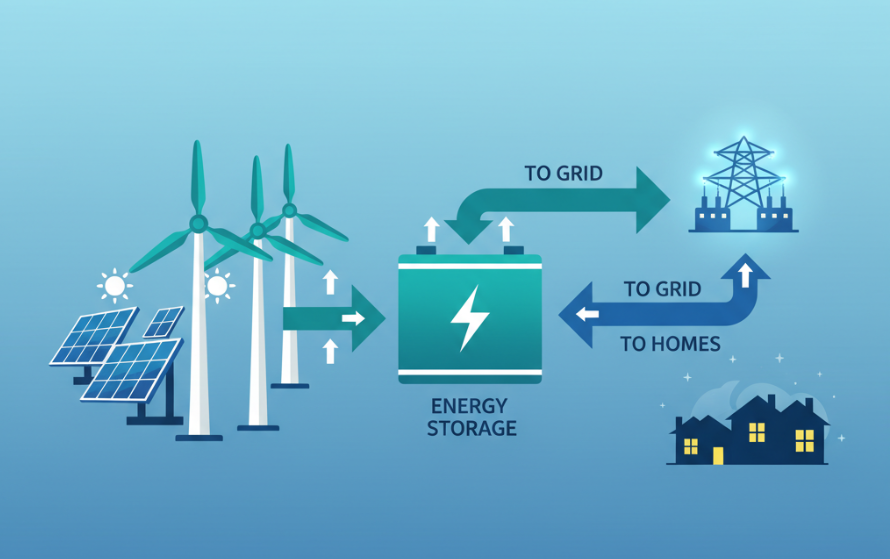
Solar and wind power are intermittent, which can cause reliability issues. One of the clear advantages of Battery Energy Storage System (BESS) is renewable integration.
- Store midday solar surplus → release in evening peaks.
- Smooth wind ramp-ups and sudden drops.
- Reduce renewable curtailment by capturing excess generation.
👉 At Sunlith Energy, we deploy hybrid systems combining solar/wind with BESS for firm, round-the-clock renewable power.
3. Peak Shaving: A Cost-Saving Advantage of Battery Energy Storage System (BESS)
For businesses, one of the most direct advantages of Battery Energy Storage System (BESS) is lowering electricity costs through peak shaving.
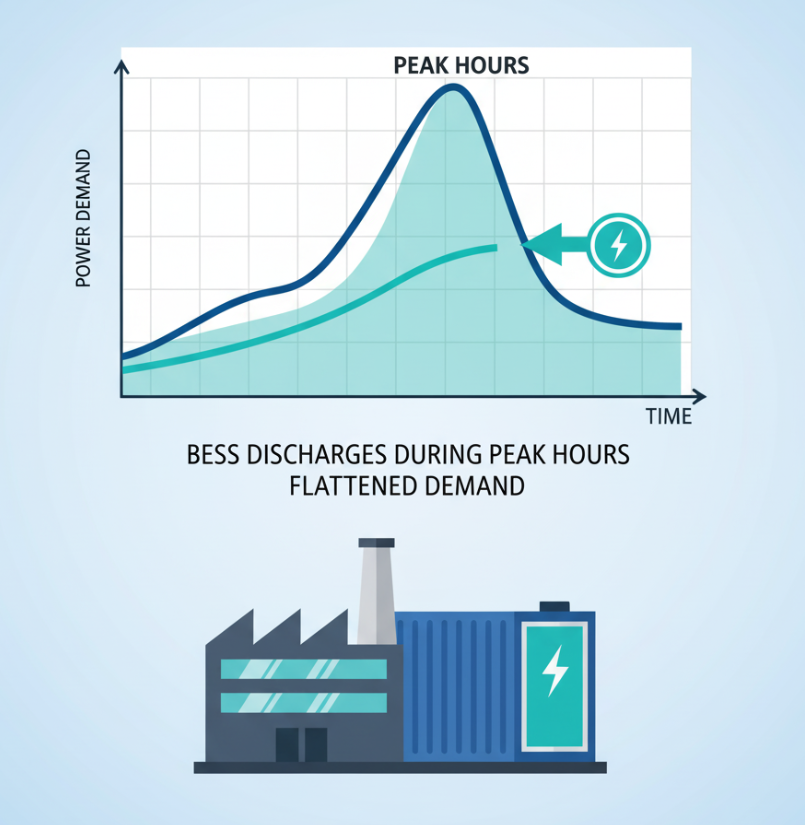
- Discharge stored power during peak demand hours.
- Reduce utility demand charges.
- Flatten facility load curves for smoother operations.
📌 Example: A commercial facility with a 5 MW peak demand can cut demand charges by 20–30% annually using BESS.
🔗 External Reference: U.S. DOE Demand Charge Management Study
4. Energy Arbitrage: Financial Advantages of Battery Energy Storage System (BESS)
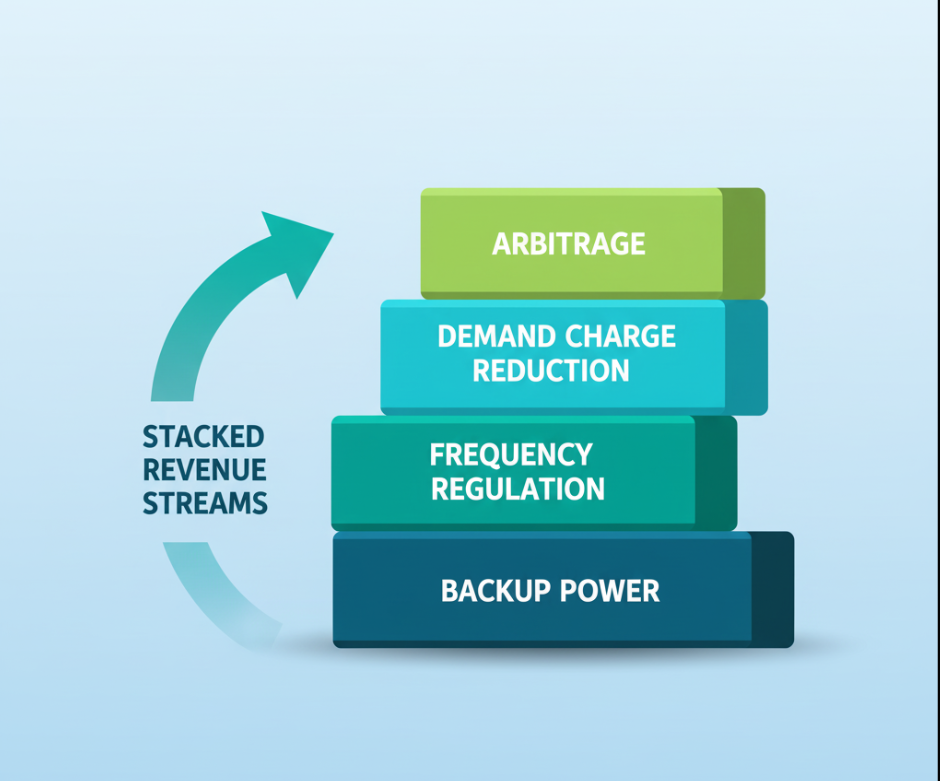
The advantages of Battery Energy Storage System (BESS) extend into financial markets through energy arbitrage.
- Charge when electricity is cheap (off-peak).
- Discharge when electricity is expensive (peak).
- Participate in wholesale markets for profit.
This strategy—combined with demand charge reduction and ancillary services—creates revenue stacking opportunities.
👉 Sunlith Energy’s AI-driven Energy Management Systems (EMS) automate these decisions for maximum returns.
5. Resilience: Backup Power as an Advantage of Battery Energy Storage System (BESS)

Another strong advantage of Battery Energy Storage System (BESS) is resilience.
- Provides seamless backup power during grid outages.
- Supports critical infrastructure like hospitals, data centers, and EV charging hubs.
- Operates in island mode with on-site renewables.
With more extreme weather events, the resilience advantage is invaluable for businesses and communities.
6. Grid Upgrade Deferral: Utility-Level Advantages of Battery Energy Storage System (BESS)
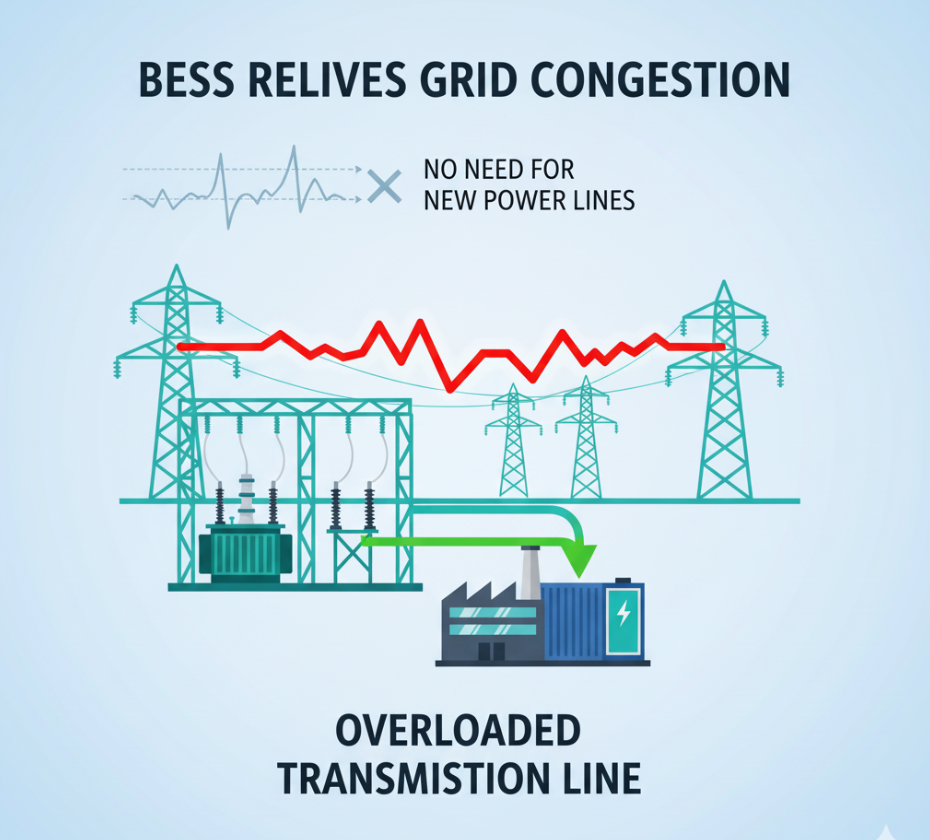
Utilities face expensive upgrades to handle peak demand. Another advantage of Battery Energy Storage System (BESS) is grid deferral.
- Place BESS near substations or congested nodes.
- Relieve stress on transmission and distribution infrastructure.
- Defer or avoid costly grid expansion projects.
🔗 External Reference: EPRI Grid Deferral Study
7. Power Quality: Technical Advantages of Battery Energy Storage System (BESS)
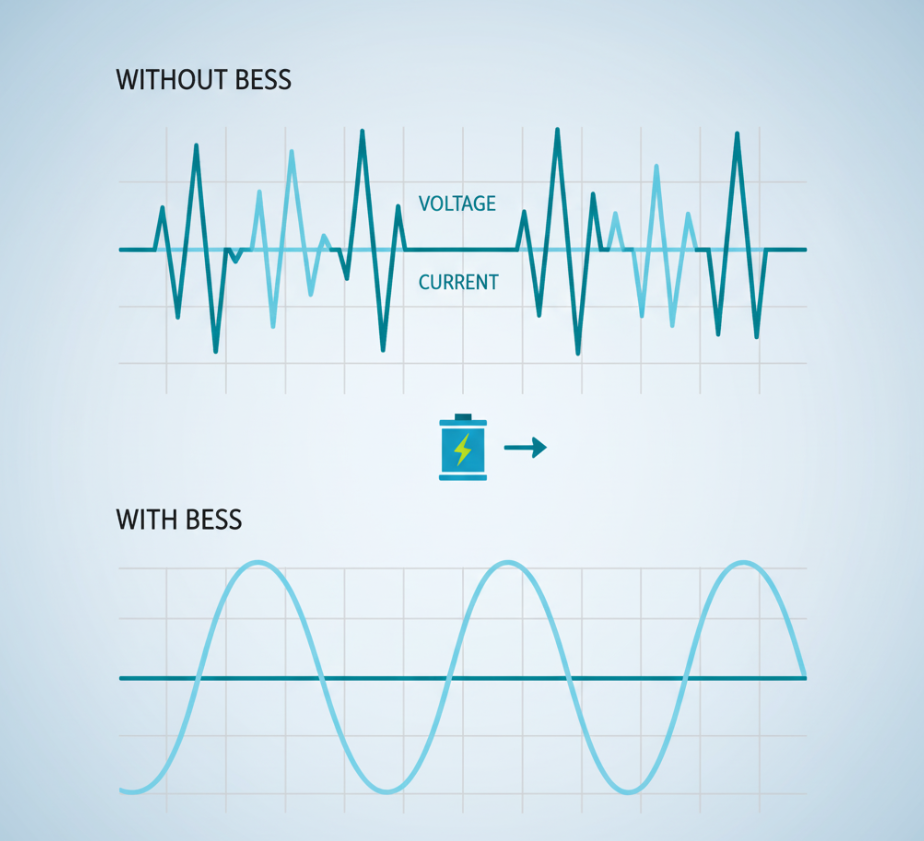
Power quality issues cause downtime and equipment damage. The advantages of Battery Energy Storage System (BESS) also include better power quality.
- Harmonic filtering.
- Reactive power support.
- Voltage stabilization.
For industries with sensitive equipment (like semiconductor manufacturing), this is a game-changing advantage.
8. Synthetic Inertia: A Modern Advantage of Battery Energy Storage System (BESS)
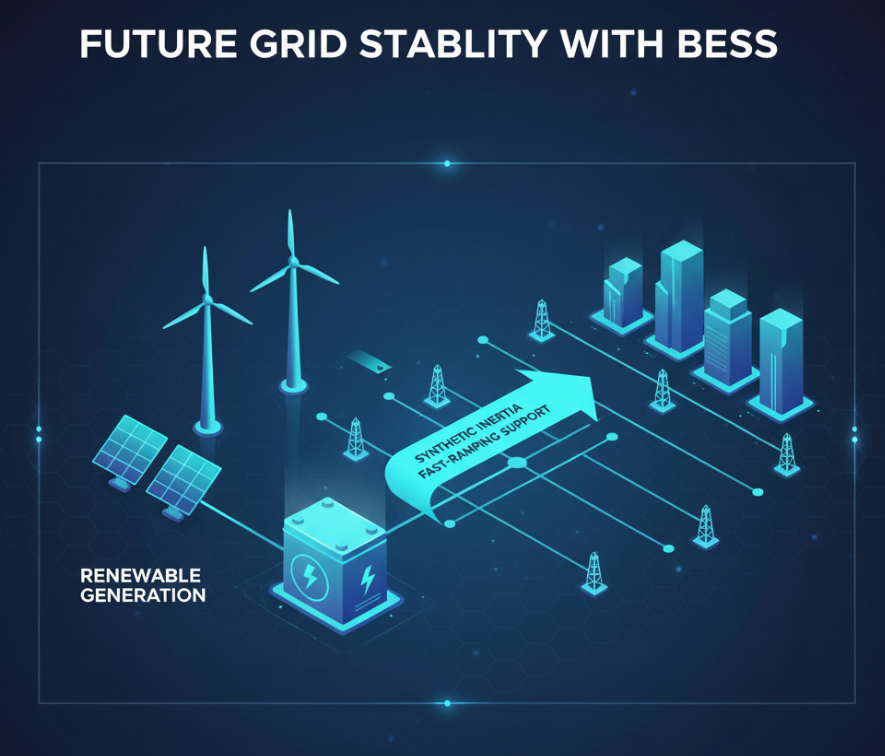
Traditional power plants provided inertia to stabilize the grid. One of the modern advantages of Battery Energy Storage System (BESS) is providing synthetic inertia.
- Advanced inverters mimic inertia.
- Fast ramping balances renewable fluctuations.
- Supports reliable, renewable-heavy grids.
9. Environmental Advantages of Battery Energy Storage System (BESS)

Beyond economics, the advantages of Battery Energy Storage System (BESS) extend to sustainability.
- Enables higher renewable penetration.
- Reduces reliance on fossil peaker plants.
- Supports EV charging hubs without straining the grid.
At Sunlith Energy, we prioritize LFP-based BESS solutions for safer, more sustainable performance.
10. Scalability: Flexible Advantages of Battery Energy Storage System (BESS)
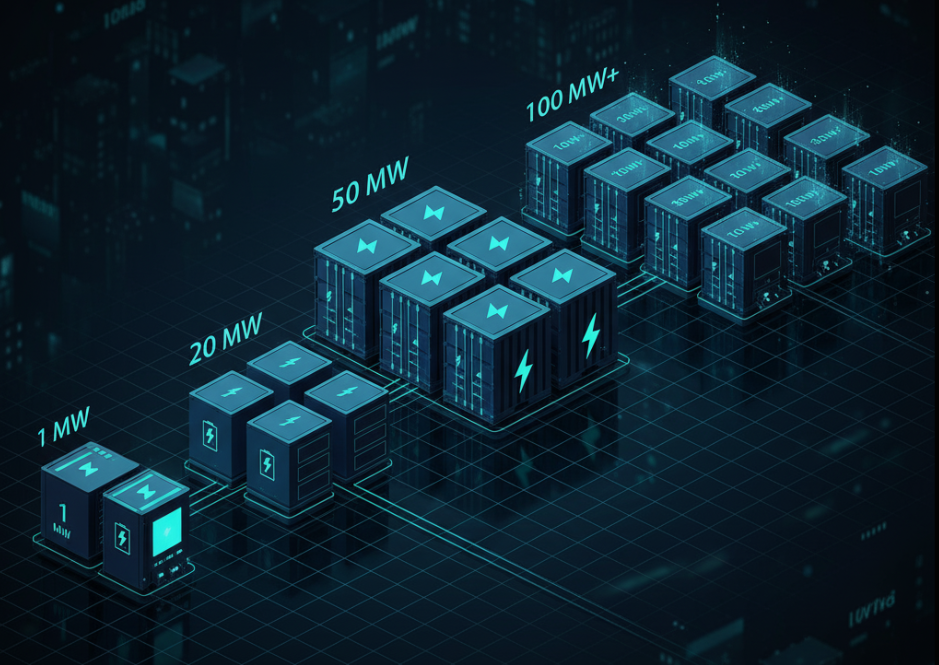
Finally, one of the most practical advantages of Battery Energy Storage System (BESS) is scalability.
- Systems range from 1 MW to 100+ MW.
- Modular designs enable expansion as needs grow.
- Standardized containers accelerate deployment.
This makes BESS suitable for homes, businesses, and utility-scale projects alike.
Sunlith Energy’s Role in Delivering the Advantages of Battery Energy Storage System (BESS)
At Sunlith Energy, we specialize in unlocking the advantages of Battery Energy Storage System (BESS) for clients across sectors. Our solutions are:
- Safe: UL/IEC certified with advanced fire suppression.
- Smart: AI-driven controls for optimization.
- Scalable: Tailored for C&I, microgrids, and utility-scale projects.
- Sustainable: High-efficiency, long-cycle-life LFP batteries.
👉 Explore our BESS Solutions.
FAQ
Q1: What are the main advantages of Battery Energy Storage System (BESS)?
A: The main advantages of Battery Energy Storage System (BESS) are grid stability, renewable integration, peak shaving, energy arbitrage, backup power, improved power quality, and scalability.
Q2: How does BESS save money for businesses?
A: By reducing demand charges, enabling energy arbitrage, and improving power reliability, BESS lowers operational costs.
Q3: How long do the advantages of Battery Energy Storage System (BESS) last?
A: A typical BESS lasts 8–15 years, depending on usage cycles, chemistry, and maintenance.
Q4: Is BESS safe?
A: Yes, with proper BMS, thermal management, and certifications like UL 9540, modern BESS are safe.
Q5: Who benefits most from the advantages of Battery Energy Storage System (BESS)?
A: Utilities, C&I facilities, renewable developers, EV charging hubs, and critical infrastructure.
Conclusion: Why the Advantages of Battery Energy Storage System (BESS) Matter
The advantages of Battery Energy Storage System (BESS) are multi-dimensional—economic, technical, and environmental. From stabilizing grids and enabling renewables to saving costs and enhancing resilience, BESS is the backbone of the future energy system.
At Sunlith Energy, we deliver tailored BESS solutions that unlock these benefits while ensuring safety, scalability, and sustainability.
👉 Ready to experience the full advantages of Battery Energy Storage System (BESS)? Visit our Contact Page today.

The Future of Battery Passport: Driving Transparency in the Energy Transition
What is a Battery Passport?
The Battery Passport is a digital record that tracks essential data about a battery’s lifecycle — from raw material sourcing to recycling. Think of it as a “digital twin” that provides information on carbon footprint, material origin, performance, and compliance.
Starting in 2027, the EU Batteries Regulation will mandate that all industrial and EV batteries above 2 kWh must include a digital Battery Passport accessible through a QR code. This initiative is designed to build transparency, safety, and sustainability across the global energy ecosystem. (European Commission)
At Sunlith Energy, we recognize how this change aligns with our mission to build safer, cleaner, and future-ready energy storage systems (ESS).
Why the Battery Passport Matters
1. Traceability Across the Supply Chain
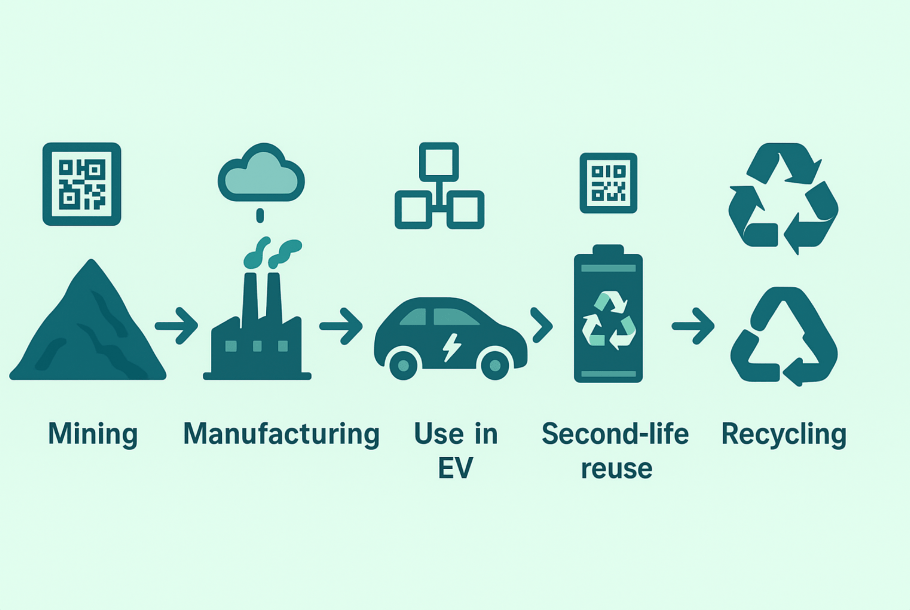
The Battery Passport ensures that every stage — from mining to manufacturing, EV usage, second-life applications, and recycling — is documented. This reduces risks of unethical sourcing and improves compliance with global sustainability standards.
Learn how UL Certifications for Battery Systems already help ensure safety and traceability in energy storage.
2. Compliance with EU Regulations
By 2027, all manufacturers must adopt digital passports for large batteries. This includes data on materials, carbon footprint, and recycling rates. The Battery Pass Project provides detailed guidance on the required attributes (Battery Pass Consortium).
3. Boosting Consumer Trust
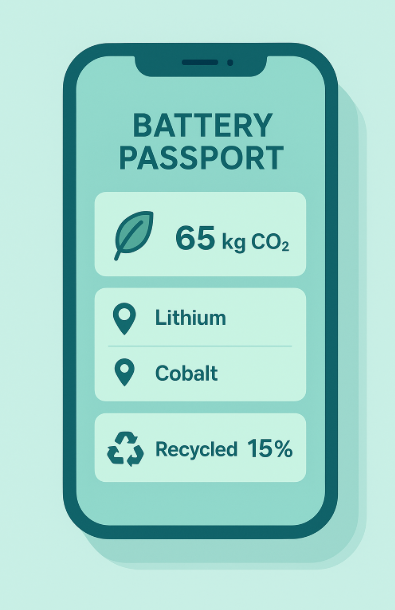
Consumers and fleet operators will be able to scan a QR code and instantly view:
- Carbon footprint (e.g., 65 kg CO₂ per battery)
- Material origin (Lithium: Chile, Cobalt: DRC)
- Recycled content (e.g., 15% of metals reused)
This transparency empowers greener purchasing decisions.
Global Efforts Driving the Battery Passport
The Global Battery Alliance (GBA) is leading the effort by developing a standardized Battery Passport Framework (GBA Battery Passport). GBA pilots are already running with automakers and energy companies to test data sharing and compliance models (GBA Pilots).

Even automakers are moving ahead — Volvo became the first to issue a digital battery passport for its EV lineup, well before the EU mandate (Reuters).
At Sunlith Energy, we’re preparing our commercial and industrial ESS to meet these requirements, ensuring compliance and customer trust.
Benefits for the Energy Storage Sector
🔹 Sustainability and Circular Economy
Battery Passports encourage second-life applications and recycling by providing accurate records of material health and usage cycles. This helps optimize ESS deployments for solar, wind, and commercial operations.
🔹 Industry Standardization
With frameworks like the DIN DKE SPEC 99100, companies gain a clear path to standardize reporting and compliance (Charged EVs).
🔹 Competitive Advantage
Companies that adopt the Battery Passport early will gain a market edge, especially in Europe, where sustainability standards are strict.
Battery Passport Implementation Timeline
- 2024–2025 → Pilot projects and voluntary adoption (GBA Pilot Wave)
- 2026 → Mandatory data collection requirements for large batteries
- 2027 → Battery Passport becomes legally required in the EU
How Sunlith Energy is Preparing
At Sunlith Energy, we design battery energy storage systems (BESS) that are built with compliance, safety, and traceability in mind. Our approach includes:
- Partnering with certified cell and pack suppliers
- Aligning product designs with UL 1973, UL 9540, and IEC 62619 standards
- Preparing for integration of Battery Passports into our commercial and industrial solutions
Learn more about how we ensure safety in our products:
Conclusion
The Battery Passport is more than a compliance requirement — it’s a gateway to transparency, sustainability, and trust in the energy storage industry. From raw material sourcing to recycling, it ensures accountability across the entire value chain.
At Sunlith Energy, we’re not just preparing for the 2027 EU mandate — we’re building future-ready storage solutions that embrace transparency and circular economy principles today.
By preparing early, manufacturers, suppliers, and recyclers can reduce costs, meet regulations, and build consumer trust.The future of batteries isn’t only about performance—it’s also about traceability, accountability, and circularity.
FAQ
Q1: What is a Battery Passport?
A Battery Passport is a digital record that provides detailed information about a battery’s lifecycle — from raw material sourcing to recycling. It includes data on carbon footprint, material origins, compliance certifications, and end-of-life options.
Q2: Why is the Battery Passport important?
It ensures transparency, sustainability, and safety in the battery industry. By making information accessible through a QR code, it helps regulators enforce standards, supports recyclers with accurate chemistry data, and builds consumer trust.
Q3: Do all batteries need a passport?
Not yet. Initially, only industrial and EV batteries over 2 kWh must comply. Smaller consumer batteries may be included in later phases.
Q4: When will the Battery Passport become mandatory?
Under the EU Battery Regulation, all industrial and EV batteries over 2 kWh must have a Battery Passport by February 2027. Pilot projects are ongoing from 2024–2025, with data collection requirements starting in 2026.
Q5: How are Battery Passports implemented technically?
They are accessed via a QR code, RFID, or digital identifier, linked to a secure database. Some projects use blockchain for tamper-proof records, while others rely on centralized registries.
Q6: Who benefits from the Battery Passport?
Manufacturers → Ensure compliance and demonstrate sustainability.
Recyclers → Gain accurate data for efficient recovery of valuable materials.
Consumers → Access battery performance, footprint, and sustainability data.
Regulators → Monitor environmental impact and supply chain responsibility.
Q7: What does this mean for consumers?
Consumers gain access to sustainability data, battery health metrics, and recycling instructions—boosting confidence and transparency.
Q8: What data does a Battery Passport include?
Q9: Is the Battery Passport only for EV batteries?
Initially, it applies to EV and industrial batteries above 2 kWh, but experts expect smaller batteries for electronics and light mobility devices to be included in future updates.
Q10: How does the Battery Passport support recycling?
By providing chemistry and material breakdown data, recyclers can recover lithium, cobalt, nickel, and other critical minerals more efficiently. This supports the circular economy and reduces dependence on new mining.
UL 2054 Certification Guide: Battery Pack Safety
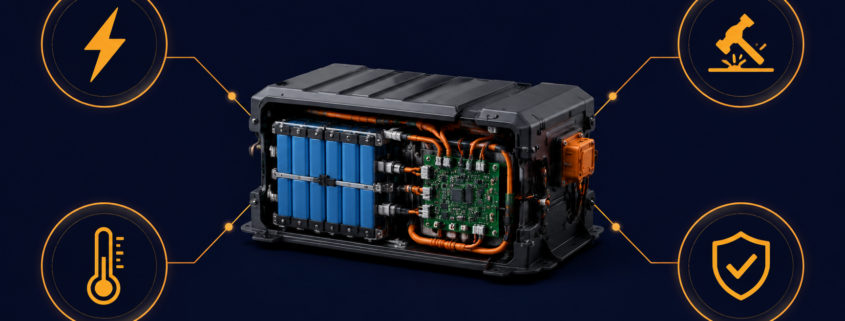
UL 2054 certification is the core safety standard for complete battery packs sold in North America. Underwriters Laboratories publishes it. A cell-level standard tests one component. UL 2054, on the other hand, tests the finished pack as a whole — the housing, the wiring, and the protection circuits, all working together.
This guide covers what actually sets UL 2054 apart. First, you’ll see the Single Fault Condition test. Next, you’ll learn the two paths to certification. Then, we’ll explain why the cells inside your pack need their own approval first. For the cell-level standard this builds on, see our UL 1642 certification guide. Or, browse our full UL certifications overview for the complete compliance picture. The U.S. Consumer Product Safety Commission also lists UL 2054 as a recognized voluntary standard for household and commercial batteries.
What UL 2054 Covers — and What It Doesn’t
UL 2054 applies to complete battery packs. This includes both primary, non-rechargeable batteries and secondary, rechargeable ones. It covers several chemistries too: lithium-ion, lithium-polymer, NiMH, and NiCd.
However, the standard doesn’t test individual cells on its own. Instead, it points to UL 1642 for the lithium cells used inside a pack. In practice, this means the cells need UL 1642 approval first, before the finished pack goes to a lab for UL 2054 testing. Skipping this step doesn’t skip the requirement. It just shifts the burden. If a pack arrives with uncertified cells, the lab has to run the full UL 1642 cell tests too. As a result, this roughly doubles both the testing cycle and the cost.
UL 2054 also stops at a certain scale. It doesn’t cover electric vehicle batteries, since those fall under UL 2580. It doesn’t cover industrial or stationary storage batteries either, since those fall under UL 1973. Think of UL 2054 as the standard for everything in between: the packs inside laptops, power tools, e-bikes, medical devices, and household energy storage products.
The Testing Categories
UL 2054 groups its requirements into four areas. Each one targets a different way a pack can fail.
- Electrical — short-circuit testing at multiple temperatures, an abnormal charging test, an abusive overcharge test at an elevated charge rate, a forced-discharge test for multi-cell configurations, and a Limited Power Source (LPS) test.
- Mechanical — a crush test using a hydraulic ram, an impact test with a drop weight, shock testing, and vibration testing that simulates shipping and handling.
- Environmental — temperature cycling, humidity exposure, and low-pressure altitude simulation.
- Enclosure — a mold stress test, a drop test, and a static force test on the housing itself. After all, the casing is the pack’s first line of defense if something goes wrong internally.
Across every category, the underlying requirement stays the same: no fire, and no explosion. For pack-level samples specifically, the pack also can’t leak electrolyte through a cracked or ruptured cell casing. For a broader look at how labs approach battery testing generally, UL’s own battery safety testing overview is a useful reference.
The Single Fault Condition Test
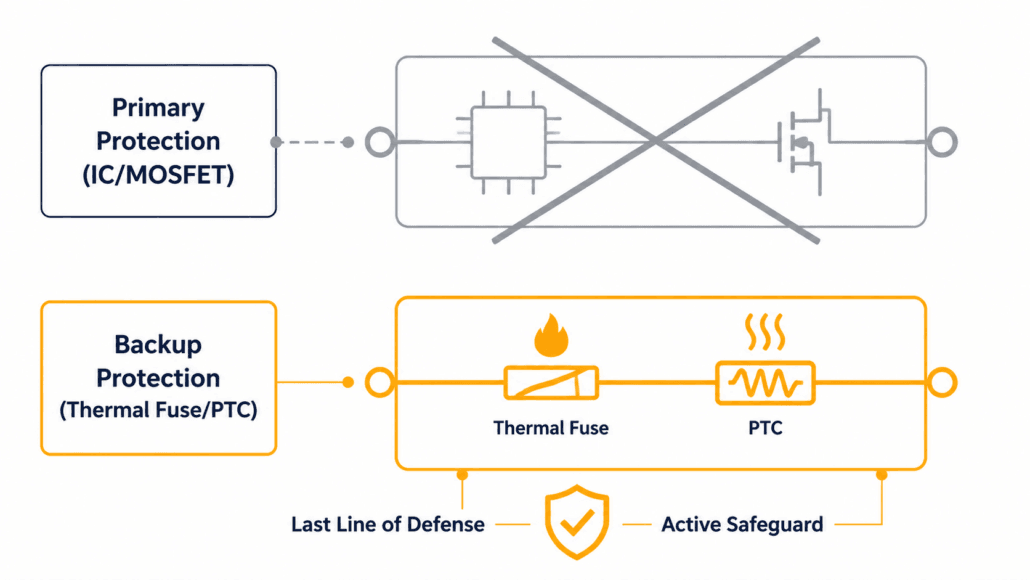
This is the detail that most separates UL2054 from a simpler pack test. Yet it rarely gets explained clearly. Most battery packs ship with two layers of protection: a primary IC-based circuit, and a secondary fuse or protection device.
During testing, the lab doesn’t just check that both layers work. Instead, it deliberately disables one. Typically, this means intentionally shorting the primary protection MOSFET or IC, to simulate a real-world failure of that first layer. The pack then has to survive on its remaining protection alone — commonly a thermal fuse or PTC device — during an overcharge event. A pack that depends entirely on its primary IC, with no independent hardware backup, tends to fail here. In fact, this is the most common reason a first submission doesn’t pass.
Two Paths to UL 2054 Certification
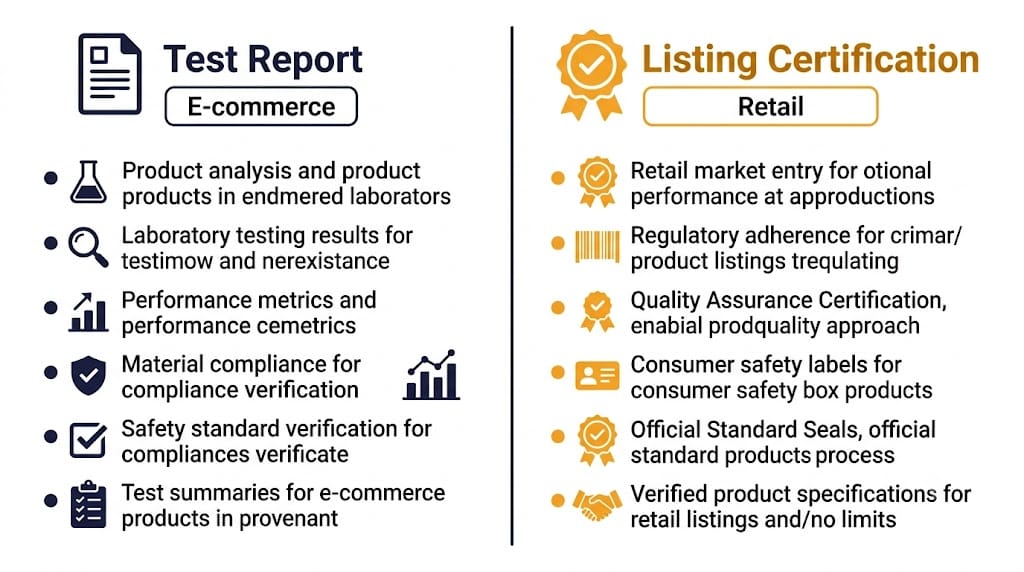
Manufacturers can pursue UL 2054 compliance in two different ways. The right choice depends on where the product is sold.
| UL 2054 Test Report | UL 2054 Listing Certification | |
|---|---|---|
| What it includes | Lab testing only, no factory audit | Lab testing plus ongoing quarterly factory inspections |
| Speed and cost | Faster and lower cost | Slower and more expensive, due to the audit program |
| Allows the UL Mark? | No | Yes |
| Typical use case | E-commerce platforms like Amazon | Offline retail and big-box distribution |
Amazon specifically requires a UL 2054 test report from an ISO 17025-accredited lab for lithium battery listings. If a listing gets flagged for missing documentation, sellers typically get a narrow window — often 14 to 30 days — to submit a valid report. Otherwise, the listing faces removal. For manufacturers targeting physical retail instead, the full Listing Certification with the UL Mark is usually the better long-term investment. Many retail buyers specifically require it.
How UL 2054 Fits With Other UL Battery Standards
UL 2054, UL 1642, UL 1973, UL 2580, and UL 9540 get confused constantly. That’s because they all show up in battery compliance conversations. However, each one certifies a different scope.
| Standard | What It Covers |
|---|---|
| UL 1642 | Individual lithium-ion or lithium-metal cells |
| UL 2054 | Complete battery packs for consumer and commercial products |
| UL 1973 | Batteries for stationary storage (BESS), light electric rail, and similar applications |
| UL 2580 | Battery packs and modules used in electric vehicles |
| UL 9540 | The complete energy storage system — batteries, PCS, controls, and enclosure together |
In short, UL 2054 sits between cell-level and system-level safety. It confirms the pack itself is safe, before that pack goes into a larger product or system. For the standard that governs full BESS installations, see our UL 9540A test method guide.
Why UL 2054 Certification Matters
- Market access — most major retailers and e-commerce platforms require it before listing a lithium battery product.
- Liability protection — a UL 2054 report demonstrates due diligence if a product safety issue is ever challenged.
- Foundation for trust — for household energy storage products specifically, pack-level certification reassures buyers that the same rigor applies as it does to larger BESS installations.
At Sunlith Energy, every battery pack we source starts with UL 1642-certified cells before pack-level testing begins. See our BESS certifications overview for a buyer’s-side breakdown of what to verify before purchasing.
Frequently Asked Questions
Does UL 2054 test individual battery cells?
No. UL 2054 tests the complete pack — housing, wiring, and protection circuits. It references UL 1642 for the lithium cells inside the pack. So, those cells need separate UL 1642 approval first.
What is the Single Fault Condition test?
It’s a test where the lab intentionally disables one layer of a pack’s protection circuit. Then, it checks whether the remaining protection can still prevent fire or explosion during an overcharge event. This is one of the most common reasons a first test submission fails.
What’s the difference between a UL 2054 Test Report and Listing Certification?
A Test Report covers lab testing only. It’s typically enough for e-commerce platforms like Amazon. Listing Certification adds ongoing factory audits and allows use of the UL Mark, which offline retail distribution usually requires.
Does UL 2054 cover EV or stationary storage batteries?
No. EV battery packs fall under UL 2580. Stationary storage batteries fall under UL 1973 instead. UL 2054 covers the range in between: consumer and commercial products like power tools, e-bikes, medical devices, and household energy storage.
Related UL Certifications
For the certification layers before and after UL 2054, see our guides to UL 1642 certification, UL 1973 certification, and UL 9540A test methodology.
UL 2580 Certification: A Guide to EV Battery Safety
Electric vehicles are driving the future of transportation. As adoption grows, battery safety has become a critical focus for manufacturers and regulators. To ensure reliability, UL 2580 certification was introduced as a dedicated safety standard for electric vehicle batteries.
This blog explains what UL 2580 covers, why it’s important, and how it differs from other UL certifications.
What is UL 2580?
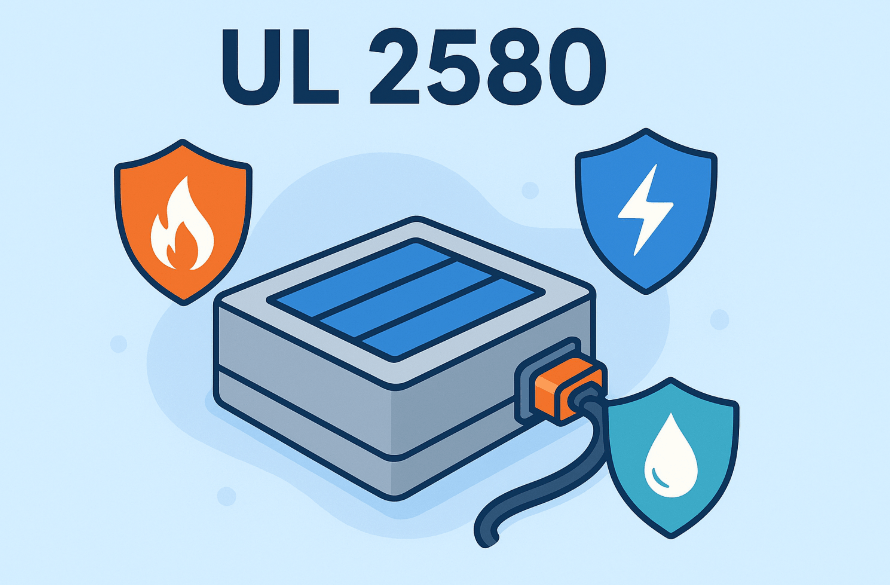
UL 2580 is a safety standard for lithium-ion battery packs and modules used in electric vehicles. Developed by Underwriters Laboratories, it focuses on testing how batteries perform under electrical, mechanical, and environmental stresses.
Unlike standards aimed at small devices or stationary storage, UL 2580 addresses the unique demands of automotive applications, where batteries face high loads, vibrations, and varied climate conditions.
Scope of the UL 2580 Standard
The requirements apply to complete battery packs and modules used in passenger cars, buses, and commercial EVs. The goal is to minimize risks like fire, leakage, or explosion by verifying:
- Electrical protection (overcharge, short circuit, insulation resistance)
- Mechanical resilience (impact, crush, vibration)
- Environmental durability (temperature extremes, water exposure, corrosion)
These evaluations simulate real-world driving scenarios, from high-speed crashes to operation in extreme weather.
Benefits of Compliance
1. Safety Assurance
Certification confirms that EV batteries can withstand demanding conditions without compromising driver or passenger safety.
2. Market Access
Many global regions expect compliance with UL2580 or equivalent standards before EVs can be sold.
3. Consumer Confidence
When automakers highlight UL-certified batteries, it reassures buyers that the technology is tested and reliable.
4. Brand Advantage
Certification demonstrates a manufacturer’s commitment to high-quality and safe energy storage solutions.
UL 2580 vs. Other Certifications
Battery standards vary depending on application. Here’s how UL 2580 compares:
| Standard | Applies To | Main Focus |
|---|---|---|
| UL 1642 | Individual cells | Cell-level safety tests |
| UL 2054 | Household/portable devices | Consumer electronics batteries |
| UL 2271 | Light electric vehicles | E-bikes, scooters |
| UL 2580 | EV battery packs & modules | Vehicle-level battery safety |
| UL 1973 | Stationary & motive use | Energy storage & industrial vehicles |
This comparison highlights UL2580 as the benchmark for road-going electric vehicles.
Looking Ahead
As battery technologies evolve—such as solid-state and advanced chemistries—standards like UL2580 will also adapt. This ensures future EVs continue to meet stringent safety requirements while supporting global electrification goals.
Conclusion
UL 2580 plays a key role in making electric vehicles safer and more reliable. By verifying battery pack safety under extreme electrical, mechanical, and environmental stresses, it protects consumers and strengthens trust in EV technology.
For manufacturers, certification isn’t just about compliance—it’s about staying competitive in a fast-growing market.
FAQs
1. What is tested under UL 2580?
Electrical, mechanical, and environmental safety of EV battery packs.
2. Is it mandatory?
In many regions, yes, or an equivalent standard is required for market approval.
3. How does it differ from UL 1973?
UL 2580 applies to road vehicles, while UL 1973 is for stationary or motive applications.
4. Who needs it?
Automakers, EV battery pack suppliers, and system integrators.
5. Does it apply to solid-state batteries?
Yes—future updates ensure new technologies remain covered.
The Role of IP-Rated Enclosures in C&I BESS Performance
Why Enclosures Matter in C&I BESS
In the world of commercial and industrial battery energy storage systems (C&I BESS), performance and reliability depend on more than just advanced batteries and control systems. One often overlooked component is the BESS enclosure. Enclosures act as the first line of defense against dust, moisture, temperature extremes, and physical damage. The use of IP-rated C&I BESS enclosures ensures not only long-term performance but also compliance with global safety standards.
At Sunlith Energy, we design enclosures that balance safety, efficiency, and scalability for diverse applications in renewable energy, EV charging hubs, and grid support.
What Are IP Ratings in C&I BESS Enclosures?
An IP ratinghttps://www.iec.ch/ip-ratings (Ingress Protection) defines how well an enclosure resists dust and water penetration. For C&I BESS enclosures, this rating is crucial because systems are often deployed in harsh industrial or outdoor environments.
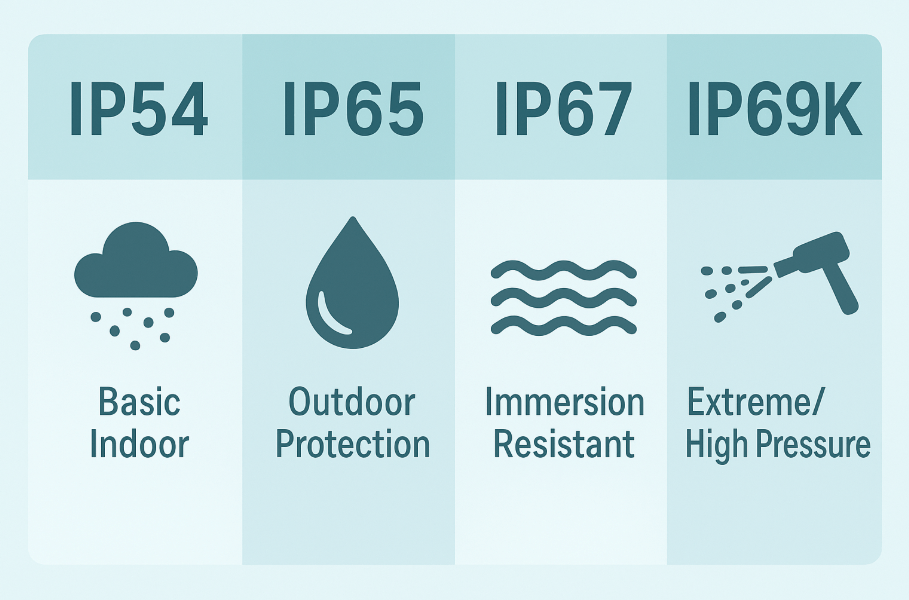
- IP54: Basic indoor protection against dust and splashing water.
- IP65: Outdoor-level dust-tight enclosure with water spray protection.
- IP67: Resistant to immersion, suitable for flood-prone areas.
- IP69K: Extreme protection against high-pressure water jets and severe environments.
➡️ Learn more about Key Components of C&I BESS (IP Enclosures Section).
Why C&I BESS Enclosures Need IP Protection
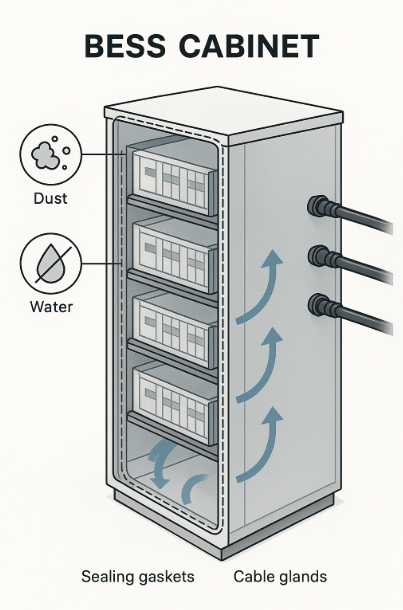
Unlike residential systems, C&I energy storage systems face more demanding operational conditions. Choosing the right C&I BESS enclosure enhances:
- Durability – Prevents dust buildup that can impair cooling systems and electronics.
- Safety – Reduces the risk of short circuits and fire hazards caused by moisture ingress.
- Performance – Maintains thermal stability and system efficiency under varying climates.
- Compliance – Supports certifications for safe operation in industrial and utility environments.
Indoor vs Outdoor Applications
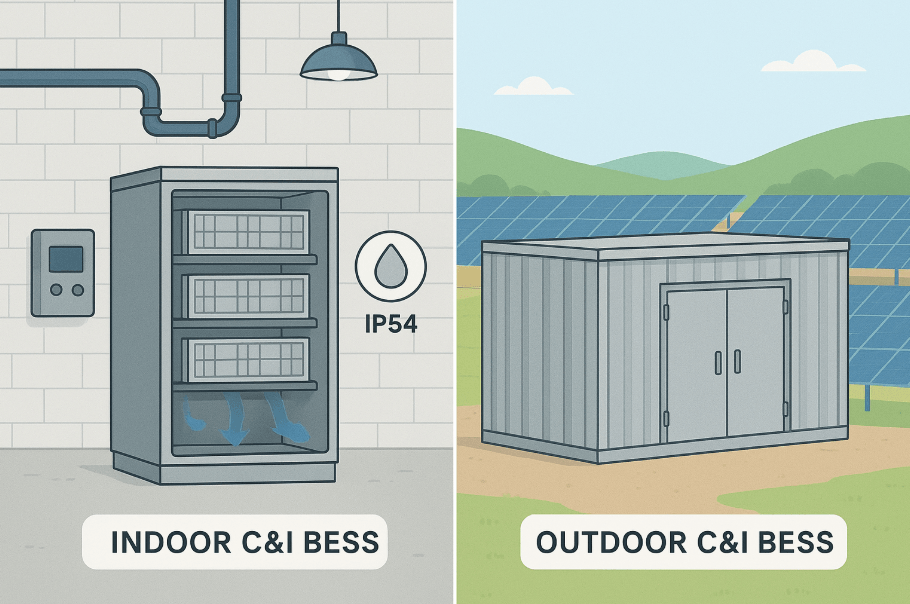
Different C&I projects demand different enclosure strategies:
- Indoor C&I BESS enclosures (IP54–IP65): Suitable for factories, warehouses, and commercial spaces. They provide moderate dust and moisture protection while maintaining cost efficiency.
- Outdoor C&I BESS enclosures (IP65–IP67): Essential for solar farms, EV fast-charging stations, and microgrids where systems face rain, dust storms, and high humidity.
This careful selection ensures maximum uptime and reduced maintenance costs.
C&I BESS Enclosures and Safety Standards
IP ratings directly contribute to safety and compliance by ensuring protection from hazards such as:
- Electrical shocks due to water intrusion
- Overheating caused by blocked airflow
- Contamination from dust and industrial particles
At Sunlith Energy, we integrate IP-rated enclosures as part of a broader compliance strategy that aligns with UL, IEC, and fire safety standards.
➡️ Read more about our Safety & Compliance practices.
Choosing the Right IP-Rated C&I BESS Enclosure
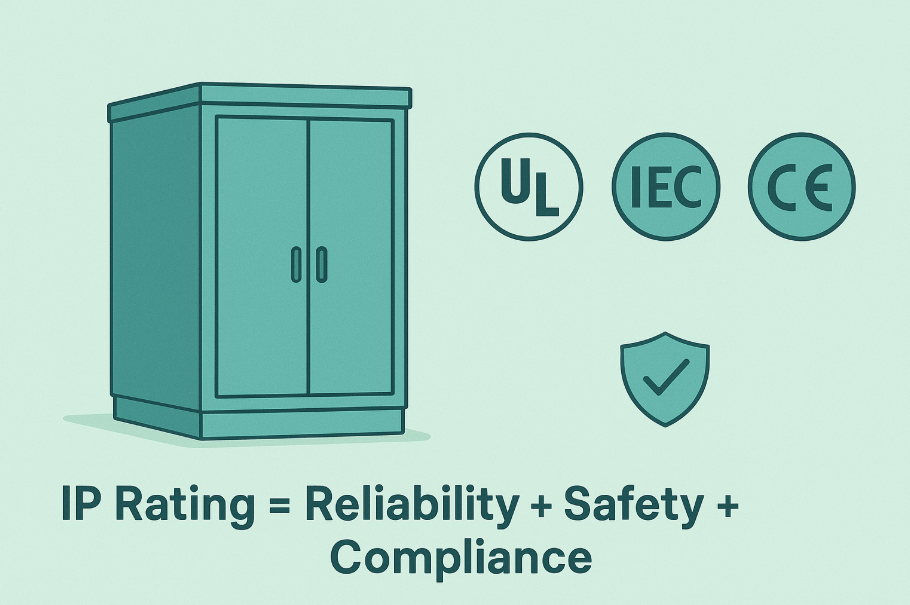
When selecting an enclosure for your C&I battery storage project, consider:
- Environment: Dusty factories, coastal areas, or flood-prone zones need higher IP ratings.
- Application: Indoor projects may optimize for cost with IP54, while outdoor utility-scale projects require IP65–IP67.
- Scalability: Larger systems benefit from modular enclosures with high IP protection to ensure reliability as capacity grows.
Conclusion: Enclosures Define Reliability
C&I BESS enclosures are not just boxes that house batteries; they are a critical safeguard that ensures performance, reliability, and compliance. By choosing the right IP-rated enclosure, businesses protect their investments, enhance safety, and enable long-term sustainability in energy storage projects.
At Sunlith Energy, we provide advanced C&I BESS solutions with enclosures tailored to industrial and commercial needs, ensuring that your system is built to last.
Frequently Asked Questions (FAQ) about C&I BESS Enclosures
1. What is an IP-rated C&I BESS enclosure?
An IP-rated C&I BESS enclosure is a protective housing designed for commercial and industrial battery energy storage systems. The IP rating specifies how well the enclosure resists dust and water, ensuring safety and durability in challenging environments.
2. Why are IP ratings important for C&I BESS?
IP ratings define how resistant enclosures are to dust and water intrusion. For C&I BESS enclosures, higher IP ratings mean better protection, which translates into improved system reliability, longer lifespan, and compliance with industry safety standards.
3. Which IP rating is best for C&I BESS enclosures?
The choice depends on the application:
IP69K: Used in extreme industrial conditions where systems face high-pressure cleaning or severe weather.
IP54–IP65: Best for indoor commercial or industrial settings.
IP65–IP67: Ideal for outdoor environments exposed to rain, dust, and humidity.
4. How do C&I BESS enclosures improve safety?
By preventing water, dust, and debris from entering the system, C&I BESS enclosures reduce the risk of electrical faults, overheating, and fire hazards. They also help ensure compliance with UL and IEC safety standards.
5. Do all commercial and industrial BESS require high-IP enclosures?
Not always. Indoor C&I BESS may only need moderate protection (e.g., IP54), while outdoor and utility-scale BESS demand higher protection (e.g., IP67). The correct choice balances cost, environment, and safety needs.
6. How does Sunlith Energy ensure quality in its C&I BESS enclosures?
At Sunlith Energy, our enclosures are engineered with high-quality sealing, robust materials, and compliance with international standards. Each C&I BESS enclosure is tested for dust and water resistance to guarantee long-term reliability.