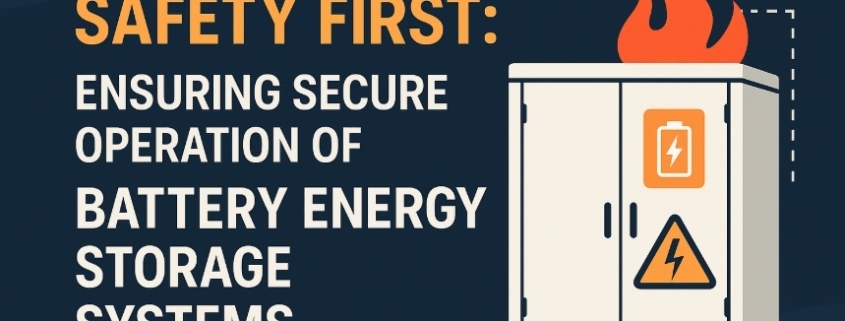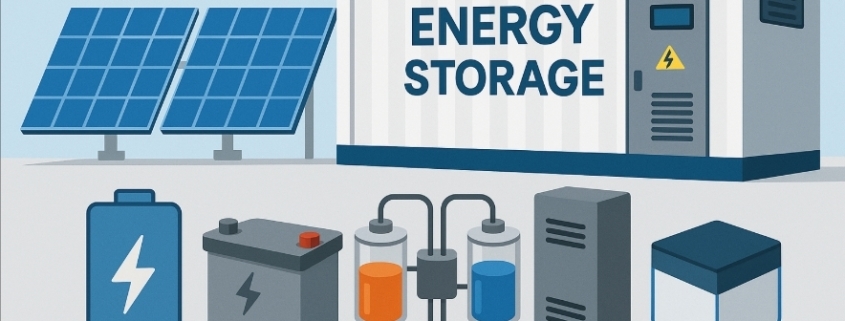
Battery Energy Storage System Safety is more important than ever. As energy storage becomes critical for renewable energy, businesses must put safety first. This guide will show you how to ensure your battery energy storage system operates securely, efficiently, and without risk to people or property.
Why Battery Energy Storage System Safety Matters
Battery energy storage system safety is the backbone of any reliable storage project. When you install large energy storage units, they hold massive energy. If the system is poorly designed or operated, it can lead to fires, explosions, or system failures. By making safety a priority, you protect people, equipment, and your investment.
Understand the Risks: Thermal Runaway and Fire Hazards
One major safety concern is thermal runaway. This happens when a cell overheats, triggering a chain reaction that leads to fire or explosion. Battery energy storage system safety means you must know what causes thermal runaway. Common causes include overcharging, poor cooling, and internal cell faults.
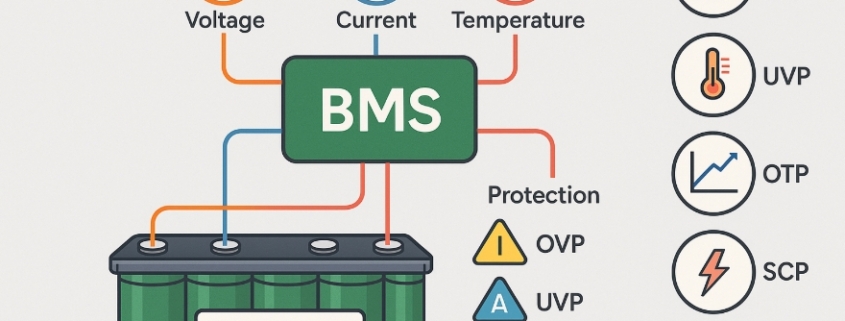
To prevent this, choose batteries with built-in protections. Good battery management systems (BMS) monitor each cell’s temperature, voltage, and state of charge. Always use reputable manufacturers who provide test reports for the complete battery system — not just individual cells.
Install Certified and Tested Systems
Never compromise on certifications. Certified battery systems comply with strict standards for performance and safety. Look for certifications like UL 9540 (for system safety) and UL 1973 (for stationary batteries). Battery energy storage system safety depends on verifying these certifications with every purchase.
Work with suppliers who can share test data for thermal performance, electrical protection, and fire suppression. Some buyers skip this, assuming a cell-level report is enough. It’s not! The entire battery system must be tested under real-world conditions.
Design for Safe Operation and Monitoring
Design is key for battery energy storage system safety. Plan the installation with these factors:
Adequate spacing: Batteries must have enough room for air flow.
Proper ventilation: Good air circulation keeps temperatures stable.
Fire suppression: Install automatic fire detection and suppression systems.
Emergency shutoff: Use clear disconnect switches and accessible emergency controls.
A well-designed system includes real-time monitoring. Smart BMS and EMS (Energy Management Systems) help track every parameter, sending alerts if something goes wrong.
Use Safe Installation Practices
A safe battery energy storage system starts with proper installation. Only hire qualified professionals to install and commission your system. Ensure the following:
Connect all terminals securely.
Use cables rated for the correct voltage and current.
Keep high-voltage areas clearly marked.
Ground the system properly.
Never allow untrained personnel to handle installation or maintenance. Mistakes can cause short circuits, fires, or electric shocks.
Train Your Team on Battery Energy Storage System Safety
People often overlook this step, but training is vital. Your team should understand how the system works, what to monitor, and what to do in an emergency. Create clear safety procedures for:
Routine inspections
Emergency response
System shutdown and isolation
Fire drills
Regular drills keep everyone ready to respond fast and safely.
Routine Maintenance Keeps Your System Safe
Battery energy storage system safety is not a one-time effort. You must perform routine checks to keep the system secure.
Inspect connections for corrosion or loose fittings.
Check temperature readings for unusual spikes.
Test alarms, shutoffs, and fire systems.
Update software for BMS and EMS.
Keep a log of all inspections and maintenance activities. This record helps spot trends before they become problems.
Industry Standards to Follow
Follow international standards to strengthen your battery energy storage system safety plan. Here are a few to know:
Stay updated as standards evolve. Regulations change to keep up with new battery technologies.
Best Practices for Fire Safety
Fire safety is the biggest fear in energy storage. Good design and maintenance lower the risk, but you still need an action plan.
Place fire extinguishers and automatic suppression near battery banks.
Use fire-resistant enclosures.
Keep flammable materials away from battery storage areas.
Develop an evacuation plan for staff and nearby buildings.
Choose Reliable Partners
Battery energy storage system safety starts long before installation. Choose reliable partners who supply quality products and stand by their work. Reputable suppliers will provide complete test reports, certifications, and system guarantees. Buying cheaper, uncertified products can be a big risk. Never cut corners on safety!
Keep Learning and Improving
Energy storage technologies evolve every year. Stay updated with new safety standards, new battery chemistries, and best practices. Attend training sessions, read industry reports, and join local energy associations. The more you know, the safer your system will be.
Final Thoughts: Safety First, Always
Putting battery energy storage system safety first protects your people, your business, and your bottom line. Plan carefully, choose quality equipment, follow standards, and train your team well. By doing this, you will build a system that performs reliably and safely for years to come.
✅ FAQ: Battery Energy Storage System Safety
Q1. Why is battery energy storage system safety so important?
Battery energy storage system safety is critical because these systems store large amounts of energy. Poor safety can lead to thermal runaway, fires, or explosions, putting people and property at risk.
Q2. What causes thermal runaway in battery energy storage systems?
Thermal runaway happens when a battery cell overheats and triggers a chain reaction. Common causes include overcharging, poor cooling, manufacturing defects, or damage to the cells.
Q3. How can I prevent fires in my battery energy storage system?
Use certified batteries, install fire suppression systems, ensure proper ventilation, and monitor your system with a smart BMS. Routine inspections help catch problems early.
Q4. What industry standards should I follow for battery energy storage system safety?
Key standards include UL 9540, IEEE 1547, IEC 62619, and NFPA 855. These guidelines help ensure that your battery energy storage system operates safely and reliably. Read our detailed NFPA 855 Guide to learn more about installation and fire safety compliance.
Q5. How often should I maintain my battery energy storage system?
Routine checks should happen monthly, with a thorough inspection at least once a year. Always inspect connections, test fire systems, and update your BMS software regularly.
As the demand for reliable renewable energy grows, Battery Energy Storage Systems (BESS) have become an essential part of modern power infrastructure. But did you know that not all batteries are the same? In this post, we’ll break down the top 5 battery technologies used in BESS and help you understand their advantages, limitations, and typical applications.
1. Lithium-Ion Batteries: The Most Popular Choice
Lithium-ion batteries are by far the most common battery technology used in BESS today. Their high energy density, long cycle life, and declining costs make them ideal for everything from residential storage to utility-scale projects.
Pros:
High energy density
Long lifespan (up to 15 years or more)
Good round-trip efficiency (90%+)
Cons:
Sensitive to temperature
Fire risk if not properly managed
Where they fit: Perfect for grid balancing, renewable integration, and behind-the-meter storage.
2. Lead-Acid Batteries: Reliable and Cost-Effective
Although older than other battery technologies, lead-acid batteries are still widely used in BESS for their low upfront cost and proven track record.
Pros:
Low capital cost
Mature and well-understood technology
Easy to recycle
Cons:
Lower energy density
Shorter cycle life (typically 3–5 years)
Heavier and larger footprint
Where they fit: Best for backup power and applications where budget constraints are tight and space is not an issue.
3. Flow Batteries: Flexibility for Long-Duration Storage
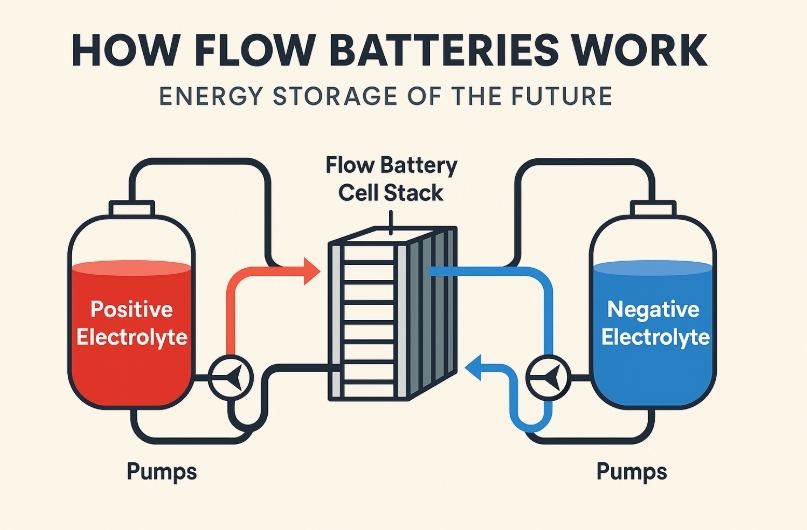
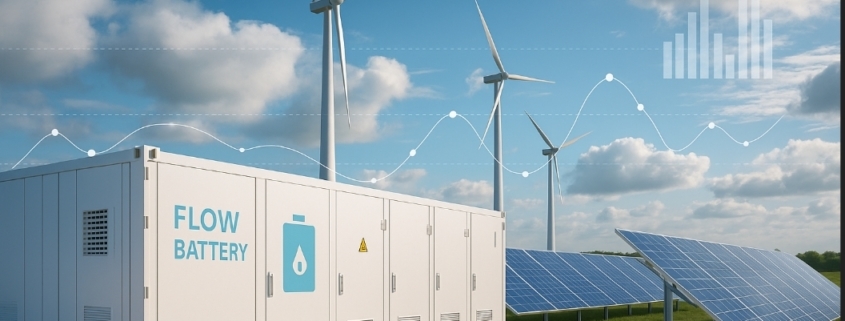
Flow batteries (like vanadium redox) store energy in liquid electrolytes that flow through a cell stack. They’re gaining attention for large-scale, long-duration storage projects.
Sodium-sulfur batteries are high-temperature batteries that deliver large amounts of energy for longer durations. Utilities have used them for grid support and load leveling.
Pros:
High energy density
Suitable for large-scale, long-duration storage
Long cycle life
Cons:
Operate at high temperatures (300°C+)
Safety and material challenges
Where they fit: Best for utility-scale BESS applications where space and temperature control are manageable.
Where they fit: Promising for future BESS projects once commercialization and scalability improve.
How to Choose the Right Battery Technology for Your BESS
Choosing the best battery for your energy storage project depends on your goals: ✅ Do you need high energy density? → Lithium-ion or solid-state. ✅ Is low upfront cost key? → Lead-acid might work. ✅ Do you want long-duration storage? → Consider flow or sodium-sulfur batteries. ✅ Looking to future-proof? → Keep an eye on solid-state technology.
Always balance cost, safety, lifespan, efficiency, and your specific use case when selecting battery technologies for BESS.
It depends on the technology: lithium-ion can last 10–15 years, flow batteries up to 20 years, and lead-acid about 3–5 years.
Q4: What’s the safest battery for BESS?
Solid-state batteries promise enhanced safety because they have no flammable liquid, but they’re not yet widely available. Proper BMS (battery management systems) also play a big role in safety.
Q5: Can I mix different battery technologies in one BESS?
Technically, it’s possible but complex. Most projects stick with one type to simplify design, maintenance, and management.
In today’s world of renewable energy and smart grids, understanding the key components in a BESS architecture is very important. A Battery Energy Storage System (BESS) is made up of several parts that work together to store, manage, and deliver electricity safely and efficiently. In this blog post, we’ll break down each major component — what it does and why it matters — so you can see how a BESS works as a whole.
What Is a BESS?
Before we dive into the key components in a BESS architecture, let’s quickly explain what a BESS is. A Battery Energy Storage System is a setup that stores electricity in batteries so it can be used later. It helps balance energy supply and demand, provides backup power, and supports the use of renewable energy like solar and wind.
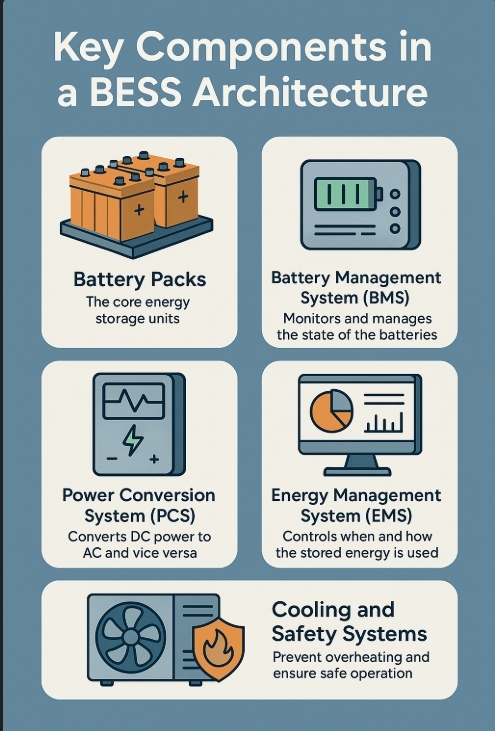
1. Battery Packs: The Core Energy Storage Units
The battery packs are the heart of any BESS. These packs are made up of many individual battery cells grouped together. They store the electrical energy until it’s needed.
Function: Store electrical energy in chemical form and release it as needed.
Why It Matters: The quality and type of battery pack (like Lithium-ion, LFP, or others) decide how much energy you can store, how long it lasts, and how safe the system is.
Tip: Always choose battery packs from reputable manufacturers with proper certifications.
2. Battery Management System (BMS): Monitors and Protects
The Battery Management System (BMS) is like the brain for the battery packs. It constantly checks the status of each cell to make sure everything works safely.
Function: Monitors voltage, temperature, and charge level. Balances cells and protects against overcharging or deep discharge.
Why It Matters: Without a good BMS, batteries can get damaged, lose efficiency, or even pose safety risks.
Tip: A well-designed BMS extends battery life and helps you get the most from your investment.
3. Power Conversion System (PCS): Converts Power
The Power Conversion System (PCS) is what makes your stored energy usable. Batteries store electricity as Direct Current (DC), but most homes and businesses use Alternating Current (AC).
Why It Matters: A good PCS maximizes efficiency, ensures stable power output, and protects connected devices.
Tip: Look for PCS units with high conversion efficiency and reliable grid interaction features.
4. Energy Management System (EMS): Controls Energy Flow
The Energy Management System (EMS) decides when to charge, when to discharge, and how to manage energy flows smartly.
Function: Monitors energy demand, renewable production, and market conditions to optimize usage.
Why It Matters: An EMS helps reduce electricity bills, maximize renewable energy use, and maintain grid stability.
Tip: Modern EMS can be cloud-based, allowing remote monitoring and control for better energy savings.
5. Cooling and Safety Systems: Keep It Safe and Efficient
Batteries generate heat during charging and discharging. That’s why Cooling and Safety Systems are vital parts of any BESS architecture.
Function: Maintain safe operating temperatures, prevent overheating, and manage emergencies like fires.
Why It Matters: Proper thermal management improves battery life and reduces safety risks.
Tip: Systems can use air cooling, liquid cooling, or a mix. Always ensure your system meets local safety standards.
Why Knowing These Key Components in a BESS Architecture Matters
Understanding the key components in a BESS architecture helps you make better decisions when planning or buying a system. Each part plays a role in safety, efficiency, and cost-effectiveness.
When all these components work together, you get reliable energy storage that supports your home, business, or grid.
Frequently Asked Questions (FAQ)
Q1: Which component is the most important in a BESS?
A: All components are important, but the battery packs and BMS are the core for safety and performance.
Q2: Can I upgrade one part of my BESS later?
A: It depends. Some parts like EMS software can be upgraded, but battery packs or PCS upgrades need expert checks for compatibility.
Q3: How do I maintain a BESS?
A: Regular checks on the BMS, PCS, cooling system, and software updates are recommended to keep your BESS in top shape.
Final Thoughts
Knowing the key components in a BESS architecture is the first step to using battery storage wisely. Whether you’re planning a home energy system or a big grid-scale project, make sure you work with trusted suppliers and ask about certifications, maintenance, and upgrades.
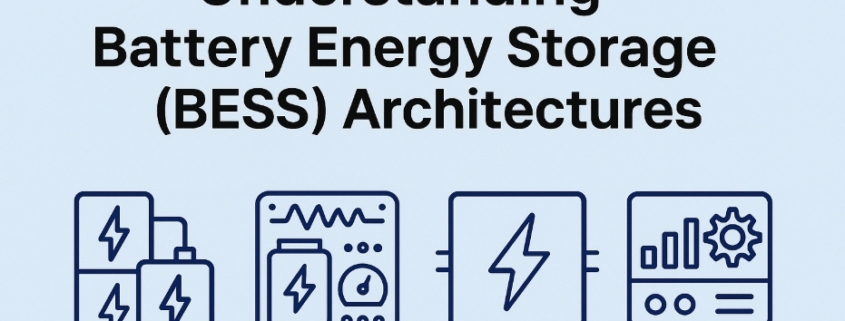
BESS architectures refers to the system design that connects batteries, power electronics, and control systems in a battery energy storage system. A typical BESS architecture includes battery modules, battery management systems (BMS), power conversion systems (PCS), and energy management systems (EMS) that work together to store and deliver electricity efficiently.
Battery energy storage systems are now critical infrastructure for renewable energy integration and grid stability.
What is a BESS Architecture?
A BESS architecture is the overall design and arrangement of the hardware and software components that make up the energy storage system. This includes the batteries, Battery Management System (BMS), Power Conversion System (PCS), control systems, and the way they are integrated and operated.
Why Understanding BESS Architecture is Important
The architecture determines how efficiently a BESS can store and deliver energy. It affects safety, scalability, cost, and performance. A well-designed BESS architecture ensures optimal energy usage, reduces losses, and prolongs battery life.
Key Components in a BESS Architecture
A typical BESS architecture includes:
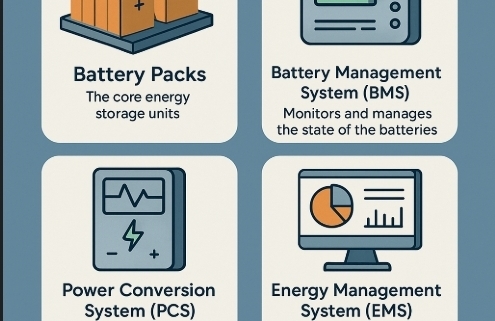
Battery Packs: The core energy storage units.
Battery Management System (BMS): Monitors and manages the state of the batteries.
A modular architecture allows scaling up the system by adding standardized battery modules. This is common in containerized BESS solutions.
Advantages:
Easy scalability.
Simplified maintenance.
Disadvantages:
Initial setup can be more expensive.
4. Hybrid BESS Architecture
This combines features of both AC and DC coupling. It is ideal for complex systems requiring high flexibility.
Advantages:
Maximizes energy capture.
Adapts to different grid conditions.
Disadvantages:
More complex design and higher upfront costs.
How to Choose the Right BESS Architecture
When selecting a BESS architecture, consider:
Project Size: Small residential vs. large utility-scale.
Energy Goals: Backup power, peak shaving, grid services.
Budget: Upfront cost vs. long-term savings.
Scalability: Future expansion needs.
Consult with experienced energy consultants to ensure the architecture matches your project’s requirements.
What are the Benefits of a Good BESS Architecture?
A well-planned BESS architecture provides:
Higher Efficiency: Less energy lost during storage and conversion.
Better Reliability: Consistent performance over time.
Improved Safety: Lower risk of overheating or failure.
Cost Savings: Optimized use of energy reduces utility costs.
Questions About BESS Architectures
What is the difference between AC-coupled and DC-coupled BESS?
The main difference is where the battery connects to the system. AC-coupled uses a separate inverter, while DC-coupled shares an inverter with solar PV.
Can BESS be retrofitted into existing solar systems?
Modular BESS architectures are ideal for projects that need easy scalability and flexibility. However, they can have higher upfront costs.
Final Thoughts on BESS Architectures
Understanding Battery Energy Storage System architectures is key to building efficient, safe, and future-ready energy storage solutions. Whether you’re installing a residential system or a large grid-connected project, choosing the right BESS architecture can maximize your return on investment and help you get the most from your renewable energy.
Utility-scale Battery Energy Storage Systems (BESS) are becoming an essential part of today’s power grids. As we use more renewable energy like solar and wind, grid operators have to deal with issues such as fluctuating supply and sudden peaks in demand. Utility-scale BESS solves these problems by storing extra electricity when there’s plenty of it and releasing it when it’s needed most. This makes our power supply more stable, efficient, and reliable for everyone.
What is Utility-Scale BESS?
Utility-scale BESS refers to large-scale battery storage installations typically rated in megawatts (MW) or gigawatts (GW). Unlike residential or commercial storage systems, these projects serve the grid directly and can deliver energy for hours or even days, depending on system design.
Key characteristics:
Capacity ranges from tens of MW to several hundred MW.
Located near generation sites or substations.
Provide grid services like frequency response, voltage control, and peak shaving.
How Does a Utility-Scale BESS Work?
A utility-scale battery storage system typically consists of:
Battery modules: Usually lithium-ion, but other chemistries like flow batteries or sodium-sulfur are emerging.
Battery Management System (BMS): Monitors cell performance, state-of-charge, and safety.
PowerConversion System (PCS): Converts DC from batteries to AC for the grid and vice versa.
Energy Management System (EMS): Controls dispatch, optimization, and integration with other grid assets.
One of the primary benefits of utility-scale BESS is rapid response to frequency deviations. Unlike traditional peaker plants, batteries can react within milliseconds, maintaining grid balance.
2. Renewable Integration
Wind and solar are variable by nature. Utility-scale battery storage smooths out fluctuations, stores surplus during high production, and releases energy during lulls — helping achieve higher renewable penetration.
Large battery storage systems can support critical infrastructure during outages and help restart a power grid after a blackout — known as “black start.”
Types of Utility-Scale BESS Technologies
Technology
Features
Typical Use Cases
Lithium-Ion
High energy density, fast response
Frequency regulation, peak shaving
Flow Batteries
Long duration, scalable, deep cycling
Renewable firming, load shifting
Sodium-Sulfur
High temperature, long discharge duration
Base-load shifting, remote microgrids
Advanced Lead-Acid
Low cost, moderate performance
Short-term backup, frequency response
Challenges Facing Utility-Scale BESS
While utility-scale BESS brings immense benefits, some challenges remain:
High upfront capital costs: Though prices are falling, large installations require significant investment.
Supply chain constraints: Dependence on critical minerals like lithium and cobalt can affect availability and cost.
Degradation and lifespan: Batteries degrade over time, impacting performance and replacement cycles.
Regulatory and market barriers: In some regions, market structures don’t fully value storage services yet.
Recent Trends and Global Outlook
According to industry reports, global utility-scale BESS installations are expected to grow exponentially. Markets like the US, China, Australia, and Europe lead the way with supportive policies and ambitious renewable energy targets.
Key trends include:
Hybrid projects combining solar, wind, and storage.
Longer-duration storage technologies (8+ hours).
Second-life batteries and recycling solutions.
Grid services monetization through virtual power plants (VPPs).
Case Study: Notable Utility-Scale BESS Projects
Hornsdale Power Reserve (Australia): 150 MW/193.5 MWh — one of the world’s largest lithium-ion storage projects, providing frequency control and grid support.
Crimson Energy Storage (California, USA): 350 MW/1,400 MWh — supports California’s push for 100% clean energy.
UK National Grid Projects: Multiple installations delivering fast frequency response and capacity market services.
Environmental and Sustainability Considerations for Utility-Scale BESS
Raw Material Sourcing
Mining the raw materials inside a utility-scale BESS — lithium, nickel, and cobalt — carries documented ecological and social costs.
Responsible sourcing standards, including the EU’s due-diligence rules, help address some of these concerns. But the impact isn’t zero.
Manufacturers are shifting toward chemistries with fewer conflict minerals. Lithium iron phosphate, for example, skips cobalt entirely.
Many installations enter a second-life phase first. They power smaller applications like commercial backup or residential storage before final retirement.
This extends the useful life of the materials by several years. It also delays the need for new mining.
Recycling technology is maturing quickly. Modern recovery processes can now reclaim over 90% of the critical minerals inside a spent battery.
That recovered material then feeds back into new cell production. This cuts demand for freshly mined resources over time.
Several major recycling facilities have opened in the US, Europe, and China since 2023. Capacity is scaling to handle the coming wave of retirements from early grid-storage deployments.
Carbon, Land, and Water Impact
The lifecycle math still favors large-scale storage overall. A typical installation offsets far more carbon over its operating life than its manufacturing footprint requires.
Every megawatt-hour it delivers to the grid displaces power that would otherwise come from fossil-fuel peaker plants. Over a 15-20 year lifespan, that adds up to a significant net emissions benefit.
Land use is a smaller, but real, consideration too. These projects need less physical footprint than equivalent solar or wind farms delivering the same capacity.
Siting near existing substations or brownfield sites further reduces the land impact. Many developers now prioritize these locations to minimize new land disturbance.
Water use is minimal compared to other grid technologies. Battery systems need cooling, but nowhere near the volume required by thermal power plants.
That makes large-scale storage a strong fit for water-stressed regions expanding renewable capacity.
Safety and Community Impact
Fire and thermal-runaway risk also factor into the environmental conversation.
Modern battery chemistries and containment designs cut incident rates significantly. Standards like NFPA 855 push this further.
Community and noise impact matter too. Modern inverter and cooling equipment runs far quieter than early-generation hardware.
Most projects now include acoustic buffers and setback distances from residential areas. This keeps neighboring communities largely unaffected by day-to-day operation.
Regulatory Outlook
Regulators are formalizing end-of-life requirements for utility-scale BESS too. The EU’s Batteries Regulation sets clear recycling targets.
Cobalt and nickel must hit 90% recovery by 2027, rising to 95% by 2031. Expect similar rules to spread as installed capacity grows worldwide.
Taken together, these factors paint a nuanced picture. Large-scale storage isn’t environmentally free.
But its net contribution to decarbonizing the grid still outweighs the footprint by a wide margin.
Future of Utility-Scale BESS: What’s Next?
As we aim for net-zero goals, the role of utility-scale BESS will only expand. The focus will shift toward:
Integrating with renewable mega-projects.
Supporting decarbonization of hard-to-abate sectors.
Enabling community energy storage and distributed resources.
Policy support, continued cost reductions, and technological breakthroughs will be crucial to unlocking the full potential of grid-scale energy storage.
Final Thoughts
Utility-scale BESS is more than just a technological solution — it’s the backbone of a flexible, reliable, and low-carbon energy future. By bridging the gap between intermittent renewables and constant demand, these systems are paving the way for a resilient grid that works for everyone.
FAQs about Utility-Scale BESS
Q1: How long can a utility-scale BESS supply power?
Depending on the system’s energy capacity, it can range from minutes (for frequency response) to multiple hours (for peak shaving or load shifting).
Q2: Is lithium-ion the only option for utility-scale BESS?
No, while lithium-ion dominates the market today, flow batteries, sodium-sulfur, and other chemistries are gaining traction for longer-duration applications.
Q3: How is utility-scale BESS different from residential storage?
Utility-scale systems are grid assets providing large-scale services, while residential storage focuses on individual homes’ energy needs.
Q4: What’s the biggest challenge for utility-scale BESS?
High upfront costs and market barriers to monetizing all available services remain significant challenges.
Q5: How does utility-scale BESS support grid stability and frequency regulation?
Utility-scale BESS supports grid stability by detecting frequency deviations and responding within milliseconds, far faster than traditional peaker plants. The system injects or absorbs power almost instantly to keep grid frequency within a narrow target range, preventing outages and helping operators integrate more variable renewable generation without compromising reliability.
Q6: What is a utility-scale battery energy storage system and how does it work?
A utility-scale battery energy storage system is a large battery installation, typically rated in tens to hundreds of MW, that stores electricity from the grid or renewable sources and discharges it when needed. It charges during periods of excess supply and low demand, then releases stored power during peak demand or supply shortfalls.
Q7: What are the main components of a utility-scale BESS?
A utility-scale BESS has four main components: battery modules that store energy, a Battery Management System (BMS) that monitors cell health and safety, a Power Conversion System (PCS) that converts between DC and AC, and an Energy Management System (EMS) that controls dispatch and grid integration.
Ever wondered what Energy Storage PCS actually does? In this post, we’ll break down how it works and where it’s used in real-world energy storage systems.
What is PCS in Energy Storage?
PCS stands for Power Conversion System. It is an essential device in energy storage systems that converts electricity between alternating current (AC) and direct current (DC). It allows batteries to store energy from the grid or renewable sources and then release it back as usable AC power when needed.
In short, PCS is the bridge between your batteries and the electrical grid—managing energy flow, ensuring safety, and improving overall efficiency.
What is Energy Storage PCS and Why It Matters?
Energy storage PCS (Power Conversion System) is the heart of any Battery Energy Storage System (BESS). It is responsible for managing the conversion between AC and DC power, enabling batteries to store energy and deliver it back to the grid when needed. Without a PCS, your energy storage solution is like a car without an engine.
The PCS helps to regulate the flow of electricity, balance energy loads, and ensure maximum efficiency and safety of your battery system. Whether for solar, wind, or hybrid power systems,energy storage PCS plays a vital role in stabilizing renewable energy.
How Energy Storage PCS Works
The PCS acts as a two-way converter. When the energy is generated by solar panels or wind turbines (AC power), the PCS converts it into DC to charge the batteries. When the energy is needed (like during peak hours), it converts the stored DC power back into AC to feed into the grid or power your home or facility.
In simpler terms:
AC to DC conversion for charging the battery.
DC to AC conversion for discharging to the grid or loads.
It also works with smart controllers and EMS (Energy Management Systems) to provide grid-support functions, frequency regulation, peak shaving, and energy arbitrage.
1. Low-Voltage PCS (LV PCS) Used in small-scale or residential BESS. Operates below 1,000V.
2. Medium-Voltage PCS (MV PCS) Used in commercial and industrial systems. Operates between 1,000V to 35kV.
3. High-Voltage PCS (HV PCS) Used in utility-scale and grid-level projects. Supports large containers and centralized ESS plants.
4. Bi-directional PCS This is the most advanced type. It can both charge and discharge efficiently, supporting dynamic grid functions.
Each type serves a unique purpose, and selecting the right PCS depends on your project size, energy goals, and budget.
PCS vs. Inverter: Are They the Same Thing?
People often use “PCS” and “inverter” interchangeably, but a PCS is the broader system. Every PCS contains an inverter, but a PCS also handles charge/discharge control, grid synchronization, protection functions, and often bidirectional power flow — jobs a standalone inverter doesn’t do on its own.
Most modern PCS units are built around a bidirectional inverter core — one that converts power in both directions, DC to AC during discharge and AC to DC during charging, rather than needing separate hardware for each direction.
PCS Architecture: AC-Coupled vs. DC-Coupled Systems
How many PCS units a project needs, and how they’re configured, depends heavily on whether the system is AC-coupled or DC-coupled. AC-coupled systems use a separate battery inverter alongside the solar inverter; DC-coupled systems share one PCS across both PV and battery on the same DC bus.
A PCS can operate in one of two modes. Grid-following units synchronize to an existing grid signal and can’t operate without one. Grid-forming units establish their own voltage and frequency reference, which is what makes off-grid and islanded operation possible.
These reactive power control, voltage ride-through, and frequency response functions are documented in NREL’s research on advanced inverter functions, funded by the U.S. Department of Energy, which explains how grid-support-capable inverters and PCS units help maintain grid stability as more distributed solar and storage comes online.
Grid-forming PCS capability becomes essential once a project needs to operate independently of the utility grid, whether that’s a resilience-focused microgrid or a fully islanded system. Sizing and configuring the PCS correctly for these applications looks different from a standard grid-tied project.
Voltage & Frequency Control: Ensures clean, stable, and reliable electricity output.
Safety & Protection: Prevents overcurrent, overvoltage, and system failures.
Efficiency Optimization: Boosts round-trip efficiency and reduces energy losses.
Smart Control: Works with EMS and BMS to manage operations in real time.
Without a reliable PCS, your BESS will struggle to perform efficiently or safely.
Common Applications of Energy Storage PCS
PCS isn’t just for big power plants. You can find them in:
Home and C&I energy storage systems
Solar plus storage solutions
Microgrids and off-grid systems
EV charging stations
Grid stabilization and frequency regulation projects
Peak shaving and demand charge reduction
Whether you’re a homeowner trying to store solar energy or a utility trying to manage grid fluctuations, energy storage PCS is the backbone of your system.
Choosing the Right PCS for Your BESS
Here are a few questions to ask before choosing a PCS:
Q: What voltage and power level does my application need?
A: Match the PCS to your battery bank’s voltage and your energy load.
Q: Is it compatible with my battery chemistry (LFP, NMC, etc.)?
A: Yes. Always confirm with your supplier or integrator.
Q: Does it offer bidirectional operation?
A: For advanced systems, bidirectional PCS is a must.
Q: What kind of grid functions does it support?
A: Look for reactive power control, frequency response, black start, and islanding support.
Q: How efficient is the PCS?
A: A good PCS will offer 96%–98% round-trip efficiency.
Q: What is a PCS in a BESS?
A: A PCS, or Power Conversion System, is the equipment that converts DC power from the battery to AC power for the grid or loads, and back again during charging. It’s the central control point that manages how energy moves into and out of a battery energy storage system.
Q: Is a PCS the same as an inverter?
A: A PCS includes an inverter but does more than one. Inverters convert DC to AC; a PCS also manages charge/discharge control, grid synchronization, and protection functions, often across bidirectional power flow. See our full breakdown in PCS vs. Inverter: What’s the Difference in an ESS?.
Q: What’s the difference between PCS in AC-coupled and DC-coupled BESS?
A: In AC-coupled systems, the PCS is a standalone battery inverter working independently of the solar inverter. In DC-coupled systems, the PCS is a shared hybrid inverter that manages power from both PV and battery through a single conversion point. See our full comparison in AC-Coupled vs. DC-Coupled BESS: Which Architecture Is Right for Your Project?.
Q: What certifications does a PCS need?
A: Requirements vary by region and grid operator, typically including UL 1741 and IEEE 1547 in the U.S., IEC 62109 and VDE-AR-N standards in the EU, and additional grid codes depending on the interconnection point. See our full breakdown in Worldwide PCS Certification Guide.
Q: Can a PCS operate in grid-forming mode?
A: Yes, depending on its design. Grid-forming PCS units can establish voltage and frequency independently, which is essential for microgrid and island-mode operation. Grid-following units instead synchronize to an existing grid signal. See our full comparison in Grid-Forming vs. Grid-Following BESS.
Top Features to Look for in Energy Storage PCS
If you’re sourcing or integrating a PCS, here are some must-have features:
Modular design for easy expansion
IP54 or higher protection level for outdoor installations
Liquid or forced air cooling for heat management
LCD/Touchscreen display for monitoring
Remote control and IoT connectivity
CE, UL 1741, IEC 62109, and IEEE 1547 grid code certifications
Certification requirements vary significantly by region and grid operator. See our worldwide guide to PCS certification standards for a full breakdown of what’s required in your market.
PCS + EMS integration: Full-stack energy management solutions
These innovations make energy storage more accessible, efficient, and intelligent.
Conclusion: Energy Storage PCS Is the Unsung Hero of Clean Energy
In today’s energy transition journey, energy storage PCS is more important than ever. It acts as a bridge between renewable power and the grid, ensuring smooth, efficient, and safe operations. Whether you are building a small home system or a 100MW utility project, choosing the right PCS will make or break your success.
So, next time you think about a battery storage system, remember—your energy is only as smart as your PCS.
Energy arbitrage is the simplest revenue strategy in battery storage. A battery charges when electricity is cheap. Then, it discharges when electricity is expensive. The gap between those two prices is the spread. Capturing that spread is the entire strategy.
However, the full spread is never pure profit. Efficiency losses shrink it. Battery wear shrinks it further. This guide walks through how the strategy actually earns money, which costs cut into that revenue, and how to calculate the spread a project truly needs. For how this fits alongside other revenue streams, see our C&I BESS economics guide and our peak shaving vs. load shifting comparison.
How the Strategy Works
The pattern repeats daily. First, prices drop overnight, when demand is low. A battery charges during these cheap hours. Then, prices climb during the day. They often peak on hot afternoons, when air conditioning load surges. As a result, the battery discharges during these expensive hours, selling stored energy back at the higher rate.
Market structure shapes how much a project can actually earn. Deregulated markets tend to see more price swings, and those swings are what create opportunity in the first place. Grid congestion adds a second layer of upside. When transmission lines hit their limits, prices can vary sharply by location. So, a battery placed in the right zone can capture that gap too, on top of the daily time-based one.
Three Hidden Costs That Cut Into Your Margin
A visible price gap doesn’t automatically mean a profitable trade. Three factors quietly shrink that spread before it becomes real revenue.
Round-trip efficienc:. No battery returns 100% of the electricity it stores. Lithium-ion systems typically land in the 83–92% range, depending on chemistry, C-rate, and cooling. In other words, 10 kWh charged in might only return 8.5–9.2 kWh usable. Because of this, the sell price has to clear the buy price by more than the visible gap suggests — not just match it.
Battery degradation: Each cycle wears the battery down a little. In fact, one widely cited analysis of MISO market data found that degradation cut arbitrage revenue by roughly 12–46%, depending on the model used. This is easy to overlook, since it’s tempting to model efficiency losses and stop there.
Market fees and upkeep: Wholesale trading usually carries transaction fees. Meanwhile, the storage system itself needs ongoing maintenance. Both come out of the spread before any of it reaches the bottom line.
Put together, these three costs mean the sticker-price spread overstates the real opportunity. So, a strategy needs enough room to absorb all three and still turn a profit.
Calculating the Spread You Actually Need
Think of this as your breakeven point — the minimum price gap before the strategy is worth pursuing. Here’s the formula:
Here’s how that plays out in a simple, illustrative example:
Metric
Value
Off-peak charging cost
$25/MWh
Round-trip efficiency
88%
Effective charging cost
$25 ÷ 0.88 = $28.40/MWh
Degradation cost per cycle (illustrative)
$4/MWh
O&M and market fee allocation (illustrative)
$2/MWh
Breakeven discharge price
$28.40 + $4 + $2 = $34.40/MWh
In this example, the battery needs to sell above $34.40/MWh just to break even. That’s well above the $25/MWh most people assume is the real bar. Anything captured beyond that line becomes genuine margin. This is exactly why a headline spread can look attractive on paper, yet still produce thin or negative returns in practice.
What Actually Moves the Market
Price volatility: The wider and more frequent the daily swings, the more spread there is to capture. Flat, low-volatility tariffs, on the other hand, produce little to no opportunity.
Market structure: Deregulated wholesale markets generally offer more trading opportunity than fixed-tariff regulated ones.
Renewable penetration: Heavy solar and wind generation can trigger fast, large price swings — sometimes even negative prices during oversupply — which widens the gap available to a well-positioned battery.
Locational congestion: Grid bottlenecks create price differences between zones. Therefore, batteries sited near congestion points can capture that gap too, in addition to the daily one.
Analysts commonly benchmark this opportunity using “top-bottom” (TB) spreads — the gap between a market’s highest- and lowest-priced hours — as a standard way to compare potential across regions and durations. For broader market cost trends, the EIA’s battery storage market analysis is a useful reference point.
Why Most Projects Don’t Rely on This Alone
In practice, few BESS projects lean on a single revenue stream. Instead, layering in demand charge reduction, frequency regulation, or capacity payments spreads risk across multiple sources. As a result, this generally improves overall project economics compared to going it alone. See our peak shaving savings breakdown for how demand charge reduction stacks alongside this strategy, or our BESS cost per kWh and LCOS guide for the full project economics picture.
Merchant projects — ones relying entirely on wholesale price spreads with no fixed contract — carry real risk. Revenue depends on spreads that can shrink if market conditions or rules change. Contracted revenue, or a blended approach, generally reduces that exposure.
Energy Arbitrage Frequently Asked Questions
What is energy arbitrage in battery storage?
Energy arbitrage is the practice of charging a battery when electricity prices are low and discharging it when prices are high, capturing the price difference as revenue.
How much does round-trip efficiency affect energy arbitrage revenue?
Lithium-ion systems typically operate at 83–92% round-trip efficiency. That lost 8–17% means the discharge price must clear the charging cost by more than the visible spread suggests, not just match it.
Does battery degradation really cut into arbitrage profits?
Yes, substantially. Research using historical MISO market data found degradation reduced arbitrage revenue by roughly 12–46%, depending on the degradation model used. It’s one of the most commonly underestimated costs in arbitrage economics.
Is energy arbitrage alone enough to justify a BESS project?
Rarely as a standalone strategy. Most successful projects stack energy arbitrage with demand charge reduction, frequency regulation, or capacity payments to diversify revenue and improve overall project economics.
Next Steps
Ready to model your own numbers? Start with your local wholesale or time-of-use price spread. Then, apply the breakeven formula above, and compare it against your battery’s round-trip efficiency and degradation curve. For the full system cost picture, see our BESS cost per kWh and LCOS guide, or explore how this strategy stacks with other revenue streams in our C&I BESS economics guide.
⚡ Key Takeaways • A 100kW load run continuously (24/7) consumes 2,400 kWh per day. That daily energy figure is what drives solar and battery sizing. • Solar array size must be calculated for your worst realistic Peak Sun Hour (PSH) day, not your annual average — winter and cloudy-day sizing can be 2–2.5x larger than summer sizing. • Battery capacity depends on days of autonomy, Depth of Discharge (DoD), and round-trip efficiency — budget 3,000–10,000 kWh depending on backup duration. • The PCS/inverter is frequently undersized in DIY calculations — it must handle both the continuous 100kW draw and any surge/peak load, plus simultaneous charge and discharge in hybrid topologies. • LFP (LiFePO4) cells are the standard choice for stationary systems at this scale, rated for 3,000–5,000+ cycles at 80% DoD.
Planning solar panels and batteries to run a 100kW load around the clock? Sizing this correctly isn’t as simple as multiplying watts by hours, though.
Weather conditions, seasonal sunlight availability, cloudy-day derating, inverter sizing, and battery efficiency losses all factor in. Because of that, this guide walks through the full sizing process step by step, building toward a properly sized battery energy storage system (BESS) with formulas, worked examples, and a free interactive calculator.
📌 What You’ll Learn About Sizing for a 100kW Load
How to calculate required solar panel capacity for a continuous load
Why yearly weather data and Peak Sun Hours are critical to correct sizing
How to handle cloudy days and winter months without under-building
Battery sizing for different backup durations, DoD, and round-trip efficiency
How to size the PCS/inverter — the step most sizing guides skip
Battery chemistry, cycle life, and thermal management considerations at 100kW scale
Rough cost and payback framing so you can budget before requesting quotes
Example formulas and real-world worked values
🔧 Step 1: Understand Your 100kW Load
Let’s start with a 100kW load running 24 hours a day, every day.
100 kW × 24 hours = 2,400 kWh per day
That 2,400 kWh/day figure is your daily energy demand — it’s what solar and battery capacity are sized against.
If your load isn’t perfectly flat — for example, it dips to 60kW overnight and spikes to 130kW during a production shift — use the peak figure for PCS/inverter sizing. Use the daily kWh total instead (from a load profile or utility bill) for solar and battery sizing.
Averaging a variable load into a flat 100kW figure will, in short, undersize your inverter for the actual peak.
🌍 Step 2: Analyze Your Location’s Solar Irradiance for a 100kW Load
Your geographic location heavily influences how much sunlight you receive. Specifically, this is measured in Peak Sun Hours (PSH), the equivalent number of hours per day at 1,000 W/m² irradiance.
Location
Peak Sun Hours (avg)
Phoenix, USA
6.5 PSH
New Delhi, India
5.5 PSH
London, UK
2.8 PSH
👉 You can pull PSH data for your exact site from PVWatts (operated by the National Laboratory of the Rockies, formerly NREL), the NASA POWER Data Access Viewer, or commercial tools like Solcast. For a full breakdown of PSH by region and how it interacts with panel tilt, see our dedicated guides:
Sizing for the worst realistic case (cloudy-day PSH) rather than the annual average is, in fact, the single most common mistake in DIY sizing. In other words, it’s the difference between a system that works on a sunny July afternoon and one that keeps your load running in December.
🌥️ Why Consider Cloudy Days When Sizing a 100kW Load?
Even in a region with high annual irradiance, you’ll still, in fact, face stretches of poor sun exposure. For mission-critical applications, therefore, your system must:
Be oversized for worst-case scenarios, not average-case.
Include battery backup sized for 1–3 days of autonomy.
Use hybrid systems (generators or grid backup) where continuous uptime is non-negotiable.
❄️ Considerations for Winter Months
Winter brings three compounding effects:
Lower sun angles, which reduce effective irradiance on fixed-tilt arrays
Shorter daylight hours, which shrinks your PSH window
Snow cover in northern regions, which can fully block production for days
As a result, effective PSH drops and your dependence on stored energy or supplemental power increases. That’s exactly why the winter row in the Step 3 table above requires roughly 1.6x more solar capacity than the summer row.
⚡ Step 4: Size the Battery Energy Storage System for a 100kW Load
Ultimately, your BESS needs to store enough energy to power the load during non-sunny hours or outright weather/grid failures.
Formula:
Battery Capacity (kWh) = (Daily Load × Days of Autonomy) ÷ (DoD × Efficiency)
Daily Load = 2,400 kWh
Depth of Discharge (DoD) = 0.8
Round-trip Efficiency = 0.9
Backup Duration
Required Battery Capacity
1 Day
2,400 ÷ (0.8 × 0.9) ≈ 3,333 kWh
2 Days
4,800 ÷ (0.8 × 0.9) ≈ 6,667 kWh
3 Days
7,200 ÷ (0.8 × 0.9) ≈ 10,000 kWh
Note that these figures are usable energy requirements — rated (nameplate) capacity will need to be slightly higher once you account for BMS reserve margins and end-of-life capacity fade. For the difference between rated and usable capacity units, see Ah vs Wh Battery Capacity Explained, and for the general framework behind these backup calculations, see our Energy Storage Calculation Guide.
🔌 Step 5: Size the PCS / Inverter for Your 100kW Load (Often the Missing Step)
Solar array and battery capacity get most of the attention in sizing guides. However, the Power Conversion System (PCS) — the bidirectional inverter that moves power between panels, batteries, and load — is just as critical. In fact, it’s the component most DIY calculations undersize.
Specifically, your PCS needs enough continuous rating to handle the load, plus headroom for surge and simultaneous charge/discharge:
Continuous rating: must cover your 100kW continuous draw, not the average of a variable load profile.
Peak/surge rating: motor starts, compressor inrush, and HVAC cycling can spike 20–50% above continuous draw for a few seconds — undersized PCS units trip or clip during these events.
Simultaneous charge + discharge: in a hybrid solar + battery + load topology, the PCS may need to charge the battery from solar while discharging to load at the same time — size for the combined throughput, not just the larger of the two.
As a starting point, a reasonable figure for a 100kW continuous load is a 125–150kW PCS, though the correct number depends on your actual peak load profile and topology. For the functional breakdown of what a PCS does and how to evaluate one, see:
🔋 Battery Chemistry & Cycle Life for a Continuous-Duty 100kW Load
A 100kW load running 24/7 puts a battery through far more charge/discharge cycles per year than a typical backup-only installation. As a result, chemistry and cycle-life ratings matter more here than in a system that only discharges occasionally.
LFP (LiFePO4) is the standard choice for stationary systems at this scale: Tier-1 EV-grade LFP cells are typically rated 3,000–3,500 cycles at 0.5C / 80% DoD, with 120Ah-class prismatic cells often rated 3,500–6,000 cycles.
NMC offers higher energy density but lower cycle life and reduced thermal stability — generally a weaker fit for continuous-duty stationary storage than for space-constrained mobile applications.
Sodium-ion is an emerging alternative worth watching for cost-sensitive, cycle-heavy applications, though it currently trails LFP on energy density.
At 1–2 cycles per day, a 3,500-cycle-rated cell reaches end-of-life capacity (~80% of nameplate) in roughly 5–10 years. Therefore, factor this into both your battery oversizing margin and your long-term budget. For deeper comparisons:
🌡️ Thermal Management: Do You Need Liquid Cooling at This Scale?
A 3,000–10,000 kWh battery bank running near-continuous cycling generates meaningfully more heat than an occasional-backup system of the same size. Consequently, thermal management becomes a real design decision rather than an afterthought.
Air-cooled systems are simpler and cheaper, and remain viable for lower cycle-rate, moderate-climate installations.
Liquid-cooled systems hold tighter cell-to-cell temperature gradients, which matters directly for the cycle-life numbers above — sustained high temperatures accelerate capacity fade regardless of chemistry.
For continuous 0.5C–1C duty cycles in hot climates, liquid cooling is generally the safer long-term choice despite the higher upfront cost.
Install with adjustable tilt for seasonal optimization
TOPCon cells are, in fact, increasingly the default choice for higher-efficiency Tier-1 modules. For more detail, see our TOPCon Solar Cells guide on how they compare to standard PERC panels.
✅ Tips for Choosing Battery Cells for BESS
Use temperature-controlled (or liquid-cooled) enclosures for extreme climates
Choose Lithium Iron Phosphate (LFP) for safety and long cycle life at continuous-duty scale
Look for modular scalability so you can expand storage as load grows
Integrate with a proven BMS and EMS — don’t treat this as an afterthought
🔄 Hybrid Solutions for a Reliable 100kW Load
When powering a 100kW continuous load, therefore, it’s worth considering a hybrid setup:
Go fully off-grid: Solar + Wind + Battery — for redundancy in variable-weather regions
Add diesel backup: Solar + Battery + Diesel — for industrial backup where uptime is non-negotiable
Stay grid-connected: Solar + Grid + Battery — for grid-tied systems using the battery mainly for peak shaving and outage ride-through
💰 Estimating Total System Cost & Payback for a 100kW Load
Before requesting formal quotes, it helps to budget at a rough order of magnitude. Specifically, total installed cost scales with three line items: the solar array (per-watt installed cost), the battery bank (per-kWh installed cost), and the PCS/BOS/engineering package. Typically, the battery bank is the single largest line item at this scale given the 3,000–10,000 kWh range from Step 4.
Get exact per-watt and per-kWh figures from vendor quotes — these vary significantly by region, scale, and financing structure, so we intentionally don’t publish a single blended $/kWh figure here.
Payback period depends heavily on your alternative: offsetting diesel genset fuel and grid demand charges typically pays back faster than pure grid-tied offset in low-electricity-cost regions.
Model your specific numbers rather than relying on rule-of-thumb payback claims.
Battery for 2 days = 2,400 × 2 ÷ (0.8 × 0.9) ≈ 6,667 kWh
PCS sizing (per Step 5): 125–150 kW continuous, sized for the facility’s actual peak/surge profile
While static estimates give you a solid baseline, real-world engineering requires calculating system sizing interactively based on your specific geographical peak sun hours and target safety thresholds.
🧮 Interactive Solar & BESS Capacity Calculator
Use our professional sizing engine below to customize your numbers. Specifically, this tool automatically computes the balance between direct daytime consumption and the excess energy required to charge the battery bank for night or emergency runs.
☀️ Solar & BESS Capacity Calculator
📊 Recommended Sizing Results:
Daily Total Consumption: kWh/day
Required Solar Array Capacity: kWp
Required Battery Storage (BESS): kWh
Minimum Suggested PCS/Inverter: kW
🛠️ Sizing Definitions Explained
Daily Total Consumption (kWh): the total energy your system expends every day.
Required Solar Array Capacity (kWp): the nameplate rating of your panel configuration under Standard Test Conditions (STC), sized high enough to fill your BESS during operating hours.
Required Battery Storage (BESS, kWh): the gross storage capacity needed to survive weather downturns without exceeding safe Depth of Discharge (DoD).
PCS / Inverter Rating (kW): the continuous and surge power-handling capacity of the conversion system linking panels, batteries, and load — see Step 5 above.
📖 Recommended Sizing Resources for a 100kW Load
To fine-tune your inputs for the calculator above, explore our comprehensive technical guides:
Only if your load is flexible or you remain connected to the grid as a backstop. Otherwise, a continuous 100kW load with no grid connection and no battery has zero ride-through the moment the sun sets or a cloud rolls in.
Q: Should I oversize the battery or the solar array?
Both, in proportion to your climate. Specifically, cloudy regions need more solar oversizing to fill the same battery bank in fewer usable hours, while regions with frequent multi-day outages need more battery autonomy regardless of solar oversizing.
Q: What’s better — LFP or NMC batteries?
LFP is generally the safer, longer-cycle-life choice for stationary storage at this scale, while NMC’s higher energy density suits space-constrained mobile applications more than fixed installations.
Q: How big a PCS/inverter do I actually need for a 100kW Load?
Size for your actual peak draw plus surge headroom, rather than the 100kW continuous average. As a starting range, 125–150kW is reasonable, though you should pull your real load profile before finalizing (see Step 5).
Q: Do I need liquid cooling for a battery bank this size?
Not always — it depends on cycling frequency and climate. Continuous 0.5C–1C duty in hot climates benefits meaningfully from liquid cooling’s tighter thermal gradients, while lower cycle-rate systems in moderate climates can often stay air-cooled.
Q: How long will the battery bank last before it needs replacing?
Tier-1 LFP cells at 0.5C/80% DoD are typically rated 3,000–6,000 cycles. At roughly one full cycle per day, that’s a working life in the 8–14-year range before capacity fades to around 80% of nameplate, so budget your replacement schedule accordingly.
Q: Is grid-tied or off-grid better for a 100kW continuous load?
Grid-tied lets you undersize solar and battery relative to a true off-grid design, since the grid covers shortfalls. Off-grid or hybrid designs, on the other hand, are necessary wherever grid reliability can’t be trusted for a continuous critical load.
📌 Conclusion
Designing a solar + battery system for a 100kW load isn’t just about matching numbers. Rather, it’s about planning for the worst realistic day of the year, not the best.
In short, location-specific solar data, battery autonomy, PCS sizing, cell chemistry, thermal management, and cost all need to be part of your sizing strategy from the start, rather than bolted on after the array is already ordered.
Sodium-ion battery safety explains how safely these batteries operate, store energy, and move through supply chains. Today, safety is a top concern in energy storage.
However, lithium-ion batteries still face fire risks. Thermal runaway remains a major issue. Because of this, safer alternatives are gaining attention. One strong option is sodium-ion technology.
Sodium-ion batteries are safer because their chemistry is more stable. Unlike lithium, sodium does not react violently when exposed to stress. This significantly lowers the risk of a sudden fire or explosion.
Stable Electrolytes: The liquid inside a sodium battery is less likely to catch fire than the electrolytes used in lithium-ion systems.
Less Heat: Sodium-ion cells generate very little internal heat. This prevents the “domino effect” of overheating known as thermal runaway.
No Dendrites: Lithium batteries can grow tiny, sharp structures called “dendrites” that cause short circuits. Sodium chemistry naturally prevents these growths.
👉 Read more Sodium chemistry naturally prevents these growths. For a full look at how this technology works, check out our complete sodium-ion battery guide.
Sodium-Ion Battery Safety vs Lithium-Ion
A comparison helps clarify the difference.
Safety Factor
Sodium-Ion
Lithium-Ion
Thermal Runaway
Very low
Medium to high
Fire Risk
Low
High
Temperature Range
Wide
Limited
Electrolyte
More stable
Flammable
Transport State
0V safe
Partial charge required
🛡️ Live Battery Safety Risk Simulator
Select a critical battery stress factor to simulate safety performance behavior.
🟢 SODIUM-ION REACTION
High thermal stability. Runaway crystallization begins late at 250°C, producing minimal toxic smoke gas discharge emissions.
🔴 LITHIUM-ION REACTION
High risk of thermal runaway. Cellular decomposition triggers violently around 150°C, rapidly spreading oxygen-fed fire structures.
In contrast, lithium-ion batteries need more protection systems. Therefore, sodium-ion battery safety is often preferred in large installations.
When talking about renewable energy and power storage, the difference between BESS and ESS often confuses beginners. These two terms might seem similar, but they’re not the same. Understanding what each means is important if you’re dealing with solar systems, energy projects, or even electric vehicles.
Let’s break it down in simple words.
What Does ESS Mean?
ESS stands for Energy Storage System. It refers to any system that stores energy, not just electricity. This includes a wide range of technologies used to store energy in different forms — chemical, mechanical, thermal, or electrical.
The difference between BESS and ESS is that BESS is battery-specific, while ESS can refer to many other types of storage.
Why Is the Difference Between BESS and ESS Important?
Knowing the difference between BESS and ESS helps you:
✅ Choose the right technology ✅ Communicate clearly with vendors or partners ✅ Understand costs, installation, and maintenance needs ✅ Plan projects efficiently
If you are discussing a specific battery solution, say “BESS.” If you are referring to general energy storage options, use “ESS.”
Common Questions About BESS vs ESS
❓ Is Every BESS Also an ESS?
Yes. Every Battery Energy Storage System (BESS) is a type of Energy Storage System (ESS). But not every ESS is a BESS. Some ESS use water, air, or heat instead of batteries.
❓ Which One Should I Choose for My Project?
If you are storing electricity from solar panels or wind turbines, BESS is usually the best option. It’s compact, scalable, and fast-responding. If you are looking at long-term or large-scale energy storage, you might consider other ESS types like pumped hydro.
❓ Why Do People Use ESS Instead of Just Saying BESS?
Because ESS includes all types of storage, it’s often used in broad industry discussions. For example, when governments talk about energy policy or infrastructure planning, they use “ESS” to include all possibilities.
Real-World Example to Understand the Difference Between BESS and ESS