

E-Bike Battery Fires: Causes, Prevention, and Safer Packs
E-bike battery fires are usually preventable. Most start with a counterfeit or damaged pack, a mismatched charger, a home-built change, or unsafe charging.
What Causes E-Bike Battery Fires?
Why E-Bike Battery Fires Start
E-bike battery fires almost always begin inside one lithium-ion cell. That cell fails, heats up, and then sets off the cells around it.
How thermal runaway works
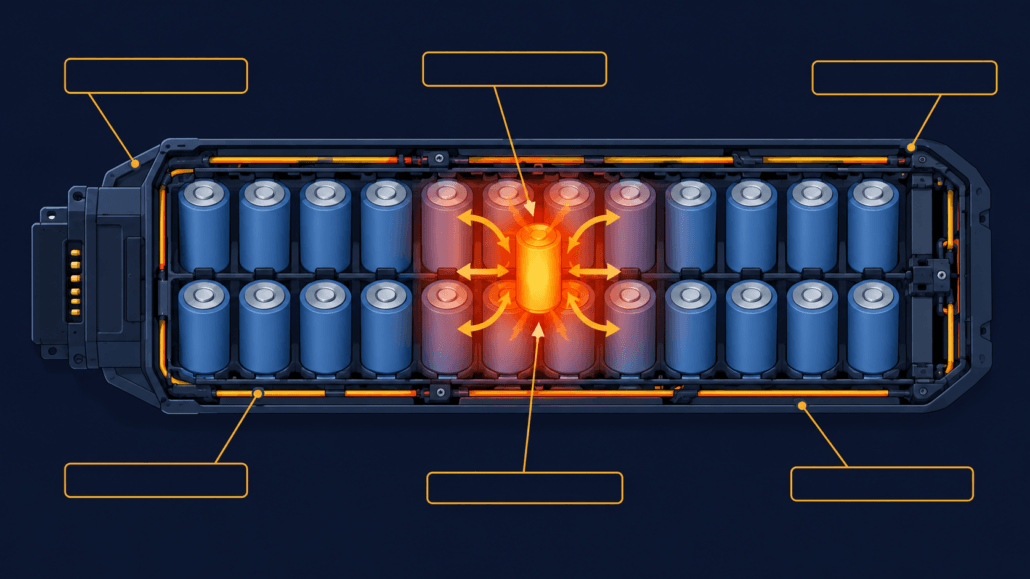
First, lithium-ion cells store energy next to a flammable liquid electrolyte. If one overheats, it can enter thermal runaway, a self-feeding reaction that vents hot gas and flame.
The U.S. Consumer Product Safety Commission (CPSC) explains that this heat can spread to neighboring cells. As a result, one failed cell can turn a whole pack into a fire.
Next, consider the battery management system (BMS). Once voltage, current, or temperature leaves the safe range, a good BMS cuts off charging or discharging.
But a BMS has limits. For example, it cannot stop a fire that starts from a manufacturing defect inside the cell.
Common causes of e-bike battery fires
These causes show up again and again in fire reports:
- Counterfeit, uncertified, or poorly built replacement packs
- Chargers with the wrong voltage, current, or polarity
- Crashes, drops, crushing, punctures, or water damage
- Swollen, leaking, corroded, or overheating cells
- DIY battery builds, cell swaps, or controller changes
- Charging on soft furnishings, near exits, overnight, or in extreme heat or cold
What the incident data shows
CPSC counted 227 incidents involving e-bikes, e-scooters, and similar devices from 2019 through 2023. They involved fires, explosions, gas releases, burns, overheating, and smoke inhalation.
Fires made up 195 of the 227 incidents. Together, the incidents caused 39 deaths and 181 injuries.
More than half of the incidents, 120 in all, happened while the device was charging. Also, 23 more started in devices that were stored or resting.
Homemade packs appeared in only four incidents. But those incidents caused three deaths, so DIY builds carry real risk.
How to Choose a Safer Pack and Avoid E-Bike Battery Fires
A safe pack is more than a box of cells. Because of that, choosing one well is your best defense against e-bike battery fires.
Check the certification label
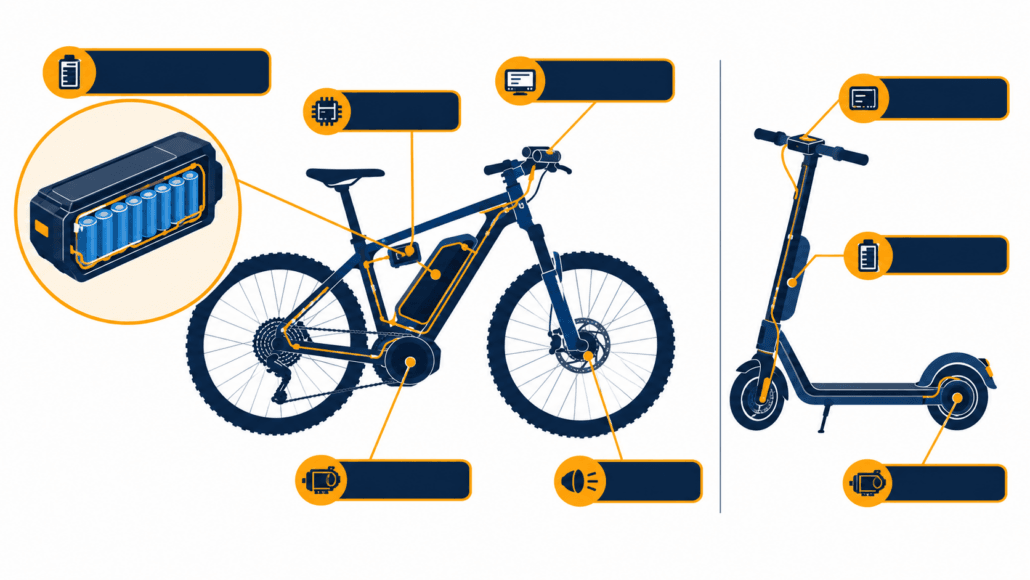
Three UL standards matter most. Each covers a different part of the system, so read the label with care.
| Standard | What it covers | Typical product |
| UL 2271 | The battery pack for light electric vehicles | Replacement and removable e-bike packs |
| UL 2849 | The full e-bike electrical system: battery, charger, motor, controller, wiring, and display | Complete e-bikes |
| UL 2272 | Electrical systems for personal e-mobility devices | E-scooters and similar devices |
For more detail, see SunLith’s guide to UL certifications for battery systems. Also, look for a recognized testing lab mark on both the battery and the charger.
New York City has required certified devices and batteries for sale, rental, or lease since September 2023. Still, a label is a floor, not a guarantee.
CPSC found these standards do not cover every hazard. Its June 2026 proposed rule would also add tamper-resistant battery enclosures.
Since the rule is not final, check its status before you rely on it.
Buying checklist to avoid e-bike battery fires
Before you buy an e-bike or e-scooter battery, run through this list:
- Confirm the battery and charger carry recognized certification marks
- Buy the battery and charger as a matched system where possible
- Avoid no-name packs, unusually cheap replacements, and used cells
- Check that voltage, capacity, connector, and current rating match your bike or scooter
- Confirm the seller offers a warranty, support, and replacement guidance
- Avoid any pack that a stranger has opened, modified, or repaired
Inspect the battery management system
First, a pack with weak protection is a risk, even with good cells. The BMS should guard against:
- Overcharge and over-discharge
- Over-current and short circuit
- Over-temperature and under-temperature charging
- Cell imbalance
- Reverse polarity and connector faults
For a deeper look, read SunLith’s guide to how a battery management system works. Also, it explains what each protection does.
Look at the cells and construction
Next, good builders use new, traceable cells from reputable makers. They also match capacity, internal resistance, and age across each parallel group.
- Proper cell holders, insulation, compression, and vibration protection
- Nickel strips, busbars, fuses, wires, and connectors rated for the real current
- IP-rated sealing and drainage for outdoor use
- Heat-resistant separators, potting, or encapsulation where the design calls for it
Resin fill can also help block water and slow a local failure. But the benefit depends on the design, and it never replaces a good BMS or safe charging.
Match the battery, charger, and controller
Finally, the battery, charger, controller, wiring, and fuses must work as one system. Still, a connector that fits does not prove the charger is compatible.
CPSC notes that charger voltage, current, and polarity must match the pack. Otherwise, the mismatch can damage cells and start a fire.
Safe Charging and Storage to Prevent E-Bike Battery Fires
Good habits cut the risk of e-bike battery fires even further. Also, the National Fire Protection Association (NFPA) publishes clear charging and storage advice.
Charging rules that prevent e-bike battery fires
Follow these rules every time you charge:
- Charge only when you are awake and can watch the battery
- Use the supplied charger or a maker-approved equivalent
- Charge on a hard, non-flammable surface, never on a bed, sofa, or carpet
- Plug the charger straight into a wall outlet, not a power strip or extension cord
- Avoid charging below 0°C (32°F) or above 40°C (104°F)
- Let the pack cool after a ride before you recharge it
- Unplug the charger once the battery is full
Storage rules
Where you keep the bike matters too.
- Store e-bikes, e-scooters, and spare batteries away from exits and bedrooms
- Keep them away from heaters, direct sunlight, liquids, and anything that burns
- Store spare batteries at room temperature and out of reach of children
CPSC logged 23 fires in devices that were stored or resting. So keep your escape routes clear, even when nothing is charging.
Inspect often and know the warning signs
Check the pack for cracks, dents, swelling, leaks, corrosion, burn marks, or loose connectors. Also notice unusual smells, heat, hissing, or popping.
Never open or repair a pack yourself. Instead, use a qualified professional, and recycle old packs at an approved battery-recycling site, not in household trash.
Safer Chemistries to Reduce E-Bike Battery Fires
Chemistry changes how e-bike battery fires behave. But no chemistry removes the risk.
Lithium iron phosphate (LFP)
Although LFP cells are more thermally stable than nickel-rich cells, they are not risk-free. In one peer-reviewed lab study, LFP cells at 0% and 30% charge did not enter thermal runaway before 350°C.
In severe failures, LFP can still vent toxic gases, including hydrogen fluoride. A 2026 safety review notes this, and other lithium-ion cells can do the same.
For a full comparison, see SunLith’s NMC vs LFP safety guide. Also note that LFP packs are usually heavier for the same range.
Sodium-ion
First, sodium-ion cells use abundant materials. Also, the same 2026 review reports higher thermal runaway start temperatures than for nickel-rich lithium cells.
But results vary by design. In a German federal lab study, a sodium-ion cell went into mild thermal runaway at 30% charge.
A similar LFP cell, by contrast, did not before 350°C. Also, sodium-ion cells have lower energy density.
This does not mean sodium-ion is unsafe. Safety depends on the cathode, electrolyte, cell format, build quality, and pack protection.
For the basics, read SunLith’s sodium-ion battery guide.
Solid-state
Next, solid-state cells replace the flammable liquid electrolyte with a solid one. Some oxide-based designs also show very high thermal stability and slow fire spread in lab tests.
But solid-state is not fireproof. A severe puncture can still cause an internal short, heat, and smoke.
Some sulfide designs can also release toxic hydrogen sulfide if they meet moisture. Still, these cells are costly and scarce for e-bikes today.
Next, this table sums up the trade-offs.
| Chemistry | Safety profile | Cost outlook | Best fit |
| NMC | High energy density, but higher runaway risk if abused or poorly made | Mature and low cost | Performance e-bikes and scooters |
| LFP | More thermally stable than NMC, but not risk-free | Moderate | Fleet, delivery, and durability-focused bikes |
| Sodium-ion | Often a higher runaway start temperature, but it varies by cell design | Expected to compete at scale | Budget commuter bikes and fleets |
| Solid-state | No flammable liquid electrolyte, but a damaged pack stays hazardous | Very high today | Premium future products |
What to Do If E-Bike Battery Fires Start
Quick action limits the damage when e-bike battery fires begin. Follow these steps:
- Stop using the battery, and disconnect it if that is safe.
- Move people and pets away from it.
- Do not charge, open, puncture, or repair it.
- If it smokes or burns, leave the area at once and call emergency services.
- Do not try to fight a large lithium-ion battery fire yourself.
Key Takeaway
Preventing e-bike battery fires starts with a certified, matched battery and charger. Then inspect the pack often, avoid modifications, and charge safely.
Still, new chemistries will help over time. But until then, good hardware and good habits matter most.
Frequently Asked Questions About E-Bike Battery Fires
So these answers cover the questions riders ask most about e-bike battery fires.
Do e-bike battery fires happen when the battery is not charging?
Yes, but it is less common. CPSC logged 23 such incidents in stored or resting devices, versus 120 during charging.
Is it safe to charge an e-bike battery overnight?
Avoid it. You cannot react to a problem while asleep, and NFPA also advises against charging after the battery is full.
Does UL certification stop e-bike battery fires?
No, certification only lowers the risk. CPSC found the standards do not cover every hazard, so safe use still matters.
Are LFP e-bike batteries fireproof?
No. LFP resists thermal runaway better than many nickel-rich cells, but it can still fail, vent gas, and burn.
How should I dispose of an old e-bike battery?
Take it to an approved battery-recycling site instead. Household trash is never safe.
Further Reading
These guides go deeper on the safety topics behind e-bike battery fires.
- Battery Management System (BMS) Explained: How It Works, What It Monitors, and Why It Matters for BESS
- NMC Battery vs LFP Safety: The Complete BESS Risk Breakdown
- Sodium Ion Battery: Complete Guide to Next-Generation Energy Storage (2026)
- UL Certifications for Battery Systems: A Complete Guide
- NFPA: E-Bike and E-Scooter Safety