
⚡ kWh vs kW Explained (Simple Guide to Power vs Energy)
If you are confused about kWh vs kW explained, you are not alone. Many people mix up these terms. However, they measure different things.
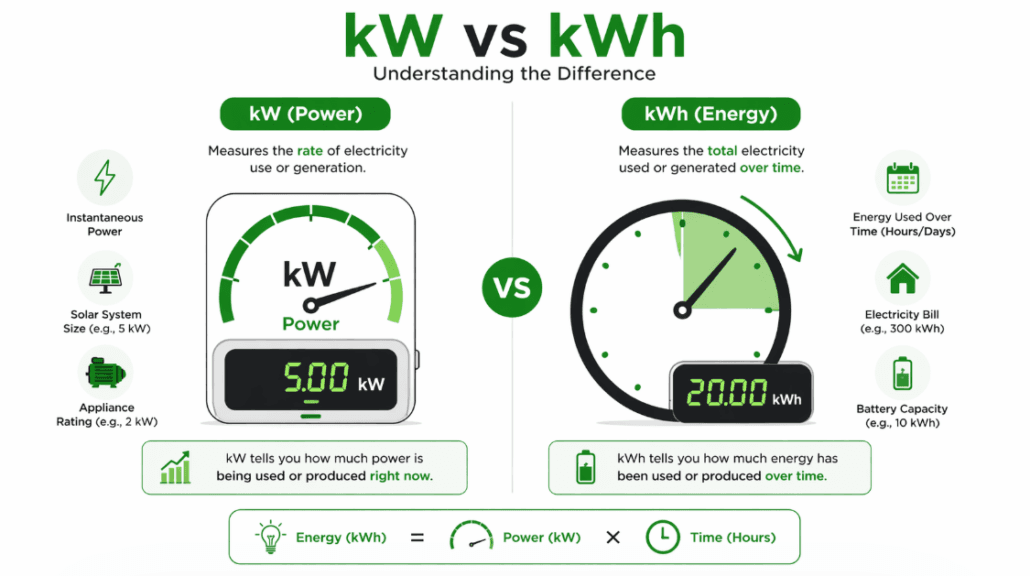
In simple terms, kW (kilowatt) measures power. On the other hand, kWh (kilowatt-hour) measures energy over time. Therefore, understanding this difference is critical for solar and battery sizing.
🔍 kWh vs kW Explained: What Is kW (Kilowatt)?
kW measures how fast energy is used or produced. In other words, it is the rate of power.
For example:
- A 1 kW heater uses 1 kilowatt of power
- A 5 kW solar system produces 5 kilowatts at peak
Therefore, kW tells you instant power, not total energy.
🔋 kWh vs kW Explained: What Is kWh (Kilowatt-Hour)?
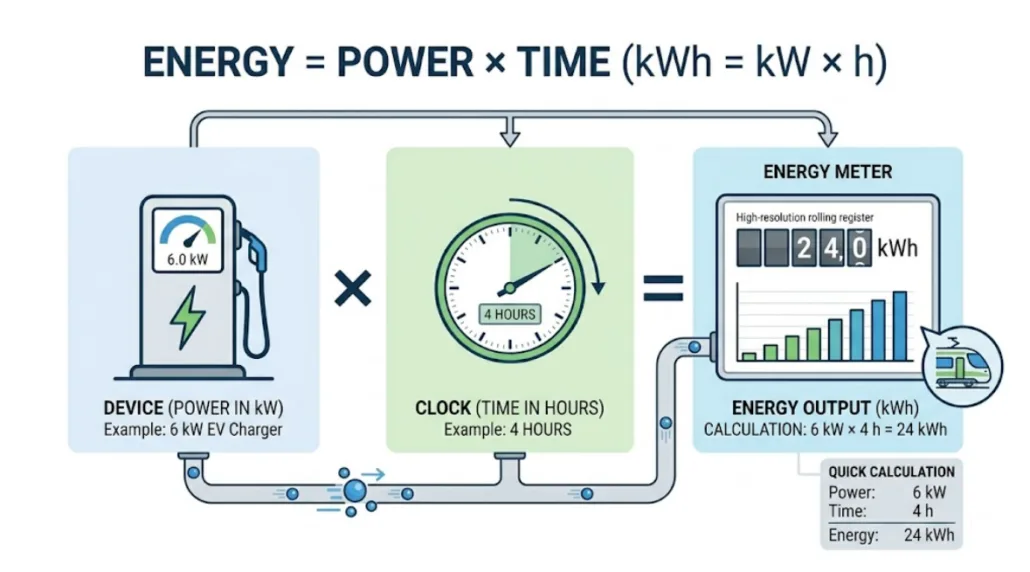
kWh measures total energy consumed over time. It combines power and duration.
Formula:
Energy (kWh) = Power (kW) × Time (hours)
Example:
- 1 kW device running for 5 hours = 5 kWh
- 2 kW AC running for 3 hours = 6 kWh
As a result, kWh tells you how much energy you actually use.
⚖️ kWh vs kW Explained: Key Difference
| Metric | kW | kWh |
|---|---|---|
| Meaning | Power | Energy |
| Measures | Rate | Total usage |
| Example | 5 kW system | 20 kWh per day |
| Use Case | System size | Energy consumption |
Therefore, kW is capacity, while kWh is consumption.
☀️ kWh vs kW Explained in Solar Systems
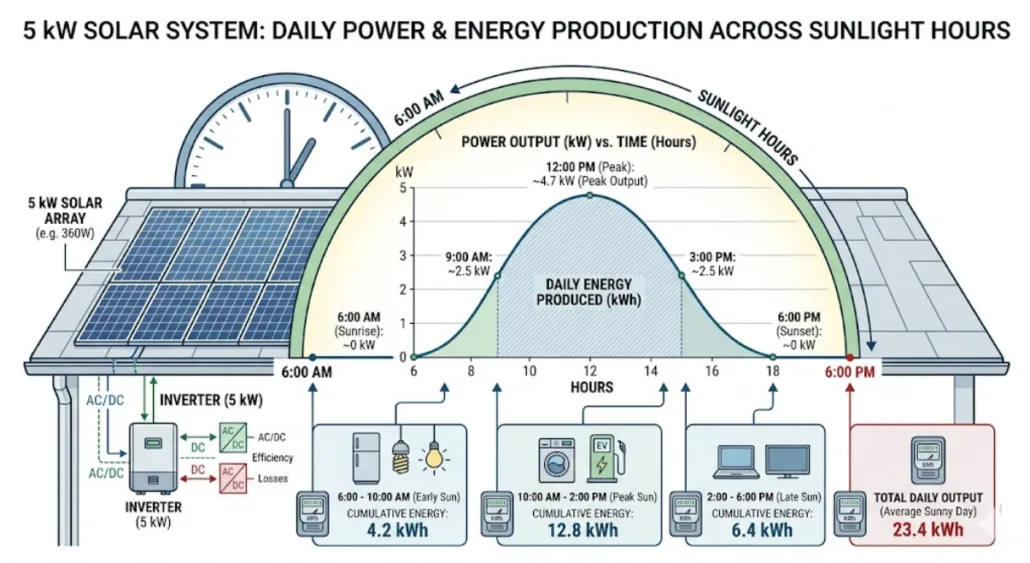
Solar systems use both values. However, they serve different purposes.
- kW → Solar system size
- kWh → Daily energy generation
For example:
- A 5 kW system does not produce 5 kWh per day
- It produces energy based on sunlight
👉Solar output depends on sunlight intensity. Therefore, understanding peak sun hours by location is essential for accurate energy calculations.
🔋 kWh vs kW Explained in Battery Storage
Battery systems are measured in kWh. This is because they store energy.
However, batteries also have a kW rating. This shows how fast they can deliver power.
👉 In addition, solar and battery systems must be sized together. You can follow this energy storage calculation guide to design a complete system.
📉 kWh vs kW Explained with Real Example
Let’s break it down:
- Solar system size = 6 kW
- Peak sun hours = 5
Energy produced:
6 × 5 = 30 kWh per day
However, losses reduce output.
👉 However, actual energy output is lower due to inefficiencies. Learn more about energy storage system losses and their impact on system performance.
🧮 kWh vs kW Explained for Home Electricity Bills
Your electricity bill shows kWh. This is because utilities charge based on total energy used.
For example:
- Monthly usage = 900 kWh
- Daily usage ≈ 30 kWh
Therefore, kWh determines your cost.
🔢 kWh vs kW Explained for Solar Panel Sizing
To size a solar system, you must convert kWh into kW.
Formula:
System Size (kW) = Daily Energy (kWh) ÷ Peak Sun Hours
⚠️ Common Mistakes in kWh vs kW Explained
Many users misunderstand these terms. As a result, they design incorrect systems.
Common mistakes include:
- Confusing kW with kWh
- Ignoring time in calculations
- Oversizing solar systems
Therefore, always use correct formulas.
🌍 Reference
For standardized definitions, refer to: National Renewable Energy Laboratory (NREL)
❓ FAQs – kWh vs kW Explained
What is the difference between kW and kWh?
kW measures power, while kWh measures energy over time.
Is kWh or kW more important?
Both are important. However, they are used for different purposes.
How do I convert kW to kWh?
Multiply kW by time in hours.
How many kWh does a 5 kW solar system produce?
It depends on sunlight. Typically, 20–25 kWh per day.







Trackbacks & Pingbacks
[…] kWh vs kW Explained (Simple Guide to Power vs Energy) […]
[…] you need a quick refresher on kW vs kWh first, see our guide on kWh vs kW explained. Otherwise, read on for the full kWp vs kWh […]
Leave a Reply
Want to join the discussion?Feel free to contribute!