
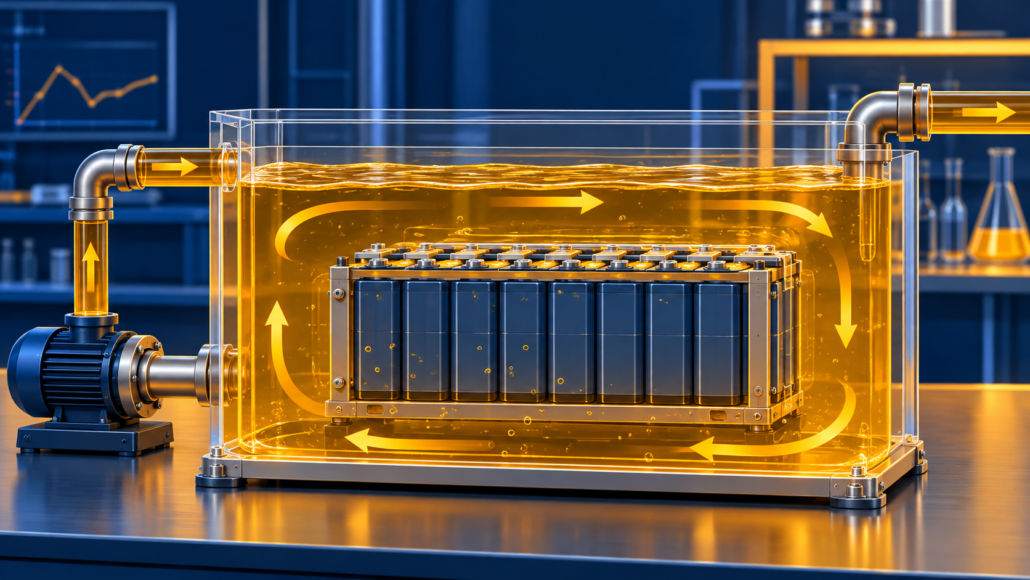
Dielectric Fluid for Immersion Cooling in Battery Storage: Selection, Compatibility, and Safety
Choosing a dielectric fluid for immersion cooling in battery storage is a system decision, not a datasheet contest. That is because the fluid insulates live parts, contacts the system’s wetted components, and shapes fire behavior.
Therefore, this guide shows how to test that decision. First it covers properties, then compatibility, fire limits, maintenance, and supplier documentation.
What Does a Dielectric Fluid for Immersion Cooling Do?
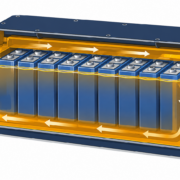
A dielectric fluid for immersion cooling is a liquid that provides electrical insulation. It also carries heat away from the cells.
New to the cooling method? Our guide to immersion cooling battery storage explains how the system works and what evidence buyers should request.
Instead, this guide asks a narrower question: does one fluid suit one battery system?
Because the fluid moves heat, insulates, and touches every wetted part, one weak property can spoil the rest. As a result, no single number settles the choice.
For example, a 2025 review in Energies notes that the industry has no clear consensus on the ideal fluid. It covers electric vehicles, but storage buyers face the same problem.
Which Properties Matter in a Dielectric Fluid for Immersion Cooling?
First, six property groups matter most for a dielectric fluid for immersion cooling. Then the table below shows why each one matters and what proof to request.
| Property | Why it matters | Evidence to request |
|---|---|---|
| Electrical insulation and breakdown | Helps maintain electrical insulation between exposed conductive parts. Very low conductivity can also let static charge build in pumped fluid. | Breakdown voltage with test method and gap, plus resistivity and dissipation factor, new and aged. |
| Specific heat and thermal conductivity | Specific heat helps set temperature rise at a given mass flow and heat load. Thermal conductivity affects heat transfer through the fluid near the cell surface. | Both values across the operating temperature range, with the test method. |
| Viscosity across temperature | Drives pump power and cold-start flow. | Viscosity curve and pour point, from the coldest to the hottest site condition. |
| Material compatibility | Seals, adhesives, and coatings can swell, harden, or leach. | Exposure results for each wetted material, with temperature and duration. |
| Oxidation and thermal stability | Aging can raise acidity and viscosity and weaken insulation. | Aging tests with properties measured before and after, plus the method used. |
| Flammability and fire behavior | Flash point alone does not predict behavior in a cell failure. | Flash and fire points, plus system-level test data with the fluid present. |
Thermal Properties Versus Flow Resistance
Fluid selection involves trade-offs between thermal performance and pumping demand. For example, a published modeling study of one 18650 cell found that fluid thermal conductivity and heat capacity most strongly affected thermal and electrochemical response.
That study modeled one cell, not a storage rack. Even so, it shows why thermal data alone cannot pick a fluid.
Next, viscosity sets what that heat transfer costs in pump power. It also changes with temperature.
For instance, the 2025 Energies review notes that natural-ester formulations can be more viscous, with poorer cold flow, than mineral oils. However, formulation can change this, so request temperature-dependent viscosity data for the exact products compared.
How to Evaluate Material Compatibility
Material compatibility is a critical qualification step for any dielectric fluid for immersion cooling. In fact, a fluid can have attractive electrical and thermal properties yet damage the components it contacts.
In fact, a 2022 Journal of Power Sources review found few studies on lifetime, fluid stability, and compatibility. Therefore, supplier test data matters more here than published averages.
List Every Wetted Material
First, write down everything the fluid touches. Then ask for evidence on each item.
- Seals, gaskets, and hoses
- Adhesives, gap fillers, and thermal interface materials
- Cable insulation, connectors, and busbar plating
- Coatings, labels, and enclosure plastics
- Cell cases, vent seals, and terminals
- Sensors and any hygroscopic parts that can release water
Also, adhesives and gap fillers deserve extra attention. Because heat and swelling both matter, our guide to gluing cells in a battery pack explains the trade-offs.
What a Credible Compatibility Test Shows
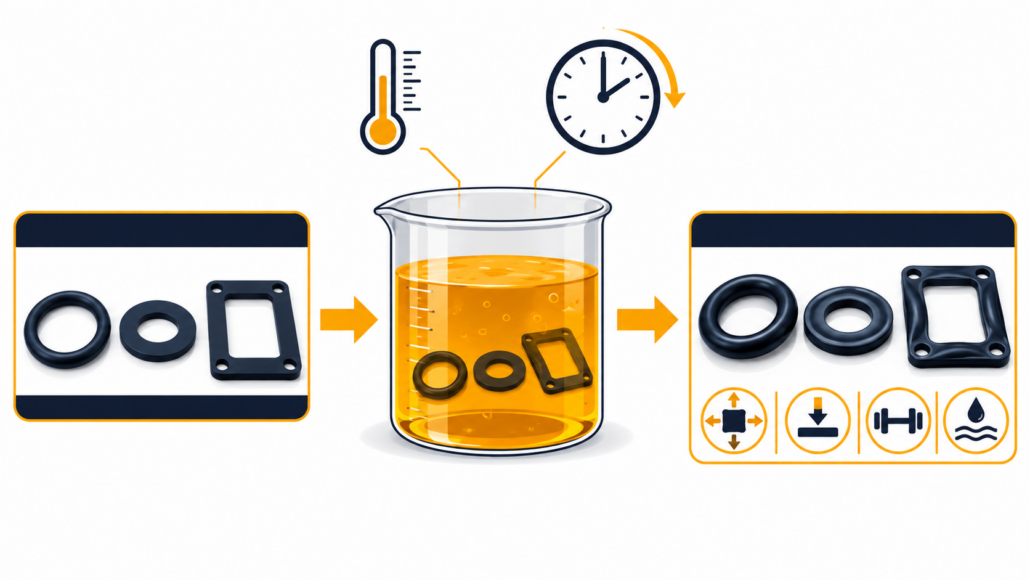
First, look for samples soaked in the exact fluid at specified temperatures and exposure durations. Then check what changed.
- Mass and volume change, such as swelling or shrinkage
- Hardness, tensile strength, and elongation
- Compression set for seals
- Substances leached into the fluid, and any shift in its insulation
- Corrosion or staining on copper and other metals
For example, rubber seals are often screened with immersion methods such as ASTM D471. However, it gives comparative data, not a direct forecast of part life.
Also, metals need checking. For instance, the Energies review links some mineral oils to copper corrosion associated with corrosive sulfur species, and notes compatibility challenges with synthetic esters.
Test Both Directions and the Failure Case
Because compatibility runs both ways, the fluid can change a material, and a damp part can release water into the fluid.
Also ask what happens if a cell leaks or vents into the fluid. A battery-engineering publication advises testing the fluid against all cell materials in that case.
Red Flags in Compatibility Claims
Treat these claims as warning signs:
- A claim that a fluid family suits all battery materials
- Tests run only at room temperature
- Results with no exposure duration or material grade
- Data for a different cell format or seal supplier
Comparing Fluid Families
Although five fluid families appear most often in the research, this guide does not rank them.
Still, the best dielectric fluid for immersion cooling depends on the cell, system, and site. Fluid families offer different starting points, but properties vary with formulation, additives, condition, and test method.
Next, the table below identifies questions to investigate, not a ranking of suitability for battery storage.
| Family | Potential advantages | Qualification concerns | Evidence to request |
|---|---|---|---|
| Mineral oil | Low cost, low viscosity, long transformer history | Fire resistance, oxidation behavior, corrosive sulfur species with copper, biodegradability | Corrosion and oxidation test data for the exact formulation |
| Silicone oil | Thermal stability, high fire points reported | Cost, biodegradability, higher viscosity | Viscosity across temperature and system-level fire test data |
| Synthetic ester | Tunable formulation, wide range of grades | Cost, material compatibility challenges, formulation-dependent properties | Exposure results for each wetted material and aging data |
| Natural ester | Readily biodegradable, high fire points reported | Oxidation and gelling with oxygen exposure, viscosity and cold flow | Sealed-system aging data and low-temperature flow data |
| Fluorinated fluids | Some formulations are nonflammable; low-viscosity options exist | Cost, volatility, PFAS concerns, density, gas generation when boiling | Safety data sheet, boiling behavior, and regulatory status |
The table draws on the 2025 Energies review, which centers on transformer and EV fluids. Therefore, treat it as a source of questions, not qualification data.
A Family Label Is Not a Qualification
First, two fluids in one family can differ in base stock, purity, and additives. Therefore, a family label cannot replace data on the exact product.
For example, studies summarized in the review show that blending mineral oil with natural esters can change viscosity, flash point, and breakdown performance. Therefore, do not assume a top-up mixture keeps the original fluid’s qualification.
Transformer Standards Are a Baseline, Not a Qualification
Several standards cover new insulating fluids; for example, IEC 61099 covers synthetic esters, and IEC 62770 covers natural esters.
Because both target transformers and similar equipment, they give a useful base, but they do not qualify a fluid for a battery system.
Why a Dielectric Fluid for Immersion Cooling Is Not Automatically Fireproof
A dielectric fluid for immersion cooling can insulate well and still burn. Instead, the word describes electrical traits, not fire traits.
Three Questions Buyers Often Merge
Buyers often blend three separate questions, but each one needs its own evidence.
- Insulation: does the fluid block current when new and when aged?
- Flammability: how does the fluid ignite and burn?
- System behavior: what happens to the module when a cell fails?
A fluid can pass the first question and fail the others. In fact, system-level testing is needed to evaluate the third.
What One Abuse Test Showed
For example, a 2024 study in the World Electric Vehicle Journal overcharged 10 Ah cylindrical lithium titanate cells at 4C in four fluids. The study compared two fluorinated fluids, a synthetic ester, and a silicone oil.
First, no fluid fully prevented thermal runaway. Moreover, the tested ester and silicone-oil formulations burned, even though their flash points exceeded 250 °C.
The authors note that local heat rose above those flash and fire points, and then a cell short circuit triggered ignition.
In the reported three-cell test, the lower-boiling fluorinated fluid reduced neighboring-cell peak temperatures to 57 °C and 62.5 °C, against 92.3 °C and 160.7 °C in air. No flames were recorded.
However, the abused cell exploded, and adjacent cells showed no external visible damage in either test.
Also, the fluorinated fluids boiled off and added gas. Therefore, these results show mitigation under the tested conditions, not removal of explosion hazards or proof for large LFP systems.
What to Ask for Fire Evidence
First, request the UL 9540A reports relevant to the proposed system. Then ask which edition and test levels were used, and whether the fluid and circulation system were present or operating.
Next, ask whether components were modified to start the event, and how the tested setup relates to the supplied system. Also, our UL 9540A test method guide explains the four test levels.
Then ask where the fluid goes when a cell vents, and how gas leaves the module. LFP cells also fail differently from other chemistries, as our NMC vs LFP safety comparison shows.
What Should Buyers Ask About Fluid Maintenance?
Because fluid maintenance is part of the product, a supplier should explain how the dielectric fluid for immersion cooling stays in specification for the full project life.
Because no one service interval fits every system, ask for the supplier’s interval and the data behind it.
Condition Monitoring and Sampling
Aging changes a fluid, because oxidation and contamination can change conductivity, breakdown performance, acidity, and viscosity.
Next, ask which properties the supplier monitors and what limits trigger corrective action. Common tests include:
- Breakdown voltage
- Water content and acidity
- Dissipation factor or resistivity
- Viscosity
- Particles and other contamination
Transformer practice offers a starting point; for instance, IEC 61203:2025 guides the use and maintenance of synthetic esters in transformers and other electrical equipment.
It can inform fluid-care practices, but it does not by itself establish suitability for a battery system.
Accelerated-aging results need interpretation because test conditions and degradation mechanisms must suit the exact fluid and materials in the proposed system.
Contamination Control and Top-Ups
First, ask how the design keeps out moisture and air. For example, natural esters serve in sealed transformers because oxygen can cause gelling.
Also ask which fluids suit top-ups, since mixing can change flash point and breakdown voltage.
Pumped fluids with low conductivity can also build static charge. Therefore, ask how the design handles grounding.
Replacement, Handling, and Disposal
Next, ask what condition triggers replacement and who performs it. Then request the safety data sheet and the local waste classification.
For example, the review describes mineral oil as non-biodegradable and natural esters as readily biodegradable. It also flags PFAS concerns for some fluorinated fluids.
Supplier Documents for a Dielectric Fluid for Immersion Cooling

Because the list is good practice rather than a universal certification rule, use it as a due-diligence checklist for any dielectric fluid for immersion cooling.
- Fluid technical data sheet and safety data sheet for the exact grade
- Compatibility test results for each proposed wetted material, with temperature and duration
- Electrical and thermal property data across the intended operating range
- Aging test evidence, with properties measured before and after
- System test reports that name the fluid, cell format, and configuration, including UL 9540A where claimed
- Written maintenance, sampling, and replacement procedures
- Written confirmation that the cell supplier’s warranty allows immersion in that fluid
First, request each item in writing. Then check that every document names the same fluid, grade, and setup you will receive.
Warranty terms matter because immersion changes what touches the cell. Also, our guide to reading a C&I BESS warranty shows what else to check.
Frequently Asked Questions About Dielectric Fluid for Immersion Cooling
Because buyers ask similar questions, short answers about dielectric fluid for immersion cooling follow.
What is a dielectric fluid for immersion cooling?
It is an electrically insulating liquid that contacts battery cells directly and carries heat away. Therefore, its insulation, viscosity, compatibility, and fire behavior all affect the system.
Which dielectric fluid for immersion cooling is best?
No fluid is best for every system. Instead, the right choice depends on the cell format, operating range, materials, and test proof for that exact mix.
Is a dielectric fluid for immersion cooling fireproof?
No. Dielectric describes electrical insulation, not fire behavior, so ask for flash and fire points and system tests.
How do I check material compatibility with a dielectric fluid for immersion cooling?
First, ask for soak-test results on every wetted material at specified temperatures and exposure durations. Then check changes in size, hardness, strength, and fluid properties.
How often should a dielectric fluid for immersion cooling be replaced?
No one interval fits every system. Instead, ask the supplier for sampling limits and replacement triggers, backed by aging data.
Further Reading on Immersion Cooling Fluids
Also see these SunLith guides on the dielectric fluid for immersion cooling decision.
- Immersion Cooling Battery Storage: Benefits, Risks, and What to Ask
- Liquid vs Air Cooling System Use in BESS: Choosing the Right Thermal Management
- C&I BESS Thermal Management: Optimizing Performance, Safety & Lifespan
- UL 9540A Test Method: Complete Guide for BESS Manufacturers
- Gluing Cells in a Battery Pack: Heat, Swelling, and Long-Term Reliability
- How to Read a C&I BESS Warranty Before You Buy
Sources
Because every claim should be checkable, the research behind this guide to dielectric fluid for immersion cooling appears below.
- Shah et al. Potential of Natural Esters as Immersion Coolant in Electric Vehicles. Energies 2025, 18(15), 4145
- Menale et al. Analysis of the Thermal Runaway Mitigation Performances of Dielectric Fluids During Overcharge Abuse Tests of Lithium-Ion Cells with Lithium Titanate Oxide Anodes. World Electric Vehicle Journal 2024, 15(12), 554
- Roe et al. Immersion cooling for lithium-ion batteries: a review. Journal of Power Sources, 2022, 525, 231094
- Tripathi and Marconnet. Effect of immersion cooling parameters on thermal and electrochemical response of a Li-ion cell. Journal of Power Sources, 2025, 632, 236285 (arXiv:2404.14428)
- IEC 61099:2010. Insulating liquids, specifications for unused synthetic organic esters for electrical purposes
- IEC 62770:2024. Fluids for electrotechnical applications, unused natural esters for transformers and similar electrical equipment
- IEC 61203:2025. Synthetic organic esters, guidelines for maintenance and use in electrical equipment
- Battery Design. Key Parameters for Dielectric Fluids







Leave a Reply
Want to join the discussion?Feel free to contribute!