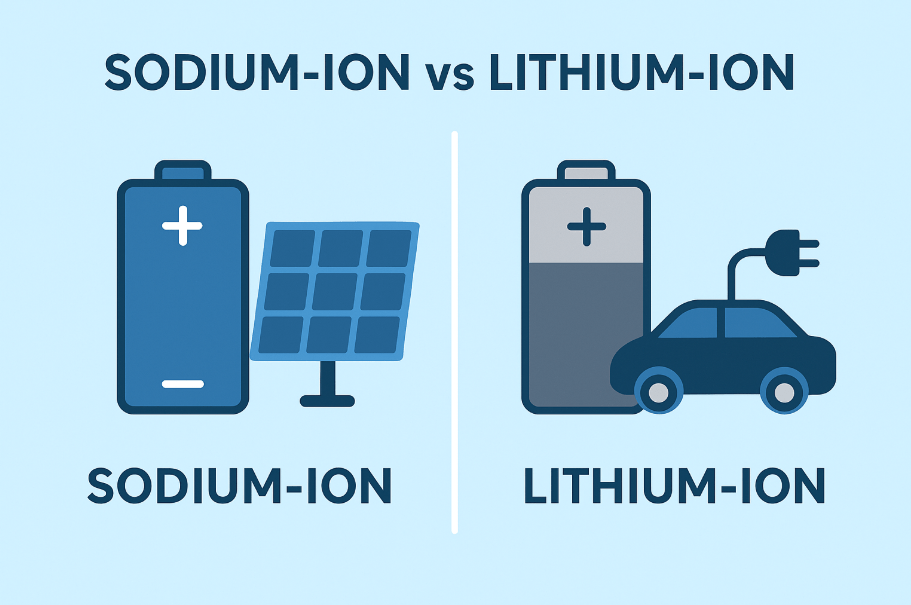
Sodium-Ion vs Lithium-Ion Batteries: As renewable energy adoption accelerates, demand for advanced battery energy storage systems (BESS) is rising. For years, lithium-ion batteries have dominated, powering everything from smartphones to large-scale grid storage. But today, a new contender—sodium-ion batteries—is gaining traction as a safer, cheaper, and more sustainable alternative.
In this post, we’ll explore how sodium-ion and lithium-ion batteries compare in performance, cost, safety, and future potential, and what this means for businesses and energy developers.
What Are Sodium-Ion and Lithium-Ion Batteries?
Lithium-Ion Batteries
Widely used in EVs, electronics, and BESS.
Offer high energy density and long cycle life.
Rely on lithium, a limited and costly resource, concentrated in a few countries.
Sodium-Ion Batteries
Emerging technology using sodium instead of lithium.
Sodium is abundant, low-cost, and evenly distributed worldwide.
Still in early commercialization stages but gaining momentum with companies like CATL and Faradion.
Key takeaway: Lithium-ion leads in maturity and energy density, while sodium-ion offers scalability and sustainability.
Performance Comparison: Energy Density and Efficiency
Lithium-Ion: Higher energy density (150–250 Wh/kg). Ideal for applications where space and weight matter, like EVs.
Sodium-Ion: Lower density (90–160 Wh/kg). Better suited for stationary energy storage where space is less critical.
Efficiency: Both achieve 85–95% round-trip efficiency in BESS applications.
👉 For residential and commercial storage, sodium-ion can deliver reliable performance without the premium cost of lithium.
Cost Advantage: Can Sodium-Ion Beat Lithium Prices?
Lithium-ion costs: Fluctuate due to limited supply of lithium, cobalt, and nickel.
Sodium-ion costs: Lower raw material prices (sodium is 1,000x more abundant than lithium).
Manufacturing: Sodium-ion cells can often use similar production lines as lithium-ion, reducing transition barriers.
Result: Sodium-ion is expected to become a cost-effective solution for large-scale BESS, especially as raw material scarcity drives lithium prices higher.
Safety Considerations
Lithium-Ion Risks: Thermal runaway, overheating, and fire hazards. Requires strict BMS (Battery Management Systems) and certifications.
Sodium: Widely available (seawater, salt deposits), eco-friendly extraction, reduces geopolitical risk.
👉 For businesses aiming to meet ESG and sustainability goals, sodium-ion offers a clear advantage.
Sodium-Ion vs Lithium-Ion Batteries Applications: Where Each Technology Shines
Lithium-Ion Best Fit:
Electric vehicles
Consumer electronics
High-density, mobile applications
Sodium-Ion Best Fit:
Grid-scale renewable energy storage
Residential and commercial BESS
Backup power in regions with strict safety standards
Sodium-Ion vs Lithium-Ion Batteries, Future Outlook: Instead of replacing lithium-ion, sodium-ion will likely complement it—dominating stationary storage while lithium retains the EV market.
Market Outlook for 2026 and Beyond
Major players like CATL, HiNa Battery, and Faradion are scaling sodium-ion production.
The EU Battery Regulation 2026 could accelerate adoption, as companies look for safer, sustainable, and compliant alternatives.
Analysts predict sodium-ion to capture a significant share of stationary BESS markets by 2030, especially in Asia and Europe.
Conclusion: (Sodium-Ion vs Lithium-Ion Batteries) The Future of Energy Storage
Both sodium-ion and lithium-ion batteries will play critical roles in the future of renewable energy and storage systems.
Lithium-ion remains the go-to for EVs and high-density needs.
Sodium-ion is set to become a cost-effective, safer, and more sustainable option for stationary BESS.
For businesses, utilities, and developers, the key is to choose the right battery technology for the right application. At SunLith Energy, we track these innovations to help our clients make informed decisions for reliable and future-proof energy storage.
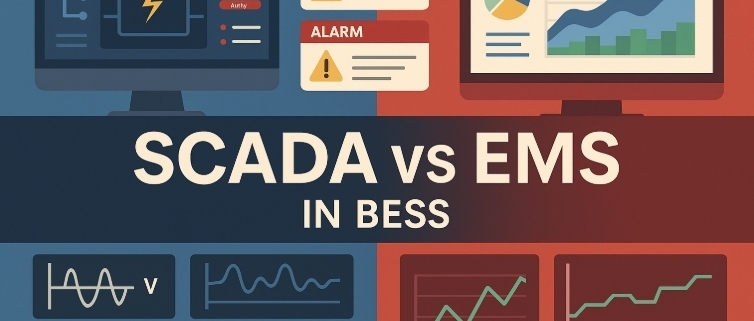
SCADA vs EMS in BESS: Battery Energy Storage Systems (BESS) are more than just batteries—they are intelligent ecosystems. At the heart of this intelligence lie two key control systems: SCADA (Supervisory Control and Data Acquisition) and EMS (Energy Management System).
But what’s the difference between them? Why do you need both in your energy storage infrastructure? Let’s break it down.
EMS is the strategic brain of the energy storage system. While SCADA controls how things operate, EMS decides what should be done to maximize efficiency, economics, and reliability.
✅ Key Functions of EMS:
Energy Flow Optimization: Determines how and when to charge/discharge the battery.
EMS optimizes cost-saving strategies across multiple sites.
⚡ Utility-Scale BESS
SCADA integrates with substation automation and DNP3/IEC 61850 protocols.
EMS participates in energy markets, frequency response, and ancillary services.
📈 Why You Need Both
Some may think EMS alone is enough, but it’s not. Without SCADA, the EMS is blind. Without EMS, the SCADA is mute.
✅ SCADA ensures the system runs safely. ✅ EMS ensures it runs profitably.
You need both for your BESS to be intelligent, safe, and profitable.
❓ FAQ: SCADA vs EMS in BESS
Q1. Can SCADA and EMS be integrated into one platform? Yes. Many vendors offer combined platforms or modular systems where EMS sits on top of SCADA.
Q2. Is EMS cloud-based and SCADA local? Generally, yes. SCADA operates locally for fast response, while EMS can be local or cloud-based for broader optimization.
Q3. Which one is more expensive? EMS often costs more due to its software intelligence, licensing, and integration needs.
Q4. Which is more important for safety? SCADA is crucial for safety and reliability. EMS focuses more on economic performance.
📌 Final Thoughts: Build a Smarter BESS with SCADA and EMS
Understanding the SCADA vs EMS in BESS distinction is not just academic—it has real business and technical consequences. If you want your Battery Energy Storage System to be both safe and smart, you need both systems.
Understanding their roles and differences is crucial for:
System integrators
Project developers
Energy consultants
Facility managers
And anyone involved in the deployment of BESS
Whether you’re building a microgrid or managing utility-scale storage, make sure your BESS includes both a robust SCADA and an intelligent EMS.
Looking for help integrating SCADA and EMS in your energy project? Reach out to a qualified consultant who understands both layers of the stack and can optimize your BESS from the ground up.
Top advantages of sodium-ion batteries: The demand for energy storage systems (ESS) is growing rapidly as businesses, homeowners, and utilities shift toward renewable energy. For years, lithium-ion batteries have dominated the industry. But as challenges like raw material costs, safety risks, and supply chain constraints emerge, a new player—sodium-ion batteries—is stepping into the spotlight.
Sodium-ion technology isn’t here to replace lithium-ion entirely. Instead, it offers unique advantages that make it especially promising for stationary storage applications such as residential ESS, commercial & industrial (C&I) systems, and grid-scale storage.
In this article, we’ll explore the top five advantages of sodium-ion batteries, and why they could be a game-changer for the future of energy storage.
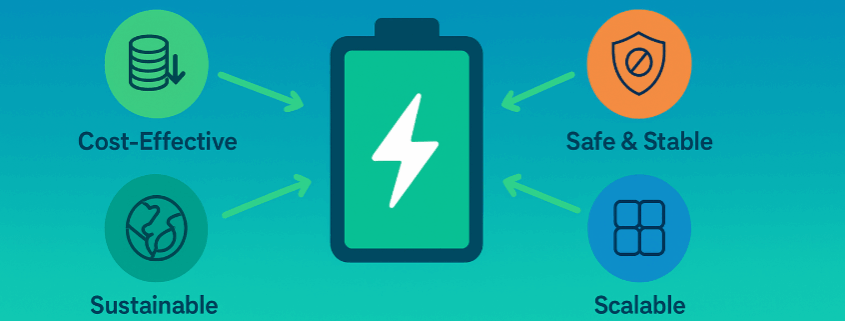
1. Top advantages of sodium-ion batteries: Cost-Effective and Abundant Raw Materials
One of the biggest advantages of sodium-ion batteries is their reliance on sodium, a material that is far more abundant than lithium.
Sodium sources: Widely available in seawater and common minerals.
Cost factor: Sodium is cheaper to extract and process, reducing the overall cost of batteries.
Supply chain benefit: Unlike lithium, which is concentrated in a few regions, sodium resources are globally distributed, lowering geopolitical risks.
👉 For businesses investing in large-scale BESS, sodium-ion batteries can help reduce long-term costs while ensuring a more stable supply chain.
2. Top advantages of sodium-ion batteries: Enhanced Safety and Thermal Stability
Safety is one of the top concerns in energy storage—especially after widely publicized incidents involving lithium-ion battery fires.
Lithium-ion risks: Thermal runaway and fire hazards under extreme heat or damage.
Sodium-ion advantage: Better thermal stability, meaning they are less likely to overheat or catch fire.
This makes sodium-ion batteries a strong candidate for:
Residential storage systems, where safety is a priority for homeowners.
Indoor commercial applications, where fire risk regulations are stricter.
Key takeaway: Sodium-ion batteries reduce safety risks, lowering compliance burdens and offering peace of mind to users.
3. Sustainability and Environmental Benefits
Sodium-ion batteries align well with global sustainability goals.
Eco-friendly mining: Sodium extraction is less environmentally damaging compared to lithium mining, which consumes vast amounts of water.
At SunLith Energy, we believe sodium-ion batteries will accelerate the transition to cleaner, more sustainable energy systems. By staying ahead of this innovation, businesses can future-proof their energy strategies and remain competitive in the evolving market.
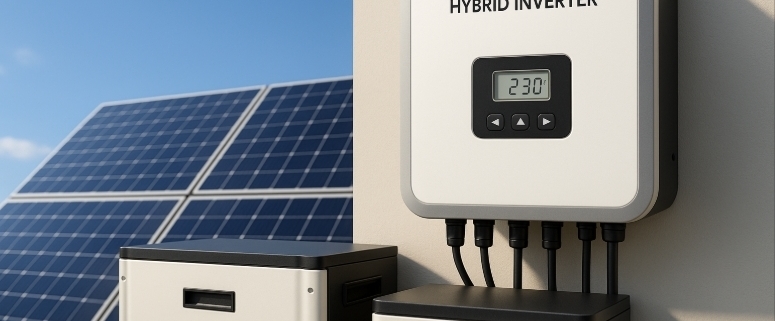
A hybrid inverter is an advanced device that combines the functions of a solar inverter and a battery inverter in one. It manages power from solar panels, batteries, and the grid.
A hybrid inverter takes DC electricity from solar panels and converts it into AC power for home use. At the same time, it charges batteries using extra solar power or grid electricity.
When solar generation is low—say at night—the inverter automatically switches to battery power. If the battery runs low, it then draws power from the grid.
This seamless transition between sources ensures energy availability, peak-time savings, and stable voltage supply.
Key Features
Hybrid inverters offer several cutting-edge features that make them ideal for modern homes and businesses:
Grid Interaction: Smart control over when to use or sell electricity back to the grid.
Battery Management: Efficient charging and discharging of batteries with real-time monitoring.
Backup Power: Keeps essential appliances running during power cuts.
Remote Monitoring: Most hybrid inverters come with mobile apps for tracking energy usage.
Load Shifting: Shifts electricity use to off-peak hours to reduce costs.
These features allow for dynamic energy use, especially when paired with solar and energy storage systems.
Benefits of Using a Hybrid Inverter
Choosing a hybrid inverter provides several benefits over traditional setups:
Energy Independence: Reduces dependence on the utility grid.
Cost Efficiency: Saves money by using stored or solar energy during peak rates.
Reliable Backup: Ensures continuous power during outages or grid failures.
Eco-Friendly: Maximizes solar usage and minimizes grid energy consumption.
Space-Saving Design: Combines two inverters into one sleek unit.
All these advantages make inverters an excellent choice for homes aiming for sustainability and savings.
Applications
Hybrid inverters are commonly used in residential solar-plus-storage systems. However, they’re also gaining traction in:
As solar adoption grows, so will the role of hybrid inverters in managing clean, stable energy flow.
Certifications to Look for in a Hybrid Inverter
Before purchasing a hybrid inverter, always check for essential certifications. These indicate compliance with safety, quality, and efficiency standards. Key certifications include:
IEC 62109 – Safety of power converters used in photovoltaic systems. Ensures the inverter is safe for residential and commercial use.
UL 1741 / IEEE 1547 – Common in North America, these ensure grid compatibility and operational safety.
CE Marking – Required in the European Union, it indicates conformity with health, safety, and environmental protection standards.
RoHS Compliance – Confirms the product is free from hazardous substances like lead or mercury.
ISO 9001 Certification – Demonstrates the manufacturer’s commitment to quality control and continuous improvement.
VDE-AR-N 4105 / G99 (UK) – Required for connecting inverters to low-voltage grids in specific countries like Germany or the UK.
Always request documentation and verify certification numbers when evaluating products. A certified hybrid inverter ensures safety, better performance, and legal compliance with your local power grid.
Things to Consider Before Buying
Before investing in a Inverter, keep these points in mind:
Battery Compatibility: Ensure it supports lithium, lead-acid, or the battery type you plan to use.
Power Rating: Choose an inverter that matches your load and solar panel capacity.
Efficiency Rating: Look for models with >95% conversion efficiency.
Warranty & Support: A reliable brand should offer at least 5–10 years of warranty.
Taking time to assess these factors ensures long-term satisfaction and performance.
Conclusion
A hybrid inverter is the brain of modern solar energy systems. It integrates solar, storage, and grid power into one smart solution. Whether you’re cutting costs, going green, or building energy independence, a hybrid inverter is a powerful asset.
Long Duration Energy Storage (LDES) refers to energy storage systems that can discharge energy continuously for more than 10 hours, unlike traditional short-term batteries. LDES solutions are designed to store excess electricity—often from renewable sources like solar or wind—and release it during periods of high demand, outages, or when generation drops.
These systems are not just battery backups—they’re enablers of round-the-clock clean power, grid stability, and energy transition. With longer durations, they serve both daily and seasonal energy balancing needs.
⚡ Why is Long Duration Energy Storage Important?
Long Duration Energy Storage plays a critical role in modern energy systems. Its importance can be broken down into the following key points:
🌞 Enabling Renewable Energy Integration
One of the biggest challenges with renewable energy is its intermittent nature. Solar panels don’t generate power at night, and wind turbines are at the mercy of wind patterns.
How LDES Helps:
Stores excess daytime solar energy for nighttime use.
Balances supply and demand mismatches caused by variable renewables.
Helps reach 100% renewable energy targets.
Without LDES, we are limited in how much solar and wind energy we can effectively use.
🔌 Grid Reliability and Resilience
The grid must constantly balance generation and consumption. Outages, sudden surges, and extreme weather events challenge this balance.
LDES Improves Reliability By:
Providing backup power during outages and blackouts.
Acting as a buffer during grid instability or peak demand.
Supporting islanded microgrids and off-grid applications.
A resilient grid supported by LDES can bounce back quickly during disasters.
🛢️ Reducing Reliance on Fossil Fuels
Fossil fuel plants have traditionally handled peak loads and filled the gaps left by renewables. But this comes at an environmental and economic cost.
LDES Enables Clean Alternatives:
Replaces peaker plants with zero-emission storage systems.
Reduces carbon emissions and air pollution.
Cuts fuel dependency for countries aiming at energy independence.
💡 Why We Need Long Duration Energy Storage Now
Here’s a quick list of why LDES is no longer optional:
Renewables are growing fast, but they need storage to be reliable.
Climate change requires urgent reduction in emissions.
Blackouts and energy crises are increasing globally.
Energy equity—delivering clean power to remote regions—is now a priority.
Policy mandates and carbon neutrality goals demand storage integration.
🔬 LDES Technologies: Explained in Detail
Let’s explore the major Long Duration Energy Storage technologies powering the future:
1. 💧 Pumped Hydro Storage
How it works: Water is pumped to a higher elevation during low demand periods and released through turbines during high demand to generate electricity.
Key Benefits:
Proven, mature technology
Can deliver GW-scale storage
Low operating cost over decades
Limitations:
Requires specific geography (elevation and water availability)
High initial capital cost
2. 🌬️ Compressed Air Energy Storage (CAES)
How it works: Air is compressed using electricity and stored in underground caverns. When needed, the air is heated and expanded through turbines to generate power.
Key Benefits:
Long operational lifespan
Can be scaled up easily
Low cost per kWh at scale
Limitations:
Requires underground storage space
Efficiency is lower than some alternatives (~50-70%)
3. 🔥 Thermal Energy Storage (TES)
How it works: Excess energy is stored as heat (or cold), often in molten salts or phase change materials, and later used for power generation or industrial heating/cooling.
Key Benefits:
Excellent for concentrated solar power (CSP)
Useful for both electric and thermal applications
Scalable and cost-effective
Limitations:
Energy-to-electricity conversion can involve losses
Best suited for hybrid systems
4. ⚗️ Flow Batteries
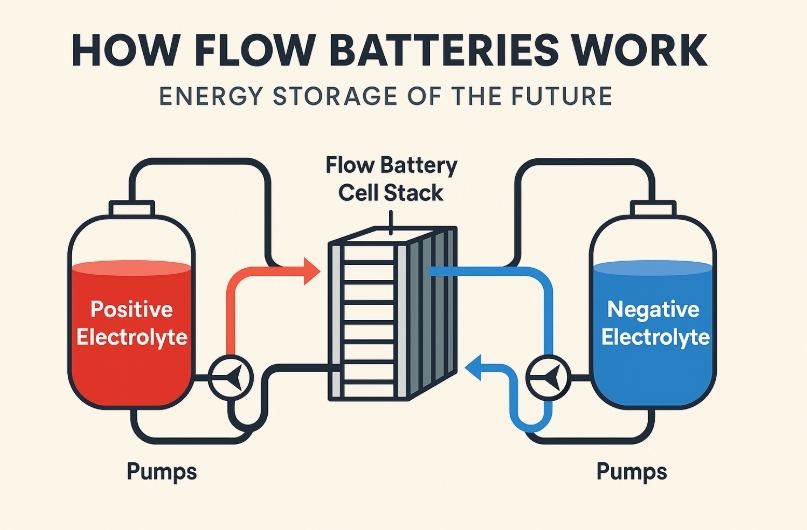
How it works: Electrolytes are stored in external tanks and pumped through a cell stack where chemical energy is converted into electrical energy.
Seasonal Storage: Especially in northern climates where solar dips in winter.
❓ FAQ: Long Duration Energy Storage
Q1: What is the difference between short and long duration energy storage?
A1: Short duration systems (e.g., lithium-ion) store energy for 1–4 hours. Long duration systems store energy for 10 hours or more, addressing broader grid needs.
Q2: Is LDES only for renewable energy?
A2: While LDES is crucial for integrating renewables, it can also support fossil-free baseload power, emergency backup, and industrial loads.
Q3: Is LDES commercially viable today?
A3: Yes, many LDES technologies are already in pilot or commercial use, especially in Europe, China, and the U.S., with rapid cost reductions underway.
Q4: Which LDES technology is best?
A4: It depends on the application:
Hydrogen for seasonal shifts
Hydro and CAES for bulk storage
Flow batteries for daily cycling
Thermal for hybrid systems
F
✅ Final Thoughts
The future of clean energy doesn’t stop at installing solar panels or wind turbines—it lies in our ability to store energy affordably, reliably, and sustainably. That’s where Long Duration Energy Storage (LDES) becomes indispensable.
LDES isn’t just an energy solution; it’s an economic enabler, an environmental protector, and a key pillar of global decarbonization.
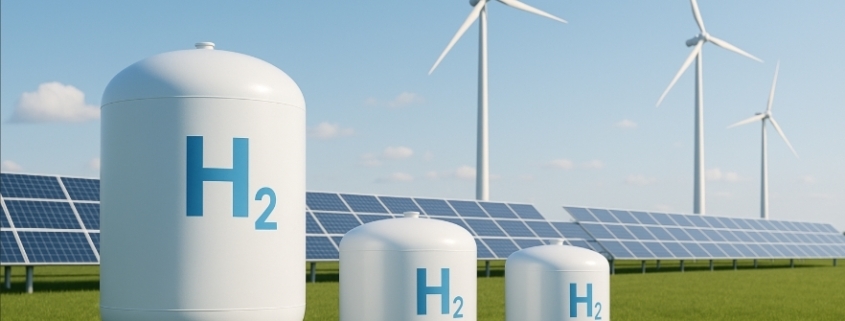
Green hydrogen storage is a hot topic in the clean energy world. As more industries look to hydrogen as a zero-carbon fuel, knowing how to store it safely and efficiently becomes just as important as making it.
In this post, we’ll break down what green hydrogen is, why storage matters, how it’s done, and what challenges we face in storing this promising fuel.
What Is Green Hydrogen?
Before we talk about green hydrogen storage, let’s understand what green hydrogen is. Hydrogen is the most abundant element in the universe. But on Earth, we have to produce it because pure hydrogen gas doesn’t exist naturally.
There are a few main ways to store green hydrogen. Let’s look at the most common ones:
1. Compressed Gas Storage
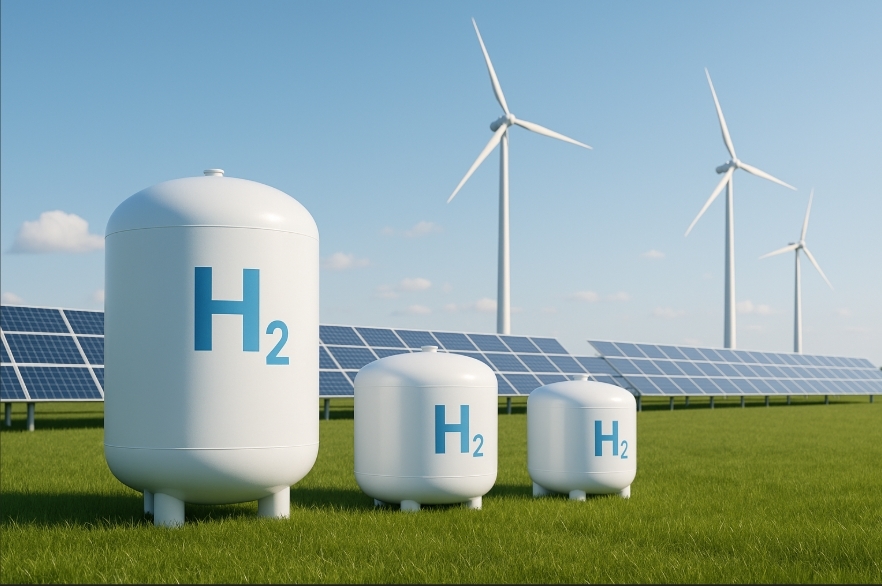
This is the simplest and most common method today. Hydrogen gas is compressed to high pressures — typically 350–700 bar — and kept in special high-pressure tanks.
Pros:
Mature technology
Relatively low cost for small-to-medium storage
Cons:
Requires strong, heavy tanks
Energy needed for compression
2. Liquid Hydrogen Storage
Hydrogen can be cooled to −253°C to become a liquid. Storing hydrogen as a cryogenic liquid reduces its volume about 800 times compared to its gaseous state.
Pros:
High storage density
Useful for large-scale transport (e.g., shipping)
Cons:
Expensive to chill hydrogen to these temperatures
Boil-off losses due to heat leaks
3. Materials-Based Storage (Solid Storage)
Another method is storing hydrogen in solid materials — like metal hydrides or chemical carriers.
Hydrogen binds with certain metals or chemicals and can be released when needed.
Pros:
High safety level (low pressure)
Compact storage
Cons:
Expensive materials
Slow hydrogen release rates
Where Is Green Hydrogen Storage Used?
Energy Storage: Store excess renewable energy in the form of hydrogen.
Transport: Fuel for hydrogen cars, trucks, buses, and even planes.
Industry: For steelmaking, ammonia production, or backup power.
While the technology is promising, there are still hurdles:
✅ High costs of compression, liquefaction, or materials ✅ Safety concerns (hydrogen is highly flammable and leaks easily) ✅ Lack of storage infrastructure in many places ✅ Energy losses during storage and retrieval
Researchers and companies worldwide are working to make green hydrogen storage safer, cheaper, and more efficient.
The Future of Green Hydrogen Storage
With more investment and innovation, the future looks bright. We may see new storage technologies — like underground hydrogen caverns, advanced metal hydrides, or organic liquid carriers — that help us store large amounts of hydrogen cost-effectively.
One thing is clear: green hydrogen storage will play a big role in our move toward a carbon-free energy future.
Final Thoughts
Green hydrogen has huge potential to decarbonize industries, transport, and power. But producing it is only half the battle — storing it is the key to unlocking its full promise.
As technology improves, we’ll see better, safer, and more affordable ways to store green hydrogen, making it a real fuel for the future.
FAQs About Green Hydrogen Storage
Q1: Is storing green hydrogen dangerous?
Hydrogen is flammable and can leak easily, so storage systems must follow strict safety standards. Modern storage tanks and systems are designed with multiple safety layers.
Q2: Can hydrogen be stored underground?
Yes! Underground salt caverns and depleted gas fields are being explored as large-scale, low-cost options for bulk hydrogen storage.
Q3: Is green hydrogen storage expensive?
Currently, storage costs can be high, especially for liquid or solid storage. But with more research and scaling up, costs are expected to come down.
Q4: Why not use batteries instead?
Batteries are great for short-term storage, but hydrogen is better for storing large amounts of energy for long periods, like seasonal energy storage.
Ready to Learn More?
Want to keep up with the latest on green hydrogen and clean energy storage? Subscribe to our blog or contact us to see how hydrogen solutions could power your future projects!
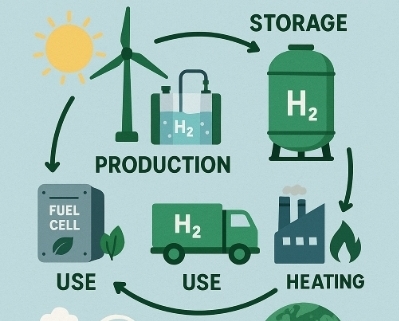
When people talk about clean energy, green hydrogen often comes up. But what is green hydrogen? Simply put, it’s hydrogen made using clean, renewable energy — no pollution, no carbon emissions. In this post, you’ll learn how green hydrogen is produced, how it’s stored, and why it’s so important for a carbon-neutral future.
What is Green Hydrogen?
Green hydrogen is a sustainable and environmentally friendly form of hydrogen produced through a process called electrolysis, using renewable energy sources. This means no fossil fuels are burned and no extra CO₂ is made.
How is Green Hydrogen Produced?
The main method to produce it is called electrolysis. Here’s how it works:
Water is split into hydrogen and oxygen.
Electricity from wind or solar does the work.
The result is clean hydrogen gas.
The hydrogen gas is collected and can be used as fuel.
It’s simple, but doing this at scale needs lots of renewable power. The best part? No greenhouse gases are released during this process!
Q1: What’s the difference between green hydrogen and blue hydrogen?
A: Green hydrogen uses renewable energy, so it has no carbon emissions. Blue hydrogen uses natural gas but tries to capture some carbon — it’s not fully clean.
Q2: Is green hydrogen safe?
A: Yes, when stored and handled properly, it’s safe to use, just like other fuels.
Q3: Can green hydrogen power my car or home?
A: Yes! Hydrogen cars exist now. In the future, you might also heat your home with it.
Final Thoughts
Green hydrogen is a big part of our journey to a carbon-neutral world. From clean production to smart storage and multiple uses, it’s a flexible and powerful clean energy solution. As technology improves, we’ll see hydrogen power more vehicles, industries, and communities — all while keeping our planet clean. Let’s Build a Cleaner Future Together without harming the planet.
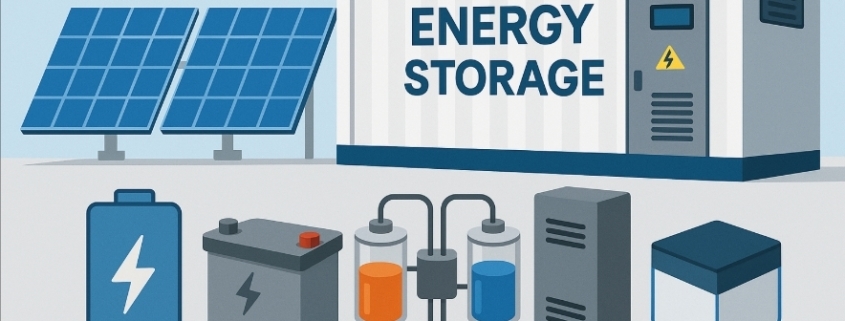
As the demand for reliable renewable energy grows, Battery Energy Storage Systems (BESS) have become an essential part of modern power infrastructure. But did you know that not all batteries are the same? In this post, we’ll break down the top 5 battery technologies used in BESS and help you understand their advantages, limitations, and typical applications.
1. Lithium-Ion Batteries: The Most Popular Choice
Lithium-ion batteries are by far the most common battery technology used in BESS today. Their high energy density, long cycle life, and declining costs make them ideal for everything from residential storage to utility-scale projects.
Pros:
High energy density
Long lifespan (up to 15 years or more)
Good round-trip efficiency (90%+)
Cons:
Sensitive to temperature
Fire risk if not properly managed
Where they fit: Perfect for grid balancing, renewable integration, and behind-the-meter storage.
2. Lead-Acid Batteries: Reliable and Cost-Effective
Although older than other battery technologies, lead-acid batteries are still widely used in BESS for their low upfront cost and proven track record.
Pros:
Low capital cost
Mature and well-understood technology
Easy to recycle
Cons:
Lower energy density
Shorter cycle life (typically 3–5 years)
Heavier and larger footprint
Where they fit: Best for backup power and applications where budget constraints are tight and space is not an issue.
3. Flow Batteries: Flexibility for Long-Duration Storage
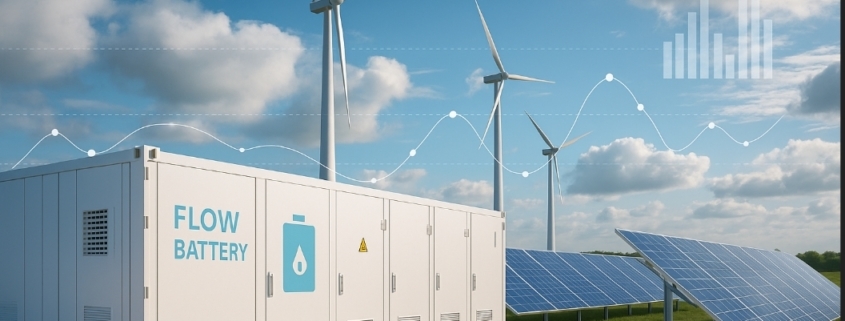
Flow batteries (like vanadium redox) store energy in liquid electrolytes that flow through a cell stack. They’re gaining attention for large-scale, long-duration storage projects.
Sodium-sulfur batteries are high-temperature batteries that deliver large amounts of energy for longer durations. Utilities have used them for grid support and load leveling.
Pros:
High energy density
Suitable for large-scale, long-duration storage
Long cycle life
Cons:
Operate at high temperatures (300°C+)
Safety and material challenges
Where they fit: Best for utility-scale BESS applications where space and temperature control are manageable.
Where they fit: Promising for future BESS projects once commercialization and scalability improve.
How to Choose the Right Battery Technology for Your BESS
Choosing the best battery for your energy storage project depends on your goals: ✅ Do you need high energy density? → Lithium-ion or solid-state. ✅ Is low upfront cost key? → Lead-acid might work. ✅ Do you want long-duration storage? → Consider flow or sodium-sulfur batteries. ✅ Looking to future-proof? → Keep an eye on solid-state technology.
Always balance cost, safety, lifespan, efficiency, and your specific use case when selecting battery technologies for BESS.
It depends on the technology: lithium-ion can last 10–15 years, flow batteries up to 20 years, and lead-acid about 3–5 years.
Q4: What’s the safest battery for BESS?
Solid-state batteries promise enhanced safety because they have no flammable liquid, but they’re not yet widely available. Proper BMS (battery management systems) also play a big role in safety.
Q5: Can I mix different battery technologies in one BESS?
Technically, it’s possible but complex. Most projects stick with one type to simplify design, maintenance, and management.
In today’s world of renewable energy and smart grids, understanding the key components in a BESS architecture is very important. A Battery Energy Storage System (BESS) is made up of several parts that work together to store, manage, and deliver electricity safely and efficiently. In this blog post, we’ll break down each major component — what it does and why it matters — so you can see how a BESS works as a whole.
What Is a BESS?
Before we dive into the key components in a BESS architecture, let’s quickly explain what a BESS is. A Battery Energy Storage System is a setup that stores electricity in batteries so it can be used later. It helps balance energy supply and demand, provides backup power, and supports the use of renewable energy like solar and wind.
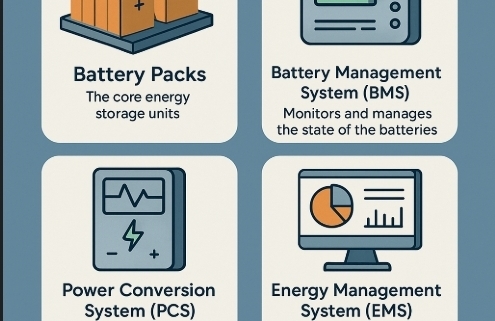
1. Battery Packs: The Core Energy Storage Units
The battery packs are the heart of any BESS. These packs are made up of many individual battery cells grouped together. They store the electrical energy until it’s needed.
Function: Store electrical energy in chemical form and release it as needed.
Why It Matters: The quality and type of battery pack (like Lithium-ion, LFP, or others) decide how much energy you can store, how long it lasts, and how safe the system is.
Tip: Always choose battery packs from reputable manufacturers with proper certifications.
2. Battery Management System (BMS): Monitors and Protects
The Battery Management System (BMS) is like the brain for the battery packs. It constantly checks the status of each cell to make sure everything works safely.
Function: Monitors voltage, temperature, and charge level. Balances cells and protects against overcharging or deep discharge.
Why It Matters: Without a good BMS, batteries can get damaged, lose efficiency, or even pose safety risks.
Tip: A well-designed BMS extends battery life and helps you get the most from your investment.
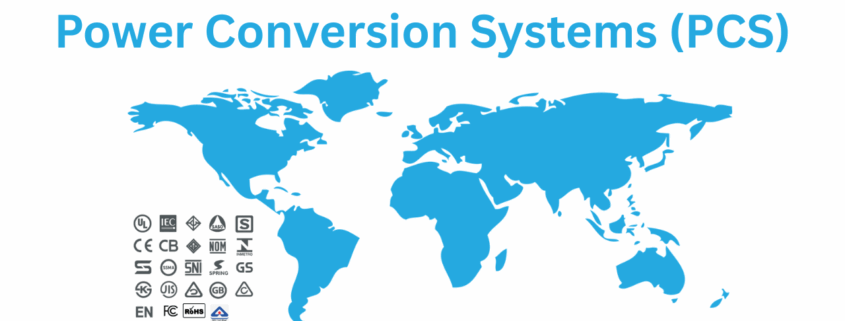
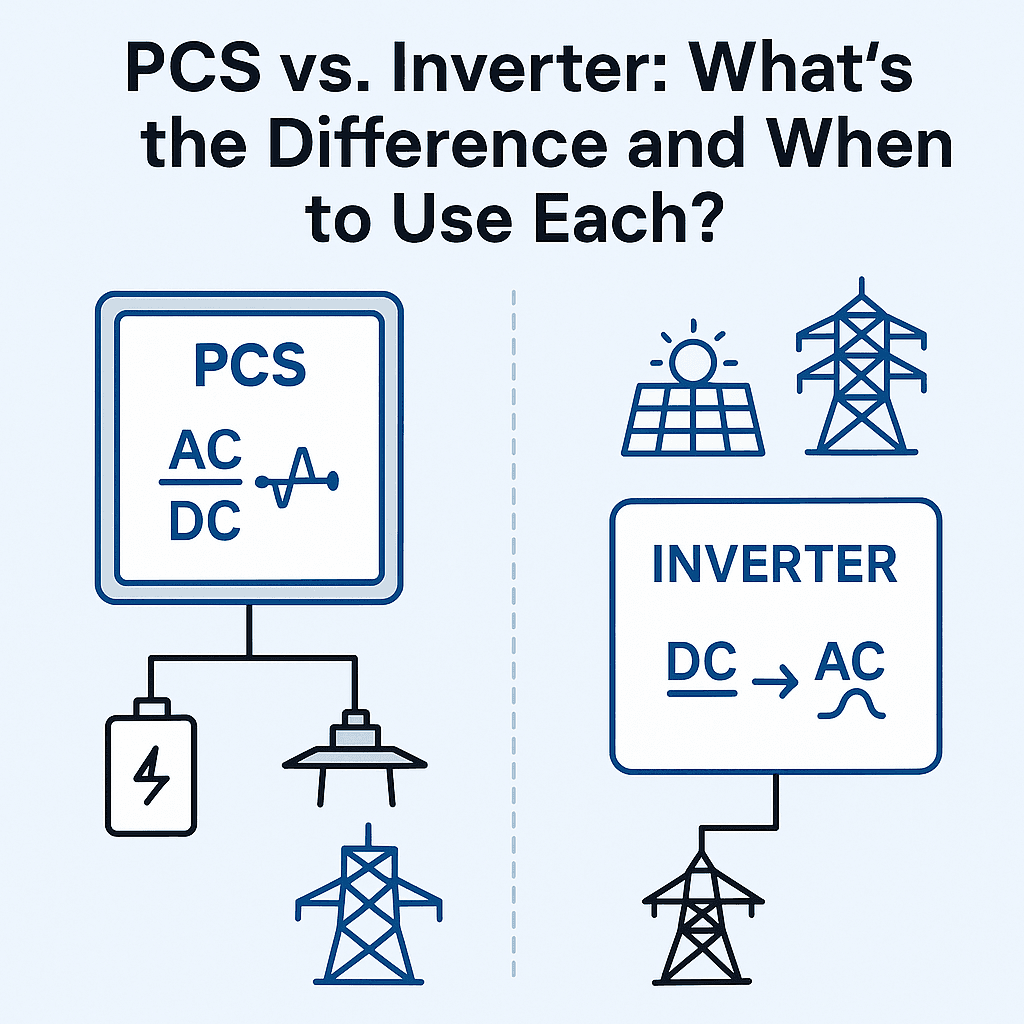
3. Power Conversion System (PCS): Converts Power
The Power Conversion System (PCS) is what makes your stored energy usable. Batteries store electricity as Direct Current (DC), but most homes and businesses use Alternating Current (AC).
Why It Matters: A good PCS maximizes efficiency, ensures stable power output, and protects connected devices.
Tip: Look for PCS units with high conversion efficiency and reliable grid interaction features.
4. Energy Management System (EMS): Controls Energy Flow
The Energy Management System (EMS) decides when to charge, when to discharge, and how to manage energy flows smartly.
Function: Monitors energy demand, renewable production, and market conditions to optimize usage.
Why It Matters: An EMS helps reduce electricity bills, maximize renewable energy use, and maintain grid stability.
Tip: Modern EMS can be cloud-based, allowing remote monitoring and control for better energy savings.
5. Cooling and Safety Systems: Keep It Safe and Efficient
Batteries generate heat during charging and discharging. That’s why Cooling and Safety Systems are vital parts of any BESS architecture.
Function: Maintain safe operating temperatures, prevent overheating, and manage emergencies like fires.
Why It Matters: Proper thermal management improves battery life and reduces safety risks.
Tip: Systems can use air cooling, liquid cooling, or a mix. Always ensure your system meets local safety standards.
Why Knowing These Key Components in a BESS Architecture Matters
Understanding the key components in a BESS architecture helps you make better decisions when planning or buying a system. Each part plays a role in safety, efficiency, and cost-effectiveness.
When all these components work together, you get reliable energy storage that supports your home, business, or grid.
Frequently Asked Questions (FAQ)
Q1: Which component is the most important in a BESS?
A: All components are important, but the battery packs and BMS are the core for safety and performance.
Q2: Can I upgrade one part of my BESS later?
A: It depends. Some parts like EMS software can be upgraded, but battery packs or PCS upgrades need expert checks for compatibility.
Q3: How do I maintain a BESS?
A: Regular checks on the BMS, PCS, cooling system, and software updates are recommended to keep your BESS in top shape.
Final Thoughts
Knowing the key components in a BESS architecture is the first step to using battery storage wisely. Whether you’re planning a home energy system or a big grid-scale project, make sure you work with trusted suppliers and ask about certifications, maintenance, and upgrades.